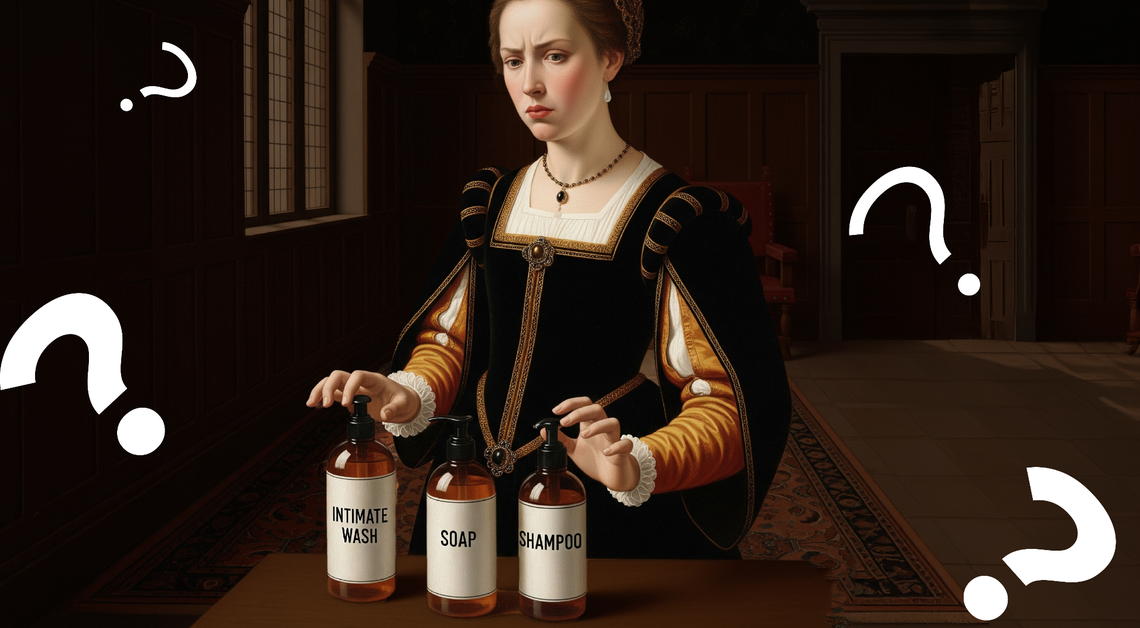
You know, those shower moments when it’s time to clean the vajayjay and your mind is doing the math: intimate wash vs. soap vs. shampoo. But in the end, you don’t care and just grab whatever’s closest, and think, “Eh, it’s all just soap, right?” Wrong! When it comes to that delicate area, your vulva, it’s not quite that simple. Neither your regular soap nor your shampoo is actually made for it.
Your vulva deserves a more informed choice. So, today, we’re diving deep into the showdown: intimate wash vs. soap vs. shampoo. Which one is safe for your vulva?
Why Your Vulva Needs Special Care
Your vulva and vagina (yes, they’re different! Vulva is external, vagina is internal) are truly incredible. Research shows that they host a thriving, tiny, unique ecosystem called the vaginal microbiome, full of beneficial bacteria called Lactobacilli. These little powerhouses produce lactic acid, which maintains a healthy, acidic pH balance (around 3.8 to 5.0) for your vulva. This acidity is like a bouncer at a club, keeping out the bad guys – the harmful bacteria and yeast that cause infections.
Also, your vulvar skin is incredibly delicate and permeable, far more so than the skin on your arms or legs. This means it’s super sensitive to what you put on it. Anything even remotely harsh can actually break down its natural protective barrier.
So, what you use for your intimate area needs to be just right, you can’t use just anything, because that would throw off its delicate balance. It’s like how you wouldn’t use dish soap to watch your silk sari, it’s just not meant for the job. In short, your vulva deserves gentler care that respects its natural chemistry.
Why Soap & Shampoo Aren’t Right for Your Vulva
We’ve been conditioned to believe that “squeaky clean” equals healthy but when it comes to your vulva, that squeaky feeling often means it’s been stripped of its natural protective barriers, leaving it vulnerable. So when weighing intimate wash vs. soap vs. shampoo, here’s what you need to know.
The Bar Soap & Shampoo Might Be Too Harsh
Your bar soaps (ah, the classics) are overwhelmingly alkaline, with a pH of 9 or even higher. While they’re great for your hands, your legs and even your armpits, when you introduce that to your naturally acidic vulva, it’s like throwing a wrench in the gears. It is basically a chemical attack on those precious Lactobacilli. They start to die off, weakening your vulva’s natural defences. As per studies, without enough Lactobacilli, the pH rises, and suddenly, you’ve increased your risk of yeast infections or bacterial vaginosis.
And shampoo? Girl, no.
“Well, I have hair down there too… so shouldn’t I shampoo it?” It’s a logical thought. Pubic hair is still hair, so it makes sense that people assume it needs the same kind of wash as what’s on your head.
But pubic hair isn’t the same. It’s curlier, coarser, and sits on much more sensitive skin. Shampoo can dry it out and disrupt the vulva’s natural barrier underneath. It’s just too harsh.
Ingredients That Shouldn’t Be Anywhere Near Your Vulva
Most regular soap products are packed with ingredients that don’t belong anywhere near your vulva:
- Synthetic fragrances
- Sulfates (SLS/SLES)
- Parabens and phthalates
- Artificial dyes and preservatives
These ingredients are added primarily to enhance the product’s appeal. The rich lather? That’s the sulfates at work. The fresh, floral scent? That’s a cocktail of synthetic fragrances. The smooth texture and long shelf life? That’s where parabens and phthalates come in.
And honestly, it’s easy to see why women fall for them. It can be because of a bad (smelly) discharge or wanting to smell nice during sex. But these ingredients aren’t just unnecessary, they’re disruptive. Some of them have been linked to potential hormone disruption, according to several studies. Others strip away your skin’s natural protective barrier, throw off your pH, and leave you more prone to irritation, dryness, and even infections.
The truth? A healthy vulva already has its own natural scent and self-cleaning system. You don’t need perfumes to cover it up or sulfates to scrub it down. What you do need is a gentle, pH-balanced cleanser (if anything at all) that respects your body’s natural balance instead of fighting it.
Why is Intimate Wash Safe for Your Vulva
If soaps and shampoos are out, what’s the right choice? That’s where intimate washes come in. Specifically formulated for your vulva, a good intimate wash doesn’t just cleanse. It protects, supports, and maintains the natural balance your body already works so hard to keep.
Here’s what makes an intimate wash actually good for your intimate health:
- pH-balanced: This is the most crucial part. Good intimate washes are designed to match the natural acidic pH of your vulva. This means less disruption, less irritation, and fewer chances of those pesky infections.
- Gentle and Hypoallergenic: They are free from harsh chemicals, artificial fragrances and dyes that can trigger sensitivities, respecting your vulva’s delicate skin barrier.
And this is precisely what brands like Nua do. They work on real scientific understanding of women’s bodies. Nua’s Foaming Intimate Wash, for example, is specifically crafted to match your natural vulvar pH. It’s incredibly gentle, free from those irritating sulfates and parabens. Plus, it also has ingredients like aloe vera, known for its soothing properties, and lactic acid, to help keep bad bacteria in check and good bacteria thriving. If you want to learn how to use an intimate wash every day, we have a blog right here for it.
Do you need to use an intimate wash every day to clean your vulva?
Yes. While your vagina is a self-cleaning marvel and healthy vaginal discharge is part of that process, naturally carrying away old cells and bacteria, daily life bring other things into the mix. Sweat, period blood, post-intimacy residue or just humidity can all create an environment where external bacteria can flourish. While water can rinse, it often doesn’t effectively remove all build-up or odours, especially if the pH has been slightly thrown off by these other factors.
This is where a pH-balanced intimate wash steps in, not to “clean” your vagina, but to gently support the external vulvar area. Think of it less as a “cleaning product” and more as a “support system” for your intimate ecosystem.
If you don’t want to use it daily, you can use it post-exercising, during your period, after sex or whenever else you feel that extra need for cleanliness.
It’s Not Just Skin, It’s a Whole Ecosystem
When it comes to your intimate hygiene, it’s really about understanding your body. Think about the delicate balance of your microbiome, how sensitive your skin barrier can be and some of those less obvious ingredients in everyday products. Knowing these things can genuinely help you make better choices for your hygiene habits.
It isn’t just about being clean. It’s simply about being informed, being gentle and truly respecting the incredible intelligence of your own body. Your vulva isn’t just a part of you, it’s a dynamic ecosystem that deserves the most thoughtful care.