The use of maternity pads should start right after childbirth. As soon as your baby arrives, your body begins to heal, and part of that healing is pretty heavy bleeding (a.k.a lochia). And maternity pads are designed to handle just that!
But childbirth can be so overwhelming that it’s easy to forget about preparing yourself for your own recovery. Even the simplest questions, like when to start using maternity pads, which ones to buy or how long you’ll need them, can catch you off guard.
So it’s wonderful that you’re here, taking a moment to look into your recovery instead of getting completely swept up in the baby world. Let’s make sure you feel just as cared for as your baby during one of the biggest transitions of your life.
What is postpartum bleeding and why does it happen?
Postpartum bleeding is your body’s way of cleaning and healing itself after birth. During pregnancy, your uterus builds up a thick, blood-rich lining to support your growing baby. After birth, your body no longer needs this lining. It gradually sheds it, along with some leftover blood and tissue. This entire process results in lochia (the vaginal discharge that looks a lot like blood).
While super uncomfortable and often painful, it’s actually a positive sign of your body’s transition into its non-pregnant state. And because it has to do more with the pregnancy than the actual birthing process, you will experience this postpartum bleeding regardless of a vaginal birth or a C-section.
So, when should I start the use of maternity pads?
You should start using maternity pads immediately after childbirth because the lochial flow begins immediately and can be quite heavy right from the start. So much so, that on the first day, you’ll likely be changing pads every one to two hours.
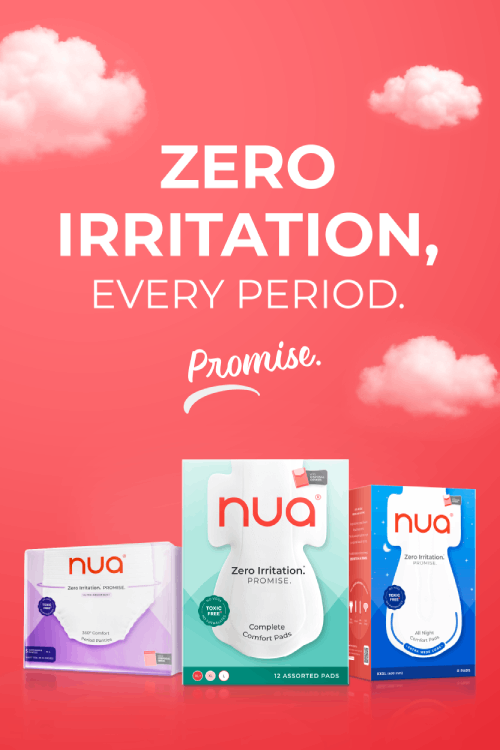
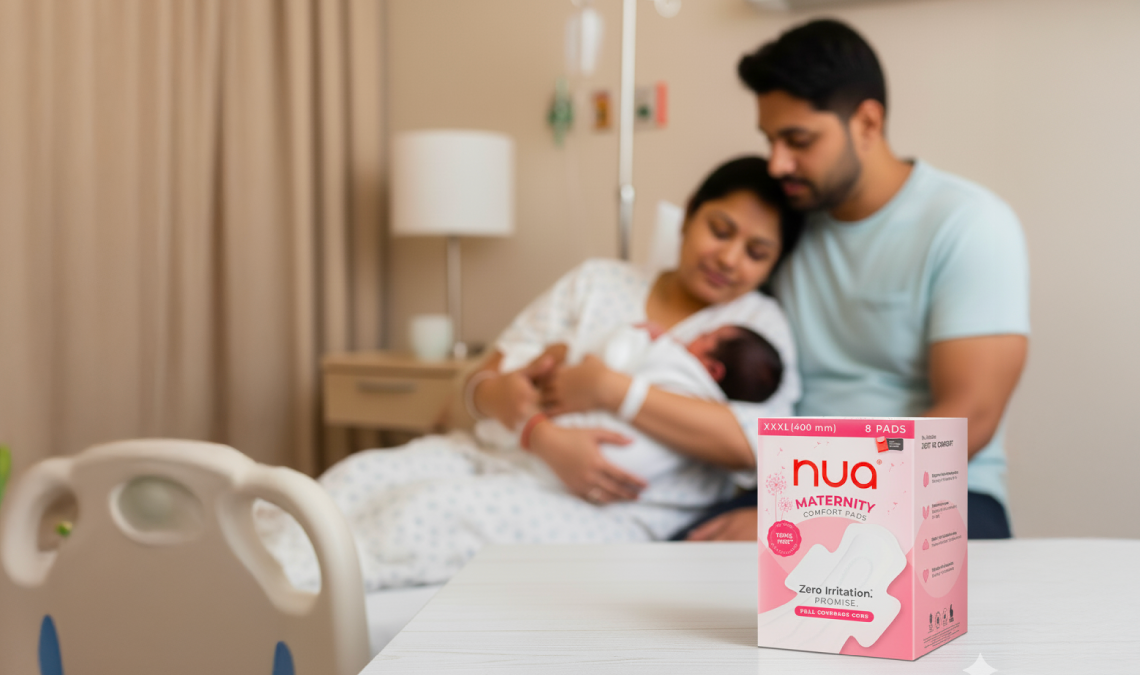
Most hospitals provide maternity pads as part of the delivery package. These pads do their job, but they’re often not the most comfortable. Therefore, learning about the right maternity pads and carrying your own high-quality ones can make a huge difference. The ones that are soft and highly absorbent, like Nua’s Maternity Comfort Pads, feel much more gentle and nicer on the already-sore area.
Can I start the use of maternity pads before delivery?
Yes, for sure. Some women do start using maternity pads before delivery. Like in the final weeks of pregnancy, when bladder leaks are common due to the baby pressing on the bladder. And, they’re better than the regular incontinence pads as they sit gently against a pregnant belly. Maternity pads also come in handy for the car ride to the hospital after your water breaks and you’ve to manage any amniotic fluid leaks.
How long will I need to use maternity pads?
You will likely use maternity pads for around six weeks after delivery, as that’s how long lochia usually lasts. For some women, however, it can last up to eight weeks, as per research. Your lochia will change in color and consistency over this time, which will help you figure out when you might be able to switch to other lighter products:
- Stage 1: Lochia Rubra (Days 1-4): The discharge will be dark or bright red, the flow will be like a very heavy period and you may pass small clots too. This is when you’ll rely on your most absorbent maternity pads and change them every 2-4 hours.
- Stage 2: Lochia Serosa (Days 4-12): The discharge will lighten to a pinkish-brown and become thinner and more watery. You will still need maternity pads, but you may not need to change them quite as often. At this point, you can shift to heavy-duty overnight pads or super-absorbent period panties.
- Stage 3: Lochia Alba (Day 12 to Week 6): The discharge turns into a yellowish-white with little to no blood. During this stage, you can likely switch from maternity pads to thin yet absorbent period pads.
It’s also common for new moms to experience some level of urinary incontinence. So, you can use maternity pads whenever your bladder is being extra ticklish, even after the lochia is long gone. To know more about when to stop using maternity pads, you can refer to our piece here.
Everyone’s recovery timeline is different, so your experience may not follow these stages exactly. And that’s completely fine.
How do I choose the right maternity pads?
You should look for pads that are specifically designed for postpartum bodies. The trick here is to prioritise four key features:
- High Absorbency: The pad needs to handle sudden gushes and large clots, as they’re common with lochia. So, look for a pad with a super-absorbent core, which is specifically made for managing the shedded mucus and uterine tissue.
- Super Soft: Your skin will be extremely sensitive after childbirth. So, you’ll HAVE to opt for a pad whose top layer feels like a soft cushion. This is non-negotiable with stitches. Nua’s Maternity Comfort Pads cause zero irritation and provide 4x more comfort than any other pad.
- Breathable: Proper airflow down there is very helpful for healing, as it keeps things cool and prevents bacterial growth and infections. So, when you’re searching for your maternity pad, make sure it’s made from a breathable fabric.
- Chemical-Free: Avoid pads with artificial fragrances, dyes, chemicals or plastics, as these can irritate intimate skin or cause allergic reactions. Your postpartum journey calls for something made with 100% toxic-free materials for 100% comfort.
What should I do with my leftover maternity pads?
Your leftover maternity pads can be your secret stash for managing heavy period days in the future. Many women find their periods are heavier after childbirth, and even if not, a maternity pad is perfect for the first heavy day of your cycle or for leak-proof overnight protection.
They are also a great option for anyone who experiences heavy menstrual bleeding (menorrhagia) due to conditions like PCOS, endometriosis or fibroids. They offer a level of absorbency and comfort that regular pads just can’t match.
Don’t make your body wait for the comfort it deserves
Lochia is a pretty big concern for most new moms because they often aren’t prepared for this part of the postpartum journey. And you can’t blame them. Be it childbirth in the TV shows or in real life with friends and family, the focus is always on the baby stuff. From diapers and rash creams to powders and changing mats, most of us know the newborn care protocol way before we need to. But the new-mom care protocol never gets spoken about, leaving many women unsure of what they’ll need for themselves.
That’s exactly where the right postpartum products come in. They’re a small but powerful way to care for yourself when everything else revolves around the baby. From hospital to home, sudden gushes to sensitive skin, good maternity pads give you comfort and protection as your body heals. Always remember that prioritizing your own healing is just as important as caring for your little angel.