What you will learn about cracked nipples from this blog:
- Cracked nipples are one of the most common breastfeeding concerns, especially in the first month postpartum.
- Friction, shallow latch, moisture imbalance, and skin stretching all contribute to the sore nipples while breastfeeding moms often deal with.
- You can start using nipple butter as early as the third trimester to help prepare the skin for feeding.
- Applying nipple butter from day one of breastfeeding helps protect the skin barrier before damage starts.
- A baby-safe, 100% natural formula can be left on during feeds without needing to wipe it off.
- Consistent use is one of the simplest breastfeeding tips that can ease discomfort, support healing, and make feeding more manageable in the early weeks.
Nobody tells you about the cracked nipples part of breastfeeding. Everyone talks about latching, milk supply and sleep deprivation. But the soreness? The itching? The jitters every time your baby wants to feed? That part tends to surprise new moms completely.
And that’s exactly where something as simple as nipple butter comes into the picture, often becoming the first thing moms reach for when they need nipple pain relief.
But when should you start using nipple butter for cracked nipples? The short answer is…sooner than you think. Ideally, before the cracking even begins, which could be as early as the third trimester.
However, it also depends on your breastfeeding journey, what your skin is telling you, and what you’re trying to prevent versus treat. This guide will walk you through all of it, from why nipples crack in the first place to every sign, stage, and situation that calls for it.
Why Do You Get Cracked Nipples from Breastfeeding?
Cracked nipples during breastfeeding are a very common concern for new moms. In fact, research suggests that about 1 in 3 postpartum women experience cracked nipples in the first month after childbirth. Understanding the causes is the first step toward effective breastfeeding nipple care. But why does it happen?
The skin isn’t used to this
Nipple skin is delicate. During breastfeeding, constant friction, suction, and moisture put it under repeated stress, which can lead to irritation and sometimes cracking.
Incorrect or Shallow Latch
When your baby doesn’t take enough of the areola (circular area of skin around the nipple) into their mouth, the nipple rubs repeatedly against the roof of the mouth, causing friction, soreness, and sometimes cracks. This is one of the most common causes of nipple pain while breastfeeding.
Blog continues after the ad.
Skin stretching
When breasts become overfull with milk, the skin stretches, and the areola can feel firm. This puts more pressure on the nipple, making it more vulnerable to cracking.
Moisture imbalance
Breastfeeding skin is repeatedly exposed to moisture. Milk leaks, baby saliva, damp clothing. This weakens the skin barrier, making it more prone to cracking.
Keeping the nipple area dry is one of the simplest breastfeeding remedies for protecting your skin barrier. Use soft, breathable nursing pads to manage leaks and prevent cracked nipples.
When Should You Start Using Nipple Butter for Cracked Nipples?
You can start using nipple butter from the 3rd trimester, or from day one of breastfeeding (before the cracked nipples even appear), or at the first sign of dryness or soreness. It depends on what you’re experiencing and what you’re trying to fix. Here’s every scenario where good breastfeeding skin care calls for nipple butter.
Should I start using nipple butter before my baby arrives?
Yes, you can start using nipple butter in the third trimester, before breastfeeding even begins. Experts share that from around week 36, the nipples become sore and start leaking as your body prepares for lactation.
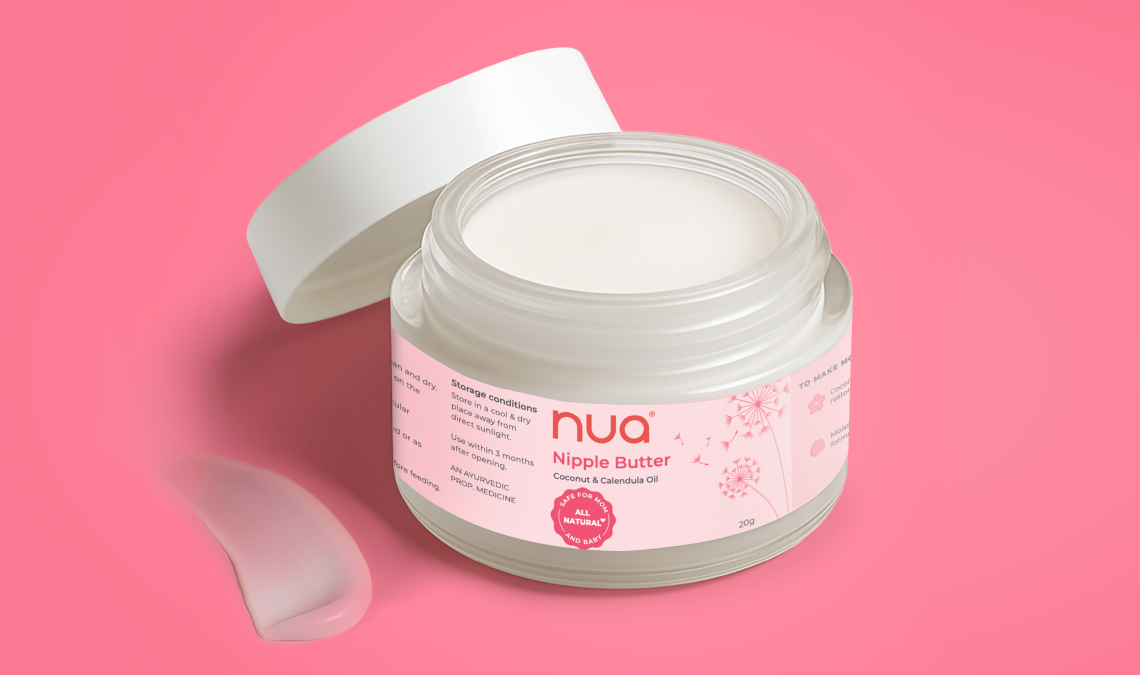
Using a nourishing product with long-lasting hydration, like Nua’s Nipple Butter, during this period helps build up the skin’s moisture reserves and keep the tissue supple before it faces the demands of feeding.
Can I start using nipple butter from day one of breastfeeding?
Yes, and honestly, it’s a great idea. Applying nipple butter after each feed from day one keeps the skin barrier intact. It gives the skin tissue a fighting chance against the friction and constant moisture that’s about to become your daily reality.
What are the early warning signs that I should use nipple butter?
If you haven’t started nipple butter early on, these are the signals your skin could really use it.
- Tenderness or sensitivity at the nipple, even if there’s no visible damage
- A feeling of tightness or dryness around the nipple or areola
- Slight redness or pinkness that wasn’t there before
- The skin around the nipple looks a little rough or flaky
- You’re dreading the next feed because of how your nipples feel
Can I use nipple butter after my nipples are already cracked?
Yes. If you’re past prevention and your nipples are already cracked, sore, or showing any of the following, nipple butter becomes less of a nice-to-have and more of a necessity for nipple soreness relief.
- Visible cracks or fissures on the nipple, especially at the base
- Bleeding, even minor spotting, on a breast pad or your bra
- Sharp, stinging pain during feeding that doesn’t ease after the latch
- Pain that lingers for more than a few minutes after the feed ends
- Scabbing between feeds
Should I use nipple butter if I’m pumping?
Yes, because pumping adds another layer of friction and suction on top of nursing. If you’re doing both, your nipples are getting twice the contact with minimal recovery time in between. Apply nipple butter after pumping sessions, too, not just nursing, to keep the skin from reaching a point of breakdown.
Do I need nipple butter while weaning?
Yes, 100%. Weaning brings its own skin changes. As feeding frequency drops, the skin can dry out and become sensitive again. Nipple butter during the weaning phase helps keep the tissue hydrated and comfortable through the transition.
Does nipple butter help during winter or in dry weather?
Yes, nipple butter works wonders when the dry, cold weather dries out skin everywhere, including the nipple area. If you’re breastfeeding through winter or in a dry climate and your skin feels more sensitive than usual, adding nipple butter to your routine is a simple and effective way to help.
| When to Start Using Nipple Butter | Why It Helps |
| Third trimester (around 36 weeks) | Supports skin health as breasts prepare for lactation. |
| From day one of breastfeeding | Protects the skin barrier from friction and constant moisture from feeding. |
| Early warning signs (dryness, redness, tightness) | Prevents minor irritation from becoming visible or sore cracks. |
| Visible cracks or soreness | Soothes, protects, and supports the healing of damaged skin. |
| Pumping | Reduces added friction and suction stress on already sensitive skin. |
| During weaning | Helps manage dryness and sensitivity as the feeding frequency decreases. |
| Cold or dry weather | Prevents dryness from worsening irritation or soreness in nipples. |
Remember, your skin needs consistent care during breastfeeding, especially in those early weeks postpartum. Find a nipple butter that’s made for this and designed to be safe for both you and your baby.
How Do You Use Nipple Butter for Cracked Nipples the First Time (and Every Time After)?
Using nipple butter is straightforward, but there are a few things worth knowing to get the most out of it as part of your nipple care for breastfeeding routine.
- After feeding or pumping, gently pat your nipples dry with a soft cloth. Don’t rub, just blot.
- Take a pea-sized amount of nipple butter on your fingertip. The texture is thick, so a little goes a long way.
- Gently massage it into the nipple and the areola in a circular motion. Don’t rub it in aggressively.
- Let it absorb for a moment before putting your bra or breast pad back on.
- Do this after every single feed or pump session. Not just when it’s painful.
Should You Wipe Off the Nipple Butter Before Breastfeeding?
You don’t have to wipe off the nipple butter before the next feed as long as it’s made with baby-safe ingredients. A 100% natural formula, like Nua’s Nipple Butter, is safe for your baby even while they nurse, so you can leave it on without worry.
What Should You Look for in a Nipple Butter?
When you’re feeding a newborn, what goes on your nipple matters. Here’s what a good nipple butter should have, and what it should absolutely not have when you’re choosing among nipple soreness remedies.
Look for these in a nipple butter
- 100% natural, baby-safe formulation
- Fragrance-free
- Nourishing and moisturizing ingredients like coconut oil
- Plant-based oils, like calendula oil, that help restore the skin
- A thick, balm-like consistency that stays on the skin
- Dermatologically tested and suitable for sensitive skin
Avoid these in a nipple butter
- Artificial fragrances or perfumes
- Alcohol-based ingredients that dry the skin
- Anything with a warning to remove before nursing
- Mineral oil or petroleum jelly that can block pores
- Numbing agents
- Harsh preservatives or chemicals
If you’re looking for something that meets all of the above, Nua’s Nipple Care Butter is formulated with breastfeeding moms and their little angels in mind.
When Nipple Butter Isn’t Enough
Nipple butter does a lot for your skin, but it’s important to know when the problem goes beyond what it can fix. Watch out for these signs and speak to your doctor if you notice them.
- Pain doesn’t improve after 5 to 7 days of consistent nipple butter use
- Deep, burning, or shooting pain that radiates into the breast
- Nipple skin that looks white, purple, or blue after feeding
- Signs of infection like heat, swelling, fever or discharge that isn’t milk
- Cracks that bleed significantly or don’t seem to be healing at all
Using Nipple Butter: Prevention is Better Than a Cure
So, when should you start using nipple butter for cracked nipples?
- Ideally, before the cracking happens. In the third trimester, if you can.
- From day one of breastfeeding, if you haven’t already.
- The moment you notice any dryness, sensitivity, or soreness, if you’ve been waiting.
Cracked nipples are one of the most common reasons new moms struggle with or stop breastfeeding earlier than they want to. The soreness is real, and it can make every feed feel like something to get through rather than something you want to do. Nipple butter can help fix a lot of that breastfeeding soreness and pain. When used consistently, it can make a real difference in your postpartum healing journey (more on that here).
Remember, your body is doing something remarkable. It deserves a little care alongside all that hard work. If you have any more questions on nipple butter, drop them in the comment and we’ll get back to you.
Disclaimer:
The content of this article is provided for general informational and educational purposes only and is not intended to constitute medical advice, diagnosis, or treatment. The information shared is of a general nature and may not be appropriate for all individuals or specific circumstances. Readers should not disregard, delay, or substitute professional medical advice based on the information contained herein.
If you experience any symptoms, notice anything unusual, or have concerns relating to your health or overall wellbeing, you should consult a qualified healthcare professional. While every effort is made to ensure the information shared is accurate and up-to-date, Nua makes no representations or warranties, express or implied, regarding the accuracy, completeness, or suitability of the information provided and disclaims all liability arising from reliance on this content to the fullest extent permitted by law.