What you will learn about Nua’s Disposable Period Panties in this blog:
- Disposable period panties combine underwear, absorbent protection and the convenience of one-time use in one product, giving full-coverage leak protection without needing a separate pad.
- Many women hesitate to try them because generic designs often feel bulky, stiff, or visible under clothes.
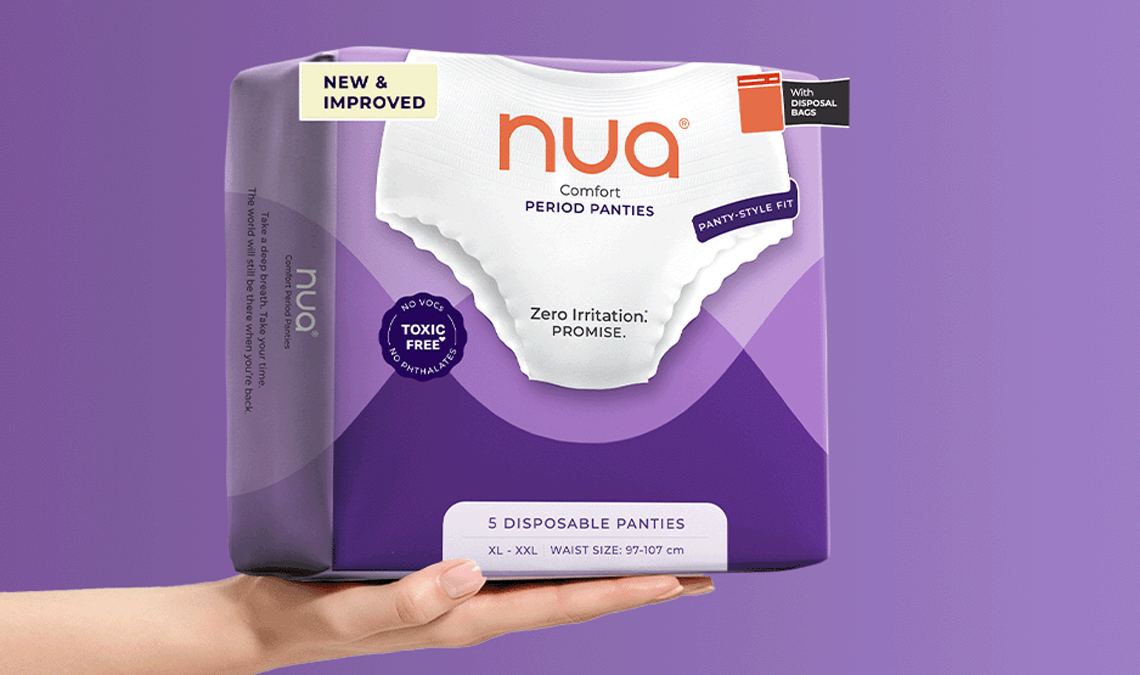
- Nua’s new Disposable Period Panties are designed with a sleeker, panty-like fit that sits seamlessly under clothing.
- They feature an ultra-absorbent core, are made with soft, breathable materials that help reduce irritation and improve comfort during long wear.
- They are free of harmful chemicals, dyes or fragrances, and are dermatologically tested.
- If you haven’t tried period panties before because of the bulky “diaper” feel, newer designs aim to make them feel more like regular underwear.
Disposable Period Panties are the latest product in period care. They sound amazing in theory, but the first question that comes to your mind is, “Will I look like I’m wearing a diaper?” Followed by, “Will there be a visible bulge under my jeans that gives away exactly what’s happening in my body this week?” These questions are the real reason women hesitate to try out disposable period panties, even when every review is glowing. And honestly, most generic disposable period panties have earned that reputation. Their fit is boxy, the fabric felt plasticky and you can see the edges through fitted clothes. Nua’s Disposable Period Panties were designed specifically to solve that, because we know the diaper association is the one of the biggest reasons women who want to try them don’t.
So, we designed something that is sleeker, thinner, and cut to sit like an actual panty. Here’s what’s worth knowing about period panties absorbency and fit before you switch.
How Do Disposable Period Panties Work?
Disposable period panties work the same way a pad does, but spread across a full garment instead of a single strip. They are wearable, single-use panties with built-in absorbency, designed to replace your pad and underwear in one step. You slip it on like a panty, go about your day & dispose of them after use.
Here’s what’s actually happening inside the panty:
- The topsheet resting against your skin is designed to pull liquid away the second it hits the sheet, so your skin stays dry even on heavy flow.
- That liquid moves straight into the absorbent core, which locks it in and distributes it across a wider area, which is why there’s no wet, heavy patch sitting in one spot.
- A leak-proof back layer stops anything from seeping through to your clothes, and the snug panty-style fit seals the sides so there’s no pooling near your thighs.
- The payoff is a 360 layer of protection that handles heavy flow, clots, and gushes without you having to adjust, check, or reposition anything.
Blog continues after the ad.
Are Disposable Period Panties Like Diapers?
No, not the good ones, and here’s more about why. Then why do we assume they do? Because most period panties are built for absorbency first, dignity second. With thick cores, plasticky outer layers, a waistband that announces itself through every pair of jeans, you put them on and suddenly you’re six years old again, waddling. The traditional period care industry assumed women wanted only one thing from period care – no leaks. So it optimised for the core and forgot about the wearer. That’s why so many curious women tap the product page, scroll, and finally just close the tab.
There’s a softer layer too. Research on menstrual stigma shows women go to great lengths to hide every trace of their period, from the product to the packaging. A product that looks like a diaper and gives the wearer away doesn’t just feel unflattering, it feels deeply embarrassing. It confirms a fear that your body, right now, is something to be managed and hidden, not lived in.
If you’ve been waiting for something that doesn’t feel like a compromise, see what Nua’s Disposable Period Panties actually feel like.
Why Do Women Hesitate To Try Disposable Period Panties?
It’s not just the fit. It’s everything the fit makes you feel. Generic panties often use harsh synthetics, fragrances and dyes in the top layer. A 2019 Reproductive Toxicology study flagged by the Environmental Working Group found phthalates and VOCs like xylene and toluene across menstrual and diaper brands, which are chemicals linked to skin irritation and allergic reactions. And a 2025 Cosmoderma survey reported that 62.7% of women experienced skin irritation from their sanitary products.
The mental cost of irritating period products is real. Every time a product rubs, bunches, or peeks above your waistband, your brain files it under “this is so irritating!” So, you plan outfits around your period, you sit differently, you stop wearing the jeans. YOU COMPROMISE. Over five days, that’s a lot of small surrenders that most brands don’t put on their specs sheet.
What Makes Nua’s Disposable Period Panties Different?
The new Nua’s Disposable Period Panties feel very close to your regular panties. Made for heavy flow days and long nights, with up to 10 hours of leak-proof wear, it doesn’t feel like you’re wearing a product, it feels like you’re just wearing underwear that happens to handle your period.
- The fit is a true panty-style fit with a soft, stretchy waistband that sits flush against your hips instead of falling away from your body.
- There’s no boxy gusset, no poofy middle, no plastic-y shell that rustles when you walk.
- The seams are nearly invisible, and the whole thing is super sleek under clothes.
And there’s more:
- Ultra-absorbent core: Built to hold heavy flow, clots and gushes for up to 10 hours, with 4x the absorption of a regular pad.
- Soft and airy topsheet: Gentle against sensitive skin, with no plasticky feel and no scratchy seams.
- 100% toxic-free materials: No harmful chemicals, dyes or fragrances, which is why Nua stands by its Zero Irritation, Promise.
- Dermatologically tested: By an ISO-accredited laboratory, non-irritant, hypoallergenic and cruelty-free.
If you’ve quietly given up on disposable period panties before, meet Nua’s Disposable Period Panties, built for women who refuse to waddle.
How To Choose The Right Period Panties: A Beginner’s Guide
Start with fit, then flow, then skin. A perfect absorbency rating means nothing if the panty rides up or triggers a rash. Here’s what to expect while buying period panties, especially when buying period panties for beginners:
- Check the size chart: A too-tight panty chafes, a loose one leaks. Nua comes in 5 sizes for a reason, here’s a guide to find your size.
- Match absorbency to your heaviest day: A good period underwear absorbency guide plans for your worst night, not your lightest afternoon.
- Read the materials label: Look for toxic-free, fragrance-free and dermatologically tested. Research in Clinical and Experimental Dermatology shows your skin’s barrier function actually weakens in the days around menstruation, making it more reactive to irritants than usual.
- Prioritise breathability: Soft, airy topsheets reduce friction and moisture, which is where rashes start.
Tips To Use Period Panties The Right Way
Good period panties are only as good as the way you wear them. A few period panties hygiene and care tips make all the difference in comfort and leak protection. Here’s how to get it right with Nua’s Disposable Period Panties:
- How to wear them: Open the pack and look for the front with the coloured elastic. Just slip it on like your regular panty.
- How long can you wear period panties: Up to 10 hours, whether that’s a long workday, a road trip, or overnight. Avoid pushing past that window.
- How to dispose of them: After use, tear or remove the sides, wrap the panty up in the disposal cover it comes with, and toss it in the bin.
- How to care for your skin while wearing them: A healthy vaginal pH sits between 3 to 5, so use a mild, pH-balanced intimate wash. Skip harsh soaps and fragranced products, which can trigger rashes when paired with long wear.
- When to size up or down: If the waistband digs in or the leg openings leave marks, size up. If you feel any gap near the thighs, size down. Fit is the single biggest factor in whether a disposable feels like underwear or a diaper.
Which Is Best, Period Panties Vs Pads?
Honestly, it depends on the day, the flow, and what you need your period product to do. Both can work beautifully. The question of which is best period panties vs pads isn’t about one replacing the other, it’s about matching the product to the moment.
Pads are the classic for a reason. They’re quick to change, easy to layer through the day, and perfect for light to medium flow days where you want flexibility. You can swap them as often as you like, wear them with any underwear you already own, and they’re the most intuitive starting point for most women. For lighter days, shorter hours, or when you’re changing up your activity often, a good pad is still hard to beat.
Disposable period panties step in when you want coverage without the maintenance. Think heavy flow, overnight, long travel days, big work stretches where you don’t think about your period at all. That’s where the full-coverage design comes in, because you get 360 protection and 10 hours of wear in one product. The comfort of period panties vs pads really shows up on those days, the ones where you’d normally be checking your seat or planning bathroom breaks around meetings.
The Bottom Line
Period care is built around absorbency, packed with plastic, and sold with the message that your body is a problem. Nua’s Disposable Period Panties were designed against that story. They’re sleek instead of bulky, gentle instead of chemical, panty-style, because that’s what your body needs. If the old idea of disposable panties put you off, this new design is genuinely worth a second look. Try one pack on your heaviest day and let your body be the judge.
Disclaimer:
The content of this article is provided for general informational and educational purposes only and is not intended to constitute medical advice, diagnosis, or treatment. The information shared is of a general nature and may not be appropriate for all individuals or specific circumstances. Readers should not disregard, delay, or substitute professional medical advice based on the information contained herein.
If you experience any symptoms, notice anything unusual, or have concerns relating to your health or overall wellbeing, you should consult a qualified healthcare professional. While every effort is made to ensure the information shared is accurate and up-to-date, Nua makes no representations or warranties, express or implied, regarding the accuracy, completeness, or suitability of the information provided and disclaims all liability arising from reliance on this content to the fullest extent permitted by law.