Wondering, “how often should you use nose strips?” here’s what you will learn from this guide.
- Use nose strips once a week max. For sensitive skin, once every two weeks is better.
- They work by removing surface blackheads (oxidised oil + dead skin), not preventing them.
- Overuse can damage your skin barrier, causing redness, dryness, and more oil production.
- Never use daily, it can lead to irritation, micro-tears, and enlarged-looking pores.
- Signs of overuse: persistent redness, tightness, breakouts, or peeling skin.
- Always apply on damp skin and remove gently to reduce irritation.
- Follow up with soothing, hydrating products to help your skin recover.
If you’ve ever peeled off a nose strip and marvelled at all the gunk it pulled out, you already know why these little things are so satisfying. But how often should you use nose strips? That’s where a lot of us get it wrong, because more is not always better, and your pores will let you know.
The promise of a cleaner nose is real. Nose strips work by bonding to the surface of your skin and physically pulling out the oxidised sebum and dead skin cells that are sitting in your pores, giving you that dramatic before-and-after that feels genuinely therapeutic. But like most satisfying things in skincare, they should be used as directed.
Understanding nose strips usage frequency is really about understanding your skin. Overuse is one of the most common mistakes people make, and it can undo a lot of the work you’re doing everywhere else in your routine.
Do Nose Strips Really Work, or Is It Just Satisfying?
Yes, they definitely work. They remove what’s already at the surface, they don’t fix the cause.
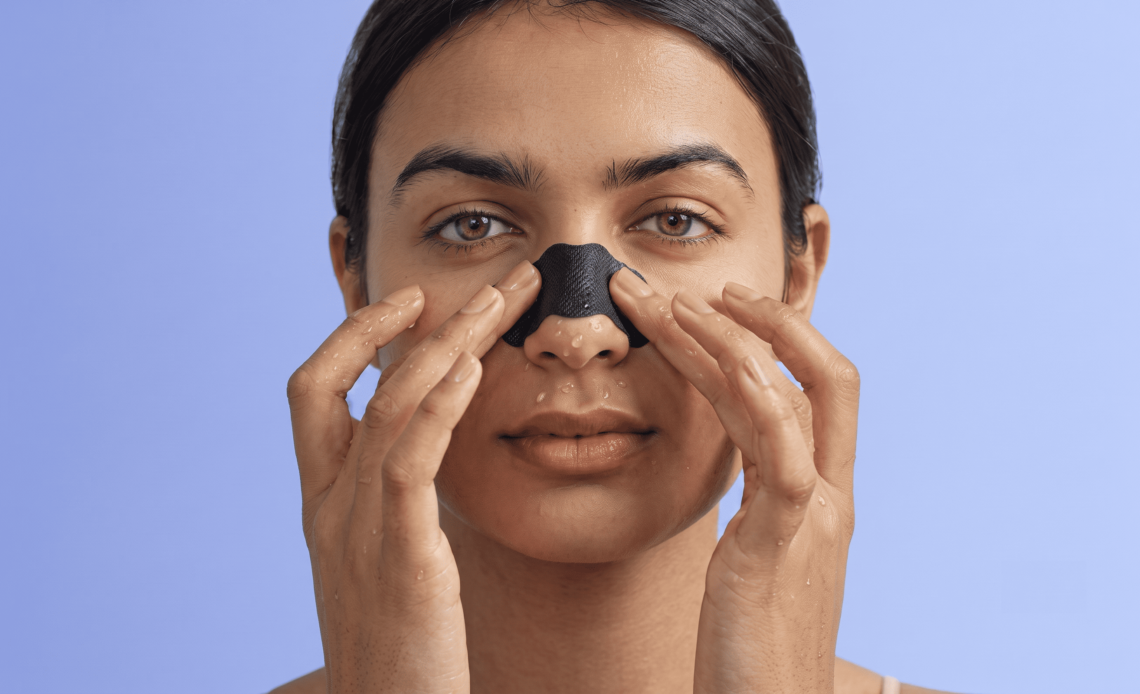
Blackheads are oxidised sebum plugs. When oil and dead skin cells clog a pore and the top is exposed to air, it darkens. That’s the oxidation. Nose strips for blackheads work using a wet-dry adhesive mechanism. The strip activates with water, adheres to your skin, and when it dries and you peel it off, it takes the top of the plug with it. You get that satisfying visual proof.
Blog continues after the ad.
But the pore itself is still there, still producing oil, and if you’re not also addressing sebum production with your overall routine, the blackheads will come back.
That doesn’t make nose strips useless. Used correctly, they’re a genuinely effective part of a routine, especially before events when you want your skin to look refined. They just can’t be the only thing you’re doing. Read more about how nose strips work here.
Nua’s Nose Strips are built to actually work, try them now!
How Often Should You Use Nose Strips?
Once a week at most, and for sensitive skin, once every two weeks is better.
The skin on your nose has a higher density of sebaceous glands, which is why your nose gets oily faster and why blackheads tend to cluster there. But that same sensitivity means it needs more recovery time between treatments.
Here’s what the Healthline says about nose strips usage frequency: your skin barrier, the outermost layer of lipids and proteins that keeps moisture in and irritants out, take time to recover from adhesive-based removal. When you overuse strips, you’re not just removing plugs, you’re also disrupting that barrier. The result is more sensitivity, more reactivity, and ironically, faster sebum production because your skin tries to compensate.
So if you’re using them more than once a week and wondering why your nose feels raw or looks red, that’s why. Your skin is telling you to slow down.
Signs of Overusing Pore Strips: What Is Your Skin Telling You?
The signs of overusing pore strips can be subtle at first, then very obvious. Here’s what to watch for:
- Redness or soreness right after peeling that doesn’t fade within a couple of hours.
- Skin that feels tight or slightly raw, like you’ve scrubbed too hard.
- Increased breakouts in the days after use, because a disrupted skin barrier lets bacteria in easier.
- Visible broken capillaries or a network of tiny red lines on and around your nose, which is a sign of physical trauma to the tissue.
- Dry patches or peeling, where your skin is literally losing its ability to retain moisture in that zone.
- Nose strips and skin barrier damage often show up as a prolonged period of sensitivity, where products that didn’t used to sting, now do.
If you’re hitting any of these, it’s time to take a break from strips entirely, focus on barrier repair (ceramides, niacinamide, gentle hydration), and then reintroduce strips at a lower frequency.
Can You Use Nose Strips Every Day?
No. Daily use is one of the fastest ways to genuinely damage your skin.
The adhesive in nose strips is strong by design. That’s how it works. But that same strength means it pulls at the skin’s surface, not just the contents of pores. Daily repetition of that pull thins the skin, weakens the barrier, and causes micro-tears in the tissue that you can’t see but your skin definitely feels. Over time, this can make pores appear larger, not smaller, because the surrounding skin loses its firmness.
There’s also the sebum rebound issue. When you strip oils from the skin too frequently, your sebaceous glands interpret that as a signal to produce more. You end up in a cycle where you strip, your skin overproduces, and the blackheads come back faster. You feel like you need to strip more often, but you’re actually making the original problem worse.
Once a week, with a good barrier-supporting routine in between, is the sweet spot.
Your skin deserves a strip that works with it, not against it. Try Nua’s skin barrier-safe nose strip.
How to Use Nose Strips Properly: A Step-by-Step Guide
How to use nose strips properly matters as much as how often. Most irritation is caused by application errors, not the strip itself.
- Cleanse first: You want to remove surface makeup and sunscreen so the strip can actually adhere to skin, not product buildup.
- Wet your nose thoroughly: The adhesive activates with moisture. If your skin is too dry, the strip won’t bond properly and you’ll end up peeling it off before it’s ready.
- Press it down firmly and smooth out any air bubbles: Air pockets mean parts of the strip aren’t in contact with your skin, and those areas won’t work.
- How long to leave nose strips on matters a lot: 10 minutes is the standard. Leaving it on longer doesn’t mean it works better. It just means the adhesive has more time to grip the skin surface itself, which increases the chance of irritation.
- Peel slowly from the edges in, not all at once from one end. Slow removal reduces the force on any single area of skin.
- Follow up with a soothing toner or serum: After removal, your pores are temporarily more open and your skin barrier is slightly compromised. Something with witch hazel or aloe vera helps close pores and calm the skin down.
One more thing: if you’re considering nose strips for sensitive skin, always do a patch test first. Try a small piece on your inner arm before using it on your face.
Are Nose Strips Safe for Skin?
Generally yes, when used correctly. The bigger question is what’s in them.
A lot of conventional nose strips contain synthetic fragrances, parabens, and sulphates, which are fine in small doses for most people but genuinely problematic for sensitive or acne-prone skin.
Nose strip side effects on skin like stinging, prolonged redness, or breakouts are often less about the stripping action and more about the ingredient list.
What you actually want is a strip with active ingredients that support your skin while it’s doing the work. Pure matcha extract has antioxidant properties that help reduce inflammation. Witch hazel is a natural astringent that temporarily tightens pores and controls excess oil without over-drying. Aloe vera is one of the most studied calming ingredients in skincare and helps the skin recover faster after treatment.
A dermatologically tested, paraben-free, sulphate-free formula means you’re not adding insult to injury when your skin is already in a vulnerable state. Good nose strip usage tips always start with choosing the right product, not just the right frequency.
The Bottom Line
Nose strips are one of those skincare tools that genuinely deliver when you use them with intention. The satisfaction of a fresh, clean nose is real. But like most things, the results depend on restraint as much as action.
How often should you use nose strips? Once a week. With the right product, the right technique, and a routine that supports your skin barrier in between. That’s it. That’s the whole answer.
If you’ve been reaching for them more often and wondering why your skin feels worse, not better, now you know why. Dial it back, give your skin some credit, and let a good formula do what it’s designed to do.
FAQs
1. How often should you use nose strips?
Most people should use nose strips no more than once a week. If you have sensitive skin, using them once every two weeks is usually a better option.
2. Can you use nose strips every day?
No. Daily use can damage your skin barrier, cause irritation, dryness, and redness, and may even make pores appear larger over time.
3. Do nose strips permanently remove blackheads?
No. Nose strips remove the surface portion of blackheads but don’t prevent pores from producing oil, so blackheads can return.
4. What are the signs you’re overusing nose strips?
Persistent redness, tightness, peeling, increased sensitivity, breakouts, or broken capillaries around the nose are common signs of overuse.
5. What’s the correct way to use a nose strip?
Apply it to clean, damp skin, leave it on for about 10 minutes, peel it off gently, and follow up with a soothing, hydrating skincare product.
6. Are nose strips safe for sensitive skin?
Yes, if used sparingly and formulated without harsh ingredients like fragrances, parabens, or sulphates. Always patch test before first use.
Disclaimer
The content of this article is provided for general informational and educational purposes only and is not intended to constitute medical advice, diagnosis, or treatment. The information shared is of a general nature and may not be appropriate for all individuals or specific circumstances. Readers should not disregard, delay, or substitute professional medical advice based on the information contained herein.
If you experience any symptoms, notice anything unusual, or have concerns relating to your health or overall wellbeing, you should consult a qualified healthcare professional. While every effort is made to ensure the information shared is accurate and up-to-date, Nua makes no representations or warranties, express or implied, regarding the accuracy, completeness, or suitability of the information provided and disclaims all liability arising from reliance on this content to the fullest extent permitted by law.