Wondering “how long should you leave a pimple patch on?” Here’s what we will cover in the guide:
- Pimple patches use hydrocolloid to absorb excess fluid while protecting the blemish from dirt, bacteria, and picking.
- Apply the patch to clean, completely dry skin so it sticks properly and works effectively.
- Nua’s Pimple Patches can be worn for up to 8 hours and can be used during the day or overnight.
- Removing the patch too soon may delay healing and leave the blemish more exposed to dirt, bacteria, and picking.
- Replace the patch once it turns white or opaque, reaches the recommended wear time, or starts lifting. Never reuse a patch.
- Keep using fresh patches until the blemish heals, replacing each one after the recommended wear time.
So you’ve just applied a pimple patch, and now you’re staring at the mirror wondering, how long should you leave a pimple patch on? Remove it too soon, and the hydrocolloid may not have enough time to absorb excess fluid from the blemish. Leave it on longer than recommended, and it may become less effective or start coming off your skin.
In this guide, we’ll explain how a pimple patch works, how to apply one correctly, when it’s time to remove or replace it, and whether you can reuse a patch or use more than one in a day.
How Do Pimple Patches Work?
Pimple patches are made with hydrocolloid, a material originally developed for wound healing. They work by absorbing excess pus, oil, and fluid from the pimple while protecting the area from dirt, bacteria, and your fingers (because we all know how tempting it is to pick). This helps create an ideal environment for the blemish to heal.
By creating a protective barrier, they act as an effective spot treatment for acne and may even help reduce post-acne marks caused by picking.
Hydrocolloid patches work best on whiteheads, pustules, and popped pimples, where the fluid is close to the skin’s surface. They’re less effective on deeper breakouts like papules, blind pimples, and cystic acne.
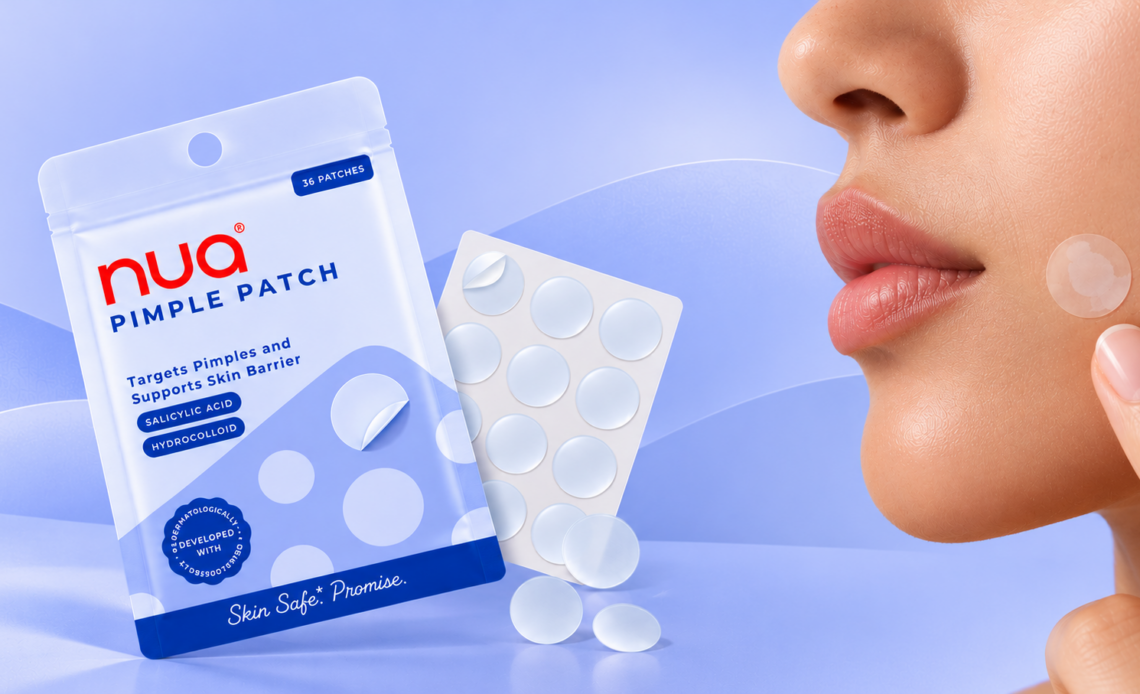
For an extra acne-fighting boost, some pimple patches, like Nua’s Pimple Patches, also contain salicylic acid to help unclog pores, reduce excess oil, soothe redness, and support clearer skin.
How Long Should You Leave A Pimple Patch On?
Nua’s Pimple Patches can be worn for up to 8 hours, giving the hydrocolloid and active ingredients enough time to absorb excess fluid and help flatten the pimple. The 8-hour recommendation isn’t arbitrary, it’s based on how hydrocolloid works.
- Unlike creams, hydrocolloid slowly draws out excess pus, oil, and other fluid from the blemish rather than absorbing it all at once. This gives the patch enough time to reduce the pimple’s size while protecting the area throughout the wound-healing process.
- As the hydrocolloid absorbs fluid, it gradually forms a soft gel. This creates a moist healing environment that supports the skin’s natural healing process, helps skin cells repair the blemish more efficiently, and prevents the pimple from drying out and forming a hard scab.
- Once the hydrocolloid becomes saturated, it can no longer absorb additional fluid. At that point, the patch mainly acts as a protective barrier rather than continuing to draw out impurities, so wearing it for longer offers little additional benefit.
- Removing the patch too early interrupts the absorption process before the hydrocolloid has had enough time to collect excess fluid. This may leave the pimple more swollen and expose it to dirt, bacteria, friction, and repeated touching or picking, which can delay healing.
While the recommended wear time may vary slightly between brands depending on their formulation and active ingredients, it’s always best to follow the instructions provided by the manufacturer to get the best results.
How to Use a Pimple Patch Correctly for the Best Results
1. Start with Clean Hands and Skin
Wash your hands before touching your face, then cleanse your skin with a gentle face wash. Pat your skin completely dry—even a little moisture can stop the patch from sticking properly.
2. Skip Skincare Under the Patch
Avoid applying serums, moisturisers, oils, or spot treatments directly underneath the patch, as they can weaken the adhesive and reduce its effectiveness.
3. Choose the Right Patch Size
Pick a patch that’s slightly larger than your pimple, so it completely covers the blemish. Nua’s Pimple Patches come in 8 mm and 12 mm sizes, making it easy to find the perfect fit.
4. Apply It to the Right Kind of Pimple
Hydrocolloid patches work best on whiteheads or pimples that have come to a head, as these blemishes contain surface fluid for the patch to absorb. Peel the patch from its backing, place it directly over the pimple, and press gently for 5–10 seconds to create a secure seal.
5. Let the Patch Do Its Job
Once it’s on, leave the patch undisturbed so it has enough time to work. Avoid lifting or checking underneath, as this can reduce its effectiveness.
6. Remove It Gently
When it’s time to remove the patch, peel it away slowly from one edge. Cleanse the area if needed, and replace it with a fresh patch if the pimple is still draining.
Wondering how long you should actually keep it on? Here’s what you need to know.
Can Pimple Patches Only Be Worn At Night?
Many people prefer wearing pimple patches overnight because they can stay on undisturbed for the full recommended wear time. However, breakouts don’t exactly stick to a bedtime schedule. They can appear right before work, college, or an outing.
Pimple patches work just as well during the day, provided they’re applied to clean, dry skin and worn for the recommended amount of time.
If you’re heading out, read our guide on how to use pimple patches with makeup to conceal your breakout while letting the patch do its job.
What Happens If You Remove a Pimple Patch Too Soon?
Removing a pimple patch too early can leave the pimple swollen, slower to clear, and more exposed to dirt, bacteria, friction, and repeated touching or picking.
What can happen if you peel it off too early?
- The blemish may reopen or bleed: If the patch is still firmly attached, removing it forcefully can tear the delicate surface of the pimple and cause minor bleeding.
- The pimple may flare up again: Removing the patch before it has had enough time to work may leave excess fluid behind, allowing the blemish to remain inflamed or become swollen again.
- The risk of post-acne marks may increase: Damaging the healing skin can increase the likelihood of post-inflammatory hyperpigmentation (dark spots) and, in some cases, pitted acne scars.
How Long Is Too Long to Leave a Pimple Patch On?
It’s best not to wear the same pimple patch beyond the recommended wear time of 6–8 hours (or up to 8 hours for Nua’s Pimple Patches ). Leaving a patch on significantly longer than recommended may cause over-softening of the skin (maceration), making the area more vulnerable to irritation. In some cases, it may even contribute to breakouts around the edges of where the patch was applied.
Signs it’s time to remove or replace your pimple patch include:
- It turns white or opaque, indicating when to remove a pimple patch.
- You’ve reached the recommended wear time, even if the patch hasn’t changed colour. This also answers how often you should change a pimple patch.
- The edges start lifting or peeling, making the patch less effective and signalling it’s time to replace it.
Can You Reuse a Pimple Patch?
No, pimple patches are designed for single use only. Once removed, the patch may carry bacteria, oil, and other impurities from the pimple. Reusing it is unhygienic and may increase the risk of skin irritation, bacterial contamination, and further inflammation, potentially worsening the breakout.
In addition, a used patch loses its adhesive and absorbent properties, making it less effective the second time around
How Often Can You Use a Pimple Patch?
You can use a fresh pimple patch daily until the blemish heals. Depending on when you apply it, you may use 2–3 pimple patches on the same blemish in a day, replacing each one after the recommended wear time if needed.
Since Nua’s Pimple Patches contain salicylic acid (read more about our ingredients here), always follow the recommended wear time and usage instructions on the packaging. Salicylic acid helps unclog pores and reduce excess oil. As with many skincare ingredients, some people—particularly those with dry or sensitive skin—may experience mild dryness or irritation. If irritation persists, discontinue use and consult a dermatologist.
The Final Takeaway
Pimple patches are a simple, low-effort way to help protect a blemish while it heals, but they work best when you use them correctly. Leave your pimple patch on for the recommended wear time, apply it to clean, dry skin, replace it with a fresh one when needed, and avoid reusing patches.
With a little consistency and the right care, you can help reduce the urge to pick, support the healing process, and give your skin a better chance to recover with minimal irritation. If you’re looking for an easy addition to your skincare routine, Nua’s Pimple Patches offer up to 8 hours of hydrocolloid and salicylic acid protection to help support blemish care.
Disclaimer
The content of this article is provided for general informational and educational purposes only and is not intended to constitute medical advice, diagnosis, or treatment. The information shared is of a general nature and may not be appropriate for all individuals or specific circumstances. Readers should not disregard, delay, or substitute professional medical advice based on the information contained herein.
If you experience any symptoms, notice anything unusual, or have concerns relating to your health or overall wellbeing, you should consult a qualified healthcare professional. While every effort is made to ensure the information shared is accurate and up-to-date, Nua makes no representations or warranties, express or implied, regarding the accuracy, completeness, or suitability of the information provided and disclaims all liability arising from reliance on this content to the fullest extent permitted by law.