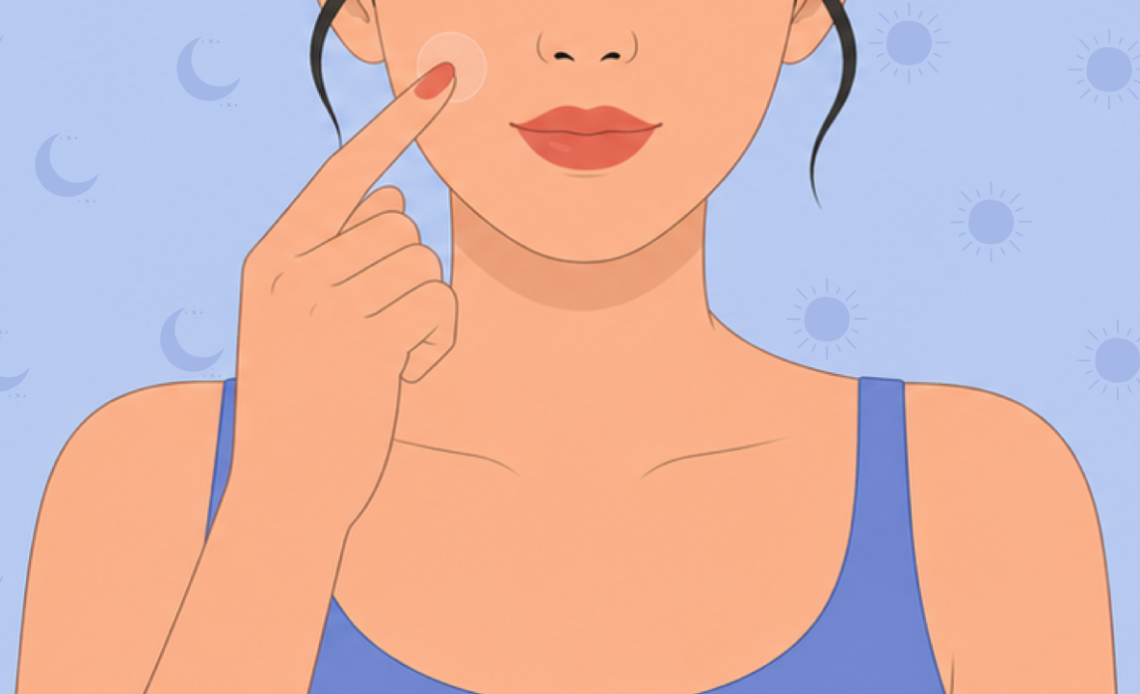
What you will learn about how to use pimple patches from this guide:
- Overnight is almost always better. More contact time, no makeup, aligned with your skin’s natural repair cycle.
- Daytime patches protect and prevent picking, even if deep extraction is slower.
- Dry skin before applying — this is non-negotiable for the patch to stick.
- 6-8 hours is the sweet spot. After that, the hydrocolloid is saturated and done.
- Pimple patches work best on surface-level and whitehead pimples. Deep cystic acne needs a different approach.
- Your patch goes last in your nighttime routine and first (before makeup) in your morning one.
It’s 11am. You’ve just spotted a pimple that definitely wasn’t there last night, and you have somewhere to be that night. You slap on a patch, go about your day, and hope for a miracle. Sometimes it works. Sometimes you take the patch off and the pimple looks angrier than before. The difference usually comes down to the timing, the prep, and whether you actually understand what the patch is doing to your skin. Knowing how to use pimple patches correctly, and specifically, the difference between overnight and daytime pimple patch use, changes your results more than any other variable.
Here’s everything you need to know.
What Actually Makes a Pimple Patch Work?
Pimple patches absorb the gunk, yes. But the mechanism is more specific than that. Most patches use hydrocolloid, originally a wound-healing material that creates a moist environment and pulls fluid out through osmosis. When you stick a hydrocolloid patch for acne on an active pimple, it draws out sebum, pus, and bacteria without you squeezing, which means less inflammation and zero scab.
Blog continues after the ad.

The white or yellow disc you peel off? That’s the gunk it pulled out. The patch needs three things to work well: clean, dry skin contact, enough time to absorb, and an environment where it can actually stay put. Which is exactly why night and day make a difference.
Night vs. Day: Which Is Actually Better for Pimple Patches?
Night. If you’re looking for a short answer based on research, that’s it. But the longer answer is more useful because it explains why, and it changes how you use patches during the day too.
Pimple patch overnight vs. daytime isn’t a debate about which one works — both do — it’s about what each one is best equipped to do.
At night, every condition lines up in the patch’s favour. Your skin isn’t being touched, exposed to pollution, or covered in product. According to research, your body is in active repair mode at night. Skin cell turnover peaks between 11pm and 4am, which means the patch is working with your biology at exactly the right time. There’s no makeup weakening the seal, no midday sweat loosening the edges, and no friction from glasses or hands undoing the adhesion. The hydrocolloid gets 6-8 uninterrupted hours to do its job. That’s why results look so different in the morning.
During the day, the patch is fighting more variables. Heat, sweat, product layering, and movement all reduce how well it sticks and how freely it can absorb. But that doesn’t make it useless. A daytime patch is a really good physical barrier, it stops you touching the area, keeps environmental bacteria out, and does some absorption if the pimple is close to the surface. Pimple patch day vs. night effectiveness comes down to this: night is for healing, day is for protection. When you use both strategically, you’re covering the full 24 hours.
If you’ve been disappointed by patches that peel off or barely work, the formula and thickness of the patch itself is usually the culprit. Meet the patch that was built for this, Nua’s Pimple Patch.
Can I Wear a Pimple Patch During the Day?
Yes. It works, just differently. Pimple patch day vs. night effectiveness isn’t about one being useless, it’s about what you’re asking the patch to do. During the day, a patch is doing a few important jobs even if the deep extraction is slower:
- It physically protects the pimple from your fingers, which is honestly half the battle.
- It stops bacteria from the environment settling into an open or inflamed pore.
- It keeps you from picking, which is where most of the real damage happens anyway.
- If the pimple is already coming to a head, a daytime patch can still pull some fluid out, especially if you’re not layering product on top.
Now, can I wear a pimple patch under makeup? Yes, with a few caveats. Ultra-thin, translucent patches blend better. And if you’re applying foundation over it, press gently instead of buffing or the edges will lift. The patch won’t work as well under a full face of product because the adhesion weakens and the absorption is blocked, but it still functions as a protective layer. Find a complete guide on how to use pimple patches under makeup here.
For pimple patch for sensitive skin types, daytime use is also gentler since you’re not leaving it on during active sweat or heat, which can sometimes irritate reactive skin around the patch edges.
How to Use Pimple Patches Correctly: A Step-by-Step Guide
Getting the most out of your patch comes down to prep. Here’s exactly how to do it:
- Clean and dry your skin first: Not damp, actually dry. Moisture under the patch is the number one reason it doesn’t stick. Pat your skin completely dry before applying.
- Skip actives on the spot beforehand: If you’re using toner, niacinamide, or any acid on the area, let it absorb and settle for a few minutes first. Product residue creates a barrier between the patch and your skin.
- Press firmly for 10-15 seconds: Don’t just rest it on, press the center and work outward so it adheres completely.
- Apply before skincare and makeup, not after: Let it stick to clean skin first, then very lightly apply skincare or press makeup around the edges.
- Don’t force-peel it: Soak a cotton pad in micellar water or oil cleanser and press it on the patch for 30 seconds before removing. Peeling dry pulls skin cells with it.
This is what a good pimple patch skincare routine actually looks like, including where it fits in your steps. The patch goes last at night, before makeup in the morning.
The right patch makes all the difference, one that stays put through the night and actually does the work. Try Nua’s Pimple Patch and see what overnight healing looks like.
What Is the Best Time to Use a Pimple Patch for Healing?
The best time to use a pimple patch for healing is the moment you notice a pimple forming above your skin’s surface, and ideally at night. Early application catches the inflammation before it fully develops.
That being said, a patch on a pimple that hasn’t come to a head yet won’t pull out much fluid, but it protects the area, reduces your urge to touch it, and sets up the environment for faster resolution.
If you’re weighing pimple patch day vs. night for a fully formed, ready-to-drain pimple? Night wins every time. If it’s a deep, cystic one that’s not close to the surface? The patch won’t do much for those since hydrocolloid works on surface-level drainage, not deep nodules. Those need topical treatments or, honestly, a dermatologist.
Knowing how to use pimple patches for different pimple stages matters:
- Early-stage, surface pimples respond best.
- Whiteheads are the patch’s literal specialty.
- Blind pimples are trickier, and the patch mostly serves as a leave-it-alone reminder there.
Are You Using Pimple Patches Wrong? Common Mistakes to Avoid
Most people using patches correctly still make at least one of these. Here’s what to watch out for:
- Applying to damp skin: This is the most common one. Even a little moisture stops the adhesive from bonding properly.
- Leaving it on too long: Past the 6-8 hour mark, you’re not getting more extraction. Swap it if you want more, don’t just keep wearing the same one.
- Using a thick patch under makeup: The bump is visible and the makeup won’t sit flat. Ultra-thin patches exist for a reason.
- Picking before patching: If you squeeze and then patch, you’ve introduced more bacteria and broken the skin barrier. The patch is damage control at that point, not a cure.
- Skipping the patch entirely because you squeezed: Patch it anyway. It still helps with healing and stops more bacteria entering.
The Final Word on Patch Usage
Knowing how to use pimple patches isn’t just stick-and-forget. The timing, the prep, and the patch itself all factor in. Night gives you the best conditions for real absorption and healing. Day gives you protection and peace of mind. Both have a place in a good pimple patch skincare routine, as long as you know what you’re asking each one to do.
The patch that does this well — one that actually stays on, pulls out what it should, and doesn’t irritate the skin around it — makes a bigger difference than any hack or workaround. You deserve a patch that works as hard as you do.
FAQs
1. Is it better to use a pimple patch overnight or during the day?
Overnight is generally more effective because the patch has 6–8 uninterrupted hours to absorb fluid while your skin undergoes its natural repair process.
2. Can I wear a pimple patch during the day?
Yes. A daytime pimple patch helps protect the blemish from dirt, bacteria, and picking while providing some absorption for surface-level pimples.
3. Should I apply a pimple patch before or after skincare?
Apply the patch to clean, completely dry skin before makeup. At night, it should be the final step in your skincare routine to ensure it adheres properly.
4. How long should I leave a pimple patch on?
Most pimple patches work best when left on for 6–8 hours or until they turn white, indicating they have absorbed fluid from the pimple.
5. Can I wear makeup over a pimple patch?
Yes. Thin, transparent pimple patches can be worn under makeup, but applying makeup gently helps prevent the edges from lifting.
Disclaimer
The content of this article is provided for general informational and educational purposes only and is not intended to constitute medical advice, diagnosis, or treatment. The information shared is of a general nature and may not be appropriate for all individuals or specific circumstances. Readers should not disregard, delay, or substitute professional medical advice based on the information contained herein.
If you experience any symptoms, notice anything unusual, or have concerns relating to your health or overall wellbeing, you should consult a qualified healthcare professional. While every effort is made to ensure the information shared is accurate and up-to-date, Nua makes no representations or warranties, express or implied, regarding the accuracy, completeness, or suitability of the information provided and disclaims all liability arising from reliance on this content to the fullest extent permitted by law.