What you will learn about why periods are considered impure in some cultures:
- The kitchen ban is a ritual purity rule, not a hygiene one, and predates modern science by centuries.
- Menstrual blood does not spoil pickles, curdle milk, or contaminate food. That’s folklore.
- Most menstruation restrictions and traditions trace back to myths that framed periods as punishment or pollution.
- Rest during your period is valid. Exclusion dressed up as rest is not.
- Asking why are menstruating women not allowed in the kitchen is itself the first step toward a new answer.
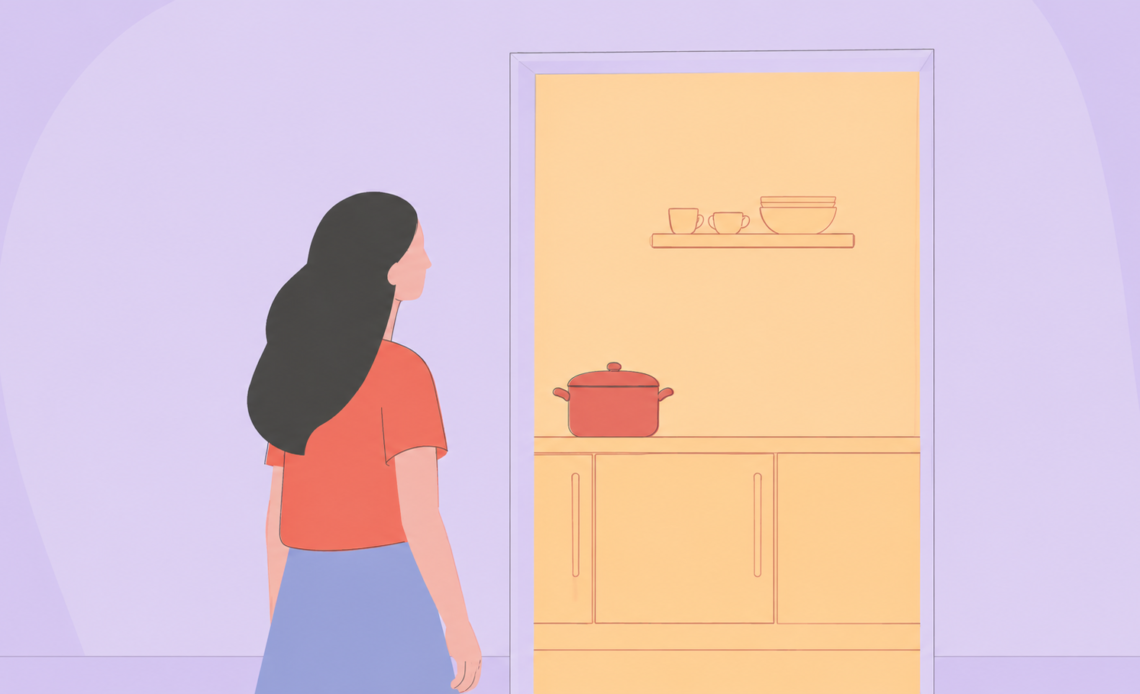
Almost every Indian girl has a version of this memory. Maybe a grandmother gently told you to stay out of the puja room, or a friend mentioned she wasn’t allowed in her kitchen during her period. A question plants itself in your head: why are menstruating women not allowed in the kitchen, really? Not the folklore version. The grown-woman answer. That’s what this blog is, a walk through the history, the science, and the quiet ways this rule still shapes us.
What Is the Origin of the Period Kitchen Ban?
The ban began as a ritual purity rule, not a hygiene one. Trace it back and you land on texts like the Manusmriti and the Vedic tradition, where a menstruating woman was considered ceremonially impure. The kitchen, with its hearth and daily offerings, counted as sacred. So the rule was never about food (as so many of us assume and perpetuate), it was about keeping a ‘differently’ behaving body away from anything holy.
Blog continues after the ad.

Similar cultural taboos around menstruation show up everywhere, from niddah in Judaism to seclusion huts in Nepal. Different geographies have the same discomfort, all rooted in the myth that menstruation was treated as ‘dirty’, impure and separate from regular life.
On days the world treats your body like a problem, your pad shouldn’t. Meet the pad that behaves like it’s on your side!
Why Are Periods Considered Impure in Some Cultures?
Periods were labelled impure because early societies couldn’t explain them, so they mythologised them. It comes down to a human pattern. When something is powerful and unexplained, you either worship it or quarantine it. Menstruation is worshipped in some cultures (like at the Kamakhya Temple in Assam, where the Ambubachi Mela celebrates the goddess Kamakhya’s annual menstruation), but in most societies, it got the quarantine.
In the Rig Vedic tradition, one origin story says Indra killed a Brahmin and women accepted part of his sin as monthly bleeding. That myth, documented in the Palgrave Handbook of Critical Menstruation Studies, shows a bodily function framed as punishment for someone else’s sin. That narrative powers a lot of menstruation restrictions and traditions, from no temple entry to no touching Tulsi plants (which are considered holy) to, yes, no kitchen. The historical roots of period kitchen restrictions had a practical layer too.
Are There Any Practical Reasons For the Period Kitchen Restrictions?
Yes, there could be. Before running water, before pads, periods were hard to manage. Cooking over a wood-fired chulha, lifting heavy vessels of water, standing in a hot kitchen for hours was demanding work, and stepping away gave women a few guaranteed days of rest.
In that original context, the rule was almost protective. It was a culturally legitimate way for a woman to say, I’m not cooking today, my body isn’t up to it. The problem is that the reason got lost while the rule stayed. Over generations, rest curdled into exclusion, and what began as permission to pause became a label of impurity. The softness at the root of why are menstruating women not allowed in the kitchen is real, but it’s been buried under centuries of shame.
What Are the Most Common Menstruation Restrictions in Kitchen Spaces?
The rules vary by household, but the greatest hits are consistent. These menstruation restrictions in kitchen spaces get handed down by women who were told the same thing by their mothers.
- No touching pickles or chutneys, because your touch is said to make them rot.
- No entering the kitchen for the first three or four days in traditional homes.
- No cooking for the family, especially no prasad or anything meant for a puja.
- No sitting at the dining table, sometimes eating from a separate plate.
If that list made your chest tighten, that’s the body remembering. Most of us absorbed these rules before we had the vocabulary to question why are menstruating women not allowed in the kitchen.
For anyone tired of their period being treated like an inconvenience, this is what comfort without compromise actually feels like.
Does Touching Pickles During Periods Spoil Them?
The researched answer is a clean no. Pickles spoil from moisture, unclean utensils, and not enough oil or salt, none of which are hormonally triggered. The scientific facts about period hygiene are boring in the best way. Menstrual blood is blood, tissue, and uterine lining. It emits no spoilage signal, and a woman on her period has the same skin microbiome as one who isn’t.
The World Health Organization’s guidance on menstrual health states that menstruation is a normal biological process and stigma, not the period, causes harm. Menstruation and food safety myths like spoiled pickles, curdled milk, wilted plants, have no evidence. What we inherited as science was superstition.
Are Any of These Menstruation Restrictions Scientifically Valid?
They are not. No peer-reviewed study shows a menstruating woman affects food, plants, pickles, or sacred objects. What research does show is the cost of the restrictions themselves. A study of 600 adolescent girls in Delhi government schools found 40% miss school during their periods, and that absenteeism was significantly linked to the restrictions placed on them at home.
When people look for the scientific reasons behind menstruation taboos, they’re often hoping for a redemptive answer, like ancient women had special energy. The truth is gentler and harder. The taboos existed because patriarchy needed a reason to pause women, and biology gave it a monthly excuse.
Your period already carries enough weight. Your pad should lighten it. Built for people who refuse to normalise discomfort.
Should Women Follow Period Restrictions? A Gentle Guide to Unlearning
Only if you want to, and even then, with awareness. In many cases, the answer to ‘Should women follow period restrictions?’ is personal, and the goal isn’t to shame anyone’s grandmother. It’s to make sure the choice is yours. Here’s how to untangle it.
- Ask where the rule came from: If the answer is ritual or inherited discomfort, you can respect it without obeying it.
- Separate rest from exclusion: Taking a break from cooking is self-care. Internalising being told you’re dirty is not.
- Teach the next generation differently: A niece who grows up cooking on her period grows up without this knot in her stomach.
- Notice the mental load you’re carrying: Research links period shame to anxiety, lower self-esteem, and school absenteeism. If the rules in your home weigh on you, that weight is real.
This is the quiet work of undoing the reflex. Not a revolution, just a reframe.
Conclusion
The kitchen rule isn’t really about the kitchen. It’s about an old story we were told about our bodies, and how long it got to stay unquestioned. Once you see it, you can’t unsee it. You get to keep the parts of tradition that feel warm, the slow cooking, the family recipes, the hand that seasons by instinct, and retire the parts that made you feel like a guest in your own home.
So next time someone asks why are menstruating women not allowed in the kitchen, you can answer with the history, the science, and the softness without flinching. And that if the question is directed towards the kitchen in your home, the answer can be as simple as, we just don’t do that here anymore.
For the days you’re rewriting the rules, here’s the pad designed with you, not around you.
FAQs
1. Why are menstruating women not allowed in the kitchen in some cultures?
The restriction originated as a ritual purity practice rooted in cultural and religious beliefs, not because menstruation poses any hygiene or food safety risk.
2. Can touching pickles during your period spoil them?
No. There is no scientific evidence that menstruating women can spoil pickles, curdle milk, or contaminate food by touching it.
3. Why are periods considered impure?
Many ancient societies viewed menstruation through myths and religious beliefs, often associating it with ritual impurity rather than understanding it as a natural biological process.
4. Are there any scientific reasons to avoid cooking during your period?
No. Menstruation does not affect food, hygiene, or a person’s ability to cook safely. Plus, there is no medical reason to avoid the kitchen during your period.
Disclaimer
The content of this article is provided for general informational and educational purposes only and is not intended to constitute medical advice, diagnosis, or treatment. The information shared is of a general nature and may not be appropriate for all individuals or specific circumstances. Readers should not disregard, delay, or substitute professional medical advice based on the information contained herein.
If you experience any symptoms, notice anything unusual, or have concerns relating to your health or overall wellbeing, you should consult a qualified healthcare professional. While every effort is made to ensure the information shared is accurate and up-to-date, Nua makes no representations or warranties, express or implied, regarding the accuracy, completeness, or suitability of the information provided and disclaims all liability arising from reliance on this content to the fullest extent permitted by law.