
Most women produce about 1 to 4 ml of vaginal discharge a day, which is roughly half a teaspoon to a full teaspoon. It’s usually clear or milky white, mostly odourless, and completely normal. The amount can rise to up to 30 times higher around ovulation, drop to almost nothing right after your period, and shift again with pregnancy or certain medications. What matters more than the exact amount is the colour, smell, and texture, because that’s where signs of an infection usually show up first.
Wondering, ‘how much vaginal discharge is normal?’ Here’s what we cover:
- Healthy women produce about 1 to 4 ml of discharge a day, roughly half a teaspoon to a full teaspoon. It’s usually clear or milky white, mostly odourless, and your vagina’s natural way of protecting itself against bacterial and fungal infections.
- Menstrual cycle discharge changes are normal, discharge during ovulation can be up to 30 times more than after your period (slippery and egg-white-like), then dips back down in the days before your next cycle.
- Pregnancy, antibiotics, hormone therapy, and birth control pills can all increase discharge naturally. Gut health, sleep, and a high-sugar diet affect it too.
- The main signs of abnormal vaginal discharge are green, grey, or cottage-cheese textures, a strong fishy smell, or itching and burning. Most the reason is a yeast infection, BV, or an STI.
- Breathable, fragrance-free panty liners absorb everyday moisture without disrupting your pH.
It’s Saturday. You’re scrolling through your phone when you notice that familiar damp feeling. You check, and yes, you’re wet again. Third time today. And somewhere quietly, the thought creeps in: how much vaginal discharge is normal?
Because conversations around intimate health still feel a little too private, most of us end up Googling question like these. So here are the answers you’re looking for:
What Is Vaginal Discharge?
Discharge is usually harmless. It’s your vagina’s way of self-cleaning and keeping harmful bacteria in check. The amount differs from person to person, and it can change through your cycle, during pregnancy, or while you’re taking certain medications. Knowing what’s normal for your body is one of the most useful things you can learn.
So, What Is Normal Vaginal Discharge?
Healthy women generally produce about 1 to 4 ml of discharge in 24 hours, which is roughly half a teaspoon to a full teaspoon. According to Northwestern Medicine, that’s the typical range, and it’s usually clear or white, thick or thin, and mostly odourless. Your vagina is its own little ecosystem with a slightly acidic pH between 3.8 and 5.0, and that acidity is what keeps the bad bacteria out. Sweat, synthetic pads, friction, harsh soaps, and badly formulated intimate washes can all throw it off. Discharge is part of how your body restores that balance.
Blog continues after the ad.

So what does normal vaginal discharge actually looks like? Clear, off-white, or milky white, made up of epithelial cells, cervical mucus, and natural secretions. No strong smell, no itchiness. Nothing dramatic.
And on those days when your underwear feels constantly damp, slipping on a soft, breathable everyday panty liner like Nua’s can help.
Is It Normal To Have A Lot of Discharge Some Days?
Yes. Completely. Menstrual cycle discharge changes are completely normal and show in texture, smell, and amount. Changes are also common with medications, and during pregnancy.
Reasons for Increased Discharge
Discharge during ovulation
Around days 10 to 14 of a 28-day cycle, discharge tends to surge.
So how much vaginal discharge is normal during this window? Research suggests discharge during ovulation can be up to 30 times greater than the amount produced right after your period.
As estrogen rises, your cervix produces fertile, egg-white-like mucus, and the cervical muscles relax to help sperm move along. So there’s a lot more discharge and it’s more easily released. It’s your most fertile phase, and the discharge in these days is usually slippery, smooth, and stretchy. Totally normal, just lightly inconvenient.
Pregnancy
Discharge goes up during pregnancy thanks to higher estrogen and increased pelvic blood flow, especially in the third trimester. It’s usually milky white and odourless, and it helps protect the baby from infections.
Medications and Birth Control
Chemotherapy, hormone therapy, and antibiotics can all bump up discharge. Birth control pills can too, since they shift your hormone levels. If you’ve recently started or switched a medication and noticed a change, it’s likely connected.
Gut Health and Diet
When gut balance gets disrupted by a low-fibre, high-sugar diet, harmful bacteria like E. coli and Candida can travel from the rectum to the vagina. That’s one of the abnormal vaginal discharge causes behind bacterial vaginosis and yeast infections. Adding probiotics like yogurt, kefir, and fermented foods is an easy way to support your bacterial flora.
Sleep and Stress
Poor sleep and chronic stress weaken your immune response can show up as recurring infections or shifts in your discharge pattern. Your vaginal ecosystem is more connected to the rest of your body than most of us were taught.
Ovulation days catch you off guard. If you find yourself checking your jeans for damp patches, that’s exactly the kind of week Nua’s Everyday Panty Liners were made for. Ultra-thin, breathable, quietly absorbent through the surge.
What Does It Mean When Discharge Is Yellow and Smells?
It’s usually signs of an infection. Changes in colour, texture, and odour are the most common signs of abnormal vaginal discharge. It might appear brown, grey, or green, and may come with irritation, burning, or itching. According to the Cleveland Clinic, when discharge isn’t normal, the most common causes are yeast infections and bacterial vaginosis, though STIs can also cause this.
Yeast Infection
Happens when yeast grows out of control. Discharge is thick, white, cottage-cheese-like. The vulva may look inflamed, with itching and burning. This can be treated with antifungal cream or oral pills.
Bacterial Vaginosis (BV)
Common in women aged 14 to 55. An overgrowth of bacteria triggers inflammation, pain, and itching. Discharge is usually white or grey with a fishy smell. Treated with antibiotics.
Trichomoniasis
An STI spread through unprotected sex. Discharge increases in quantity, may look green, yellow, or grey, and tends to be foul-smelling, with itching and burning. This can be treated with antibiotics.
Gonorrhoea and Chlamydia
Both STIs. Gonorrhoea discharge is often yellow or green and pus-like, with burning while peeing and abnormal bleeding between periods. Chlamydia often has no symptoms, which is the tricky part. Untreated, it can cause serious reproductive damage, including infertility.
Heavy Discharge Vs. Light Spotting: How To Tell The Difference
Heavy discharge vs. light spotting is mostly about what you’re seeing on the liner. Discharge that is heavy tends to be white, off-white, or clear, slippery or sticky, and might saturate a liner faster on ovulation days. Light spotting has actual blood in it. It can look pinkish, light brown, or rust-coloured, and usually shows up around ovulation, just before or after your period, or sometimes after sex. If you’re spotting between periods regularly, or noticing it after sex consistently, it’s worth checking in with a doctor instead of guessing.
Is it normal to have very little discharge?
Yes. It’s totally normal to have very little, or even no discharge for 3 to 4 days after your period ends. Since estrogen levels dip after menstruation, you’ll often notice ‘dry days’, or discharge that feels sticky or tacky. Less discharge and dryness are also common during breastfeeding, when that drop in estrogen reduces natural lubrication.
Some people deal with dryness. Others deal with constant dampness. Both are normal, just opposite ends of the same scale. If you sit on the damp end, a panty liner for vaginal discharge is one of the easiest fixes. The good ones absorb moisture without trapping heat or disturbing your pH.
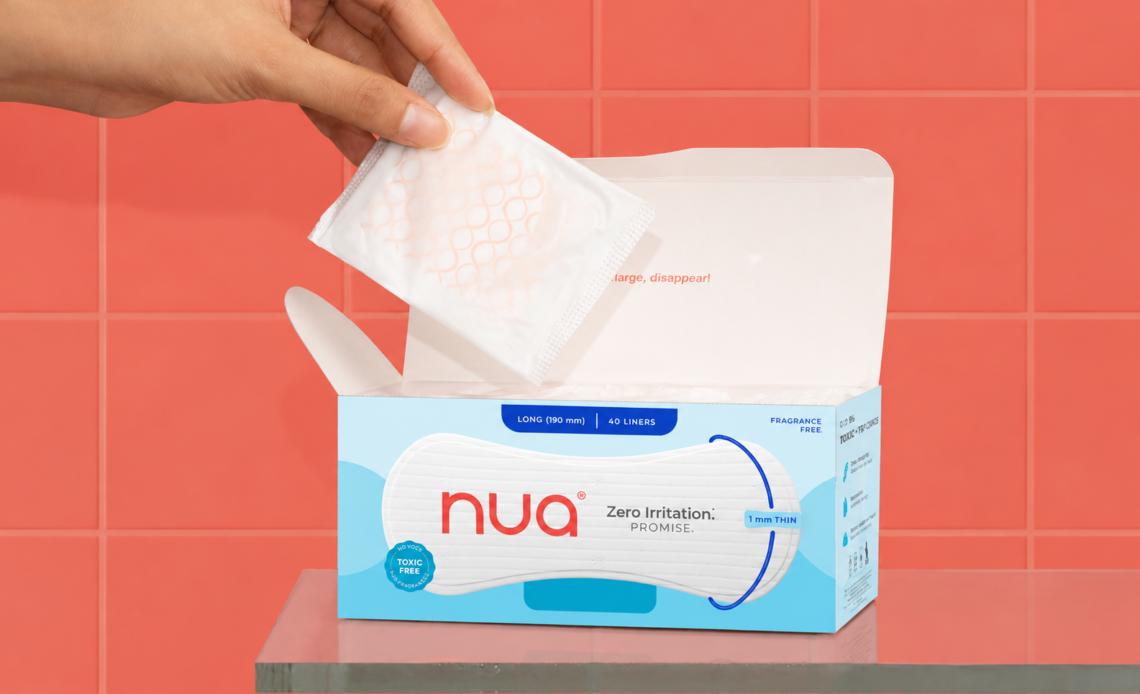
There’s a small, specific kind of relief in not constantly noticing your own underwear. Nua’s Everyday Panty Liners are under a millimetre thin and toxin-free, so you can wear them for hours and forget they’re there.
When To Use a Panty Liner for Discharge
- Ovulation week
- The days leading up to your period
- Post-period light spotting
- During breastfeeding shifts
- While on certain medications
- Any day discharge feels heavier than usual.
Honestly, you don’t need a ‘reason’. Comfort is a good enough one.
What Features To Look For In A Panty Liner
- Ultra-thin: Less than 1 mm, for a soft, barely-there feel.
- Longer coverage: 190 mm length, made for everyday wear.
- Skin-friendly: 100% toxin-free, fragrance-free, dermatologically tested.
- Quick absorption: Soaks up discharge fast. Wear comfortably for 4 to 6 hours.
- Stays put: Edge-to-edge adhesive keeps it in place all day.
Can Panty Liners Help With Vaginal Odour?
Yes and no, and the distinction matters. A breathable, fragrance-free liner can soak up moisture before it has time to mix with sweat or bacteria, which is often where every day odour comes from. What a liner won’t do is mask an actual infection. If you’re noticing a strong fishy or unusual smell, that’s a sign to see a doctor, not switch to a stronger-scented product. Fragranced liners can disrupt your pH and make things worse.
How Often To Change Panty Liners?
Every 4 to 6 hours. On heavy days, sooner. The Cleveland Clinic recommends changing menstrual care products every 4 to 8 hours as part of general intimate hygiene. Leaving a liner on too long traps moisture against the skin, which is the opposite of what you want. Discharge is ‘too much’ for a liner when it saturates the liner enough to leak, or when you’re changing more often than every 4 to 6 hours.
If your current liner feels stiff, plasticky, or like it’s announcing itself every time you sit down, that’s a sign it’s not the right one. Switch to something softer on your skin and see the difference in a single day.
When To Actually See A Doctor: A Quick Checklist
Most days, your discharge is your body just doing its thing. But here’s when it’s worth booking an appointment.
Book an appointment if you notice:
- A strong fishy, foul, or yeasty smell that lingers even after a shower.
- Discharge that’s green, bright yellow, grey, or cottage-cheese in texture.
- Itching, burning, or stinging, especially when you pee.
- Pain during sex or pelvic pain that doesn’t go away.
- Bleeding or spotting between periods that happens repeatedly.
- Discharge so heavy you’re soaking through a liner in under 2 to 3 hours, consistently.
- Sores, blisters, or visible rashes around the vulva.
The Bottom Line
Just like the heart pumps blood and the lungs help us breathe, vaginal discharge is your vagina’s way of protecting itself from bacterial and fungal infections. So when you’re asking how much vaginal discharge is normal, the honest answer is: it depends. On where you are in your cycle, whether you’re pregnant, what you’re eating, how you’re sleeping, and what medications you’re on. Pay attention to what’s normal for you, and you’ll spot the off days easily. Reach for a good liner on the damp ones. See a doctor on the strange ones. That’s pretty much the whole playbook.
Disclaimer
The content of this article is provided for general informational and educational purposes only and is not intended to constitute medical advice, diagnosis, or treatment. The information shared is of a general nature and may not be appropriate for all individuals or specific circumstances. Readers should not disregard, delay, or substitute professional medical advice based on the information contained herein.
If you experience any symptoms, notice anything unusual, or have concerns relating to your health or overall wellbeing, you should consult a qualified healthcare professional. While every effort is made to ensure the information shared is accurate and up-to-date, Nua makes no representations or warranties, express or implied, regarding the accuracy, completeness, or suitability of the information provided and disclaims all liability arising from reliance on this content to the fullest extent permitted by law.