Here’s a summary of how Nua’s breaking period stigma through its Flow & Tell community:
- Flow & Tell was created to break period stigma by building a community for women to share period experiences and feel less alone, and a platform for them to speak openly and confidently about periods, supported by others doing the same.
- Breaking period stigma also means recognising why women hesitate to speak openly, from family taboos and embarrassment to fears about being judged as unprofessional or facing consequences at work.
- Flow & Tell was designed as a community where women could build confidence through other women, with meetups, group chats, events, and honest conversations on that platform that make speaking about periods feel less intimidating.
- The community has grown beyond period conversations, with members forming genuine friendships, sharing work wins and personal struggles, and even taking conversations about periods home to family members.
- The long-term goal is for Flow & Tell to make itself unnecessary: a world where women, and eventually people of every gender, can talk about periods openly without shame, discomfort, or stigma.
For most of us, a period is something we learn to manage on our own. We figure out what our own body does through trial and error, we get through cramps at work without telling anyone, and we keep the whole thing tucked out of sight, because somewhere along the way we learned that it is not really something you talk about. That silence does real damage. It’s why women ignore symptoms for months before they ask someone about it. It’s why something that happens to around half the world every single month still leaves us feeling embarrassed and faintly ashamed of our own body. So much of breaking period stigma is really just undoing that, one honest conversation at a time.
But those conversations have to happen somewhere. And the longer we thought about where, the more sure we became of one thing: You don’t get women talking, by talking at them. You do it by giving them real space to speak for themselves and to each other. Somewhere a woman could finally say the thing she had been swallowing for years, and hear another woman say, ‘Me too!’ That place became Flow & Tell.
This is the story of what we set out to do, what happened once women joined in, and where we hope it goes next.
Let’s start from the beginning.
The DMs That Showed Us What Women Weren’t Saying
Building community and platform for women has always been part of Nua’s DNA. Right at the start, when the brand was new, our Instagram was essentially a community. Women found each other in the comments, asked the questions they couldn’t ask anywhere else, and slowly worked out that they weren’t the only ones struggling with issues they thought were theirs alone. But the thing that really stood out to us were the DMs. Women wrote in with everything, from very basic questions about their own bodies to genuinely complicated, troubling menstrual health experiences they hadn’t taken to anyone else. Not to a doctor, not to their mother. To us, a period care brand, in a private message. It showed us how much women needed to just talk about their period experiences.
Blog continues after the ad.
That Instagram community was lovely while it lasted, but we couldn’t sustain it in that form. The platform changed, the way people interact with branded content changed, and that version ran its course. What didn’t change was our belief in the importance of community, of giving women a platform – to be seen and supported. We knew we had to build it again.
Why We Needed To Build Something New
While we were figuring out what that should look like, Nua itself was going through a big change. We rebranded, and our pack changed completely. We’d made our name as the discreet brand, with nothing on it you’d associate with a period. The new version has the first realistic looking pad right there on the front for everyone to see. That was a pivot to something much bolder, and it was us responding to what we were seeing around us (read more about our rebrand here).
Because a new generation of women was coming of age, and they were very different from the women before them. A lot of them grew up with at least some period education, which many of us never had, and they’d been ordering their period care online for years, so there was less shame built into how they buy it and talk about it. You can see it in everything from how they post to how they protest. This is a generation that doesn’t shy away from the things it cares about.
That doesn’t mean the taboo is gone. It still isn’t common for women to just talk about their periods as a normal part of public conversation.
So, while our first community was built around education, answering questions and busting myths, this generation didn’t need us to teach them the basics, they needed a platform too, somewhere to actually speak, share and feel supported.
Of course, we could have done a big campaign instead. Plenty of brands have, and honestly, it would have been easier. But does it move the needle in an actual individual woman’s life? It’s really hard to say that it does. She sees it, she might like it, and then she scrolls. What does change something is having support at the exact moment that you need it, the kind that helps you speak up and speak openly. Something that makes talking about periods so normal, that the next time a woman needs to tell a colleague about her period cramps, it feels as normal as saying, “My head hurts”. That’s truly breaking period stigma.
That’s where Flow & Tell came from.
So, What Is Flow & Tell?
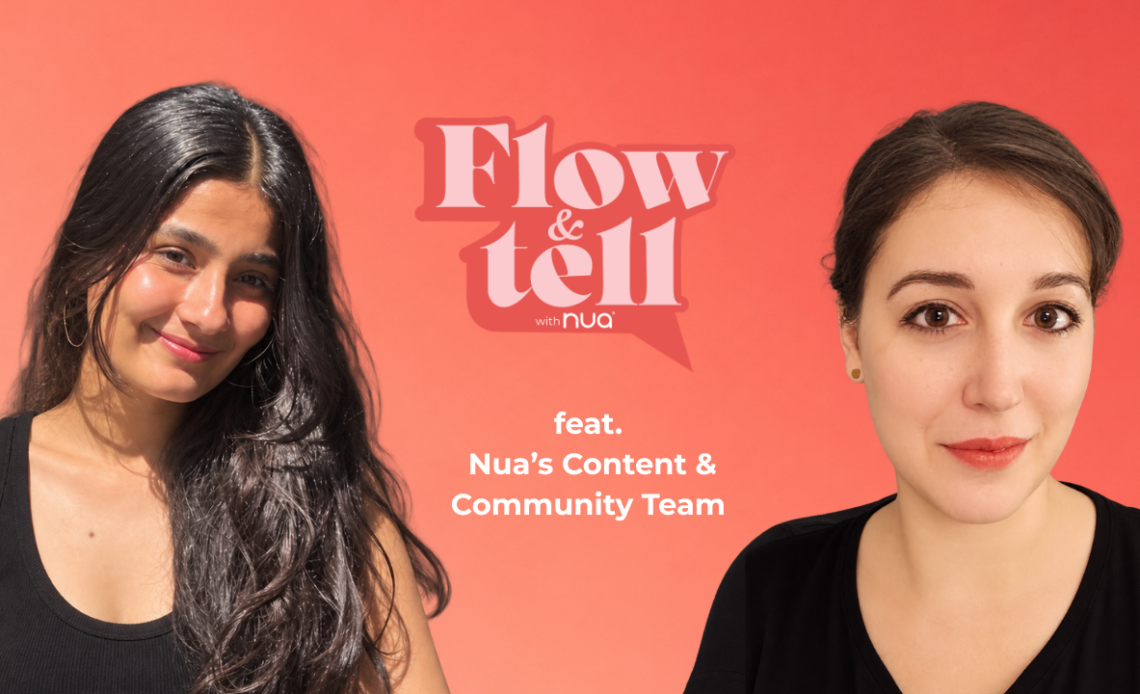
Flow & Tell is Nua’s community of women who talk about their periods openly, ask each other the questions they were taught to keep in, and back each other while they do it. Some of them share their experiences publicly on their own platforms. Others are simply there, comparing notes with women who get it.
These are women who meet, chat and stick around. There are hangouts and gatherings, group chats that light up at odd hours, events where the only requirement is honesty, and friendships that outlast the meet up and stretch across cities.
Read more about it here!
The Initial Challenge We Had to Overcome
We went into this knowing that breaking period stigma would be hard, because it genuinely is.
Think about why women lean on each other in the first place. So much of women’s wellness is treated as taboo, so the only people it’s really okay to discuss it with, ask questions of, learn about your own body from, are other women. Women’s period experiences have always been passed around that way, woman to woman, because that was the only route that felt safe, and a huge part of women’s menstrual wellbeing has depended on it.
And the reason it stays private is that speaking up openly can cost you. Some women fear actual retribution. Start posting very personal content about your period and you could conceivably lose your job, or minimally, lie awake wondering if a manager or a future employer saw it and decided you were unprofessional. That’s not paranoia. For a lot of women, it’s a real risk to their livelihood.
Even short of that, it can cost you credibility. You get labelled ‘that woman’, the one who only talks about periods, as if you don’t have interesting things to say about everything.
There’s a cost hiding in the ordinary stuff, too. If you try a new period product and you leak or stain yourself in front of strangers or family, that isn’t just embarrassing. For a lot of women, it feels unacceptable, even shameful.
So when women hesitate, they’re not being timid. They’re weighing something real.
That’s Why We Built A Safe Space Before Anything Else
There’s a big difference between speaking in public and speaking inside a closed room where nobody’s going to judge you. And once you’ve spoken enough in the closed room, speaking in public feels less impossible. That’s really what this community is, because breaking period stigma is a lot easier when you’re not doing it alone.
What makes it safe isn’t us telling women to be brave. It’s being connected to other women who are already doing it, who’ve taken that step into speaking publicly. That’s what gives someone the confidence and the little nudge of bravery to step out. There’s no judgment at all against anyone who isn’t doing that. All we’re really doing is putting women in touch with other women who want to challenge the silence but might not know how on their own.
That works because of how much these women turn out to have in common. One of the community’s managers at Nua grew up with a lot of period stigma at home, the kind where you are told you cannot touch the pickle jar during your period, with no real reason given for it. It was a revelation for her when the community randomly started talking about that one day – to see how many women had lived through those exact same rules and myths. It is a strange comfort, realizing that while every woman’s period is different, so many of us were handed the same script of shame.
The Moments That Told Us It Was Working
When we started this community, there were a lot of reservations early on, because nobody knew what to say or had seen a platform like this before. They knew they were meant to talk about periods but knowing it and finding it easy are two different things. The women who believed in it started to feel like they were part of something bigger than just content and watching them talk freely made other women in the community give it a try too.
One moment has stayed with us. One of our Flow & Tellers posted something personal about her period, the kind of post she wouldn’t have made a few months earlier. Underneath it, her own sister wrote a big paragraph about how proud she was that her sister had come out and spoken about this so openly and so confidently. This wasn’t a stranger being nice on the internet. This was family, watching one of their own do something hard and acknowledging it in public. That sister is now part of Flow & Tell, too. It showed us this wasn’t just landing with the audience. It was changing things in homes, too.
There are smaller versions of this all the time. Women tell us they talked about their period with their coworkers for the first time. That’s years of suffering silently each month at a workplace, ending on an ordinary afternoon, because they finally had somewhere that made it feel normal.
One of our members started talking to her younger brother about periods because of the content she was making, telling him, you need to learn about this too. That’s a seed. That boy will grow up believing periods are completely normal to talk about, because his sister told him so. He might be the manager one day who doesn’t blink when a team member asks for period leave, or the partner who picks up the pads on the way home. These are the period stories that keep us going.
What Surprised Us Once Women Started Talking
If you had asked us beforehand what to expect, we wouldn’t have guessed how much real excitement there would be around it.
The biggest surprise was how deeply everyone bonded. After just the first few sessions, real friendships started forming. Inside the group chats, they were not only comparing menstrual experiences, they were talking about crushes, boyfriends, breakups and the movies they were watching. We had braced ourselves for a stiff, formal group chat. Instead, they got comfortable fast, and opened up because they felt safe. They are all women, all in it together, and somehow that made everyone feel that nobody here will judge me, because they are all a little bit like me. Watching those walls come down taught us that breaking period stigma often looks less like a protest and more like a group of women laughing together late at night.
Today, women on the platform share work wins, illnesses, personal struggles and the shows they are bingeing. Not everyone responds to everything, but you always know a few of them will, and that is all you really need. Women that arrived as complete strangers are now close friends across different cities, running toward each other at events like they have known each other for years.
Where We Hope Flow & Tell Goes
We would happily grow this community until, one day, it is simply not needed anymore. We do not know when that day will come, but that is the direction we are walking in. Every one of these real period stories we gather, and every honest menstrual journey shared inside on this platform, moves us a small step closer, because breaking period stigma is really the long, patient work of making the unspeakable ordinary.
Not Sure If You Want to Join?
If you’ve read all this and part of you wants to join Flow & Tell but something’s stopping you, here’s what we’d say:
If you’re hesitant, there could be a very good reason why, and it might have nothing to do with how brave you are. Women have a lot to lose here, so we don’t want to add any more pressure. If your life is too full right now, take it easy, and don’t feel bad about it. You can still be part of this in ways that carry less risk. Follow the Flow & Tellers, like their posts, share their period stories. Being a listener is as important as being a speaker, because any conversation is two way. It needs someone to say it and someone to carry it to the next person.
We’d never want joining Flow & Tell to make your life harder. We’re here to reduce irritation, not increase it!
BUT – if you’ve been waiting for a sign or for a larger purpose, this could be it. Wherever you are in your period journey, we’d love to have you. Because breaking period stigma was never something any of us were meant to do on our own. Come and join Flow & Tell!
The experiences shared in this article are based on the first-hand accounts of members of Nua’s Content and Community team.
Disclaimer
The content of this article is provided for general informational and educational purposes only and is not intended to constitute medical advice, diagnosis, or treatment. The information shared is of a general nature and may not be appropriate for all individuals or specific circumstances. Readers should not disregard, delay, or substitute professional medical advice based on the information contained herein.
If you experience any symptoms, notice anything unusual, or have concerns relating to your health or overall wellbeing, you should consult a qualified healthcare professional. While every effort is made to ensure the information shared is accurate and up-to-date, Nua makes no representations or warranties, express or implied, regarding the accuracy, completeness, or suitability of the information provided and disclaims all liability arising from reliance on this content to the fullest extent permitted by law.