
What you’ll learn about breastfeeding with flat or inverted nipples in this blog:
- Most women with flat or inverted nipples can breastfeed successfully, as babies latch onto the breast and areola, not just the nipple.
- Flat or inverted nipples are genetic, although pregnancy, engorgement, and hormonal changes can temporarily change them.
- Simple techniques like nipple stimulation, nipple shields, breast pumps, and the Hoffman technique can make latching much easier.
- Breastfeeding with flat or inverted nipples may come with challenges like a shallow latch, engorgement, or reduced milk transfer, especially in the early weeks.
- Naturally flat or inverted nipples don’t need treatment, but a lump, unusual discharge, or persistent pain should be checked by a doctor.
- Whether your nipples are outward, flat, or inverted, proper nipple care can help soothe soreness and protect the skin throughout your breastfeeding journey.
Breastfeeding with flat or inverted nipples worries a lot of expecting and new moms. If you have either of the two, you might be wondering…Can you even breastfeed with inverted nipples? How to help a baby latch on with flat or inverted nipples? Can inverted nipples be corrected during pregnancy for breastfeeding?
The good news is that, in most cases, yes, you can absolutely breastfeed with flat or inverted nipples. That’s because babies latch onto the breast and areola, not just the nipple itself. While flat or inverted nipples can sometimes make latching a little trickier in the beginning, they don’t usually stop you from having a successful breastfeeding journey.
In fact, research suggests that around 10% to 20% of women have flat or inverted nipples, so if this sounds like you, you’re definitely not alone.
Let’s break down what flat and inverted nipples actually are, why they happen, what breastfeeding latch problems they can come with and their solutions.
What are Flat and Inverted Nipples?
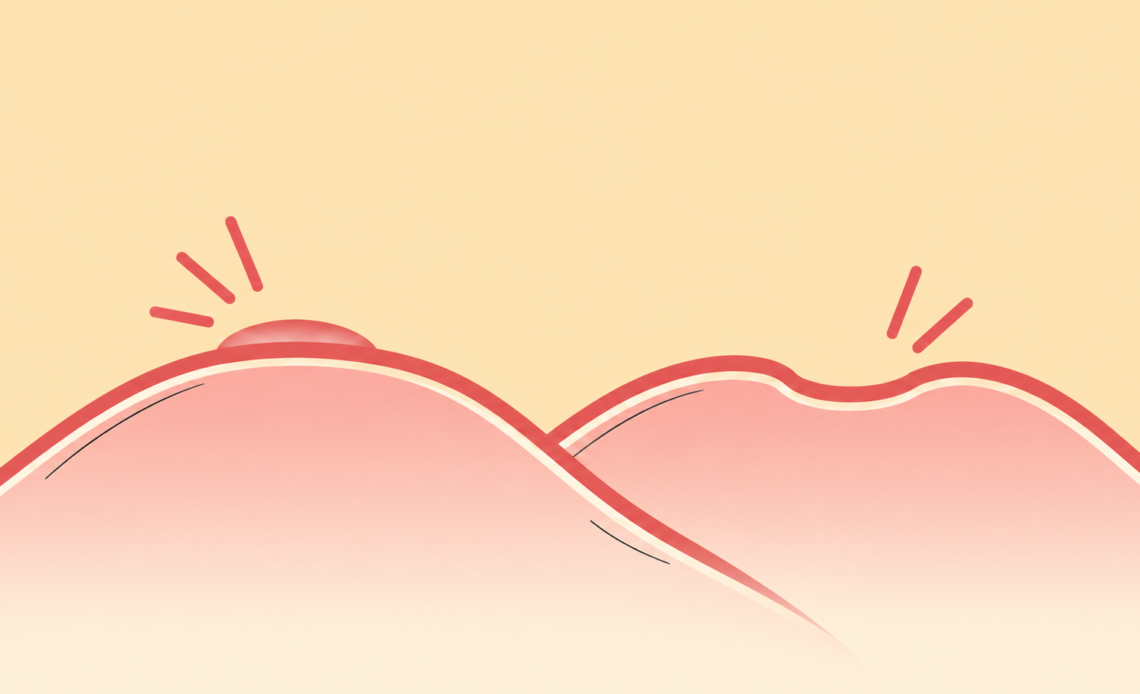
Just like breasts come in all shapes and sizes, so do nipples. Broadly speaking, every nipple generally falls into three broad categories:
- Outward (or protruding)
- Flat
- Inverted
An outward nipple projects away from the areola (the darker, circular skin around the nipple) and may become even more prominent when you’re cold or when it’s stimulated by touch.
But that’s not the only normal.
For some women, the nipple sits almost level with the areola instead of protruding out. This is called a flat nipple. Even when it’s cold or stimulated, it may stay fairly flat.
Blog continues after the ad.

For others, the nipple turns inwards rather than outwards. This is called an inverted nipple. In some women, it may temporarily pop out when it’s chilly or stimulated, then turn inwards again. In others, it remains inverted all the time.
Why are My Nipples Flat or Inverted?
In most cases, flat or inverted nipples are something you’re born with. They often run in families and are simply a natural part of how your breasts developed, a.k.a. genetics.
Under every nipple are milk ducts (the tiny tubes that carry breast milk) and connective tissue that support the nipple and connect it to the inside of the breast. In most women, these structures allow the nipple to project outwards. But in some women, the milk ducts or connective tissue are naturally a little shorter or tighter than usual.
As a result, they create a gentle inward pull on the nipple. If the pull is mild, the nipple may look flat. If it’s stronger, the nipple may turn inwards instead.
Many women don’t even realise they have flat or inverted nipples until they start preparing to breastfeed, because that’s often the first time they begin paying close attention to how their nipples look.
While your nipple shape may be different, the wear and tear from breastfeeding is pretty much the same. So, keep a nourishing balm like Nua’s Nipple Butter handy to soothe your delicate nipple skin.
But Why Did My Nipples Become Flat or Inverted Only After Pregnancy?
Pregnancy, childbirth, and breastfeeding can temporarily change the way your breasts and nipples look. As per research, some of the most common reasons include:
- Breast engorgement: In the first few days after delivery, your breasts can become very full of milk, causing the surrounding tissue to swell and the nipple to temporarily flatten.
- Hormonal changes: Pregnancy and postpartum hormones can affect the milk ducts, sometimes shortening them and causing retraction of the nipple.
- Ductal scarring: Inflammation from continuous breastfeeding can cause the milk ducts or surrounding tissues to thicken and scar. This can pull the nipple inwards.
Can I Breastfeed With Flat or Inverted Nipples?
Yes, in most cases, you absolutely can.
One of the biggest myths about breastfeeding is that babies suck only on the nipple.
They don’t.
When a baby latches, they don’t just take the nipple into their mouth. They also take in a large part of the areola. As they suck, their tongue and jaw gently press on the milk ducts beneath the areola, which is what helps release the milk. The nipple simply helps guide the latch. It doesn’t work like a straw that the baby drinks from.
That’s why having a flat or inverted nipple doesn’t automatically mean you won’t be able to breastfeed. It just means you may take a little longer to figure out the latch, especially during the first few days or weeks.
For other common breastfeeding challenges, our guide here can help you navigate them, one feed at a time.
Nipple Shape and Breastfeeding Difficulties That Come With Them
Breastfeeding with flat or inverted nipples might mean you and your baby have to work through a few extra hurdles in the beginning, such as:
- Difficulty getting a deep latch: With flat or inverted nipples, babies may find it harder to grasp enough breast tissue for a deep latch.
- Frequent slipping off the breast: Because the nipple protrudes less, babies may latch briefly but lose their grip more easily, especially in the early days.
- Longer or more frequent feeds: Since latching may be less effective, milk transfer can be slower, leading to longer or more frequent feeds.
- Nipple pain or soreness: Repeated attempts to latch onto flat or inverted nipples, or a shallow latch, can make breastfeeding painful.
- Breast engorgement: If flat or inverted nipples make latching difficult, milk may not be removed effectively, leaving the breasts overly full and uncomfortable.
- Reduced milk supply: When milk isn’t removed well because of latching difficulties, your body may gradually produce less milk.
- Frustration for both mum and baby: Learning to breastfeed with flat or inverted nipples can take extra patience, making feeds tiring or stressful at first.
If all that extra latching practice leaves your nipples feeling sore, a soothing nipple balm like Nua’s Nipple Butter can help keep the skin moisturised, so you’re a little more comfortable between feeds.
How to Fix Breastfeeding Latch Problems With Flat or Inverted Nipples?
How to help your baby latch on with flat or inverted nipples often involves a few small adjustments to make breastfeeding easier.
Stimulate the nipple before feeding
Gently rolling the nipple between your fingers or applying a cool compress for a minute or two before a feed can help it protrude a little more, giving your baby something easier to latch onto.
Try a nipple shield if needed
There are many breastfeeding tools for latching problems out there. One of them includes nipple shields for inverted nipples. These are thin silicone covers worn over the nipple to create a firmer, more prominent surface that can make latching easier for some babies.
Pump for a minute or two first
Using a breast pump just before a feed can help draw the nipple out temporarily. In fact, pumping also helps keep your milk supply up until breastfeeding becomes easier.
Give the Hoffman technique a chance
The Hoffman technique involves placing your thumbs on either side of the nipple and gently stretching the skin outwards for a few seconds. It may help loosen the tissue beneath the nipple over time.
Don’t wait to ask for help
If latching continues to be difficult, reach out to a lactation consultant as early as possible. They can watch a feed, identify what’s making latching difficult, and suggest techniques that work for you and your baby. Sometimes, just one session is enough to learn how to fix breastfeeding latch problems.
And latching is just one part of the journey. For more tips to make those first few weeks of breastfeeding a little smoother, head to our breastfeeding tips for new moms guide.
Can Flat or Inverted Nipples Be Corrected During Pregnancy For Breastfeeding?
Yes, flat or inverted nipples can be corrected. However, most women don’t need correction because they usually don’t prevent successful breastfeeding.
Correction is generally considered only if the nipple inversion is caused by an underlying medical condition (such as breast cancer, mastitis, scarring of the milk ducts or a breast abscess) or if breastfeeding difficulties continue despite trying latch techniques and working with a lactation consultant.
When Should You See a Doctor for Flat or Inverted Nipples During Breastfeeding?
Flat or inverted nipples are usually just a normal variation in anatomy. However, you should speak to your doctor if you notice any of the following:
- One nipple suddenly becomes flat or inverted, especially if it wasn’t like that before.
- A new lump in your breast or under your arm, or persistent breast pain.
- Bloody, pus-like, or unusual nipple discharge that isn’t breast milk.
- Redness, swelling, fever, or severe pain, as these could be signs of an infection.
- Your baby continues to struggle with latching or isn’t gaining weight.
If breastfeeding has left your nipples feeling dry, sore, or cracked, Nua’s Nipple Butter can help keep the skin soft, protected, and more comfortable throughout your feeding journey.
Different Nipples, Same Love
The shape of your nipples doesn’t decide whether you’ll have a successful breastfeeding journey. Your baby’s latch, a little patience, and the right support matter far more. While flat or inverted nipples can make those first few feeds feel a little more challenging, they’re rarely the roadblock many moms fear they are.
So, give yourself (and your baby) a little grace while you’re both learning. Don’t hesitate to lean on a lactation consultant if you need help, keep your nipples cared for, and remember that every successful breastfeeding journey starts with practice, not perfection.
If you’ve got any more questions about breastfeeding with flat or inverted nipples, drop them in the comments. We’d be happy to help.
FAQs
1. Can you breastfeed with flat or inverted nipples?
Yes, most women with flat or inverted nipples can breastfeed successfully. Babies latch onto the breast and areola, not just the nipple, although latching may take more practice.
2. Why are my nipples flat or inverted?
Flat or inverted nipples are usually a natural variation caused by genetics, shorter milk ducts, or tighter connective tissue. Pregnancy, hormonal changes, and breast engorgement can also temporarily affect nipple shape.
3. How can you help a baby latch onto flat or inverted nipples?
Nipple stimulation, brief pumping before a feed, and a nipple shield may help create a more prominent surface for latching. A lactation consultant can also recommend techniques based on your baby’s latch.
4. Can flat or inverted nipples cause breastfeeding problems?
They may make it harder to achieve a deep latch, leading to slipping, longer feeds, nipple soreness, engorgement, or reduced milk transfer. With the right support, these challenges can often be managed.
5. Can flat or inverted nipples be corrected during pregnancy?
Most women do not need to correct naturally flat or inverted nipples because they usually do not prevent breastfeeding. Treatment may be considered if inversion is new, caused by an underlying condition, or continues to affect feeding.
6. When should you see a doctor about inverted nipples?
Speak to a doctor if one nipple suddenly becomes inverted, you notice a lump, persistent pain, unusual discharge, redness, swelling, or fever. You should also seek breastfeeding support if your baby struggles to latch or gain weight.
Disclaimer
The content of this article is provided for general informational and educational purposes only and is not intended to constitute medical advice, diagnosis, or treatment. The information shared is of a general nature and may not be appropriate for all individuals or specific circumstances. Readers should not disregard, delay, or substitute professional medical advice based on the information contained herein.
If you experience any symptoms, notice anything unusual, or have concerns relating to your health or overall well-being, you should consult a qualified healthcare professional. While every effort is made to ensure the information shared is accurate and up-to-date, Nua makes no representations or warranties, express or implied, regarding the accuracy, completeness, or suitability of the information provided and disclaims all liability arising from reliance on this content to the fullest extent permitted by law.