What you will learn about mastitis symptoms, causes, risks, and management in this blog:
- Mastitis is breast inflammation, usually linked to milk building up faster than it is being removed during breastfeeding.
- Mastitis can develop when milk ducts become clogged, causing inflammation and, in some cases, a bacterial infection.
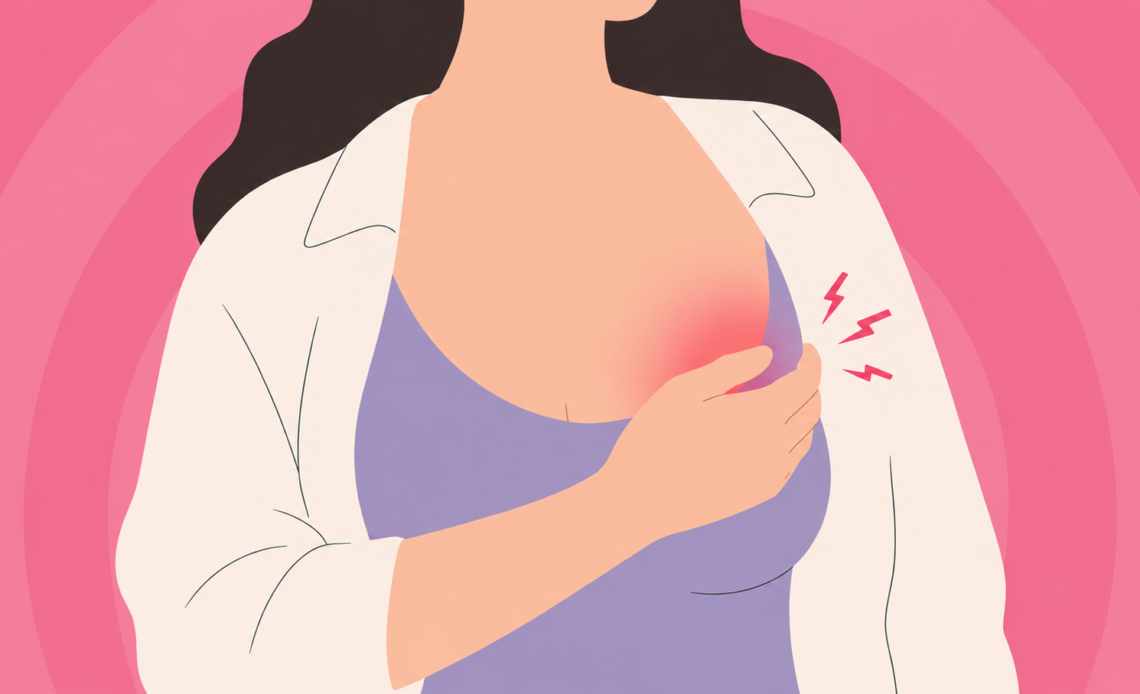
- Mastitis symptoms can include a hot, red, swollen, and painful area on one breast, along with fever, chills, or body aches.
- Certain breastfeeding habits can increase your risk, including missed feeds, a poor latch, cracked nipples, extra pumping and tight bras.
- Simple measures can help manage mastitis, including gentle feeding, cold compresses, ibuprofen and rest, while deep massage and extra pumping should be avoided.
- Most cases start improving within 24-48 hours, but worsening symptoms, persistent fever, or a fluid-filled lump should be checked by a doctor.
Mastitis is inflammation of the breast tissue, and it can come on when you least expect it. Mastitis symptoms can start with something as simple as a sore, swollen, or hot breast and may progress to a painful, lumpy area that feels harder than the rest.
It’s especially common during breastfeeding, with research suggesting it can affect up to 33% of breastfeeding women. That means around 1 in 3 breastfeeding women may experience it, making it something every new mum should know about.
So, what actually causes mastitis? What can you do about it when it happens? And when is it something you should get checked? Let’s find out.
What is Mastitis?
Mastitis is inflammation of the breast, usually during breastfeeding, and it often starts when your body is making too much milk.
Your breast is basically a network of tiny tubes, called milk ducts, that carry milk from the mammary glands, where milk is made, to the nipple. When your baby feeds, hormones like prolactin help your body make more milk, while oxytocin helps push the milk through the ducts and out of the nipple (more on that here).
The problem starts when milk is being made faster than it is being removed. From there, mastitis can develop in stages:
1. Breast Engorgement
If a feed is skipped or your baby doesn’t remove much milk, more milk stays in the breast. This can make the breast feel very full, tight, and uncomfortable. This is called engorgement.
2. Breast Inflammation
If that fullness continues, the breast tissue around the milk ducts can swell and squeeze the ducts, making it harder for milk to flow through. This can lead to a clogged milk duct, which can further irritate the breast and trigger inflammation, known as inflammatory mastitis.
3. An infection can develop
Inflammation can sometimes be followed by a bacterial infection. Bacteria that normally live on the skin can enter through a crack or sore on the nipple and multiply inside the breast tissue, causing bacterial mastitis.
And this is where something as ordinary as milk leakage can become a big issue. Constantly wet nipples lead to cracking, allowing easy entry for bacteria. Nua’s Nursing Pads help manage those leaks with a soft, breathable, thin design, so your skin stays more comfortable between feeds.
Mastitis Symptoms: How Do You Know You’ve Got It?
Mastitis usually affects one breast, and symptoms can develop very quickly, sometimes within a few hours. You may go from feeling completely fine to feeling quite unwell.
The most common symptoms are:
- A warm, red, and swollen area on the breast, often shaped like a wedge
- Pain or tenderness in that area of your breast
- A fever of 101°F (38.3°C) or higher
- Chills and body aches, similar to having the flu
- Feeling very tired, weak, or generally unwell
So if these symptoms show up together, especially the sudden breast pain and flu-like feeling, mastitis is a likely possibility.
Blog continues after the ad.
Mastitis Risks: What Makes This More Likely To Happen To You?
A lot of very normal, everyday things can increase your chances of getting mastitis.
- Missing a feed, or your baby suddenly sleeping through the night, can leave more milk in the breast for longer and increase the chance of clogged milk ducts.
- A poor latch can mean less milk is removed from the breast, so more milk stays behind and can contribute to inflammation.
- Cracked or sore nipples can give bacteria an easier way into the breast tissue, increasing the chance of infection.
- Pumping more than needed acts as a signal for your body to make more milk. This can cause hyperlactation, which increases the risk of milk build-up.
- Wearing a tight bra can put pressure on the breast and make it harder for milk to move through the ducts, increasing the chance of engorgement.
- Having had mastitis before. Once you’ve had it, you’re more likely to get it again. One study found that over 51% of lactating women have recurrent mastitis.
- Being a first-time mum means your body is still getting used to making the right amount of milk. This can make it easier for milk to build up in the breast.
- Being run down, stressed, or not eating enough. These can make it harder for your body to manage the inflammation and everyday bacteria around the breast, which may increase the chance of mastitis.
New to breastfeeding and feeling a little lost with all the dos and don’ts? Our guide to breastfeeding for new mums breaks down what actually helps in those first few weeks.
Mastitis Management: What Actually Helps Once You Have It?
If you think you have mastitis, the first thing to do is calm the inflammation and give your breast a chance to recover. You don’t need to stop breastfeeding, but you also should not ignore the situation.
- Feed your baby as usual and pump if you need to, but don’t add extra sessions just to empty the breast or unclog the ducts. Making and removing more milk can tell your body to produce even more, which can make the problem worse.
- Use a cold compress on the sore area. It helps reduce blood flow to the inflamed tissue, which brings down swelling and eases the pressure and pain.
- Keep the area dry between feeds to reduce the risk of nipple cracking from trapped moisture. Nua’s Nursing Pads help with this by quickly absorbing milk with their liquid-lock design. They’re also breathable and thin for all-day comfort.
- Take ibuprofen if it is safe for you to take it (confirm with your doctor). It helps with both the pain and the inflammation.
- Don’t try to massage the lump out. Deep massage can put more pressure on tissue that is already swollen and irritated.
- Rest when you can. Your body is dealing with inflammation, so rest gives it some time to recover. With a newborn, “rest” obviously means whatever you can realistically get.
- Take antibiotics if your doctor advises them. Most cases of inflammatory mastitis do not need antibiotics straight away. But if your symptoms are not getting better within 24 to 48 hours, your doctor may prescribe them.
Untreated Mastitis: What Happens If You Just Let It Be?
Most cases of mastitis start improving within 24-48 hours with the right care and usually settle over the next few days. But if a bacterial infection is left untreated, the infection can spread deeper into the breast and form an abscess, which is a pocket of pus inside the breast tissue.
The good news is that abscesses are uncommon, with studies reporting them in around 0.4–11% of breastfeeding women. But when one does form, it cannot be treated at home and usually needs to be drained by a doctor.
This can be done through needle aspiration, where the pus is removed with a needle, or incision and drainage (I&D), where the doctor makes a small opening to drain it. Antibiotics alone may not be enough once an abscess has formed.
Note: If an abscess is not drained, the pus remains trapped inside the breast, allowing the infection to continue and the abscess to grow larger, which can lead to a more severe infection and a longer recovery.
Next Steps: When Should You See A Doctor?
You don’t need to panic over every sore or full breast, but if things aren’t settling with home care, or are getting worse instead, it’s time to get help from a doctor.
- You still have a fever after 24-48 hours, especially if you’re also having chills or body aches.
- You’re feeling very unwell or unusually weak, beyond the normal exhaustion of caring for a newborn.
- A lump feels like it has become a separate, firm pocket rather than just general breast swelling.
- The lump becomes softer in the middle or feels like it has fluid inside it. This can be a sign of an abscess, where pus has collected inside the breast.
- Redness starts spreading beyond the original sore area, or you see red streaks on the breast.
Mastitis is common and usually VERY treatable, so getting help early can stop it from turning into a bigger problem.
And for the everyday side of breastfeeding, Nua’s Nursing Pads are an easy add-on to your routine, helping manage leaks while staying soft, breathable, and thin.
Time to Nip It in the Bud
Mastitis can sound scary when you first hear about it, but knowing what’s happening in your body makes it a lot less confusing. Most cases can be managed with the right care, and knowing the early signs means you’re less likely to let things get worse.
So, keep an eye on those changes, give your body some time to recover, and don’t be afraid to get medical help when something doesn’t feel right. And for the everyday bits of breastfeeding, like milk leaks, a little preparation can go a long way. Nua’s Nursing Pads are made to keep up with those leaks without adding bulk to your routine.
Got a breastfeeding tip that made your life SO much easier? Tell us in the comments.
FAQs
1. What are the symptoms of breast engorgement?
Breast engorgement can make your breasts feel very full, tight, swollen, and uncomfortable when more milk stays in the breast than is removed.
2. What is the difference between a clogged milk duct and mastitis?
A clogged milk duct can cause a painful, firm area, while mastitis involves breast inflammation and may also cause redness, fever, chills or body aches.
3. What causes mastitis while breastfeeding?
Lactational mastitis can develop when milk builds up in the breast, with factors like missed feeds, poor latch, cracked nipples, and extra pumping increasing the risk.
4. How do you treat mastitis?
Mastitis treatment usually involves continuing normal feeds, using cold compresses, resting, and managing pain and inflammation, while avoiding deep massage and extra pumping.
5. What are some home remedies for mastitis?
Cold compresses, rest, gentle feeding, and pain relief such as ibuprofen can help manage mastitis symptoms at home when appropriate.
6. Can nursing pads cause mastitis?
Nursing pads do not directly cause mastitis, but keeping the nipple damp for long periods can contribute to cracking, so changing wet pads can help keep the area dry.
7. How often should you change nursing pads?
Change nursing pads whenever they become wet to help keep the nipple area dry and comfortable, especially if you have heavy milk leakage.
Disclaimer
The content of this article is provided for general informational and educational purposes only and is not intended to constitute medical advice, diagnosis, or treatment. The information shared is of a general nature and may not be appropriate for all individuals or specific circumstances. Readers should not disregard, delay, or substitute professional medical advice based on the information contained herein.
If you experience any symptoms, notice anything unusual, or have concerns relating to your health or overall well-being, you should consult a qualified healthcare professional. While every effort is made to ensure the information shared is accurate and up-to-date, Nua makes no representations or warranties, express or implied, regarding the accuracy, completeness, or suitability of the information provided and disclaims all liability arising from reliance on this content to the fullest extent permitted by law.