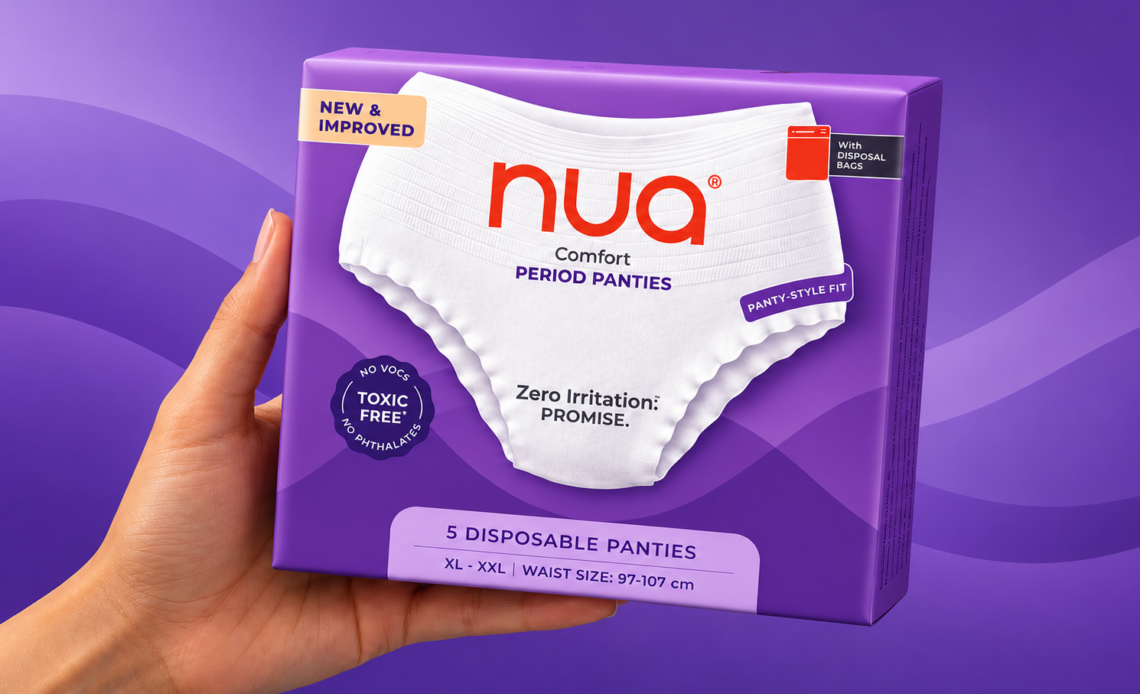
Wondering, “can you reuse disposable period panties?” here’s what we will cover in this guide:
- No, you shouldn’t reuse disposable period panties, even if your flow is light.
- Used disposable period panties can retain menstrual blood, vaginal discharge, sweat, and moisture, which may encourage bacterial growth and cause discomfort.
- In some cases, reusing disposable period panties may contribute to conditions such as bacterial vaginosis (BV), vaginal yeast infections, urinary tract infections (UTIs), or contact dermatitis.
- Nua’s Disposable Period Panties can be worn for up to 10 hours. Change them sooner if they feel damp, full, or uncomfortable.
- On light-flow or spotting days, consider switching to panty liners instead of using disposable period panties.
- To get the most out of your disposable period panties, clean your external intimate area before wearing them and use the tear-away side seams for quick, hygienic disposal.
Can you reuse disposable period panties? It’s a question many people ask, especially on light-flow days when a pair doesn’t look or feel completely used. You might even wonder, “why throw them away when I can get a little more out of them?”
The answer is the name, you can’t reuse something ‘disposable’. Disposable period panties are designed for single use to help maintain hygiene, comfort, and reliable protection. Even if they don’t look soiled, they may have already absorbed menstrual blood, vaginal discharge, sweat, moisture, and naturally occurring bacteria during wear, which can compromise hygiene if they’re worn again.
In this guide, you’ll learn why disposable period panties should never be reused, how long you can safely wear them, when to change them, and what to use instead on light-flow days.
Can You Reuse Disposable Period Panties If Your Flow Is Light?
No. Even if your flow is light, disposable period panties should not be reused.
Rewearing the same pair may re-expose the delicate vulvar area to retained moisture and naturally occurring bacteria, which can increase the risk of irritation, unpleasant odour, and discomfort.
To help keep the intimate area clean, comfortable, and protected, always wear a fresh pair of disposable period panties each time.
Blog continues after the ad.
Why Disposable Period Panties Are Designed For Single Use
During wear, a pair of disposable period panties collects much more than just menstrual blood. It also comes into contact with:
- Sweat, which adds moisture and contributes to a warm, damp environment.
- Vaginal discharge, a normal fluid that naturally occurs throughout the menstrual cycle.
- Dead skin cells, which are continuously shed from the skin’s surface.
- Naturally occurring bacteria, which normally live on the skin and around the vulvar area.
Many of these aren’t visible to the naked eye, so a used pair of disposable period panties may still appear clean even after use. Once absorbed into the product, they can’t simply be removed by airing it out or wearing it again.
Rewearing a used pair of disposable period panties may contribute to irritation or create conditions that favour bacterial or fungal overgrowth. If symptoms develop, they may be associated with conditions such as:
- Bacterial vaginosis (BV): An imbalance of the naturally occurring bacteria in the vagina that may cause a fishy odour, thin grey or white discharge, and vaginal discomfort.
- Vaginal yeast infection: An overgrowth of Candida yeast that may lead to intense itching, redness, soreness, and a thick, white discharge.
- Urinary tract infection (UTI): A bacterial infection of the urinary tract that may cause a burning sensation during urination, frequent urges to urinate, and pelvic discomfort.
- Contact dermatitis: Prolonged exposure to moisture, friction, or a used menstrual product may contribute to redness, itching, and rashes around the vulvar area.
If you experience persistent itching, burning, unusual vaginal discharge, a strong odour, pain, or symptoms that don’t improve after changing to a fresh product, consult a healthcare professional for an accurate diagnosis and appropriate treatment.
How Long Can You Wear Disposable Period Panties?
You can wear Nua’s Disposable Period Panties for up to 10 hours, making them ideal for overnight sleep, long journeys, or busy days when changing isn’t always convenient.
Their ultra-absorbent core and leakproof design help keep you dry and comfortable, so you can wake up feeling fresh instead of worrying about midnight leaks.
When Should You Change Your Disposable Period Panties?
Change your disposable period panties after 10 hours, or sooner if they feel damp, full, or uncomfortable.
To help you decide when it’s time for a fresh pair, look out for these signs:
- Your flow is heavier than usual: On heavier flow days, your disposable period panties may become saturated sooner than on lighter days. If it starts feeling fuller than usual, it’s time to change into a fresh pair.
- It feels damp or uncomfortable: If your disposable period panties feels damp, heavy, or less comfortable than when you first put it on, replace it with a fresh pair to help maintain comfort throughout the day.
- You’ve reached the recommended wear time: Even if it still appears clean or doesn’t feel full, change into a fresh pair after the recommended wear time to help maintain hygiene, comfort, and reliable protection.
What If I Don’t Want To Waste Period Panties On Light-Flow Days?
If your flow is very light or you’re only spotting, you don’t need to wear disposable period panties. Instead, switch to a panty liner, which is designed for minimal menstrual flow or discharge. It provides just the right level of protection while helping you stay fresh and comfortable.
Nua’s Panty Liners are just 1 mm thin—about as thin as a credit card—yet their super-absorbent core provides 100% reliable protection for light-flow and spotting days.
How To Get The Most Out of Nua’s Disposable Period Panties
Getting the most out of Nua’s Disposable Period Panties comes down to a few simple habits. From wearing them comfortably to disposing of them correctly, these tips can help you enjoy a fuss-free period experience.
- Freshen up before wearing them: Clean your external intimate area with lukewarm water or a gentle intimate wash before putting on your disposable period panties. Starting with clean, dry skin can help you stay comfortable for longer.
- Dispose of them properly: To remove your disposable period panties, tear along the perforated side seams, wrap them up, and throw them in a dustbin. Do not flush them down the toilet. Learn more here,
- Store them the right way: Keep your unused Disposable Period Panties in a cool, dry place to help keep them clean and ready to use whenever you need them.
The Final Takeaway
Even if your flow is light, disposable period panties are never meant to be worn twice. They’re designed for a single wear to provide the best hygiene, comfort, and reliable leak protection. Reusing them may reduce their absorbency and comfort while increasing the likelihood of irritation, odour, and leaks.
For the best experience, wear a fresh pair every time, change them after the recommended wear time, and dispose of them responsibly. With Nua’s Disposable Period Panties, you can enjoy a comfortable, worry-free period—day or night.
Disclaimer
The content of this article is provided for general informational and educational purposes only and is not intended to constitute medical advice, diagnosis, or treatment. The information shared is of a general nature and may not be appropriate for all individuals or specific circumstances. Readers should not disregard, delay, or substitute professional medical advice based on the information contained herein.
If you experience any symptoms, notice anything unusual, or have concerns relating to your health or overall wellbeing, you should consult a qualified healthcare professional. While every effort is made to ensure the information shared is accurate and up-to-date, Nua makes no representations or warranties, express or implied, regarding the accuracy, completeness, or suitability of the information provided and disclaims all liability arising from reliance on this content to the fullest extent permitted by law.