What you will learn in this blog about finding a skin safe deodorant for women:
- Your underarm skin is warmer, stays damp, and sits at a higher pH than the rest of your body, which is exactly the environment odour-causing bacteria thrive in.
- Sweat is nearly odourless on its own, the smell only appears when skin bacteria break it down, so odour control is really bacteria management.
- Most deodorant rashes trace back to a short list of triggers, and fragrance is the single most common cause of allergic reactions to cosmetics.
- AHAs gently lower the skin’s surface pH, making the underarm less welcoming to odour bacteria, while ceramides hold your skin barrier together so it does not dry out and react.
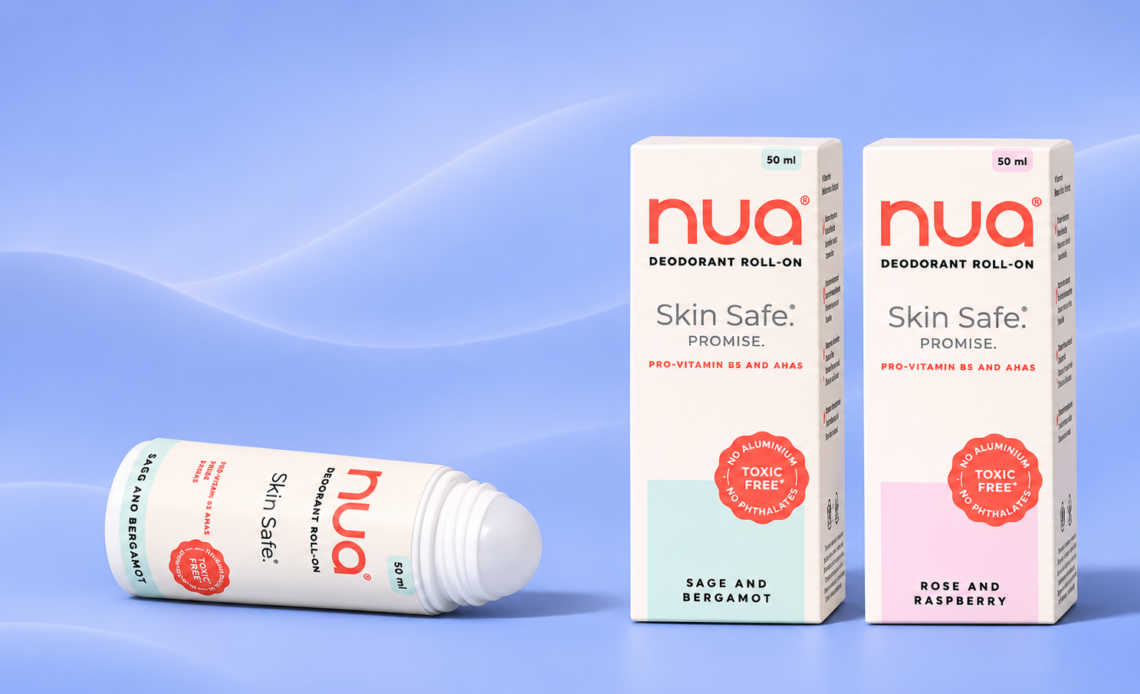
- Nua’s deodorant roll-on is built on that logic: AHAs and ceramides, with no aluminium, no alcohol, no parabens, no sulphates, and a phthalate-free fragrance, in two scents.
- Because it is aluminium-free, it is a true deodorant rather than an antiperspirant, so you get a skin safe deodorant for women that manages odour without plugging your sweat glands.
An underarm rash or a deodorant that stings is hard to ignore, partly because it’s in a spot you cannot easily scratch or touch in public. It is also more common than it seems, because the underarm is a tricky place to put any product. The skin there sits at a higher pH than the rest of your body, stays warm and damp, and rubs against your clothes all day, which is both why odour-causing bacteria thrive there and why an ingredient that feels fine on your arm can irritate the crease under it.
A lot of deodorants are built to cover the smell rather than work with that skin, which is why a product can seem fine on the label and still leave you red or itchy. If you have been switching brands looking for a skin safe deodorant for women that does not react, this guide explains what is actually going on and what to look for.
Why your underarms are more sensitive than most of your skin
Your underarm is not like the skin on your forearm or your cheek. It is warmer, it stays damp, it folds in on itself, and it runs at a higher pH than the rest of your body. The surface of healthy skin usually sits slightly acidic, somewhere around 4.5 to 6, a state dermatologists call the acid mantle, and that mild acidity is one of the ways skin keeps unwanted bacteria in check. Research in the Indian Journal of Dermatology notes that this acidic film is maintained partly by alpha hydroxy acids in your own sweat, and that it has a real antimicrobial role. The catch is that underarm skin can sometimes climb closer to a pH of 6.5, and that small shift makes the area far friendlier to the bacteria behind body odour.
Sweat itself is almost odourless, which surprises people. The smell comes later, when skin bacteria feast on sweat and break it into the compounds we recognise as body odour. So odour control is really bacteria management, and bacteria respond to their surroundings. Nudge the pH down a little and you make the neighbourhood less inviting. That is the foundation of any skin safe deodorant for women, and it is exactly why alpha hydroxy acids matter.
If the goal is to make your underarms a calmer place rather than just spraying scent over what is happening there, what formula you use is important. Nua’s deodorant leans on AHAs to do precisely that, check it out here!
Why does my deodorant cause rashes under my arms?
A handful of ingredients are behind most reactions, and once you can name them, a mystery rash becomes a solvable problem. Here are the usual deodorant irritation causes, and the deodorant allergy symptoms you should make note of.
- Fragrance: It is the most common cause of allergic contact dermatitis from cosmetics, according to a review of cosmetic contact allergy, and deodorant sits on covered-up skin all day, which is close to a worst-case setup for a reactive ingredient. This does not doom every scented product. It means the quality and formulation of that fragrance really matters.
- Alcohol: The fast-drying kind gives a crisp finish, but on already-tender underarm skin it can sting and dry the area out, which weakens the skin barrier over time.
- Certain preservatives: Preservatives keep your deodorant from growing bacteria or mould, so they serve a real purpose, and most skin tolerates them without any issue. The catch is that a small number of people react to certain ones. A toxic-free formula simply leaves those out, so there is one less likely trigger, which matters if your skin is the reactive kind.
- Friction and already-irritated skin: The underarm rubs against clothing all day, and any small break or tenderness in the surface lets a product reach the raw layer underneath. So a deodorant that feels fine on calm, intact skin can sting on a day when the area is already sensitive. A lot of underarm skin irritation comes down to this, the same formula reacts differently depending on the state your skin is in when you apply it.
If you have ever wondered what ingredients in deodorant cause skin irritation, that short list covers most of it. The redness, itching, stinging, or small bumps that follow are textbook deodorant allergy symptoms, and they are your skin asking for a gentle deodorant for sensitive skin, not a stronger one.
Blog continues after the ad.
If you have spent years thinking you had sensitive underarms, it helps to know the trigger is usually in the bottle, not your body. Nua’ built its roll-on without the usual irritants, including fragrance-heavy phthalates, check it out here!
What makes a deodorant skin safe?
A skin safe deodorant is not simply one that smells nice and dodges the scary-sounding words. It is one that actively supports the skin it sits on all day. Here is what that looks like inside Nua’s roll-on.
- AHAs that work with your skin’s chemistry: Alpha hydroxy acids gently lower the underarm’s surface pH, the same move your own natural acid mantle uses to keep odour bacteria in line. They also smooth the surface as they go, which is why AHA-based roll-ons tend to leave the area feeling softer the longer you use them.
- Ceramides that protect the skin barrier: Ceramides are a type of fat that sits between your skin cells and holds them together. That seal is what keeps moisture locked in and irritants out, so when ceramide levels drop, skin tends to get dry, rough, and quicker to react. Building them into a deodorant means it supports your barrier while it deodorises, rather than stripping it.
- No aluminium: Aluminium is what turns a deodorant into an antiperspirant by plugging your sweat ducts. Leaving it out means your skin sweats normally while odour is still managed.
- No alcohol: Alcohol gives that quick-dry finish, but it can sting and dry out skin that is already tender.
- No parabens or sulphates: Both are common in personal care and fine for most people, but they are also among the ingredients reactive skin tends to respond to, so removing them takes a couple of likely triggers off the table.
- Phthalate-free fragrance: Fragrance is the most common cause of skin irritation, so keeping it phthalate-free matters more on the underarm than almost anywhere else on the body.
- Comfort you actually notice: Nua describes it as a toxic-free formulation, and in daily use that looks like a non-sticky, quick-absorbing roll-on that dries down without white marks or residue, so it disappears under clothes instead of clumping at your seams.
A deodorant that feeds your skin barrier instead of fighting it quietly changes how the whole day feels. That is the thinking behind Nua’s ceramide-backed formula, try it here!
How to choose a safe deodorant for sensitive skin
If you are standing in the aisle or scrolling a product page, here is a checklist for finding a skin safe deodorant for women that you can actually use in real life.
- See if it’s toxic-free before the scent name: A real skin safe deodorant for women is upfront about what it leaves out. Aluminium, alcohol, parabens, sulphates, and phthalate-laden fragrance are the names worth scanning for first.
- Treat fragrance as the thing to watch: You do not have to give up scent. Favour products that use cleaner, phthalate-free fragrance, because that is statistically your most likely trigger.
- Look for barrier-supporting ingredients: Ceramides and AHAs are a sign the formula is thinking about your skin’s health, not just masking odour.
- Patch test: Swipe a little on intact skin, wait a day, and see how it settles before you commit. This single habit prevents most underarm skin irritation surprises.
- Give a new formula a full week: Skin can take a few days to adjust to a non-irritating deodorant, so judge it after a week of normal use, not one nervous afternoon.
Same gentle formula, two scents to pick from
Both versions of Nua’s roll-on share the identical skin-friendly, toxic-free formula, with the AHAs and the ceramides. So your only real job is choosing how you want to smell.
- Sage and Bergamot. Fresh, green, and grounded, the kind of clean that feels like a deep breath. Meet it here.
- Rose and Raspberry. Soft, a little sweet, gently floral without tipping into heavy perfume. Find it here.
The Luxury Of Not Thinking About It
The whole point of a skin safe deodorant for women is that you eventually stop thinking about your underarms at all. No sting after a shave or wax, no rash when you switch, no scrubbing off a product that fought your skin all day. Nua’s roll-on is built to be that quietly reliable, working with your skin’s own chemistry rather than overriding it, so the only thing you notice is that you smell good and nothing hurts.
FAQs
1. Why are my underarms more sensitive than the rest of my skin?
Underarm skin is warmer, stays damp, folds in on itself and has a higher pH than most other areas of the body. These conditions make it easier for odour-causing bacteria to thrive and can also make the skin more prone to irritation.
2. What ingredients in deodorant can cause skin irritation?
Fragrance is the most common cause of allergic reactions to cosmetics. Alcohol, certain preservatives, and applying deodorant to already irritated or damaged skin can also cause redness, itching, stinging or small bumps.
3. What makes a deodorant safe for sensitive skin?
A skin-friendly deodorant should support the skin barrier while managing odour. Look for ingredients like AHAs, which help lower the skin’s surface pH, and ceramides, which help retain moisture and protect the skin barrier. You can also look for formulas without aluminium, alcohol, parabens, sulphates and phthalates.
4. Are aluminium-free deodorants better for sensitive skin?
Aluminium-free deodorants manage odour without plugging sweat ducts, allowing your body to sweat normally. However, being aluminium-free alone does not guarantee that a deodorant will suit sensitive skin; its other ingredients matter too.
5. How do you choose a deodorant for sensitive underarms?
Look for a formula with barrier-supporting ingredients like AHAs and ceramides, and check for potential irritants such as alcohol, parabens, sulphates and phthalate-containing fragrances. Patch test the product on intact skin, wait 24 hours and give a new formula about a week of normal use before judging how your skin responds.
6. How can you prevent rashes from deodorant?
Choose a gentle formula, patch test it before regular use and avoid applying deodorant to underarms that are already irritated or damaged. Friction from clothing and existing skin irritation can make even a normally tolerated product sting.
Disclaimer
The content of this article is provided for general informational and educational purposes only and is not intended to constitute medical advice, diagnosis, or treatment. The information shared is of a general nature and may not be appropriate for all individuals or specific circumstances. Readers should not disregard, delay, or substitute professional medical advice based on the information contained herein.
If you experience any symptoms, notice anything unusual, or have concerns relating to your health or overall wellbeing, you should consult a qualified healthcare professional. While every effort is made to ensure the information shared is accurate and up-to-date, Nua makes no representations or warranties, express or implied, regarding the accuracy, completeness, or suitability of the information provided and disclaims all liability arising from reliance on this content to the fullest extent permitted by law.