
Wondering, “why does discharge bleach underwear?” here’s what you’ll learn in this guide:
- Vaginal discharge is naturally acidic, which is why it can bleach underwear by reacting with fabric dyes.
- Bleached or faded patches in underwear are usually a normal result of healthy vaginal discharge, not poor hygiene.
- Vaginal discharge naturally changes throughout your menstrual cycle, which may make underwear bleaching more noticeable at certain times.
- Wearing panty liners and caring for your underwear properly can help reduce visible discharge stains and bleaching.
- While underwear bleaching is usually harmless, seek medical advice if your vaginal discharge changes colour, develops a strong odour, or is accompanied by itching, burning, or pain.
Yes, your discharge really can bleach your underwear, and no, that doesn’t mean something’s wrong with you. It’s one of those things nobody really talks about, yet it’s a surprisingly common experience.
The good news is that underwear bleaching is usually a normal result of healthy vaginal discharge, not a sign of poor hygiene or an infection. Knowing why it happens can help put your mind at ease.
In this article, we’ll explain why discharge bleaches underwear, the science behind the bleaching effect, what’s considered a healthy range of vaginal discharge, how to stay comfortable on heavier discharge days, and the symptoms that warrant a visit to your healthcare provider.
What Is Vaginal Discharge?
Vaginal discharge is a natural fluid produced by the vagina and cervix that helps keep them clean, lubricated, and protected by flushing out dead cells and maintaining a healthy balance.
While vaginal discharge plays an important role in keeping your vagina healthy, it doesn’t always feel comfortable. On heavier discharge days, you might feel constantly wet, sticky, or damp. Some people mistake the sensation for bladder leakage, while others worry that something is wrong. That cold, damp feeling in your underwear may feel even a little “slimy,” making it harder to feel fresh throughout the day.
Vaginal discharge can also show through light-coloured pants or leggings, or leave noticeable damp patches, making everyday outfits feel a little less carefree.
Blog continues after the ad.

As frustrating as it can be, these changes are usually a normal part of your menstrual cycle. In most cases, the discomfort comes from excess moisture sitting against your skin rather than the discharge itself.
Panty liners for daily discharge can help you stay fresh and comfortable throughout the day. Nua’s Panty Liners are soft, lightweight, and designed to absorb everyday discharge, so you can go about your day with confidence.
Why Does Discharge Bleach Underwear?
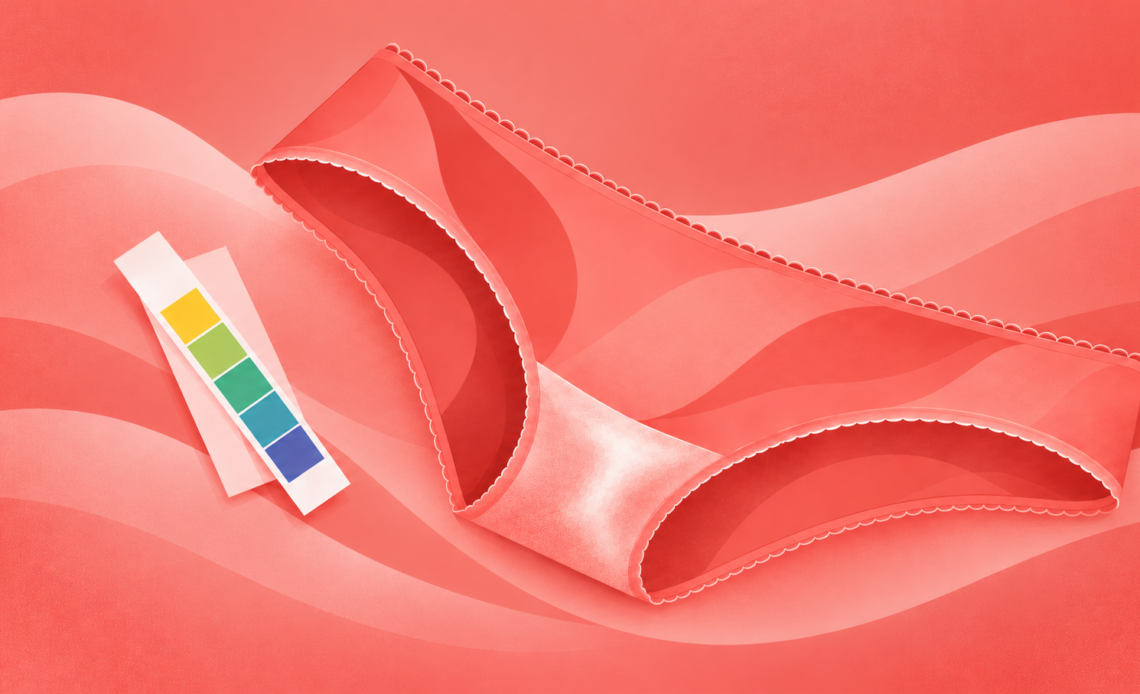
Vaginal discharge bleaches underwear because its naturally acidic pH can gradually break down the dyes used in the fabric of your favourite panties. A healthy vagina naturally maintains a mildly acidic pH (between 3.8 and 4.5) to keep harmful bacteria in check and support a healthy vaginal microbiome (read more about vaginal pH here). This is why dark-coloured underwear may develop familiar pale or orange patches over time.
The bleaching is usually most noticeable in the gusset area, where vaginal discharge comes into direct contact with the fabric. Depending on the fabric and dye used, these patches may appear pale, orange, yellowish, or simply lighter than the rest of the underwear. The exact shade and intensity of the bleaching can vary, so some underwear may show more noticeable colour changes than others. While it may look surprising, it’s simply a result of your vagina’s natural acidic environment and is usually nothing to worry about.
Is Bleached Underwear a Sign of Good Vaginal Health?
Yes, bleached underwear is usually a sign of a healthy vaginal environment. While the faded patches may make your underwear look worn or stained, the bleaching doesn’t mean it’s dirty, unhygienic, or unsafe to wear. If your underwear is otherwise clean and in good condition, you can continue wearing it as usual.
Common Myths About Bleached Underwear
Myth #1: It Means You Have an Infection
Not necessarily. Bleached underwear is usually caused by the natural acidity of healthy vaginal discharge, not an infection. However, if your discharge has a strong odour, unusual colour, itching, burning, or pain, consult a healthcare provider.
Myth # 2: Your Body Is Producing Bleach
Your body doesn’t produce bleach. The colour change happens because the natural acidity of vaginal discharge can gradually react with the dyes in your underwear, causing them to fade over time.
Myth # 3: Only Some Women Experience It
Bleached underwear is a common experience for many people with a vulva. However, not everyone will notice it to the same extent. The appearance of bleached patches can vary depending on your vaginal pH, the amount of discharge, and the colour and type of fabric dye used in your underwear.
Myth 4: It Means Poor Hygiene
Bleached underwear has nothing to do with poor hygiene. Vaginal discharge is a normal part of your vagina’s self-cleaning process, and bleaching is simply a reaction with the fabric dye.
What is Normal Vaginal Discharge?
Producing about 1 to 4 millilitres (roughly ½ to 1 teaspoon) of vaginal discharge each day is considered normal. Some days you may notice much more discharge, especially around ovulation, before your period, during sexual arousal, or during pregnancy. Everyone with a vulva has vaginal discharge, but the amount, consistency, and acidity vary from person to person.
As long as your discharge is clear, white, or off-white and isn’t accompanied by a strong odour, itching, burning, or pain, bleached underwear is generally nothing to worry about.
How Can You Manage Heavy Vaginal Discharge?
Vaginal discharge can be managed by wearing breathable cotton underwear, using panty liners during heavier discharge days, and washing your underwear properly to help prevent stains and odours. While you can’t stop normal vaginal discharge, these simple habits can help you stay comfortable throughout the day.
Use Panty Liners
We’re often taught about periods and pads, but panty liners don’t get nearly as much attention. Many people don’t realise that panty liners can be used for everyday vaginal discharge, light spotting, or minor urine leaks. They help absorb moisture, protect your underwear from discharge stains, and keep you feeling fresh and comfortable throughout the day.
Adding panty liners to your intimate care routine is a simple way to stay comfortable and confident, especially on heavier discharge days. Nua’s Panty Liners are designed to provide everyday protection without compromising on comfort.
Here’s what makes Nua’s Panty Liners a great choice for daily discharge:
- Absorbent protection: tahy Helps absorb everyday vaginal discharge, light spotting, and minor urine leaks to keep you feeling dry.
- Ultra-soft topsheet: Gentle on intimate skin to help minimise friction and discomfort.
- Safe for daily use: Made with 100% toxic-free materials and free from added fragrance, making them gentle enough for everyday use.
- Ultra-thin design: At just 1 mm thin, they fit comfortably and discreetly into your underwear without feeling bulky.
Choose Breathable Cotton Underwear
Switch to breathable 100% cotton underwear to improve airflow. Synthetic fabrics such as polyester, lace, or nylon can trap heat and moisture, making you feel damp and uncomfortable.
Wash Your Underwear Properly
Proper washing can help minimise discharge stains and keep your underwear in good condition.
- Rinse immediately: Rinse your underwear in cold water as soon as possible after wearing it. This helps remove discharge before it sets into the fabric.
- Use a mild detergent: Wash with a gentle, fragrance-free detergent and avoid harsh chemicals or fabric softeners, which may irritate sensitive vulvar skin and gradually wear down the fabric.
- Air dry: Let your underwear air dry naturally instead of using a machine dryer, as high heat can make stains more difficult to remove.
Simple self-care can help you stay comfortable, but it’s equally important to recognise when vaginal discharge may indicate an infection or another underlying condition.
When should you be concerned about vaginal discharge?
You should be concerned about vaginal discharge if it suddenly changes in colour (such as yellow, green, or grey), develops a strong or fishy odour, has an unusual texture, or is accompanied by itching, burning, pelvic pain, pain during urination or sex, or unexplained vaginal bleeding. (To better understand how to identify what’s normal vaginal discharge and what isn’t, read our guide here). These symptoms may indicate an underlying infection or another condition that requires medical attention.
Possible causes include:
- Yeast infection: Thick, white, cottage cheese-like discharge with intense itching.
- Bacterial vaginosis (BV): Thin white or grey discharge with a distinct fishy odour.
- Sexually transmitted infections (STIs): Yellow-green or frothy discharge, often accompanied by pain during urination or intercourse.
If you’re ever unsure whether your discharge is normal, it’s always best to consult a healthcare professional for an accurate diagnosis and appropriate treatment.
The Final Takeaway
Vaginal discharge is a natural part of every woman’s reproductive health, and most women experience changes in the amount and consistency of their discharge at different stages of life. While it may sometimes bleach your underwear or leave you feeling damp, these changes are usually normal. Understanding what’s typical for your body and using breathable underwear and Nua’s Panty Liners as panty liners for daily discharge can help you stay fresh and comfortable. If you notice unusual changes in your discharge or experience symptoms such as itching, burning, or pain, consult a healthcare professional.
FAQs
1. Why does vaginal discharge bleach underwear?
Vaginal discharge is naturally acidic, with a pH of around 3.8–4.5. This acidity can gradually react with the dyes in underwear fabric, causing pale, orange or yellowish patches, particularly around the gusset.
2. Is bleached underwear a sign of good vaginal health?
Yes, bleached underwear is usually a normal result of healthy vaginal discharge. It does not mean your underwear is dirty, that you have poor hygiene or that you have an infection.
3. Does everyone experience underwear bleaching from vaginal discharge?
No, not everyone notices it to the same extent. The appearance of bleached patches depends on factors such as vaginal pH, the amount of discharge, and the colour and type of fabric dye.
4. What does normal vaginal discharge look like?
Normal vaginal discharge is generally clear, white or off-white and does not have a strong odour. Its amount and consistency can vary throughout your menstrual cycle, with heavier discharge around ovulation, before your period, during pregnancy or during sexual arousal.
5. How can you prevent vaginal discharge from staining your underwear?
You can use panty liners on heavier discharge days, wear breathable cotton underwear and rinse your underwear in cold water soon after wearing it. Washing with a mild, fragrance-free detergent and air-drying can also help prevent stains and odours.
6. When should you worry about changes in vaginal discharge?
Consult a healthcare professional if your discharge turns yellow, green or grey, develops a strong or fishy odour, or is accompanied by itching, burning, pelvic pain, pain during urination or sex, or unexplained vaginal bleeding. These changes may indicate an infection or another underlying condition.
Disclaimer
The content of this article is provided for general informational and educational purposes only and is not intended to constitute medical advice, diagnosis, or treatment. The information shared is of a general nature and may not be appropriate for all individuals or specific circumstances. Readers should not disregard, delay, or substitute professional medical advice based on the information contained herein.
If you experience any symptoms, notice anything unusual, or have concerns relating to your health or overall wellbeing, you should consult a qualified healthcare professional. While every effort is made to ensure the information shared is accurate and up-to-date, Nua makes no representations or warranties, express or implied, regarding the accuracy, completeness, or suitability of the information provided and disclaims all liability arising from reliance on this content to the fullest extent permitted by law.