If you’re wondering, ‘can you use tampons for vaginal discharge?’, here’s what you will learn in this blog:
- Can you use tampons for vaginal discharge? Not ideally. Tampons are designed for menstrual flow, not discharge. Using them outside your period can cause dryness and mild irritation because the conditions they’re built for simply aren’t present.
- Vaginal discharge vs. menstrual flow are biologically different. Discharge is a self-cleaning mechanism. Flow is what tampons are actually designed to handle.
- Panty liners are better than tampons for discharge and it comes down to design. Liners work externally and don’t interfere with your body’s natural environment, which is what discharge is made to protect.
- Safe alternatives to tampons for daily discharge include breathable liners, cotton underwear, period underwear, and sometimes nothing at all.
Picture this, you’re in the middle of a perfectly normal day and you notice a wetness in your underwear. Your period isn’t due yet, but it kind of feels like something is coming out of you. So you reach for a tampon because it feels logical in the moment. But can you use tampons for vaginal discharge? The short answer is no, and the longer answer is worth understanding because it affects your comfort, your vaginal health, and honestly, your everyday quality of life.
Because first and foremost, discharge is not a problem to be plugged, it’s your vagina doing its job. So let’s talk about what’s actually going on, why tampons aren’t built for this, and what actually works better.
Is Vaginal Discharge Normal?
Yes, completely. Normal vaginal discharge management starts with understanding that discharge is a biological self-cleaning system. Your vagina produces fluid to flush out dead cells, balance pH, and keep the environment slightly acidic so bacteria and yeast don’t take over. According to research, different people produce different amounts but around 2-5 ml daily is normal. The texture, colour, and volume shift throughout your cycle because your hormone levels, specifically oestrogen and progesterone, are constantly changing.
Blog continues after this ad.

Right after your period, discharge is usually minimal. As you approach ovulation, it becomes clear, stretchy, and more abundant. Think raw egg white. After ovulation, it thickens and reduces. This entire spectrum is healthy and doesn’t always require management. It’s not just normal, it’s healthy!
| Discharge Across Your Cycle | |
| Follicular Phase | Minimal |
| Ovulation | Clear, stretchy and increased volume |
| Luteal Phase | Thicker and decreased volume |
| Menstruation | Minimal-None |
The issue is we were never taught this. So, we started treating discharge like a problem, or the only other thing we’re familiar with coming out of us — a period. And tampons felt like a fix.
But they’re not.
Vaginal Discharge vs. Menstrual Flow: What’s the Difference?
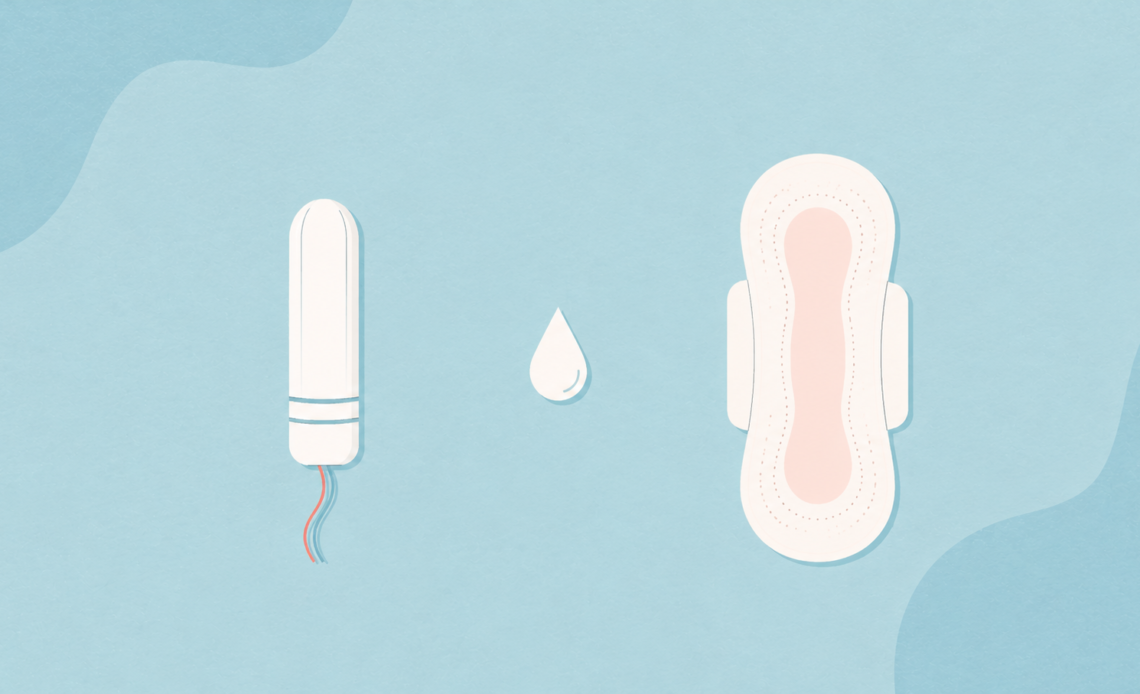
Vaginal discharge and menstrual flow are not the same thing, and treating them as interchangeable is where a lot of discomfort starts. Menstrual blood is a mix of blood, uterine lining tissue, and mucus that flows outward from the uterus through the cervix. It has volume, and it has a consistent flow pattern, which is exactly what tampons are engineered to manage.
Discharge, on the other hand, originates from the cervix and vaginal walls. It’s mostly water, mucins, and proteins. The amount is typically small, and it exists not to leave the body but to maintain the internal environment. Absorbing it is like mopping up the very thing keeping the floor from cracking.
Using a tampon on a discharge day means you’re solving for a sensation, specifically the feeling of wetness, rather than a need. And that difference matters.
Can You Use Tampons for Vaginal Discharge?
Not ideally. Tampons are designed to absorb menstrual blood, which has a specific viscosity and volume (roughly 10-20ml a day, according to the NHS). When you use them on a day with only discharge (20% of the volume), they absorb the very moisture your vaginal walls need to stay healthy.
Here’s what actually happens when you use tampons for discharge regularly:
- Dryness Dangers: Tampons don’t discriminate. They absorb discharge the same way they absorb blood, pulling moisture from the vagina and leaving the tissue dry. During your period, this means the extra moisture from the blood, but outside your period it means essential moisture, the lack of which can cause infections.
- Vaginal Irritation: When a tampon absorbs what little moisture is there on a light-discharge day, removing it creates friction on dry tissue. That friction can cause small abrasions you might not even notice, except as a vague soreness, irritation or discomfort.
- Microbiome Disruption: Beyond physical damage, using tampons daily confuses the body’s natural bacterial balance. The vaginal microbiome is dominated by Lactobacillus bacteria that thrive in a moist, slightly acidic environment. Dry it out consistently, and you’re weakening their home.
- Inflammation Risks: The fibres in conventional tampons can also shed. These micro-fibres stay inside the vaginal canal and can cause low-grade inflammation over time, especially when there isn’t enough fluid present to help clear them out.
If you’ve been reaching for a tampon on non-period days, stop. Your discharge days deserve the right product, meet Nua Everyday Panty Liners!
Safe Alternatives to Tampons for Daily Discharge: What Actually Works
Safe alternatives tampons daily discharge do exist, and they’re genuinely better suited for what your body is doing between periods. Here’s what works and why:
- Nua Everyday Panty Liners: Thin, breathable, and designed for light moisture. Panty liners are better than tampons for discharge, because they sit externally and collect discharge without interfering with the internal environment at all. Nua’s Everyday Liners are made from plant-based materials, which means no synthetic fragrance, no irritation, just coverage that actually works with your body.
- Disposable Period Panties: A great option for days when discharge is heavier. The fabric absorbs moisture and wicks it away from your skin, keeping you dry without touching the vaginal canal at all.
- Nothing at all: On lighter days, going liner-free when possible (if comfortable for you) actually supports your skin and reduces friction. Your vagina is not a site that needs constant management.
The common thread is simple — manage discharge from the outside, not from within.
How to Manage Discharge Comfortably: An Actionable Daily Guide
Here’s how to actually take care of yourself on non-period days without disrupting anything your body is doing:
- Track your cycle so you know when discharge naturally increases. Trackers with Nua’s or even just a notes app work fine. Knowing that mid-cycle discharge is ovulation discharge (not a problem) changes how you respond to it.
- Switch to breathable underwear, especially on days you know will be heavier. This reduces irritation and keeps moisture from sitting against your skin.
- Use a thin, unscented panty liner on days when you want coverage. Nua’s Everyday Panty Liners are a good option here. Change it every 4-6 hours.
- Cleanse externally only. Warm water or a gentle intimate wash on the vulva is enough. Harsh soaps inside the vaginal opening strip the microbiome and often make discharge worse, not better.
- Save tampons for your actual period. This is the single most impactful change you can make. Nua’s Tampons are designed for exactly that, let them do the job they were built for.
- Note your discharge patterns. Colour, texture, and smell all shift throughout the month. Getting familiar with your normal makes it easier to spot when something’s off.
The right tampon on the right day makes all the difference. Nua’s EaseFIt Tampons are built to work with your body, not against it!
When Does Discharge Need a Doctor’s Attention?
Most discharge is completely normal. But some changes are your body flagging something that needs actual treatment.
Get it checked if you notice:
- A strong, fish-like odour, especially after sex. This is often bacterial vaginosis, a common and treatable imbalance in vaginal bacteria.
- Thick, cottage-cheese-like texture with itching or burning. That’s a yeast infection, and it can be made worse by tampon use because of the dryness and friction involved.
- Yellow, green, or grey-tinged discharge, especially with any pelvic discomfort or unusual odour. This can indicate an STI or infection that needs prompt treatment.
- Discharge that’s significantly heavier than your usual, outside of ovulation, or that comes with pelvic pain.
- Any bleeding between periods that you can’t account for.
You know your body’s normal better than anyone. When something shifts and stays shifted, that’s worth a conversation with a doctor.
Why Do So Many of Us Default to Tampons for Discharge?
Most of us grew up without detailed education about the menstrual cycle beyond ‘you’ll bleed once a month.’ The nuances, like the fact that discharge changes in texture, volume, and colour throughout the month, or even that it happens, are rarely taught. So we improvise with what we know, the products marketed to us for anything vagina-adjacent.
There’s also a deeply embedded cultural discomfort with discharge itself. It gets coded as dirty, as something to hide or manage, when really it’s just your body being a body. That discomfort drives people to want it completely gone, not just caught, which is exactly why a tampon feels like a solution.
The more you understand what’s actually happening, the less it feels like a problem and the easier it is to choose care over coverage.
We got tired of products that work against your body. So we built ones that don’t. for well-thought-out period care, try Nua’s tampons, only when it’s actually your period.
The Bottom Line
Discharge is one of the most misunderstood parts of having a vagina, and that misunderstanding has cost a lot of people a lot of unnecessary discomfort. The habit of reaching for a tampon on a non-period day made sense when no one told us anything different. But now you know what’s actually happening, and that changes things.
Your discharge is not a problem. It’s your body maintaining itself. The right response isn’t to absorb it away with something designed for a completely different purpose. It’s to support it with products that work from the outside, that let your internal environment do what it’s built to do, and that don’t leave you drier, more irritated, or more vulnerable to infection than you started.
Use Nua’s Everyday Panty Liners on discharge days, because they’re breathable, plant-based, and made to collect without interfering. Save Nua’s Tampons for your period, when they’re actually doing what they were designed for.
Disclaimer:
The content of this article is provided for general informational and educational purposes only and is not intended to constitute medical advice, diagnosis, or treatment. The information shared is of a general nature and may not be appropriate for all individuals or specific circumstances. Readers should not disregard, delay, or substitute professional medical advice based on the information contained herein.
If you experience any symptoms, notice anything unusual, or have concerns relating to your health or overall wellbeing, you should consult a qualified healthcare professional. While every effort is made to ensure the information shared is accurate and up-to-date, Nua makes no representations or warranties, express or implied, regarding the accuracy, completeness, or suitability of the information provided and disclaims all liability arising from reliance on this content to the fullest extent permitted by law.