
A lot of people are squeamish about blood, any blood. The sight of a cut, the smell of iron, even a few drops can trigger that full-body flinch. So it makes perfect sense that the idea of handling menstrual blood feels even more intense, especially for anyone who already struggles with a fear of blood during periods. Because unlike a scraped knee, this isn’t blood from an accident, it’s blood from you. It’s private, intimate, and part of a process we’re taught to keep invisible. That’s exactly why this menstrual cup comfort guide exists, to talk honestly about what it means to face that discomfort and move from avoidance to ease.
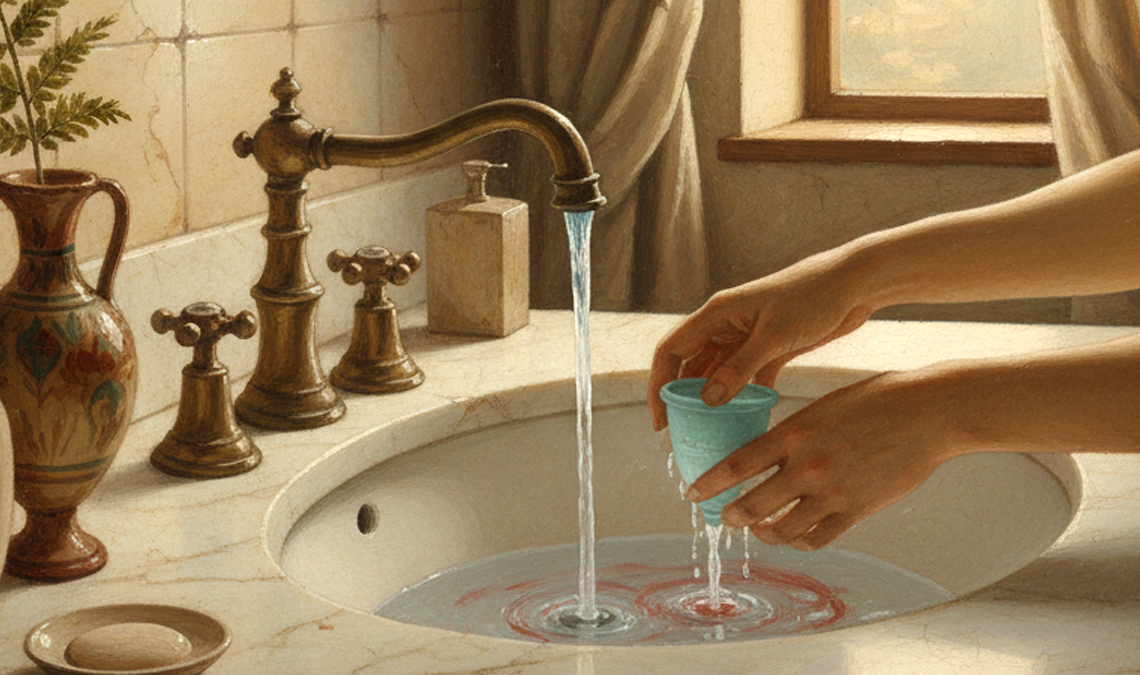
Using a menstrual cup can be confronting at first because it’s the only period product that doesn’t let you look away. You can’t just wrap it up and toss it, you have to engage with your blood, see it, pour it, rinse it, and acknowledge it. For someone who’s already squeamish about blood in general, that can feel like crossing a line, and it’s one of the most common concerns that come up when people look for menstrual cup tips for beginners. But it’s also where the mindset shift begins.
Why does blood make some people uneasy?
Our reaction to blood isn’t random, it’s part biology, part social conditioning. From an evolutionary perspective, blood signals injury and danger, which makes flinching at it totally normal. Scientists think this reaction evolved as a survival mechanism. Seeing blood often meant someone was hurt or there was a threat nearby. It’s our nervous system’s built-in alarm, triggering a mix of anxiety and physical sensations like dizziness or nausea meant to protect us from harm or overexertion.
According to research, approximately 3% to 4% of the general population has a full-on phobia of blood, injections, and injuries (this is called hemophobia). A larger number of people, an estimated 15%, may experience squeamishness or faintness at the sight of blood or when donating blood.
Why does menstrual blood make some people queasy?
If you take into consideration the cultural shame around menstruation, you get a double layer of discomfort. It’s not just ew, blood, it’s ew, period blood. From a young age, most of us learn to hide any sign of our period. We tuck pads into sleeves, pass tampons like contraband, and whisper about leaks as if they’re moral failings. Advertisers reinforce this silence by replacing red with that famous blue liquid, as if real blood would be too much for public view. This is how the fear around periods grows into something bigger, a form of stigma that follows us into adulthood. The result? We grow up believing period blood is something to conceal, not understand.
So when we finally see it for what it really is—rich, textured, and undeniably human—it’s jarring. Menstrual blood is biologically unique, mostly uterine lining, mucus, and water, with fewer clotting agents than typical blood. That’s why it doesn’t scab or clot like a wound, it flows. Seeing that up close can feel shocking when all we’ve ever seen are sterile white pads in pink packaging and sanitized commercials. But that initial shock is also the first step toward overcoming period blood stigma, because it replaces imagination with reality.
Once you see what your body actually does, you stop thinking of it as “gross” and start recognizing it as information — real, living insight into your cycle. This is one of the unexpected ways menstrual cups help with overcoming period blood stigma, every time you rinse your cup, you’re not just cleaning a product, you’re unlearning years of embarrassment. The blood itself isn’t the issue, it’s the story we’ve inherited about it.
Why the menstrual cup feels different
If you’re squeamish, pads, period panties, and tampons offer distance, they handle the mess for you. But with a cup, you’re suddenly hands-on. You fold it, insert it, remove it, and you see what it collects. There’s no barrier between you and your biology. Instead of simply tossing it away and pretending it didn’t happen, you’re required to interact with it—see it, feel it, empty it, and clean it. The process demands presence rather than avoidance, turning something we usually distance ourselves from into an act of acknowledgment. That sensory elements like the temperature, the texture, the weight of it, is what makes it so real.
And that’s what unsettles people at first. It’s confronting, but also grounding. It’s like meeting a version of yourself you’ve ignored for years.
Blog continues after the ad.

How to change how you experience it
This specific kind of blood is the opposite of what instinct tells us. Menstrual blood isn’t danger, it’s renewal. It’s the shedding of something your body built with care.
But that’s not the narrative we’re raised with. So when you first see it in your cup, thicker, darker, more alive than expected, let curiosity exist alongside discomfort instead of pushing it away. Maybe even that “oh god, why is it brown?” moment. That’s normal. That’s your brain catching up with reality.
The first step toward menstrual cup confidence isn’t about mastering insertion (although that’s important and you can learn about it here), it’s about giving yourself permission to feel squeamish and curious at the same time. For many people, getting used to menstrual cups starts with this mental shift, not a physical one.
The truth is, everyone who uses a cup goes through that moment of hesitation, the heartbeat before you look into the sink. But what comes after is almost always relief. Because what you imagined would be disgusting often turns out to be… ordinary. You get used to it faster than you expect. That’s the surprising part of getting used to menstrual cups, familiarity replaces fear far sooner than you think.
(Here’s a story about how tampons can make you feel better about your body – which applies to menstrual cups too!)
Managing the Squeamishness in Real Life
If you already know you’re squeamish, treat your first few cycles as exposure therapy, not a test of bravery. Here are some menstrual cup tips for beginners designed specifically for people who struggle with the sight of blood:
- Control the environment.: Empty your cup in the shower, it’s less visual and feels contained.
- Keep perspective: According to research, most people lose only 30–60 ml of blood in an entire cycle. That’s about a shot glass. Seeing it collected just makes it look like more.
- Use cool water first: Hot water can exaggerate colour and scent, while cool water keeps things neutral and less overwhelming.
- Use grounding language: Instead of “ew,” say “okay, this is my body doing its job.” Words shift perception.
- Take breaks: If you feel faint, pause. Sit down. You’re rewiring years of instinct, it’s okay if it takes time.
Over time, this process becomes normal. The shock fades, replaced by awareness. That’s the real path toward menstrual cup comfort and long-term confidence.
When squeamishness meets self-awareness
The wild thing about confronting menstrual blood is how much it teaches you about fear itself. Fear thrives on avoidance. The more we look away, the bigger it grows. But when you actually see what you were afraid of, it loses its edge. You realize, it’s not gore, it’s just your body.
That’s why this whole menstrual cup comfort guide isn’t about being fearless, it’s about being familiar. When you stop treating your body like something to manage and start treating it like something to understand, you change your relationship with it completely.
You stop saying, “I can’t deal with blood,” and start saying, “I’m learning to deal with blood.” That subtle shift is everything.
Once you’ve faced what scared you, the confidence that follows feels bigger than just period talk. You’ve proved to yourself that you can confront something uncomfortable and not run away. You’ll notice it in small ways, how calmly you handle a paper cut, how much less dramatic your period feels, how much more respect you have for your body’s processes.
Using something like the Nua Menstrual Cup helps make this transition smoother—it’s firm, flexible, and designed for comfort, which means one less reason for your brain to panic. The goal isn’t to force yourself into confidence; it’s to make space for it to grow.
The Final Bloody Takeaway
At some point, you’ll pour out your cup and won’t even think twice. You’ll rinse, reinsert, and carry on. That’s not desensitization, it’s integration. Blood becomes neutral. You’ll realize you no longer tense up at the sight of it, whether it’s from a scraped knee or your own cycle. That’s the deeper shift that happens when you’re truly getting used to menstrual cups.
And maybe, just maybe, when someone else admits they’re squeamish about blood, you’ll tell them what no one told you — it’s okay to be scared but you can also outgrow that fear.
By using a cup, you’re giving yourself that practice. Each cycle, you’re not just collecting blood, you’re collecting confidence. And that’s the real magic of this journey.
That’s what menstrual cup confidence looks like.