
If you’re anything like most moms-to-be, you’ve probably already spiralled down some maze of mixed advice of what goes on your maternity hospital bag checklist. One person says pack three nightgowns, another swears by adult diapers. Your gynaecologist has one list, a prenatal class mom another, and family members will chime in with what worked for them in the ’80s. Add to that the endless Pinterest lists with color-coded categories and ziplocked pouches, and suddenly packing a hospital bag feels like prepping for an expedition, not a delivery.
But here’s the truth: when you’re in the thick of contractions or trying to latch a baby at 3 a.m., you won’t care about lavender-scented lip balm.
So here’s you ultimate no-nonsense guide on what to pack in a hospital bag, what not to, and the real MVPs you’ll want on hand, especially when it comes to handling postpartum bleeding (aka lochia).
Let’s Get Real About Lochia, Which Is Really What You’re Prepping For
Nobody talks about lochia enough. It’s not a regular period, it’s heavier, longer, and it doesn’t ask for permission. Whether delivering vaginally or via C-section, lochia happens. It’s your uterus clearing out everything it no longer needs—blood, mucus, tissue, amniotic fluid, and remnants of the placenta.
It starts off bright red and intense, then gradually shifts to pink, brown, and eventually yellow-white. For the first few days, it can feel like a tsunami. We’re talking giant pads, mesh underwear, and the strange sensation of losing what feels like a pint of blood every time you stand up.
According to the WHO, this phase can last up to six weeks, but the first few days are the absolute worst. Think managing a cocktail of cramps, hormone crashes, bleeding, sore nipples, and sleep deprivation all at once.
That’s why your hospital bag must-haves need to be built around real recovery. Right now, it might be hard to distinguish between what your pre-delivery mind is hoping for and what your post-partum brain 100% requires ASAP. So trust us, and prep for the post-partum bleeding more than you prep for your post-partum glow.
The Real Hospital Bag Checklist
Let’s break it down into what’s truly worth the space in a hospital bag for delivery and what can be skipped.
Must-Haves (for you)
- ID + Medical Documents: Keep them in a folder. Bonus points if it’s waterproof. Hospitals often require identification, insurance papers, and previous test results.
- Comfortable Clothes: Think loose nursing tops, a robe, and a going-home outfit that doesn’t press on the belly. Prioritize dark colours and breathable fabrics. In case of C-section recovery, go for high-waisted options.
- Phone Charger (with a long cable): Outlets can be in odd places. A long cord means staying connected while staying put.
- Snacks: Pack things that require zero prep. So, granola bars, nuts, electrolyte drinks. Hunger can hit hard post-delivery.
- Flip Flops or Slides: For pacing the corridors, bathroom visits, or quick trips to the NICU.
- Toiletries: Toothbrush, face wash, moisturizer, lip balm, hairbrush and body spray. A familiar scent can lift the mood.
- Nipple Cream + Nursing Pads: If breastfeeding, the soreness starts early. Lanolin cream, nipple cups, or hydrogel pads can make a huge difference.
- Maternity Pads or Maternity Panties: Hospital options are functional but bulky and uncomfortable. Personal options can make recovery more manageable and dignified.
- Soft Towel and Pillowcase: Hospital linens are scratchy. Having a bit of home can bring comfort in those long hours.
Baby Essentials for Hospital
- Two Outfits: One for those sweet first pictures, and one that’s cozy for heading home. Consider weather-appropriate layers.
- Diapers and Wipes: Hospitals usually provide these, but pack a few extras. Sensitive skin wipes can be gentler than the generic options.
- Blanket + Swaddle: A soft swaddle makes baby feel secure, and a cozy blanket adds warmth and texture.
- Car Seat: Absolute must. Have it installed and ready before leaving for the hospital.
- Burp Cloth: Babies spit up often. A muslin square or burp cloth can help keep things clean.
Skip These
- Makeup Bag: Focus on comfort. If photos are important, a CC cream and tinted lip balm will do.
- Multiple Baby Outfits: The baby will mostly be swaddled. Extra outfits are just more laundry.
- Books or Journals: Post-birth time is a blur. Most of it will be spent sleeping, feeding, or figuring things out. So don’t pack for the ‘free time’ you will never have.
- Hair Dryer or Straightener: No one cares about blowouts in recovery mode. Seriously.
Maternity Pads vs. Lochia
Let’s go deeper on one of the most crucial hospital bag must-haves — maternity pads. Not regular pads. Not panty liners. Not period underwear. Everyday period care is not built for lochia.
The blood flow after birth can be unpredictable. Clots are common. Leaks are stressful. So look for pads that:
- Are longer and wider than regular pads
- Don’t shift or scrunch
- Are super absorbent, but soft
- Don’t irritate sensitive skin
- Stay securely in place, even during sleep
Hospital-provided ones work, but they’re not exactly comfy. They feel more like mattress toppers. There’s also something empowering about choosing products that feel good, not just what’s handed over.
Lochia is a raw part of recovery. There’s a loss of control, of ease, of privacy. But the right tools can give a little bit of that back.
What are the best maternity pads to add to your hospital bag ?
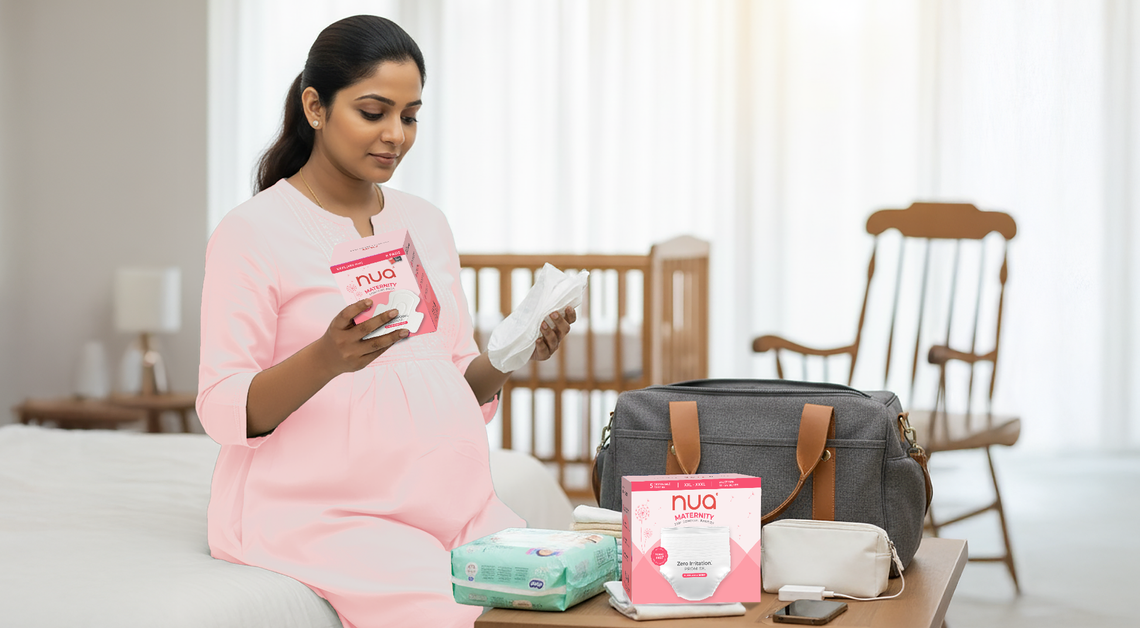
Nua’s Maternity Pads are the kind to pack in the hospital bag for delivery. They’re longer, ultra-absorbent, and most importantly, so much softer than what hospitals typically provide. No rashes, no leaks. Bleed, sit, feed, cry, they stay put.
And while we’re at it, Nua’s Maternity Panties deserve a mention. Disposable, breathable, and high-waisted (yes, even C-section friendly). They’re made to absorb lochia without feeling like a diaper.
For those who want it sorted, the New Mom Essentials Kit is the done-for-you answer. It has the pads, the panties, and even soothing wipes. Honestly, it’s the kind of kit that should be handed out with the birth certificate.
These aren’t luxuries. These are necessities that make the difference between just surviving and feeling slightly more human during recovery.
What This All Comes Down To
No need for five swaddles. No need for a silk pillowcase. What matters is feeling held, protected, and dignified in the most vulnerable hours. Build a maternity hospital bag checklist around that.
The bleeding will come. The hormones will crash. But with the right prep, it’s possible to meet that wave with softness and strength.
Because this isn’t just about what to pack in a hospital bag. It’s about giving yourself what you need to land on your feet as a mother. It’s about choosing peace over panic. It’s about packing power.
And that starts with a smarter, more compassionate hospital bag checklist.
If you need any more information about postpartum care, tell us in the comments below. We’ll help you out!