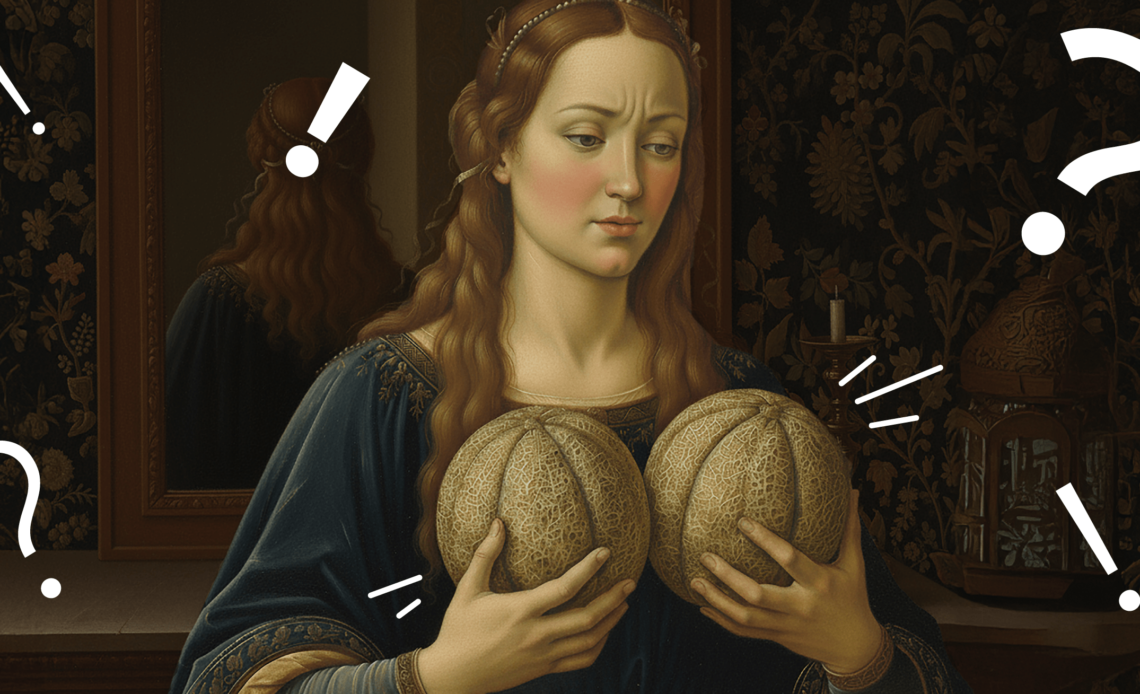
Breast cancer is more common than we might think, affecting women across generations. According to the WHO, approximately 1 in 20 women will be diagnosed with breast cancer in their lifetime, globally. That’s not meant to scare you, it’s meant to highlight the importance of early detection in breast cancer. When caught early, survival rates skyrocket. Research suggests it could be as high as 98%. And while clinical tools like mammograms are essential, knowing your own body and how to do a breast self-exam can help you spot the subtle changes that machines might not catch between screenings.
This isn’t about paranoia. It’s about awareness. Your awareness. So this Breast Cancer Awareness Day, let’s go over everything you need to know about the symptoms of breast cancer and how you can catch it yourself!
Why Breast Cancer Self-Exams Can Be Lifesaving
Your breast tissue is a mix of glandular tissue (which produces milk), fat (which gives breasts their softness and size), and connective fibres (which provide structure and support). Because of this complex mix, it naturally feels a little uneven or lumpy in places, especially in the days leading up to your period due to hormonal shifts. That’s completely normal.
What matters isn’t whether your breasts feel perfectly smooth (they rarely do), but whether you notice changes in how they feel or look. Pay attention to new lumps, areas that suddenly feel harder or thicker than surrounding tissue, swelling in one breast but not the other, or changes in texture that don’t go away after your cycle. These shifts can be some of the early signs of breast cancer (learn more about it here).
Now, here’s the nuance: most lumps you might come across are benign. Things like fluid-filled cysts, fibroadenomas (noncancerous solid growths), or monthly hormonal changes can mimic something scarier. But remember, you’re not expected to diagnose yourself, you’re simply the first line of awareness. Think of a self-exam as your personal baseline check-in, a way of telling your doctor, “Hey, this feels different, can we take a closer look?”
How to Do a Breast Self-Exam
Here’s the practical, no-nonsense breakdown of how to do a breast self-exam, so you know exactly what to do and why it matters.
Step 1: Look in the Mirror
Stand topless in front of a mirror with your arms relaxed at your sides, then slowly raise them overhead. You’re not just glancing, you’re studying. Here’s what you’re looking for:
- Contour & Shape: Notice the overall outline of your breasts. Are they the same size and shape they usually are, or do you see swelling or shrinkage in one?
- Skin Texture: Check for dimpling (which can look like an orange peel), puckering, or areas that seem pulled or uneven.
- Colour & Surface Changes: Look for redness, rashes, or any unusual patches of skin.
- Symmetry: Compare both breasts, does one look noticeably different from the other? Breasts are naturally symmetrical, so don’t panic if they generally look different from each other. Check if they look more different than usual.
- Nipples: Pay attention to sudden inversion (turning inward when that’s not your baseline), crusting, or spontaneous discharge (especially if it’s bloody or clear).
All of these are signs to flag and mention to your doctor if noticed.
Step 2: Feel While Standing (or in the Shower)
Many people find it easiest to do this step in the shower when skin is slippery. Use the pads of your three middle fingers (never the tips, because the broader surface area makes subtle changes easier to detect). Imagine your breast as a clock face: start at 12 o’clock on the outer edge and work your way around in a circle, moving gradually toward the nipple. Alternatively, you can use vertical strips, moving up and down in parallel lines until the entire breast has been covered. Don’t forget the upper outer area near the armpit, where breast tissue often extends.
Here’s what you’re looking for as you move through these patterns:
- New lumps or knots: Firm areas that feel different from the surrounding tissue.
- Thickened or rope-like areas: Sections that feel denser than before.
- Swelling or fullness: One side that feels noticeably different in size or density.
- Tender spots: Unusual pain or sensitivity in a localized area.
- Changes in mobility of tissue: A lump that feels fixed rather than moving under your fingers.
Varying your pressure matters. :ight pressure detects surface changes, medium catches abnormalities in the middle layers, and firm pressure lets you sense anything deep near the chest wall and ribs. This technique helps ensure you’re not just feeling the surface but scanning through every layer where potential issues could develop.
Step 3: Feel While Lying Down
When you lie on your back, your breast tissue spreads more evenly against the chest wall, making lumps easier to detect. Place a folded towel or pillow under one shoulder to elevate it slightly, then put that arm behind your head. Use the opposite hand to examine the breast in the same systematic pattern you used while standing — circular, up-and-down strips, or wedges, whichever feels natural to you. Repeat on the other side.
Take your time,don’t rush through this step. Consistency is more important than speed, because knowing your baseline helps you recognize subtle but important changes.
Step 4: Make It Routine
Do this once a month, ideally at the same point in your cycle, ideally a few days after your period ends, when hormonal swelling has calmed and your breasts are least tender. For those who don’t menstruate, simply pick a consistent date (like the first of each month) and stick with it.
Keeping a mental or written note of how your breasts feel over time helps you recognize what’s normal for you, so you can spot any meaningful changes quickly.
What You Might Find
Let’s be clear, self-exams aren’t about finding cancer every time. They’re about noticing changes. A lump that wasn’t there before, thickened skin, a spot that feels different from its twin on the other side. These could be symptoms of breast cancer, but they could also be harmless. Either way, they deserve attention.
It’s here that a professional breast cancer screening comes in. If you notice something unusual, don’t spiral into Google. Book an appointment. Your doctor might suggest an ultrasound, a biopsy, or a mammogram.
Let’s be honest: touching your breasts while hunting for cancer isn’t exactly the vibe of a spa night. It can feel awkward, scary, even triggering. But reframing helps. Instead of thinking, “What if I find something?”, shift it to “What if I catch something early enough to save my own life?”
Mammogram vs. Self-Exam
Self-exams are not a replacement for professional screenings. A mammogram is literally X-ray vision into your breast tissue, capable of detecting tumours too small to feel. But the debate of mammogram vs self-exam isn’t either/or, it’s both/and. Your hands plus modern breast cancer detection technology are a dream team. Self-exams catch changes in between appointments, mammograms confirm and diagnose.
Think of it as layers of protection. You wouldn’t skip locking your front door just because you have an alarm system, right?
The landscape of breast cancer prevention is evolving. Today’s breast cancer detection technology goes far beyond mammograms: there’s 3D tomosynthesis, molecular breast imaging, and AI-driven analysis of scans. That’s incredible progress.
But all the tech in the world doesn’t replace the intuition you build when you know your own body. Your fingertips are still powerful.
Bringing It All Together
So, if you take one thing from this: don’t ignore your breasts. Do the monthly check. Pay attention. And if something feels off, speak up and get it checked. A
On this Breast Cancer Awareness Day, let this be your reminder: your hands, your awareness, and your willingness to notice could literally save your life. Share this knowledge with the women around you. Talk about it, normalize it, and encourage each other. Because when we look out for ourselves and for each other, we build a culture where early detection becomes the norm — and more lives are saved.
Hoping to minimise your risk of breast cancer? Read this!