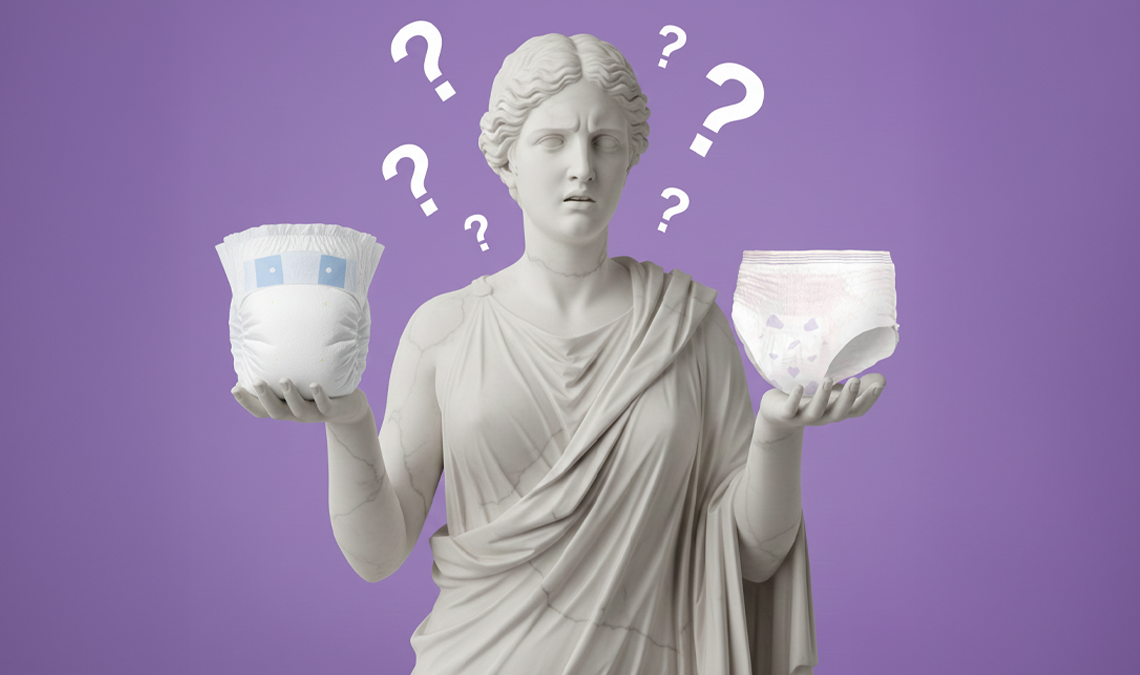
The debate of period panties vs. diapers is a common one. Many of us hear the term disposable period panties and immediately picture something bulky, crinkly and uncomfortable. We worry that we’ll be trading the anxiety of period leaks for the new embarrassment of wearing something that mostly people with bladder control issues wear (there’s nothing wrong with some incontinence btw!). This fear is completely valid, but it also stops so many women from trying a product that could actually be the most comfortable solution for their period.
So let’s uncover the truth together. Are period panties just a clever name for a diaper? Or are they a truly revolutionary product, built specifically for our bodies, our flow and our comfort?
Do disposable period panties feel like a diaper?
No. Not at all. A good pair of period panties actually just feel like your favourite underwear, whereas a diaper kinda feels like a medical aid (because it is one).
A diaper is built for a very specific and heavy job. It is designed to catch a full bladder release, which can be a continuous flow of up to 500 ml of thin, fast-moving urine. It also has to hold poop, which is much thicker and heavier than period blood and genuinely needs that “storage tank” kind of design. To handle both instantly and securely, a diaper has to be thick, layered and bulky.
Your period is a completely different story.
According to research, the average flow for an entire period (all 3-7 days) is usually between 30 ml to 80 ml. That’s around 10-20 ml per day, max. And even on your heaviest day, this fluid leaves the body slowly over the course of hours. Plus, it is not just liquid-like water. It is a mix of blood, tissue and mucus, which makes it thicker and more viscous.
Because the volume is so much lower and the flow is slower, period panties do not need that heavy diaper bulk. Nua’s Period Panties, for example, use a smart and compressed core. It is designed to be ultra-absorbent and locks the flow deep inside it without the need for thick padding. This means you get a sleek and breathable fit that feels just like your fav soft panties against your skin, rather than a heavy, bulky, plasticky feeling.
Can disposable period panties cause rashes like a diaper?
The short answer is no. A high-quality period panty is actually engineered to prevent the main causes of rashes, which are friction, rough materials and harsh chemicals.
First, let us talk about friction. Rashes often start where materials rub against the skin. Diapers rely on tight gathered elastics to prevent leaks, which can dig into your thighs and chafe as you walk. Period panties, like Nua’s, use soft and flexible materials that glide over your skin rather than rubbing against it. This creates a smooth experience that prevents chafing. Nua’s high-waisted fit also stays secure as you move, so the panty does not shift around and irritate your skin. Plus, the super soft waistband sits comfortably without leaving marks behind.
Then there is the surface itself. The top layer needs to be gentle because it touches the most sensitive skin for hours. Unlike the plastic feel of most diapers, period panties use a cotton-soft topsheet that prioritizes skin comfort.
Finally, chemicals are a huge trigger for skin irritation. This is where Nua’s Zero Irritation Promise comes in. Nua’s period panties are dermatologically tested and certified 100% toxin-free. By using a soft and airy topsheet without harsh irritants, they ensure your skin stays healthy and rash-free always.
Diapers have to be changed right after use. Is it the same with period panties?
The answer is a definitive no. And it all comes down to the advanced layering system inside a period panty that keeps you dry and fresh.
Think about how a diaper works. The sheer amount of liquid and solid waste they’re designed to hold is so high that it can feel wet on the surface before everything sinks in.
Period panties work differently because they use a technology called moisture-wicking. The top layer instantly grabs the menstrual flow and pulls it away from the body. It acts like a one-way street, pushing the fluid down into the ultra-absorbent core underneath. This core locks the fluid deep inside so it cannot squeeze back up.
This means the fabric touching the body remains dry to the touch. This advanced wicking technology, as seen in Nua’s period panties, ensures your skin is never damp or wet.
Do disposable period panties cause itching, as diapers are known for?
Period panties are designed to keep it cool and airy down there, and not hot and itchy.
Diapers can feel that way because they often use thick plastic backings to seal all the urine in. This traps body heat and moisture, which creates a hot and humid environment. That greenhouse effect is exactly what makes the skin feel irritated.
Period panties, on the other hand, prioritize ventilation. They use breathable fabrics that allow air to circulate freely. This prevents that uncomfortable heat buildup and keeps the skin cool. This focus on airflow is why Nua’s period panties offer 360° breathability, which keeps you feeling fresh rather than hot and bothered.
Will period panties look bulky under my clothes like a diaper?
No, period panties are designed to be practically invisible under clothing.
Diapers are cut with a boxy shape to accommodate the large absorbent core needed to manage poop and urine. Plus, they rely on tight elastics around the legs to stop leakage of the fast-moving urine. This creates bunching, which forms those visible lines or bulk under clothes.
Period panties are seamless. They are cut to follow the natural curves of the hips and waist. These details ensures there are no panty lines even under tight leggings.
To learn a few styling tips for wearing period panties with tight clothes, check out our blog here.
Blog continues after the ad.
Period Panties vs. Diapers For Other Bodily Fluids
Can period panties handle urine leaks?
The wicking technology in period panties is actually fantastic for minor urine leaks. If a sneeze or a laugh or a jump at the gym causes a little leak, the core will lock it away instantly.
However, there is a limit. Because period panties are designed for blood and not a full bladder release, they are not a replacement for diapers in cases of urinary incontinence. For complete urine protection, a diaper is still the correct medical choice.
Are period panties good for postpartum bleeding?
Period panties can absolutely be used for postpartum flow. In fact, Nua’s 360-degree coverage is a lifesaver when lying down or nursing.
But postpartum bleeding is very heavy and unique, with not just blood but also clots and gushes. And while period panties are great, many mums find that a product made just for this healing phase works best. Nua Maternity Panties are designed specifically for this sensitive time, offering the specialised cushioning and absorption power the body needs while it recovers. Once the flow settles down, switching to period panties is a wonderful way to feel normal again.
Can period panties be used for bowel incontinence?
This is a clear no. Period panties and some diapers are not designed to manage or contain fecal matter. This is a completely different medical need that requires a product specifically designed for that purpose.
What Should I Look for in a Period Panty?
When you are choosing, you are choosing an experience. It is about more than just not leaking. It is about feeling good in your body.
First, look for a seamless, 360° fit. The panty should move with your body. Second, prioritize skin-safe materials. Your skin is sensitive, especially during your period. You need a product that is breathable, soft and proven to be gentle. Third, check for a secure design. This means a comfortable waistband that stays put and a core that truly locks fluid away to keep you dry.
Finding your perfect solution means you don’t have to compromise. Nua’s Disposable Period Panties were designed with all of this in mind. So, if you’re new to period panties, give Nua a try. And if you’ve any other questions, leave them in the comments and we’ll get back to you.