


Let’s talk about something most of us experience but rarely talk about—vaginal discharge. It shows up in your underwear, changes with your cycle, and can sometimes be confusing or even worrying. But it doesn’t have to be. Your body has a way of whispering when things are fine, and when they’re not. This guide is here to help you tune in.
What is vaginal discharge?
Vaginal discharge is identified by secretions from the small glands of the mouth of the uterus i.e. cervix and vagina. This discharge is expelled from the vagina every day, clearing the old cells and debris, and keeping the vagina healthy and clean. It’s like an antiseptic flush that prevents the reproductive system from all kinds of infections.
Every woman’s vagina houses millions of healthy bacteria, and depending on the kind of bacteria, the odour the discharge can vary. This odour can vary if there are any infections that have gone undetected.
According to research, the amount of white, normal vaginal discharge also varies based on the phase of the menstrual cycle (more about these phases here). It increases during ovulation and right before your menstrual cycle. Its consistency also varies, it’s thickest at the time of ovulation and becomes watery just before your periods.
What is a normal discharge?
Quick answer? White in colour, slight odour, and changes with your cycle.
Your discharge can be clear or milky-white, sometimes stretchy like egg whites (especially around ovulation). A little smell? Totally normal! Your vagina isn’t supposed to smell like roses, it’s meant to smell like you. During pregnancy, ovulation, arousal, or even when you’re on birth control (thanks to the change in oestrogen and progesterone level), it might increase, and that’s still normal. It happens because there is an increase in blood supply to the hormone glands.
Even if it feels like a lot sometimes, especially right before your period or when you’re turned on, it’s just your hormones doing their thing. As long as the colour is white or clear and the smell isn’t overpowering, you’re good.
Panty liners can very helpful in feeling clean, comfortable and fresh when this happens!
Blog continues after the ad.

What is abnormal discharge?
When it’s discoloured, smells fishy, or has a weird texture.
Here’s what might set off your internal alarms:
Discoloured (yellow, green, grey, or brownish)
Fishy odour
Changing consistency (watery or curd-like)
Itching, irritation, or pelvic pain
Vaginal discharge is abnormal when you notice the following symptoms:
Watery, fishy odour → may indicate bacterial vaginosis.
Thick, white, curd-like with itching → often a fungal infection, triggered by antibiotics, diabetes, stress, or long-term pill use.
Greenish or frothy discharge → could be trichomoniasis (a parasitic infection).
Pain with discharge → may suggest pelvic inflammatory disease, or in some cases, STIs like chlamydia and gonorrhoea.
What should you do if you notice abnormal vaginal discharge?
Don’t ignore it. See your gynaecologist if discharge changes suddenly, especially if it comes with odour, pain, or irritation. Most infections are treatable when caught early, but delaying can allow them to spread to the uterus, fallopian tubes, and ovaries. Regular pelvic exams and PAP smears are essential for early detection and prevention (learn more here).
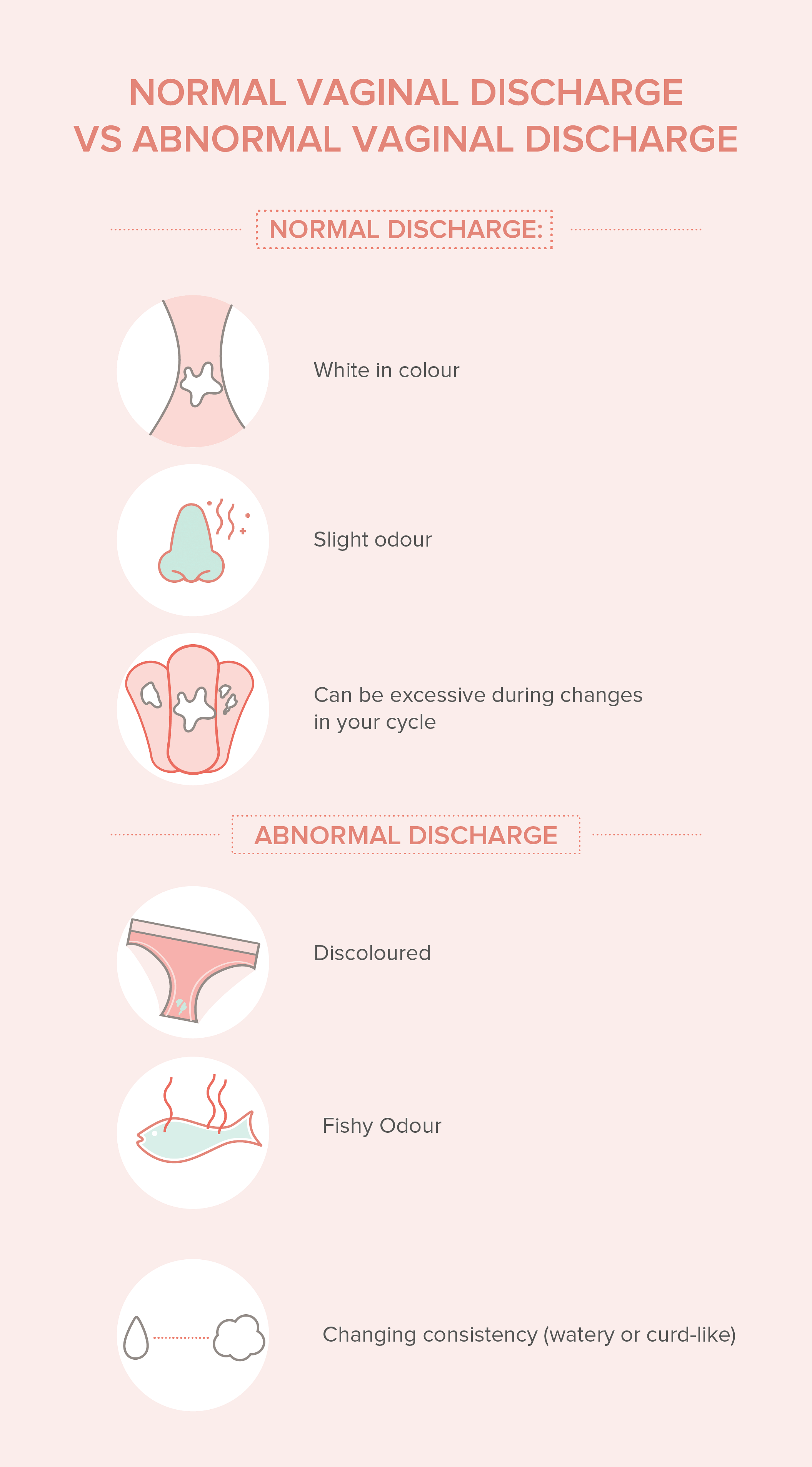
In short, it’s important to know what’s normal vaginal discharge and what isn’t. White, mild-smelling discharge that varies with your cycle is healthy. But if you notice discolouration, fishy odour, or irritation, it’s time to check in with a professional. Learn your own baseline so you can recognize when your body is signaling that something’s wrong.
Got an intimate question you’re too scared or embarrassed to ask aloud? Try Nua’s Secret Chat — a safe space for asking sensitive questions and getting expert answers.
Read more articles by Dr Anupriya Goel here.


It is very helpful information that what is normal discharge and what’s not. Thanku for sharing.
It is very helpful for me. Thanks.