
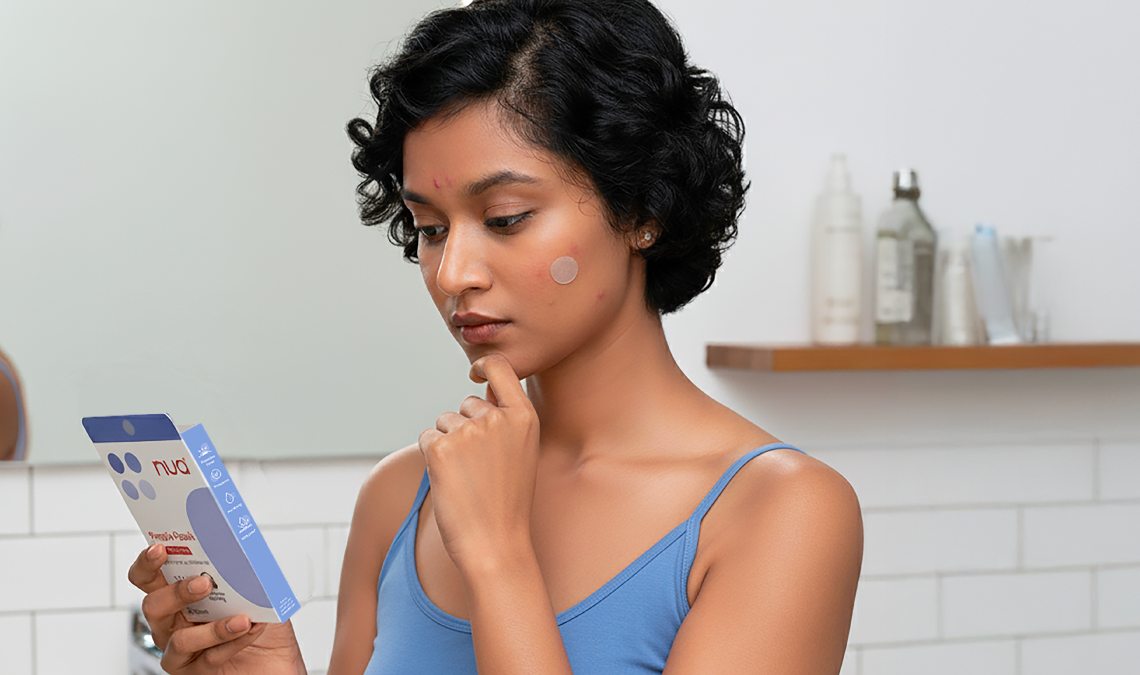
You’ve spotted them on your social media feed, cute lil’ circles on someone’s cheek, giving full Insta baddie vibes. They sleep with it on and the next morning, boom, the pimple’s gone. Feels like magic? But eh eh, spoiler alert: there’s no wizardry here. The real secret’s in the pimple patch ingredients, working behind the scenes to calm, heal and protect your skin.
And yeah, we get the scepticism. When has a trendy remedy or product ever actually worked? Staring at that tiny sticker and thinking, “Will this even do anything?” is totally normal. But here’s the thing, this tiny, cute thing will 100% work. And here’s the why and how of it.
The Hero of Pimple Patch Ingredients: Hydrocolloid
If pimple patches had a main character, it would be hydrocolloid. Smart, absorbent, hardworking, it understands the assignment. And why wouldn’t it? It’s been well-known in the medical world for ages as a wound dressing. So, don’t worry, it isn’t just another TikTok skincare trend. It’s tried-and-tested science.
Research shows hydrocolloid pimple patches can smooth out texture, calm redness and speed up healing. We’re talking visible results from Day 1. Yup, that fast.
But what is it exactly doing for your pimple? First, it sucks out all the gunk: excess fluid, pus, oil, the whole messy situation, kind of like a mini vacuum. That satisfying white blob you see on the patch when you peel it off? Yeah, that’s the proof.
Second, it puts your pimple in witness protection, blocking bacteria, dirt, and most importantly, your own itchy fingers from messing with it. And because one size never fits all, Nua’s Pimple Patches come in two sizes: 8mm for those tiny troublemakers and 12mm for the bigger drama queens.
The bonus? Nua’s patches also have an antibacterial barrier for extra protection while your skin heals.
Active Ingredient that Targets Acne: Salicylic Acid
While a plain hydrocolloid patch is great, some patches come with added active ingredients for an extra boost of acne-fighting power. The most common and effective sidekick you’ll find is Salicylic Acid. It’s a go-to for dermatologists, and for good reason. In one study, just using salicylic acid on its own was enough to bring acne severity scores way down (and it didn’t even take months, just a few weeks).
Here’s what it does:
- Dissolves dead skin cells
- Removes excess oil that blocks your pores.
- Prevents future breakouts.
- Reduces redness and swelling
Other active ingredients can include niacinamide and tea tree oil. Nua’s pimple patch gives you the best of both worlds: hydrocolloid to draw out the gunk and salicylic acid to treat what’s underneath. With Nua, you’re healing and preventing acne at the same time.
What’s NOT in a Pimple Patch Matters Just as Much
A good quality patch shouldn’t just have effective ingredients, it should also be free from things that can irritate your skin.
Maybe it’s a benzoyl peroxide gel from the pharmacy, a sulfur cream your friend suggested, something with AHAs or tea tree oil you saw online. These aren’t “bad,” in fact, they can be game-changers for some, but they’re not always meant for DIY use. Even if you’ve used them before, they need a doctor’s guidance to avoid dryness, peeling or skin sensitivity.
And honestly? Not every lil pimple calls for high-strength ingredients. Sometimes your skin just needs a calm, targeted fix. That’s where pimple patches shine. They deliver the ingredients exactly where they need to go without affecting the rest of your face. Nua’s patches are dermatologist-created and free of harsh chemicals, making them safe for all skin types, even sensitive skin.
Can pimple patch ingredients cause scarring or make things worse?
Mostly nope. By protecting the spot and stopping you from picking, patches can actually lower the risk of scarring.
But fair warning: some people can get contact dermatitis or irritation from adhesives or certain added actives (especially tea tree oil or fragrances). If your patch starts itching, stinging, or burning, peel it off and treat the area gently.
The good news? Nua’s patches are fragrance-free, dermatologist-tested, and made with skin-friendly adhesives, so you get maximum healing power with minimum irritation risk.
When should you not use a pimple patch?
If it’s a deep, painful lump hiding under the skin (cystic acne), a patch can’t reach the root, this is where you’ll need other treatments. The same goes if you’re already on medicated creams for your whole face; patches won’t replace them.
And if the spot is bleeding or there’s an open sore, check with a dermatologist first. Hydrocolloid is great for wound care, but infected or ulcerated skin needs extra attention.
Bottom line: patches are amazing for surface-level pimples, but they’re not an all-in-one cure for every type of breakout.
Small Patch, Big Results
Pimple patches aren’t here to replace your entire skincare routine. They’re here to step in when your skin needs focused, fuss-free help. By combining ingredients that pull out impurities with ones that protect, they give breakouts the exact environment they need to heal faster, with less risk of irritation or scarring. They work as you sleep, work, sweat it out or just relax. Plus, they work with make-up, too! (here’s how)
And maybe that’s the real magic, not chasing every new acne hack, but finding a tiny, reliable fix you can trust to work quietly in the background while you get on with life.