First off, there’s no one ‘best sanitary pad’. That’s probably why searching for the best sanitary pads can feel like a mini research project. You walk into the pharmacy and it’s one overwhelmingly long aisle. You go online and it’s endless scrolling, with a thousand Google results. Everywhere you turn, labels are shouting “ultra-thin,” “XXL,” “rash-free,” “overnight”, and you’re left wondering, okay, but which one is actually best for me?
That’s why we’ve pulled together the most common (and often unspoken) questions about pads that we’re going to answer one by one, so the next time you’re stuck in that store aisle or scrolling online, you’ll know exactly what to reach for.
What does “Wider Back” mean in pads? Is it really useful?
A “wider back” usually means the back portion of the pad (the part that sits closer to your tailbone when you wear it) is broader than the front. Why? Because when you’re sitting, lying down, or even walking, flow tends to move backwards (thanks to gravity).
A wider back helps catch that.
But here’s the thing, not all “wider backs” are the same. Some international brands use this term, but their pads are often sized for slimmer Western body types. For Indian bodies, where hips and curves are usually broader, that so-called “wide” isn’t always wide enough.
That’s why when Nua says “wider back,” they mean it. Their pads are designed with 50% extra back coverage that actually matches Indian body proportions perfectly. Chef’s kiss!
What are ‘Ultra-Thin” pads? Are they really better than regular pads?
Ultra-thin pads are designed for comfort and discretion. If you’re someone who hates the diaper-like bulk of traditional thick pads or if you wear tighter clothes where pad lines show through, ultra-thin pads are your best friend. They’re so great you forget you’re even on your period, you know…no heavy, padded feeling every time you sit down.
But don’t worry, ultra-thin doesn’t have to mean less absorbent. Brands like Nua have made technology work in their favour with their super-absorbent ultra-thin pads. They work by layering absorbent cores so the pad stays light but soaks up flow quickly. In short, you get the best of both worlds, 100% comfort and 100% protection.
What are “Toxif-Free” pads?
Pads don’t usually come with a detailed ingredient label like food packets do. That makes it hard to know what’s really inside. The truth is, many regular pads can have things like chemicals, artificial fragrances, dyes or bleaching residues. In the long term or on sensitive skin, they can lead to itching, rashes or allergies.
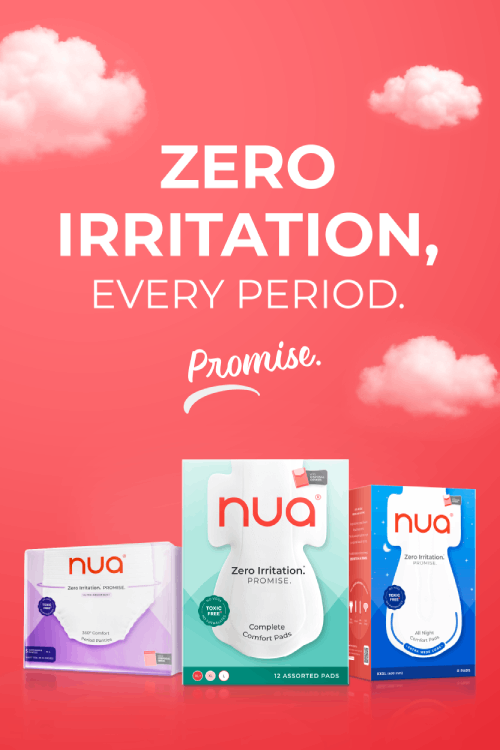
That’s where toxic-free pads come in. Brands like Nua make sure their pads are free from harmful toxics. And that matters because the skin in your intimate area is far more delicate than the skin on the rest of your body. Anything harsh can easily irritate it. So, choosing toxic-free pads means you’re not rolling the dice with your skin health down there.
Are organic pads better?
Not always. The word organic sounds reassuring, but it doesn’t automatically mean a pad will be safer or gentler for your skin. Take cotton, for example, even if it’s “organic,” it usually goes through processing, bleaching, and layering before it becomes part of a pad. So, while the starting material is organic, the final product may not be.
What actually matters is that your pad is free from harsh chemicals, skin irritants and unnecessary add-ons like fragrances and colours. Research shows that these materials can cause rashes or allergic reactions. That’s why a 100% toxic-free option like Nua’s Zero Irritation Pads works better than those that just carry an “organic” label.
Do sanitary pads need to be dermatologically tested?
Absolutely. Pads stay in close contact with your skin for hours at a stretch, often overnight. That’s why it’s not enough for them to just be absorbent, they also need to be safe for your skin.
When a pad is dermatologically tested, it means it’s been tried on human skin under the supervision of dermatologists to check for irritation, rashes, or allergic reactions. In other words, it’s been proven to be skin-friendly, not just in theory but in real use.
Nua’s pads go through this kind of testing to make sure they’re gentle and reliable. So, along with protecting you from leaks, they also care for your skin.
Which pad works best for irregular cycles?
If your cycle doesn’t stick to a schedule, choosing pads can feel like a guessing game. Some months your flow is lighter, and other months it feels like you need the heaviest protection possible. That’s why the best solution isn’t one pad, but a mix of different ones.
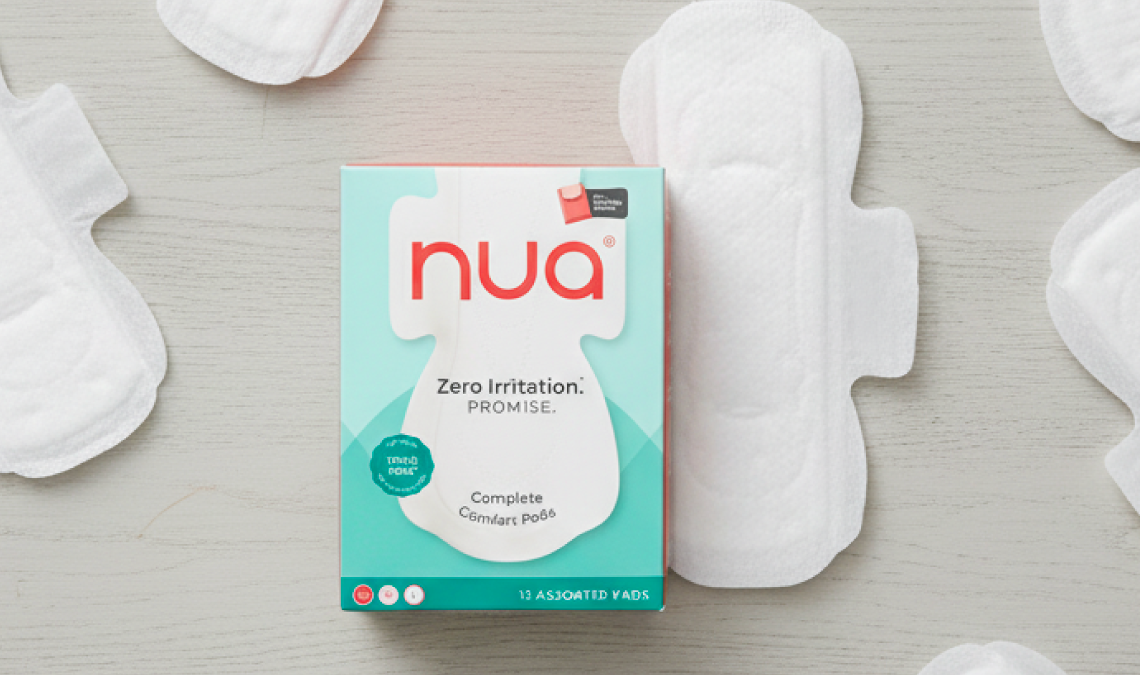
This is exactly why Nua’s Build Your Box option exists. It lets you mix different absorbencies so you’re covered for spotting days, heavy flow days and all the unpredictability in between.
So, which pad is best for periods?
At the end of the day, the best pad is the one that makes you feel comfortable and confident. Once you know what to look for (thin vs. thick, day vs. night, skin-friendly, heavy flow support), finding the best pad stops feeling overwhelming and starts feeling manageable. We have a complete guide to help you choose the right sanitary pad here.
Think of pads less like a mystery to solve and more like options you can mix and match depending on your body and lifestyle. That’s when periods start to feel a little less like stress and a lot more like something you’re in control of.