
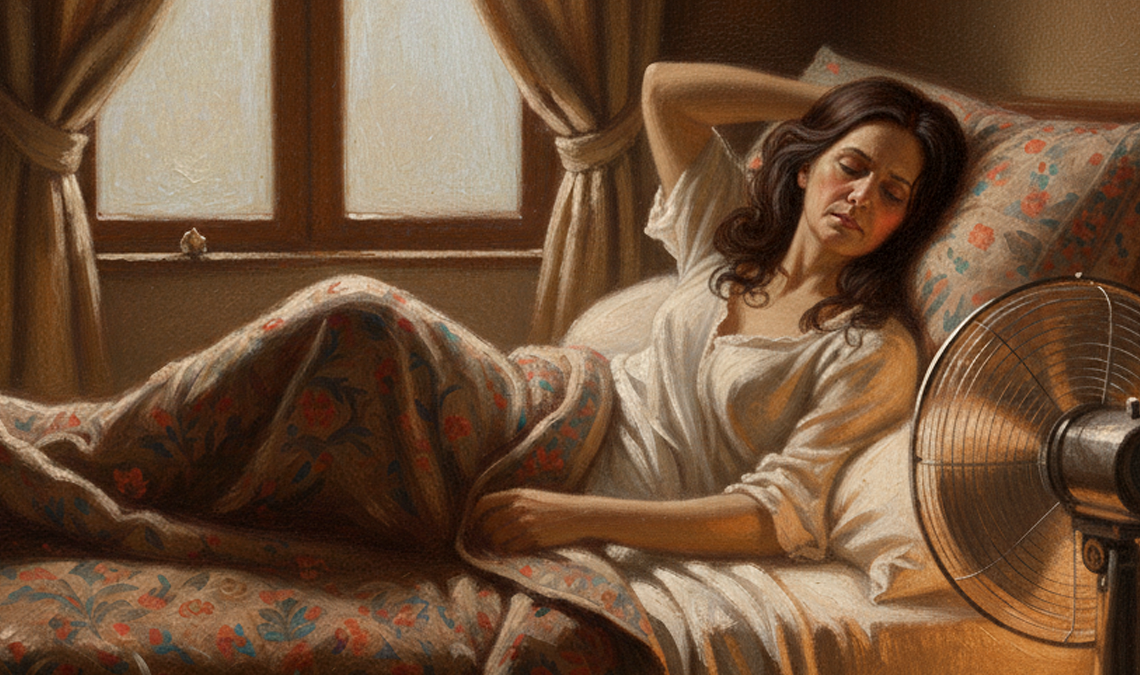
Perimenopause can feel like the universe decided to play a prank on your body. One day you’re fine, the next you’re wide awake at 3 a.m., sweating through the sheets, wondering why your brain won’t shut up. Welcome to the messy middle of hormonal evolution! Because sleep issues during perimenopause are often the unexpected guests that refuses to leave.
According to research, the prevalence of sleep disturbance varies from 16% to 42% in pre-menopause, from 39% to 47% in perimenopause, and from 35% to 60% in post-menopause. And it’s not just tiredness, it’s like your entire inner rhythm is playing out of sync, from your hormones to your body temperature, your moods to the vivid dreams that blur into wakefulness.
Sleep issues during perimenopause don’t mean you’re failing at rest, they’re a reflection of your body recalibrating to a new hormonal rhythm. Once you understand the biology behind it, the guilt starts to fade. You realize your body isn’t fighting you, it’s adapting. And that shift in mindset alone can make the process a little less lonely, a little more human.
Here’s your first step to understanding…
The Hormone Rollercoaster: Why Your Nights Feel Like a Battleground
During perimenopause, multiple hormones that once worked in harmony begin to shift their rhythms and each one plays a unique role in how well you sleep.
Estrogen helps regulate your internal thermostat, supports serotonin (the mood stabilizing hormone), and assists melatonin (your sleep hormone) in keeping your sleep-wake cycle consistent. When estrogen dips, body temperature spikes and mood regulation falters, leading to restless nights.
Serotonin and melatonin are the rhythm keepers of your sleep architecture. When estrogen levels drop, serotonin synthesis declines, which means less melatonin production too. The result? Lighter, fragmented sleep and more frequent awakenings.
Progesterone acts as a natural relaxant. It quiets the brain and eases muscle tension, helping you fall asleep. Lower levels remove that calming influence, leaving you more prone to anxiety or mid-night awakenings.
Cortisol, your stress hormone, should peak in the morning and taper by evening. During perimenopause, disrupted feedback from estrogen and progesterone can throw that pattern off. Cortisol may surge at night, keeping you alert and making insomnia and perimenopause feel inseparable.
Finally, GABA, the neurotransmitter that signals your body to relax, is closely tied to estrogen activity as well. Reduced estrogen can mean a weakened GABA response, leaving your nervous system slightly on edge even when you’re trying to rest.
Blog continues after the ad.

How does this all show up in real life?
All of these chemical changes converge in various ways. Like waking up drenched at 3 a.m., craving sugar or caffeine for energy, feeling wired at bedtime, or snapping at tiny frustrations because your brain never got deep rest. You might nap but never feel refreshed. This isn’t lack of will, it’s not that you’re not tired enough to sleep or not calm enough to pass out, it’s your neuroendocrine system recalibrating in real time. Recognizing this helps you shift from self-blame to strategy, so you can work with your body instead of against it.
Read about the other signs and symptoms of perimenopause here.
Real Talk: It’s Not Just in Your Head, It’s In Your Chemistry
The cultural narrative often tells women to “manage stress” or “just relax,” but that oversimplifies the reality. Sleep issues during perimenopause aren’t lifestyle flaws, they’re chemical, physiological, and very real. Your brain and body are literally recalibrating to a new hormonal normal. Understanding that connection is empowering, it shifts the story from blame to biology.
And when you see the pattern clearly, solutions become more strategic. You start noticing what triggers the worst nights—alcohol, caffeine, late meals, heat—and realize that managing perimenopause sleep problems isn’t about perfection. It’s about small, informed adjustments that respect what your body’s trying to do.
What Actually Helps: The Grounded, Non-Gimmicky Stuff
There’s no magic fix, but there are powerful shifts that can make a huge difference in managing perimenopause insomnia. Here’s what actually helps:
Temperature-proof your nights.
Keep your bedroom cool (around 18-20°C). Invest in moisture-wicking sheets or sleepwear designed for night sweats perimenopause. Avoid heavy blankets. Think of your bed as a temperature-neutral zone, not a sauna. (Consider this hack too!)
Rethink your bedtime routine.
Perimenopause means your body doesn’t regulate cortisol as smoothly. That means winding down early matters. Try stretching, journaling, or even slow breathing before bed. Skip doomscrolling. (We all know Instagram’s algorithm will not help your REM cycle.)
Balance your blood sugar.
Fluctuating blood sugar can trigger cortisol spikes and sleep disruption due to hormonal changes. Try to eat balanced meals with protein, fiber, and good fats—especially in the evening (here’s more information on that). Avoid the late-night carb crash that wakes you up sweating and starving at 2 a.m.
Support your hormones naturally.
Some women find relief with magnesium glycinate, B6, or herbal supports like ashwagandha and black cohosh (talk to your doctor first). These can gently support relaxation and help with restful sleep during perimenopause.
Move, but don’t overdo it.
Exercise helps regulate hormones and reduce stress, but too much high-intensity training can actually worsen insomnia and perimenopause. Find a rhythm that supports you—like walking, yoga, or strength work in the morning rather than late evening.
Track your patterns.
Keep a sleep journal or use an app to note when symptoms spike. You might find that certain phases of your cycle or stress levels line up with worse nights. Awareness makes it easier to adapt.
Talk to your doctor about real options.
If your sleep problems are persistent, discuss low-dose hormone therapy, SSRIs, or non-hormonal medications. The stigma around these treatments is fading and rightly so. There’s no medal for suffering through sleepless nights.
Reclaiming Rest: The Emotional Side of Sleep
Sleep is deeply tied to identity. It’s how we reset, heal, and process our emotions. During perimenopause, when everything feels like it’s shifting—your energy, your confidence, your body—losing sleep can feel like losing part of yourself. But here’s the reframe, your body isn’t broken. It’s transitioning. It’s recalibrating.
You might not sleep the way you did in your twenties, but you can still cultivate restful sleep during perimenopause that feels nourishing and restorative. It just takes new strategies and a lot of self-compassion.
So, next time you wake up at 3 a.m. in that familiar sweaty haze, remember: you’re not alone, and your body isn’t betraying you. It’s communicating. Listen, adjust, and give it what it needs. This season won’t last forever, and with the right perimenopause sleep tips, your nights can absolutely get better.