What you’ll learn about how travel affects your menstrual cycle:
- Travel disrupts your circadian rhythm, and time zone shifts can delay or trigger ovulation, leading to early or late periods.
- Stress from planning, flying, and navigating new places raises cortisol, which can temporarily delay ovulation.
- Poor or irregular sleep affects melatonin, which interacts with estrogen and progesterone, making cycles less predictable.
- Changes in diet, hydration, and digestion can alter how estrogen is processed, subtly shifting your period timing.
- Most travel-related cycle shifts are temporary, your period isn’t malfunctioning, it’s adapting.
You’ve packed your bags, double-checked your passport, and mentally prepared for the version of yourself who wears sundresses and sips on iced coffee in outdoor cafes. And then, out of nowhere, your period decides to drop by uninvited, like the plot twist no one asked for. Or worse: it ghosts you entirely. Suddenly you’re Googling why your period starts when traveling instead of planning what bikini to wear.
If this sounds familiar, you’re absolutely not alone. A lot of us notice that our vacation period timing feels like it operates on its own chaotic time zone. Sometimes your period shows up early. Other times you’re left waiting, confused, mildly annoyed, and triple-checking pregnancy tests in foreign languages. And the funny thing is, your body isn’t betraying you. It’s actually responding to everything happening around you.
Travel affects your menstrual cycle in ways most of us don’t realise. New foods, new places, different beds, different routines, all of these shifts are why your cycle behaves so differently when you’re away. Your cycle is basically a quiet but highly sensitive feedback system, constantly reading the room (or continent) you’re in.
Let’s get into what actually happens, without getting overly textbook about it.
Does Jet Lag Actually Affect Your Period?
Yes. Jet lag doesn’t just make you feel out of sync. It puts your hormones through a similar scramble. When you jump across time zones, your circadian rhythm (your body’s internal 24-hour clock) suddenly doesn’t match the world around you. And because your circadian rhythm helps regulate reproductive hormones, these mixed signals disrupt your menstrual cycle.
Here’s what’s actually happening with the jet lag menstrual cycle connection:
- According to research, your body relies on consistent light cues to regulate melatonin, which then influences GnRH, the hormone responsible for kicking off ovulation. When you land somewhere where the sun rises while your body thinks it’s 2 a.m., melatonin has no idea what it’s supposed to be doing.
- That delay affects the timing of ovulation. Even a small shift can cause a noticeable travel period shift. Your period might show up early, late, or feel different in intensity.
- Jet lag also affects cortisol (your stress hormone). When cortisol rises at the wrong times, it can disrupt the natural rise and fall of progesterone. Progesterone is what stabilises the uterine lining after ovulation, so if levels dip prematurely, the lining can break down earlier than planned. That’s why some people experience unexpected spotting or an early bleed after long-haul travel.
In short, your internal clock is trying to reboot, and your cycle is simply reacting to the glitch.
When your body’s out of sync and your period shows up unannounced, having the right backup matters.
Built for exactly these moments, try Nua’s Everyday Panty Liners!
Blog continues after the ad.

Does Travel Stress Shift Your Period Timing?
Absolutely. Vacations are supposed to be relaxing, but the process of getting there? Not so much. Booking flights, rushing to finish work, navigating airports, dealing with lost luggage, your cortisol levels feel all of it.
When stress rises, your brain sometimes delays ovulation because it interprets the stress as a sign that something unsafe or unpredictable is happening. Your body has one job: to protect you. If it thinks it’s not the right environment for reproduction, even temporarily, it might delay the whole cycle. If it thinks you’re under threat, it redirects resources to survival rather than to your menstrual schedule.
This is one of the biggest reasons that vacation period timing feels so unpredictable. If ovulation shifts, your period will shift right along with it. So yes, even good stress can affect your menstrual cycle in dramatic (or slight) ways. The fact that travel affects your menstrual cycle through stress alone is something most people don’t realise.
Can Poor Sleep on Vacation Trigger a Period Change?
Yes, and this one catches a lot of people off guard. Even without changing time zones, vacation sleep is rarely normal sleep. Late dinners, early excursions, different beds, bright hotel hallway lights, thin Airbnb curtains, street noise, or just the excitement of being somewhere new, all sabotage your sleep quality.
Melatonin, the hormone that regulates sleep, directly interacts with estrogen and progesterone. When sleep becomes inconsistent, melatonin production fluctuates. Those fluctuations ripple into the reproductive system, making your cycle more reactive and less predictable.
This is why so many people notice their period starts when traveling even when they haven’t crossed a single time zone. Your body interprets unusual sleep patterns as environmental stress. And stress can delay ovulation, or occasionally trigger an early bleed if progesterone dips sooner than usual.
Think of it like this: your hormones can handle a little chaos, but when your sleep becomes a collage of naps, late nights, and half-rested mornings, your cycle starts improvising.
Because your period isn’t always predictable on the road, staying prepared is its own kind of self-care.
Your travel companion for unpredictable days – Nua Period Panties.
How Does Travel Food Affect Your Period?
Your digestive system and your reproductive system collaborate constantly. In fact, a huge portion of your estrogen is processed through the gut, which means anything that affects digestion can subtly shift hormone levels too.
Here’s what’s changing when you eat differently on holiday, and what you can do about it:
- Watch the salt and alcohol. Extra salt leads to bloating and water retention. More alcohol means more inflammation. Both affect how efficiently your gut metabolises estrogen.
- Keep some fibre in the mix. New cuisines often mean less fibre than usual. Slow digestion means estrogen recirculates instead of being flushed, which can make the uterine lining more reactive or unstable.
- Stay hydrated, especially on flights. Flying is incredibly dehydrating. Dehydration slows digestion and increases pelvic pressure, making cramps feel sharper and spotting more likely.
- Eat actual meals, not just snacks. Unpredictable mealtimes disrupt your gut rhythm. Grounding meals with protein and fibre help stabilise your digestive environment, and by extension, your hormones.
- Be gentle with new water sources. New water can disrupt your probiotic balance. A disrupted gut microbiome affects estrogen metabolism, which is one more reason travel affects your menstrual cycle through seemingly unrelated things like digestion.
Does Changing Your Activity Level During Travel Affect Your Period?
It can. Some people walk 25,000 steps a day on vacation without even trying. Others spend the whole trip lounging on the beach clocking only 50. Either way, your activity level probably changes when you travel, and your hormones notice.
A few things worth knowing:
- A sudden spike in exercise or a sudden drop can subtly influence your hormones. Not usually enough to be dangerous, but enough that your vacation period timing might feel off.
- Long flights or long drives also mean long periods of sitting, which affects blood flow, digestion, and stress hormones.
- Reduced movement slows circulation to the pelvic region, which can make cramping feel worse and bleeding feel heavier when your period does arrive.
- It’s another small, often overlooked factor for why your period starts when traveling and why it can feel earlier or heavier than expected.
If your period is heavier or more unpredictable on active travel days, a product that keeps up with you makes all the difference.
Comfort that moves with you, try Nua’s EaseFit Tampons for active travel days.
Can Climate and Sunlight Changes Trigger a Travel Period Shift?
Yes. If you’ve ever gone from winter at home to a tropical beach vacation, or vice versa, there’s a good chance your period was off.
Here’s how a change in environment actually affects your cycle:
- Sunlight exposure affects melatonin. Colder places have less sunlight, beach locations are mostly very sunny. That shift in daily light exposure directly influences melatonin levels, which in turn influence reproductive hormones.
- A drastically hotter or colder environment changes how your body manages stress, hydration, and metabolic rate. These subtle changes all add up.
- Even something like higher altitude or humidity can shift how your body prioritises its resources, and your cycle may respond.
- It’s wild how your body keeps score of everything you’re not consciously tracking. This is exactly how travel affects your menstrual cycle through factors that seem completely unrelated to your period.
How Can You Keep Your Cycle Stable While Travelling?
You can’t always prevent a travel period shift, but you can make it easier to deal with. Here are gentle ways to help your cycle feel more stable while you travel:
- Keep a consistent sleep schedule, even if it’s not perfect. Going to bed and waking up at similar times, even on holiday, helps your melatonin and cortisol stay somewhat regulated.
- Hydrate more than you think you need. Flying is incredibly dehydrating. Keep a water bottle on you and drink through the journey.
- Eat something grounding. Protein, fibre, and actual meals, not just travel snacks, help stabilise your gut and by extension your hormones.
- Get sunlight early in the day. Morning light helps reset your internal clock, which helps your cycle recalibrate to the new time zone faster.
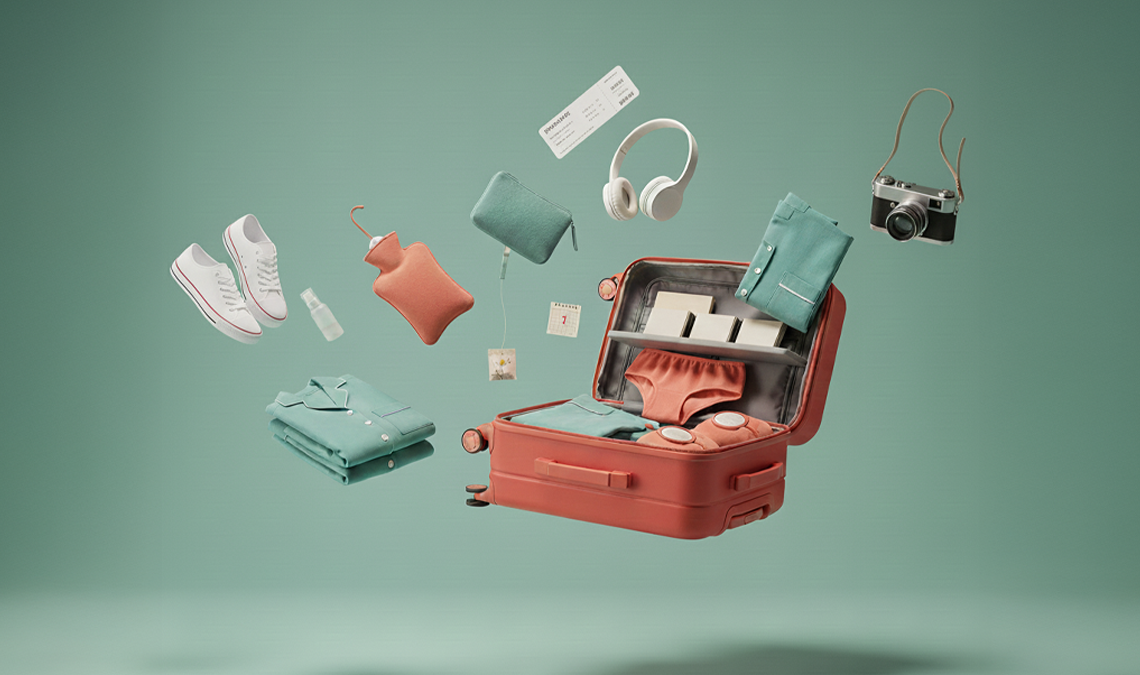
- Pack all the right period supplies, because your vacation period timing can surprise you. Panty liners for unexpected spotting, disposable period panties for long travel days, and tampons if you’re planning to be active or swimming. And of course, sanitary pads for your regular flow days.
- Be kind to yourself. You’re adapting to a new place. Your hormones are too.
None of these guarantee that your cycle won’t shift, because the truth is, travel is a full-body experience. And sometimes your period responds accordingly.
The Bottom Line: Your Period Is Just Keeping Up With You
Travel changes you, literally. The version of you who steps into a new city isn’t the same one who boarded the plane. And your hormones notice. The reason travel affects your menstrual cycle isn’t a mystery anymore. It’s jet lag reshuffling your hormones, stress from the journey delaying ovulation, poor sleep throwing off melatonin, new food changing how estrogen is metabolised, and shifts in light, climate, and activity all nudging your cycle in different directions.
Your cycle adapts to your lifestyle, your stress level, your sleep, your meals, your movement, and your environment. So when your period starts when traveling, it’s not a betrayal. It’s communication. It’s your body adjusting its rhythm to match wherever you are.
So the next time you pack your bags, throw in an extra tampon. Just to stay one step ahead of your very perceptive uterus.
Disclaimer:
The content of this article is provided for general informational and educational purposes only and is not intended to constitute medical advice, diagnosis, or treatment. The information shared is of a general nature and may not be appropriate for all individuals or specific circumstances. Readers should not disregard, delay, or substitute professional medical advice based on the information contained herein.
If you experience any symptoms, notice anything unusual, or have concerns relating to your health or overall wellbeing, you should consult a qualified healthcare professional. While every effort is made to ensure the information shared is accurate and up-to-date, Nua makes no representations or warranties, express or implied, regarding the accuracy, completeness, or suitability of the information provided and disclaims all liability arising from reliance on this content to the fullest extent permitted by law.