What you will learn from this guide about first period cramps:
- First period cramps are common and usually a normal part of your first period.
- Cramps happen because the uterus contracts to shed its lining, driven by chemicals called prostaglandins.
- Most first period cramps feel mild to moderate and are strongest in the first couple of days.
- For most girls, cramping lasts around 1–3 days and eases as the flow becomes lighter.
- Simple things like heat, rest, gentle movement, and pain relief medication can help manage the pain.
- Period cramps often become easier to handle as your cycle becomes more regular over time.
First period cramps are common, and yes, it is completely normal for your first period to hurt.
For most young girls, there is the general warning that your period is coming, maybe a quick chat about pads, and then one day it just shows up. The information that often gets forgotten is the cramping that can come with it.
If your stomach has been doing something between a dull ache and a full-on squeeze and you are wondering whether that is normal or a sign that something is wrong, this guide is for you. We are going to walk through everything. Why first period cramps happen, what they actually feel like, how long they last, and what you can do to feel better.
Is It Normal for My First Period to Be Painful?
Yes. First period cramps are very common and are a normal part of menstruation. In fact, research suggests that more than 40% of young girls experience some level of period pain in their very first cycle.
So, don’t worry. Getting cramps on your first period is not a sign that something is wrong. It is one of the most common experiences among girls who have just started their periods.
Blog continues after the ad.
But Why Does My First Period Hurt?
Period cramps happen because your uterus contracts to shed its lining, triggered by hormone-like chemicals called prostaglandins.
Every month, your uterus builds up a lining in preparation for a baby in case of a possible pregnancy. When pregnancy does not occur, the lining needs to leave the body. To make that happen, your uterus contracts, squeezing itself to push the lining out through the cervix and vagina.
These contractions are driven by chemicals called prostaglandins and are often more painful for teenagers because:
- In the first few years after periods start, the hormone signals between the brain, ovaries, and uterus are still settling. This can lead to heavier periods and stronger cramps.
- Teenagers often release higher levels of prostaglandins, which can make the uterus contract more strongly.
- The cervix may be slightly narrower in younger people, so the uterus may need to contract a bit more to push the lining out.
What Do First Period Cramps Feel Like?
Here are some common signs of first period cramps you might feel:
- A dull, persistent ache in your lower abdomen or pelvis
- A squeezing sensation that comes and goes in waves
- Pain that might radiate to your lower back or the tops of your thighs
- Nausea or an upset stomach alongside the cramps
- Feeling generally tired, heavy, or uncomfortable in your lower body
Your first period comes with a lot of new things to figure out. Nua’s guide to understanding your first period covers everything you need to know about your changing body.
How Bad Can First Period Cramps Be?
First period cramps can be mild to moderate. It should be something that doesn’t stop you from functioning in your day-to-day life.
- Discomfort or achiness in the lower abdomen that you notice but manage.
- Pain that is present on days 1 and 2 of your period but eases afterwards.
- Cramps that feel better with heat, rest, or a pain reliever.
Some girls experience heavier cramping from their very first period, and this can still fall within the normal range.
- Pain that makes it hard to concentrate in school.
- Cramps that feel like waves and seem to peak repeatedly.
- Nausea or loose stools alongside the cramping.
- Back pain or leg ache on top of the stomach cramping.
Cramps weighing you down? Nua’s Cramp Comfort Heat Patch starts working in 15 minutes and gives you pain relief that lasts 8 hours.
When Should I Worry About First Period Cramps?
In some cases, very intense first period pain can be linked to underlying conditions such as endometriosis, which are easier to manage when diagnosed early. That’s why it’s important to speak to a doctor if your cramps feel unusually severe or don’t seem normal. Like:
- Pain so intense that changing positions, using heat packs, or taking over-the-counter pain relief does not help.
- Cramps that last much longer than expected, continuing beyond the first few days of your period or even after it ends.
- Pain that keeps getting worse with each cycle instead of staying the same or gradually improving over time.
How Long Will My First Period Cramps Last?
Most first period cramps start just before or at the beginning of bleeding and ease within the first 2 to 3 days. Here is a rough timeline of what to expect.
| When | What is happening with your cramps |
| 1 to 2 days before bleeding starts | Dull ache or heaviness as prostaglandins begin rising. |
| Day 1 of your period | Most intense cramping because the bleeding is heaviest as prostaglandin levels peak. |
| Day 2 of your period | Cramps may still be present, but often start to ease as the heaviest bleeding passes. |
| Day 3 onwards of your period | Cramping reduces significantly or disappears as the flow lightens. |
| After your period ends | Cramps should be gone. Lingering pain after your period ends is worth looking into. |
Note: Everyone’s body is different. Your cramps may not follow this exact timeline, and that’s completely okay.
If you need help figuring out how to manage your first period cramps, Nua’s Cramp Comfort Heat Patch can be a good place to start. It is made with 100% natural ingredients and is completely discreet. You won’t even notice you’re wearing one!
Will My Period Cramps Get Better Over Time?
For most girls, yes. Period cramps often become less severe as you get older and your cycle becomes steadier.
- Prostaglandin levels, which drive the intensity of cramping, often stabilise as your body adjusts to your cycle.
- As your uterus and cervix become more accustomed to menstruation, contractions may become less forceful over time.
- You understand what your body needs (whether that is heat, rest, or a specific pain reliever), making you better equipped to manage cramps.
That said, every body is different. Some girls find that their first period is actually less crampy than the next ones. According to studies, the first 1-2 years of periods can be irregular and variable, so do not assume that your very first experience is how every period after that will be.
What Actually Helps With First Period Cramps?
Heat, rest, hydration, gentle movement, and exercises all help with your first period camps.
1. Heat therapy
Heat is one of the most effective ways to ease period cramps. It helps relax the muscles in your uterus and improves blood flow, which reduces the strength of the cramps. In fact, research has found that continuous low-level heat can relieve period pain just as effectively as pain-relief medication.
And an all-natural heat patch, like Nua’s Cramp Comfort, is the perfect heat solution. No matter if you’re at home or out, on-the-go, these patches stick to your underwear and give gentle warmth to help ease cramps for 8 hours.
2. Resting in a comfortable position
Sometimes, simply resting in a comfortable position can help ease period cramps.
- Lying down with a pillow under your knees can reduce pressure on your lower belly.
- Curling up on your side (the foetal position) can help relax your stomach muscles.
- Gentle movement, like light walking, can also help improve blood flow and ease cramps.
3. Hydration and food
Staying well hydrated helps reduce bloating and can ease the severity of cramps.
- Warm drinks like herbal tea or warm water with lemon are soothing and add to your fluid intake.
- Avoid salty and processed foods in the days before your period, as these can worsen bloating and discomfort.
- Magnesium-rich foods like leafy greens, nuts, and seeds have been associated with lower levels of period pain.
First period cramps are common, and completely normal.
Almost half of girls experience period pain starting from their very first cycle, and for most, it is most intense on the first day or two and then eases as the flow lightens.
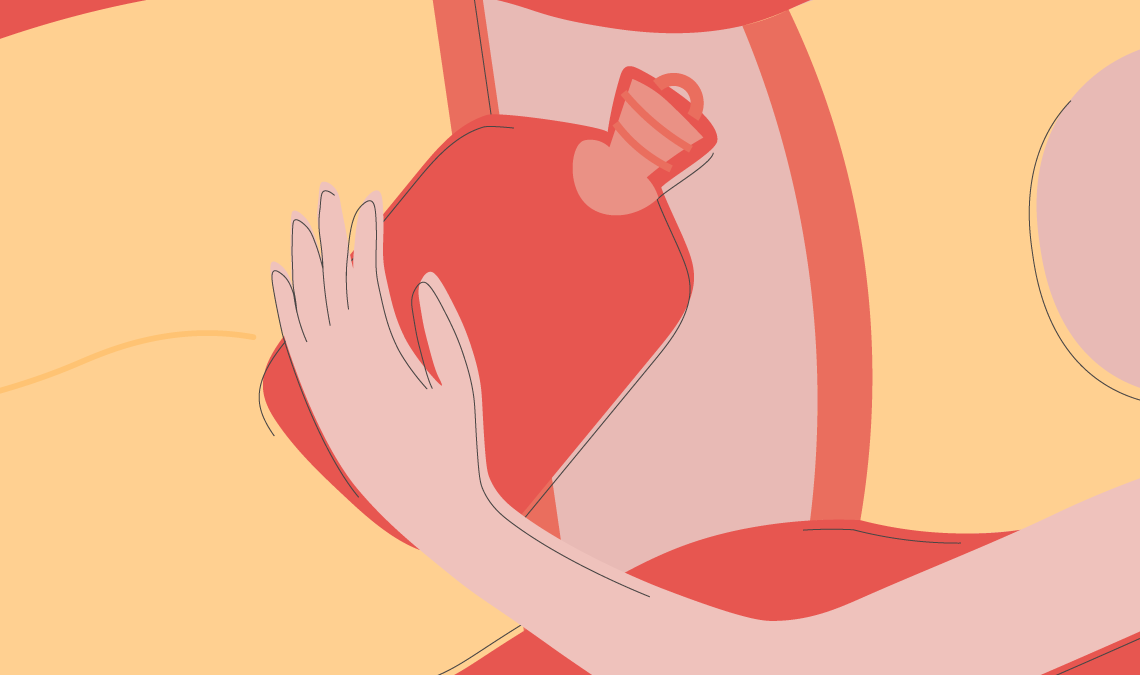
You do not have to just power through it. Heat therapy is amazing for pain relief in young girls, and it works whether you are at home with a hot water bottle or out with a heat patch on. With that, rest, hydrate, and keep moving gently.
And if your cramps are significantly impacting your daily life or getting worse over time, that is worth a conversation with a doctor. Remember, period pain is common, but it does not have to be your normal.
If you’ve more questions on first period cramps and period pain, drop them in the comments, and we’ll get back to you.
Disclaimer:
The content of this article is provided for general informational and educational purposes only and is not intended to constitute medical advice, diagnosis, or treatment. The information shared is of a general nature and may not be appropriate for all individuals or specific circumstances. Readers should not disregard, delay, or substitute professional medical advice based on the information contained herein.
If you experience any symptoms, notice anything unusual, or have concerns relating to your health or overall wellbeing, you should consult a qualified healthcare professional. While every effort is made to ensure the information shared is accurate and up-to-date, Nua makes no representations or warranties, express or implied, regarding the accuracy, completeness, or suitability of the information provided and disclaims all liability arising from reliance on this content to the fullest extent permitted by law.