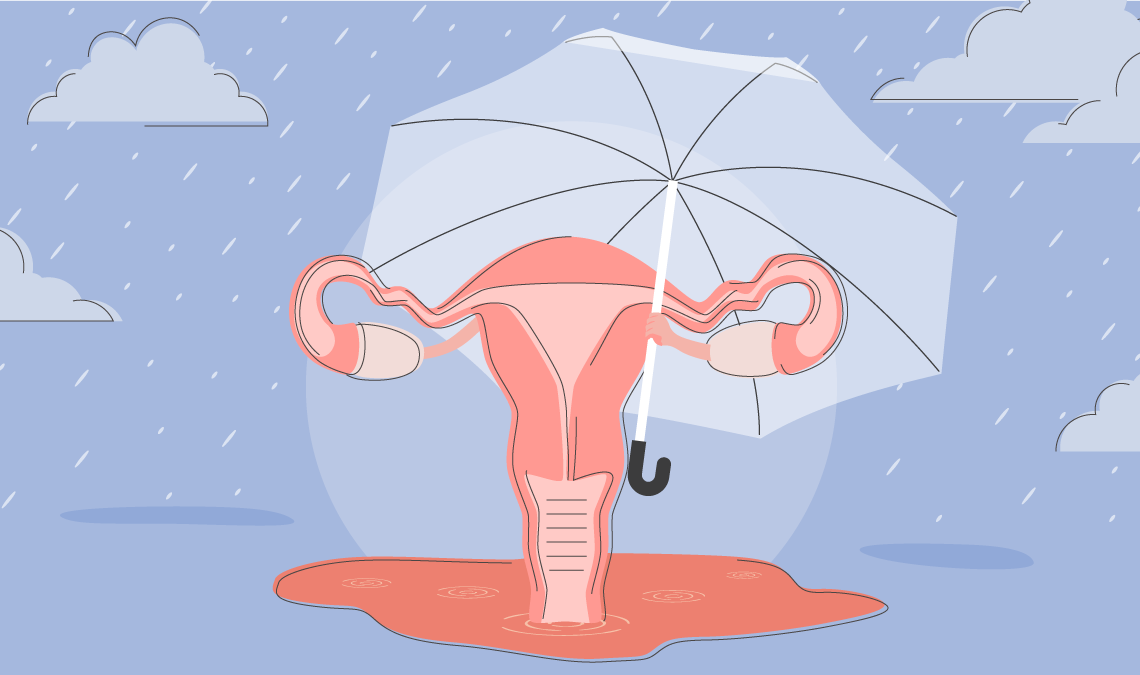
Have you noticed that your PMS feels noticeably worse during the rainy season? That’s because monsoon and PMS mood swings are biologically connected. The week before your period, when you are in your luteal phase, already brings a dip in mood-stabilising hormones. Add gloomy skies, sticky humidity, poor sleep, cancelled plans, and reduced movement, and the emotional intensity of PMS can feel much heavier than usual.
Here’s what we’re covering about monsoon and PMS mood swings in this blog:
- Your luteal phase naturally lowers serotonin, the chemical that helps regulate mood.
- Reduced sunlight during monsoon can lower serotonin even further.
- Women are more susceptible to seasonal mood shifts, and rainy weather can intensify PMS symptoms.
- Humidity and disrupted sleep increase cortisol, your stress hormone, making irritability and anxiety worse.
- Lifestyle changes during monsoon, like reduced movement and social withdrawal, can deepen emotional lows.
- Small daily habits like morning light exposure, movement, magnesium-rich food, and better sleep routines genuinely help ease symptoms.
Before understanding why the rainy season affects your emotions so strongly, it helps to understand where in your cycle you are most emotionally sensitive: the luteal phase., which is the luteal phase of your menstrual cycle.
What Happens In Your Body During The Luteal Phase
Your menstrual cycle has two halves. The first half, from the day your period ends until you ovulate, is when estrogen rises and you usually feel your most energetic. After ovulation, you enter the second half, which is called the luteal phase, or the post-ovulatory phase. This phase lasts about 1-2 weeks and ends when your period begins.
To learn more about the phases of the menstrual cycle, read this.
Right after ovulation, your body starts producing progesterone in large amounts, which is a calming hormone, to help you sleep, to lower anxiety, and to prepare your body for a possible pregnancy. However, if there is no pregnancy, progesterone production crashes. That hormonal drop is one of the primary biological triggers behind PMS symptoms.
Blog continues after the ad.

This rise and fall of progesterone in the luteal phase is why the phase is also called the progesterone phase.
Why Is My Mood Worse Before My Period?
The biggest reason your mood shifts before your period is the hormonal withdrawal that happens at the end of the luteal phase.
If you have ever wondered, “why is my mood worse before my period?”, progesterone withdrawal is one of the biggest reasons. Progesterone helps produce calming effects in the brain and interacts with the same receptors targeted by many anti-anxiety medications. According to research, when it withdraws suddenly, some women feel a sudden wave of anxiety, sadness, irritability, or emotional sensitivity. This is the leading scientific explanation for PMS, and for a more severe version called PMDD, premenstrual dysphoric disorder, which affects 3-8% of women.
Estrogen also declines during this same window. Since estrogen helps support serotonin production, your serotonin levels drop too. Serotonin is one of the brain’s key mood-stabilising chemicals, so lower serotonin often translates into emotional lows, irritability, fatigue, cravings, and increased sensitivity, along with PMS anxiety. The connection between serotonin levels and PMS mood swings is strongly supported by research.
That combination, falling progesterone and falling serotonin, is why many women feel emotionally overwhelmed in the days leading up to their period. Many women also ask,”why do I feel sad before my period?”, especially during rainy weather when emotional symptoms feel heavier.
It also creates the perfect conditions for monsoon weather to intensify symptoms further.
If your body is doing this much work in the lead-up, the actual period that follows should be the gentle part. Nua’s ultra-soft, rash-free sanitary pads are built to feel like nothing on your skin, so when the bleeding starts, that part of the month is one less thing to argue with.
Why Is My PMS Worse During Rainy Season?
Many women notice that their PMS symptoms feel heavier, sadder, or more emotionally draining during the rainy season. If you have ever wondered, “why is my PMS worse during rainy season?” or “does weather affect mood before period?”, the answer is yes. The combination of reduced sunlight, humidity, disrupted sleep, and lifestyle changes can directly affect brain chemistry and hormone regulation.
Here are the main reasons monsoon can intensify PMS mood swings.
Reduced Sunlight Lowers Serotonin
Your brain produces serotonin (your happy hormone) in response to bright light hitting your eyes, especially in the morning. During monsoon, cloud cover can dramatically reduce sunlight exposure. Even if you are awake and active, your body receives much less bright light than it normally would. Less light means reduced serotonin production.
This is the same biological pathway behind seasonal affective disorder in women, a form of depression that follows the seasons and affects women at about four times the rate it affects men. While most research on it focuses on winter, the rainy season triggers a similar, milder version.
A study in the American Journal of Psychiatry found that women who are sensitive to seasonal mood changes report their worst symptoms when their low-light sensitivity overlaps with the week before their period, which is exactly what monsoon luteal weeks look like.
Humidity Raises Stress Levels
Humidity affects more than physical comfort.
When the air is heavy with moisture, your body has to work harder to regulate temperature. This increases physical stress and can elevate cortisol, the body’s primary stress hormone.
Higher cortisol can interfere with progesterone’s calming effects, making emotional regulation more difficult. As cortisol rises, irritability, anxiety, overwhelm, and emotional fatigue often increase too. So if you have ever wondered, does humidity affect mood during PMS, the answer is yes, and there is a real hormonal pathway behind it.
Beyond biology, monsoon also creates daily frustration. Wet clothes, traffic delays, cancelled plans, damp surroundings, power cuts, and unpredictable commutes all increase emotional exhaustion. During the luteal phase, when your emotional tolerance is already lower, these stressors feel much bigger.
To learn more of how stress affects your menstrual cycle, read this.
Sleep Disruption Makes PMS Worse
Monsoon weather often affects sleep quality.
Humid nights can interrupt deep sleep, while gloomy mornings disrupt your circadian rhythm and make it harder for your brain to wake up naturally.
Poor sleep amplifies emotional reactivity. Research consistently shows that inadequate sleep increases anxiety, worsens mood swings, lowers frustration tolerance, and reduces resilience to stress.
Add that to a body already experiencing hormonal changes, bloating, cravings, fatigue, and water retention, and it becomes very clear why PMS feels heavier during rainy season.
How Monsoon Affects Your Luteal Phase, Explained
The impact of monsoon on PMS is not just emotional. It changes behaviour, energy levels, cravings, movement, and social habits in ways that intensify luteal phase symptoms.
- Serotonin drops even lower: During the luteal phase, serotonin naturally declines because estrogen levels fall. Reduced sunlight during monsoon lowers serotonin further, which is why feelings of sadness, emotional heaviness, or depression before period often feel more intense during rainy months.
- Sleep quality drops: Grey mornings and humid nights disrupt your internal body clock. Poor sleep then increases emotional sensitivity the next day, making small problems feel much larger.
- Cravings change: Carbohydrates and sugar temporarily increase serotonin levels, you already crave these in your luteal phase but these cravings often intensify during rainy weather. Warm comfort foods, chocolate, tea, fried snacks, and sugary foods are not simply emotional habits. Your brain is genuinely trying to seek comfort and regulate mood.
- Movement drops: Heavy rain changes routines. You may skip walks, avoid the gym, cancel plans, or spend more time indoors. Less movement means fewer endorphins, one of the body’s most effective natural mood regulators. This reduction in physical activity can make luteal phase mood swings feel even stronger.
- You withdraw socially: Rainy weather naturally encourages isolation.Plans get cancelled, people stay indoors, and social interaction decreases. But connection itself is a powerful emotional regulator. When you are already emotionally vulnerable during the luteal phase, isolation can make PMS symptoms feel much louder.
On a luteal week, stocking up for the period that is coming is a great idea. Nua’s toxic-free pads are gentle on sensitive skin and delivered straight to your door, so by the time you actually need them, you do not have to step out into the rain for them.
Why Monsoon Can Make PMS Physically Feel Worse Too
While mood changes get most of the attention, monsoon weather can also intensify the physical side of PMS.
- More fluid retention: During the luteal phase, hormonal fluctuations already make your body more likely to hold onto water. Add humid weather to that, and bloating can feel even more uncomfortable. Many women notice increased puffiness, breast tenderness, swelling, or heaviness during rainy weeks.
- Digestive symptoms worsen: Changes in appetite, lower activity levels, and cravings for salty or sugary comfort food may increase bloating and fatigue. Since serotonin is heavily linked to gut health, the connection between digestion and mood becomes even more noticeable during this time.
- Greater fatigue: There is also evidence that lower vitamin D levels during prolonged low-light periods may contribute to fatigue and low mood. Since sunlight exposure drops significantly during monsoon, some women may feel more physically drained during the pre-menstrual phase than usual.
- Increase in inflammation: Research suggests that disrupted sleep, stress, excess sugar, and lower movement can all increase inflammatory responses in the body. This may contribute to headaches, body aches, cramps, and fatigue feeling more intense during rainy weeks.
This is why managing monsoon PMS is not only about emotional regulation. Supporting your body physically through sleep, hydration, balanced meals, movement, and stress reduction can make a noticeable difference to both mood and energy levels.
A Practical Guide For Getting Through Monsoon PMS
Easing monsoon and PMS mood swings is less about big interventions and more about a handful of small choices.
- Get ten minutes of morning light, even if it is grey: Step onto your balcony, open a window, or sit by the brightest window in the house with your tea. Cloudy daylight is still ten to twenty times brighter than indoor lighting, and your brain registers it.
- Track your cycle and the weather together: Two months of noting your phase, your mood, and whether it rained will show you a pattern. Once you can see it, you can plan around it. Use Nua’s Period Tracker to stay on top of your cycle.
- Move for fifteen minutes: A short yoga flow, dancing while you cook, climbing your stairs twice. The point is to get the endorphins flowing.
- Prioritise protein and magnesium: Eggs, dal, dark chocolate, nuts, and leafy greens. Magnesium has strong research behind it for easing PMS symptoms, and your body uses more of it during the luteal phase.
- Warm the before you wake up: Use the AC timer to turn off your AC before you wake up, warming the room gradually by morning to match your natural circadian rhythm and protects deep sleep.
- Plan around your hardest day: If day twenty-four is consistently your lowest, do not schedule hard conversations or big deadlines for that day if you can help it.
- Notice the inner critic and do not believe it: The voice that says you are too sensitive, too sad, or too unproductive is loudest during this week. These are your hormones talking, not the truth.
If your body’s already been working overtime before your period even begins, the days that follow shouldn’t feel harder. Nua’s ultra-soft, rash-free sanitary pads are designed to feel barely there on your skin, so once your period starts, comfort is one thing you don’t have to think about.
The Bigger Picture
Monsoon and PMS mood swings together are the predictable result of two biological inputs happening at the same time, both of which lower serotonin, both of which disturb sleep, and both of which arrive on a schedule you did not choose.
Knowing this does not make the sadness vanish. It does something more useful, it stops the second layer of distress, the part where you blame yourself for feeling this way. The rain is heavy, your luteal phase is heavy, and you are allowed to be heavy with them for a few days before you feel like yourself again. Once you understand why the two meet every year, the meeting stops catching you off guard.
FAQs
1. Can the rainy season make PMS mood swings worse?
Yes. Reduced sunlight, humidity, poor sleep, and lifestyle changes during the monsoon can intensify PMS mood swings and emotional symptoms.
2. Why do I feel more emotional before my period during monsoon?
The luteal phase naturally lowers serotonin, and reduced sunlight during the rainy season can decrease it further, making sadness, irritability, and anxiety feel more intense.
3. Does humidity affect PMS symptoms?
Yes. High humidity can increase physical stress, disrupt sleep, and raise cortisol levels, which may worsen mood swings, fatigue, and irritability before your period.
4. How can I manage PMS mood swings during the rainy season?
Morning daylight exposure, regular movement, magnesium-rich foods, good sleep habits, and tracking your menstrual cycle can help reduce symptoms.
5. Why do I crave comfort foods more before my period during monsoon?
Lower serotonin levels during the luteal phase and reduced sunlight can increase cravings for carbohydrates and sugary foods that temporarily boost mood.
Disclaimer
The content of this article is provided for general informational and educational purposes only and is not intended to constitute medical advice, diagnosis, or treatment. The information shared is of a general nature and may not be appropriate for all individuals or specific circumstances. Readers should not disregard, delay, or substitute professional medical advice based on the information contained herein.
If you experience any symptoms, notice anything unusual, or have concerns relating to your health or overall wellbeing, you should consult a qualified healthcare professional. While every effort is made to ensure the information shared is accurate and up-to-date, Nua makes no representations or warranties, express or implied, regarding the accuracy, completeness, or suitability of the information provided and disclaims all liability arising from reliance on this content to the fullest extent permitted by law.