Here’s what this blog will cover about period comfort at work:
- The 9-to-5 was built around a male default, with fixed hours, limited breaks and infrastructure that often overlooks menstruating employees.
- Period discomfort at work is more than cramps. Leak anxiety, uncomfortable products and constant bathroom checks can all take attention away from work.
- Workplace routine can make period management harder too. Back-to-back meetings, short breaks, toilet queues and poor bathroom hygiene can make changing products unnecessarily stressful.
- If managing your period at work feels like a personal organisation problem, it isn’t. Your flow can change, while a rigid workday may leave little room to respond.
- The right period protection can reduce some of that burden. Breathable, leakproof products with longer wear times can make long stretches between bathroom breaks easier to manage.
You know the moment. You are three items into an agenda and a small voice at the back of your mind starts calculating. How long since the last break. How many slides left. Whether the pad has another hour in it, or whether you are about to spend the rest of the call sitting very still, crippled with fear that any shift could cause a leak. That low hum of constant maths has a real cost, and it has almost nothing to do with your body. It has to do with a workday drawn up for someone who never has to run this calculation. When people talk about period comfort at work, they usually mean products. The deeper issue is that the whole shape of the day, from the breaks, the meeting blocks, the unspoken rule that a body can wait, was first designed around men, and has never been upgraded to fit a person who menstruates.
Most women end up taking on the burden of this ill-designed work life. They assume that it was their fault – they didn’t plan better, drank too much water, forgot to go to the restroom before the meeting. But the friction they feel is not their problem. It is a design problem, in the same way that a chair built for the average male frame is not your fault for not fitting.
So, let’s dive into the issue, and figure out where and how things can improve.
How the Workday Isn’t Built for Bodies That Bleed
In her book Invisible Women, writer Caroline Criado Perez lays out a consistent pattern. Cars are crash-tested with dummies based on the average male body, so women are 47% more likely to be seriously hurt in a collision. Office thermostats are set to a formula built around the metabolic rate of an average man, which is why you are always reaching for a hoodie, even in mid-July. Some medicines were trialled mostly on male bodies. This thread runs through everything she calls the gender data gap, the simple, sweeping fact that the world collects most of its data from men and then treats that data as neutral, as just human.
Blog continues after the ad.
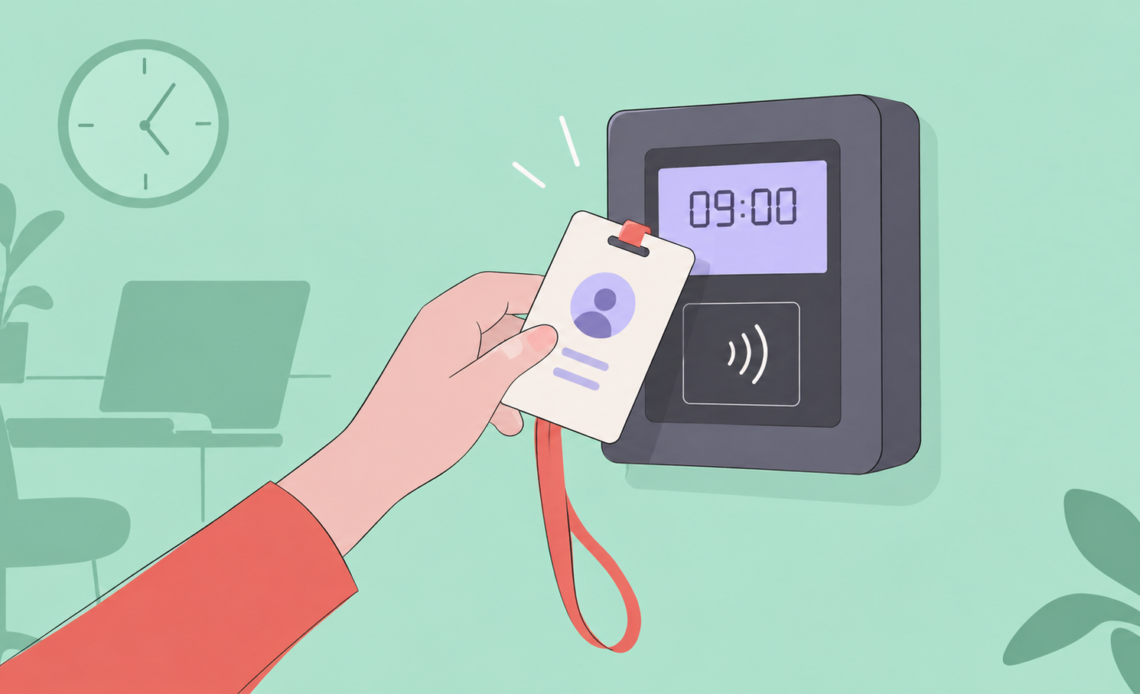
The workday fits that pattern too. The eight-hour block, the lunch-and-two-coffees rhythm, the meeting scheduled to run straight into the next one, none of it was ever stress-tested against a body that bleeds for a week every month, that needs the toilet more often and for longer, that sometimes has to change period products on a genuine health and safety timeline. These are not small oversights. They are workplace design problems baked in so long ago that we stopped noticing them and started blaming ourselves instead.
The Male Default, Through A Case Study
If ‘male default’ sounds like an overstatement, the data is oddly specific, and very telling. The temperature you’re probably currently sitting in traces back to a study in Nature Climate Change, which found the standard thermal comfort formula was calibrated in the 1970s to the metabolic rate of a 40-year-old, 70-kg man. Women’s metabolic rate runs roughly 20 to 35% lower, so the room temperature that suits him leaves her freezing. That’s not a preference gap, it’s a ‘default’ gap.
In a 2019 study in PLOS ONE of 543 people, women performed better on math and verbal tasks as the room warmed, while men dipped slightly, and the female gain was the larger, sharper effect. A thermostat set for him doesn’t just make her uncomfortable, it measurably dents her output. When the data used to design a space leaves women out, the space works against them, and nobody has to intend any harm for the result to be unfair.
A day designed around the wrong body is a lot easier to survive when your protection is designed around yours. Nua’s Disposable Period Panties stay leakproof and breathable for a genuine 10 hours, so the office’s oldest assumption stops being your daily problem to manage.
Why ‘Default’ Means Male
The male default didn’t arrive through malice. It arrived through who happened to be in the room. When the standards that still run offices were written, the office was overwhelmingly a man’s place, so the 1970s temperature formula, the fixed nine-to-five, the whole template of professional life was drawn up for a workforce that was mostly male, and “the average worker” came to mean a man.
What makes it absurd is that the room has changed and the blueprint hasn’t. In the United States, women’s labour force participation climbed steeply from the 1960s and peaked near 60% by the end of the century, so women now make up close to half of many workforces. In India, the shift is younger but real, with women now roughly one in three of the workforce and rising. But nobody went back and redrew the plans. That lag is exactly why period comfort at work still feels like an afterthought. No one decided women didn’t matter, the defaults were simply locked in before women were fully counted, and inertia did the rest.
Where the 9-to-5 Ignores Menstruation
Break the workday into its moving parts and the assumption turns up everywhere. Here are the biggest places it hides.
- The fixed breaks: The standard advice on how often to change sanitary pads is roughly every four to six hours, and more often on a heavy day. But most work days only account for lunch and maybe a coffee break. Your body and this schedule simply don’t align, and the schedule always wins.
- Back-to-back meetings: Back-to-back meetings assume everyone’s bathroom break takes the same two minutes. But changing a pad takes longer than a quick pee, so the gap that’s plenty for your colleague isn’t enough for you. And the cost? Interrupting an on-going meeting or being late to the next, which can impact the impression you’d like to make.
- “Just wait” is the default instruction: Office infrastructure and routine design assumes that you can postpone your body until a more convenient moment. Some days you can. But on a heavy day, waiting is how a small problem becomes a stain you think about for three hours.
- Dress codes that punish leaks: Light uniforms, fitted trousers, no room for a backup layer, all of it raises the stakes of a completely normal biological event.
If your protection lasts the entire workday, the broken toilet equation simply stops being yours to solve. That is exactly what Nua’s disposable period panties is built for, up to ten hours of coverage, so a missing or occupied stall goes back to being a minor annoyance instead of an emergency.
The Invisible Toilet Math
Studies show women spend one and a half to two times as long in the toilet as men, roughly ninety seconds against sixty, for reasons that are mostly practical. There’s more clothing to manage and, of course on any given day roughly a quarter of them are menstruating. Now pair that with how buildings get planned. Men’s and women’s toilets are given equal floor space. Sounds fair, but a men’s room fits urinals and cubicles where a women’s room fits only cubicles, so far more men can go at once. As a result, the queues are longer for women, and there almost always is a queue. Equal space, unequal access.
Shrink that down to your workplace and the maths stops working entirely. If the break is ten minutes and the queue is five, there’s no version of the day where you comfortably change, wash, and get back. . And the longer wait costs you productive work minutes.
In many Indian workplaces the gap is wider still, because public toilets hygiene India-wide remains patchy, and a stall with no water, no toilet paper or working lock isn’t somewhere you can manage a period at all.
When the bathroom is a queue away and the break is ten minutes, the “right” change just isn’t on the table. This is the exact gap Nua’s Disposable Period Panties were made to cover. They’re skin-friendly and secure for a full 10 hours, so a bathroom you can barely reach stops standing between you and an ordinary day.
It’s Not You, It’s The Blueprint
So much of the shame around periods at work comes from blaming yourself for something the workplace got wrong. You read a broken system as a personal shortcoming. Here are the thoughts you’ve probably had, and what’s actually going on underneath each one.
- “I’m being disorganised.” You’re not. No amount of planning controls when your flow turns heavy, and a fixed workday leaves you no room to adjust when it does.
- “I should be able to hold on.” You shouldn’t have to. The rule for how often to change sanitary pads assumes a clean, private bathroom whenever you need one. Most workdays don’t give you that, so “holding on” is the system’s failure, not your weakness.
- “I’m overthinking the leak.” You’re not overthinking, you’re reacting sensibly. When the systems are this unreliable, a running worry about leaking is period anxiety doing its job, not a flaw in you.
- “Why can’t I focus?” Because watching your period takes the same mental energy as your work does. That’s the cognitive load of periods, and it climbs when a room gives you no safe way to manage things (more on this here).
- “Everyone else copes fine.” They don’t, they’re just hiding it well. The women around you are running the same silent calculations and calling it normal.
What Actually Holds When The Day Won’t Bend To Your Needs
If the workplace won’t flex, your protection has to. When a real change might be hours away, the right period panties are what you need in your day. Here’s what they provide:
- Waer time that matches a shift: The honest answer to how long can you wear period panties depends on the pair, and a set built for a true 10 hours is what turns an unchangeable stretch into a non-issue.
- Coverage for the heavy days: Even the best pads for heavy flow can become iffy past their 6-8 hour wear time, so a fitted layer of panty-like period underwear, that guards front to back and stays put is what you actually want on your worst hour.
- Leak security you can forget: Leakproof underwear for periods removes the single biggest source of desk-bound dread.
- Skin that’s still happy at hour nine: You need something that is breathable, soft, and rash-free, because a long wear shouldn’t cost you comfort later in the day.
- A format with no logistics: Disposable period underwear means nothing to rinse, carry, or store, which is exactly what a day of rushing calls for.
Zero Irritation, From The Pad To The Whole Workday
Nua built its Zero Irritation promise on a deceptively simple realisation, that much of what women were taught to accept as “just periods” was actually the product and social systems failing them. Harsh materials, poor breathability, textures that leave marks, all normalised until we blamed our own skin instead of the design. Widen that exact lens and you get the argument of this whole blog post. It was never only the pad that was built badly. It was the building, the schedule, and the break policy too. And just as you once blamed your “sensitive skin” for a rash the product caused, you’ve been blaming your “poor organisation” for a workday that was never organised around you.
That’s why comfort stops being a soft perk and becomes the point. When you can’t step away for hours, a layer that stays breathable and rash-free is doing real work, protecting your skin and lowering the mental tax of monitoring yourself all day. Good design quietly does for you what the room around you won’t.
The aim isn’t to endure the discomfort more gracefully, it’s shift your focus back to your actual job. As soft, breathable, and rash-free for the whole day, Nua’s Disposable Period Panties quiet the background hum of “am I okay?” so your attention can go back to the room instead of your waistband.
How To Defend Your Period Comfort At Work
You can’t rebuild the office by Monday, but you can outmanoeuvre its blind spots. Here’s a realistic playbook for protecting your period comfort at work.
- Map your day’s real gaps: Find the stretch where changing will be genuinely impossible, the shift, the client meeting, the commute, and plan your protection around that window, not an imaginary free afternoon.
- Lead with staying power, not thickness: A product rated for longer wear time beats a bulkier one you still have to change mid-morning. The goal is to make “when will I need to change next?” simply irrelevant.
- Protect skin, not just fabric: If you’ll be in one layer for hours, choose something breathable so a long day doesn’t end in irritation.
- Know your rights, then don’t depend on them: Check whether your state or employer offers menstrual leave (more on that here), but plan as if the day still has to be survived, because it usually does.
- Push, gently, for the fixes: Ask for a bin, a lock, a nearer bathroom, a little calendar breathing room. Design changes when enough people name the flaw out loud.
- Get Nua’s Disposable Period Panties: They turn “I hope I can change in time” into a settled fact with full-coverage and trustworthy for 10 hours.
The Bottom Line
If changing on time at work feels impossible, that isn’t a flaw in your habits or your menstrual hygiene (more on that here). It’s a workday designed around a body that doesn’t bleed, then handed to you as though it were neutral. The thermostat, the toilet block, the ten-minute break, none of it was set with you in mind, and pretending otherwise just adds guilt to a day that already asks a lot.
The long game is redesign, better buildings, better policies, better data that actually counts women in. That’s coming, slowly. The immediate move is protection that behaves the way the workplace should, reliable, comfortable, and built around your body instead of someone else’s. Your period was never the problem. The blueprint was.
Until the blueprint catches up, you get to quietly refuse to carry its blind spots in your own body.
Give yourself protection that treats your comfort as the default, not the afterthought. Nua’s Disposable Period Panties hold for a full 10 hours, leakproof and rash-free, so the office’s oldest blind spot finally stops being yours to absorb.
FAQs
Why is period comfort at work a workplace issue?
Many workplaces were designed around routines and infrastructure that don’t account for menstruation, such as fixed breaks, back-to-back meetings, limited bathroom access, and dress codes. This can make managing periods at work unnecessarily difficult.
How often should you change a sanitary pad at work?
Sanitary pads are generally recommended to be changed every four to six hours, and more frequently on heavy-flow days. However, access to bathrooms and breaks at work doesn’t always make this easy, which is one of the challenges of achieving period comfort at work.
How can you manage your period during a long workday?
Plan around the parts of your day when bathroom access may be difficult, choose protection suited to your flow and wear time, and prioritise breathable products that help keep your skin comfortable.
How long can you wear period panties during a workday?
It depends on the product and your flow. Period panties designed for longer wear can make it easier to get through stretches when changing isn’t convenient. Nua’s Disposable Period Panties are designed for up to 10 hours of wear.
What can workplaces do to make periods more comfortable for employees?
Simple changes can make a meaningful difference, including accessible and hygienic bathrooms, working locks and water, disposal bins, adequate breaks, and more flexibility around meetings and schedules. These changes help make the workplace work better for people who menstruate.
Disclaimer
The content of this article is provided for general informational and educational purposes only and is not intended to constitute medical advice, diagnosis, or treatment. The information shared is of a general nature and may not be appropriate for all individuals or specific circumstances. Readers should not disregard, delay, or substitute professional medical advice based on the information contained herein.
If you experience any symptoms, notice anything unusual, or have concerns relating to your health or overall well-being, you should consult a qualified healthcare professional. While every effort is made to ensure the information shared is accurate and up-to-date, Nua makes no representations or warranties, express or implied, regarding the accuracy, completeness, or suitability of the information provided and disclaims all liability arising from reliance on this content to the fullest extent permitted by law.