
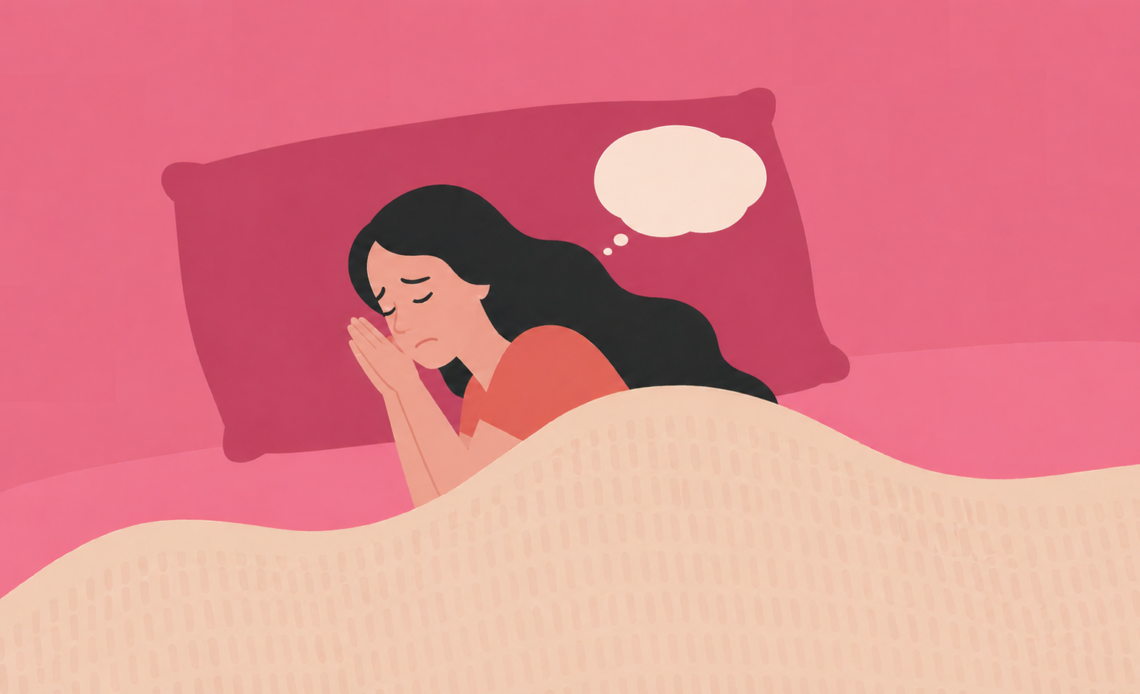
Sleep talking after having a baby? Here’s what you’ll learn about it in this blog:
- Postpartum sleep talking is usually caused by broken sleep, hormonal changes, and becuase you’re brain doesn’t fully switch off after childbirth.
- Falling estrogen and progesterone after birth can disrupt your circadian rhythm and melatonin, making sleep lighter and more prone to talking.
- Postpartum sleep disturbances push your brain in and out of REM sleep abruptly, which is what causes you to sleep-talk.
- Stress, anxiety, and the mental load of caring for a baby can keep the brain on high alert, even while your body is asleep.
- Postpartum sleep talking is usually harmless. But if it’s accompanied by screaming, violent movements or breathing issues, it’s worth speaking to a doctor.
- Small fixes like a wind-down routine, daytime naps, and sharing night duties can genuinely improve postpartum sleep over time.
So your partner casually mentioned that you’ve started sleep talking after having a baby? They told you that you said something completely random at 3 am. Maybe a full sentence. Maybe just a word.
But you have abso-what-the-hell-lutely zero memory of it.
Well…welcome to postpartum sleep talking, one of the stranger, not-so-well-known side effects of becoming a new mom. There’s nothing to worry about. In most cases, it’s simply your body reacting to postpartum sleep disturbances, the VERY dramatic hormonal changes after childbirth, and a brain that’s on 24×7 baby duty.
So let’s get into all of it. From why new moms talk in their sleep to whether sleep talking is normal after pregnancy, how to improve sleep after having a baby, and when to worry about sleep talking.
What Is Somniloguy?
Somniloguy is the medical term for sleep-talking. Normally, your whole brain goes to sleep at the same time. But sometimes a tiny glitch happens and the part of your brain that controls speech accidentally wakes up while the rest of you stays fast asleep. That’s why a few random words, weird sentences, or full conversations suddenly slip out.
Blog continues after the ad.

It’s not a window into your subconscious, and it’s definitely not a sign that something’s wrong with you. It’s just your brain being a bit clumsy when it’s overworked. And unfortunately, right now, with a new baby, your brain is about as overworked as it gets.
And while there’s not much you can do about your brain adjusting to postpartum life, staying comfortable through postpartum bleeding is one thing you can make easier with Nua’s Maternity Pads.
Is Sleep Talking Normal After Pregnancy?
Yes, sleep talking after having a baby is completely normal. Research shows that 1 in 5 women speaks in their sleep postpartum.
In fact, sleep talking, or somniloquy, can happen to anyone during periods of stress or sleep disruption. And if there’s ever a time built entirely out of stress and sleep disruption, it’s the postpartum period.
The Science: Why Do I Talk In My Sleep Postpartum?
There isn’t one single reason behind postpartum sleep talking. It’s usually a mix of a few things working together. Your hormones, your lack of sleep, and your stress levels.
Let’s break each one down.
You’re Waking Up All Night for the Baby
Every night, the brain moves through different stages of sleep. One of those stages is REM, when the brain is highly active and sleep talking is most likely to happen.
Normally, the brain moves into and out of REM smoothly throughout the night. But after having a baby, every feed, every cry, and every diaper change can interrupt that cycle.
So, instead of completing REM sleep and moving naturally into the next stage, the brain keeps getting pulled awake. This repeated REM sleep disruption after childbirth creates more opportunities for postpartum sleep talking to occur.
If you’re already waking up for feeds, don’t let milk leaks keep you awake any longer. Nua’s Nursing Pads are designed to keep you dry and comfortable through the night.
Your Brain is Always on High Alert
Having a baby is physically exhausting. But it’s mentally exhausting too.
Even when you’re asleep, your brain doesn’t completely switch off. Part of it is still listening for the baby, worrying about the next feed or the crying.
This constant state of alertness is known as hyperarousal, where the nervous system stays on guard even during sleep. This makes sleep less restful and increases the likelihood of behaviours like sleep talking after having a baby.
Your Hormones Are Still Finding Their Balance
Giving birth doesn’t just change your routine. It changes your hormones almost overnight.
Progesterone Levels Drop Suddenly
After delivery, progesterone levels fall sharply within just a few days. Since progesterone helps promote deep, restful sleep, this sudden drop can make sleep easier to interrupt and increase the chances of sleep talking.
Melatonin Release Gets Disrupted
Melatonin is the hormone that helps your body know when it’s time to sleep.
Late-night feeds, irregular sleep schedules, and exposure to lights during nighttime wake-ups can all disrupt your body’s normal melatonin rhythm. Instead of getting long, restorative sleep, you may find yourself drifting in and out of sleep throughout the night, which can make sleep talking more possible.
Your Stress Levels Are Also Heightened
Sleep deprivation, physical recovery after childbirth, lifestyle changes, and the constant responsibility of caring for your baby can keep your body’s stress response switched on. This often raises cortisol (a.k.a. stress hormone) levels, which can disrupt your body’s natural sleep process and make postpartum sleep talking more likely.
Surprisingly, sleep talking isn’t the only unusual sleep behaviour that can show up during this time. If you’re also moving, kicking, or acting out your dreams, here’s what that could mean.
How To Improve Sleep After Having A Baby?
You can’t control when your baby wakes up and demands your attention. But you can make the sleep you do get a little better. And over time, that can help reduce postpartum sleep talking.
- Nap when you can. Even a 20-30 minute nap can help your brain recover from a broken night’s sleep.
- Keep your bedroom cool, dark, and quiet so it’s easier for your brain to stay asleep.
- Take turns with feeds or baby care with your partner to give your brain a full stretch of uninterrupted sleep.
- Cut off caffeine by the afternoon. That late coffee can make it much harder to get quality sleep at night.
- Switch to soft, leak-proof maternity panties if postpartum bleeding or bulky pads are making sleep uncomfortable.
- Wind down before bed by dimming the lights, putting your phone away, and spending five quiet minutes relaxing before bed.
- Do as little as you can. Let someone else handle the dishes, laundry, or cooking while you use that time to rest.
If you’re wondering how much rest your body actually needs after childbirth, our guide to the 5-5-5 postpartum rule is a great place to start.
When To Worry About Sleep Talking After Having a Baby?
For most new mums, postpartum sleep talking is completely harmless.
In fact, experts say that over the first three months, babies gradually develop their own circadian rhythm and begin sleeping for longer stretches at night, which means you slowly start getting longer stretches of sleep too. For many new mums, that’s when sleep talking begins to fade on its own.
That said, it’s a good idea to speak to a doctor if:
- Sleep talking is completely new for you and becomes very frequent or intense after childbirth.
- It’s accompanied by screaming, thrashing, or violent movements that could hurt you or your partner.
- You snore loudly, gasp for air, or stop breathing during sleep, as these could be signs of sleep apnea.
- You’re also experiencing persistent anxiety, intrusive thoughts, or low mood, as these may be signs of a postpartum mental health condition.
So… Don’t Lose Sleep Over It
If there’s one thing to take from all this, it’s that sleep talking after having a baby is your body’s way of showing just how much it’s juggling right now. Crashing hormones, postpartum sleep disturbances, and a nervous system on permanent standby duty.
It’s strange, sure. Maybe even a little funny once you hear what you actually said. But it’s not a red flag, and it’s definitely not a sign you’re doing anything wrong.
Once your hormones settle and your nights slowly start stringing together more sleep, most of this quietly fades on its own. Until then, be a little gentle with yourself. You’re not losing your mind. You’re just postpartum.
Still have questions about postpartum sleep talking or your sleep in general? Drop them in the comments below, and we’ll do our best to help.
FAQs
1. Is sleep talking normal after pregnancy?
Yes. Sleep talking can happen during periods of stress and disrupted sleep, making it relatively common during the postpartum period.
2. Why do I talk in my sleep postpartum?
Postpartum sleep talking can be linked to frequent night-time waking, disrupted REM sleep, heightened stress, and hormonal changes after childbirth. These factors can make sleep lighter and more fragmented, creating more opportunities for sleep talking.
3. How does having a baby disrupt sleep talking patterns?
Frequent feeds, crying, and night-time baby care can repeatedly interrupt normal sleep cycles. This can disrupt REM sleep, a stage in which sleep talking is more likely to occur.
4. Can postpartum hormones cause sleep talking?
Hormonal changes after childbirth can contribute to sleep disruption. Progesterone levels fall sharply after delivery, while irregular sleep schedules, night-time light exposure, and disrupted melatonin rhythms can make sleep more fragmented.
5. How can I improve my sleep after having a baby?
Napping when possible, keeping the bedroom cool and dark, sharing night-time baby care, limiting afternoon caffeine, creating a short wind-down routine, and asking others to take over household tasks can help you get better-quality rest.
Disclaimer
The content of this article is provided for general informational and educational purposes only and is not intended to constitute medical advice, diagnosis, or treatment. The information shared is of a general nature and may not be appropriate for all individuals or specific circumstances. Readers should not disregard, delay, or substitute professional medical advice based on the information contained herein.
If you experience any symptoms, notice anything unusual, or have concerns relating to your health or overall wellbeing, you should consult a qualified healthcare professional. While every effort is made to ensure the information shared is accurate and up-to-date, Nua makes no representations or warranties, express or implied, regarding the accuracy, completeness, or suitability of the information provided and disclaims all liability arising from reliance on this content to the fullest extent permitted by law.