Why do I feel addicted to my baby? If you’re a new mom and this question has crossed your mind, here’s what you’ll learn about it in this blog:
- Caring for and being close to the baby releases dopamine, the happy hormone, making mothers want to repeat it again and again.
- Oxytocin released during feeding and skin-to-skin contact strengthens bonding and makes mothers more attuned to their babies.
- A baby’s big eyes, round cheeks, and tiny nose naturally grab grownups’ attention and trigger the brain’s instinct to care for and protect them.
- The amygdala, the brain’s emotional centre, becomes more sensitive after childbirth, keeping mothers alert to the baby’s needs.
- A newborn’s smell stimulates reward-learning areas in the brain, which can make mothers want to smell and hold their baby repeatedly.
- Hormonal changes, shifting serotonin, and lack of sleep can all affect the mother’s emotional control, making postpartum feelings much stronger.
Why do I feel addicted to my baby? Maybe you’ve wondered this while staring at them for the tenth time in an hour, missing them when they’re literally in the next room, or feeling like you could smell and kiss them all day. Again and again and again.
Yes. The emotional intensity of new motherhood can be a bit much, but there’s actually a lot of science behind why mothers feel so attached to their babies.
Postpartum brain changes and the hormonal imbalance that comes with them can affect your body’s reward system in such a way that being close to your baby feels genuinely intoxicating. In fact, it can release some of the same hormones and brain chemicals involved in drug addiction.
Crazy, right?
Let’s dig a little deeper into the maternal brain changes after childbirth and why this emotional attachment after birth can be so intense and addictive.
The Evolutionary Importance of Postpartum Emotional Intensity
Human babies, unlike most other species, are completely helpless at birth. A baby horse can walk within hours, a baby seal can navigate the ocean within days. But a baby human? They can’t even hold their head up for the first few months.
This means your baby’s survival is entirely dependent on you staying close, staying alert, and staying motivated to care for them constantly. That too, through sleep deprivation, physical exhaustion, and postpartum bleeding.
So, evolution had to solve for this.
Blog continues after the ad.
And it did so by making caregiving neurologically rewarding. Being close to and caring for your baby can activate some of the same reward pathways involved in intoxication. Which is why what you’re experiencing isn’t just love. It’s a system built to guarantee your baby’s survival by making you genuinely unable to stop wanting to be near them.
So, Why Do Mothers Feel So Attached To Their Babies?
One of the reasons why looking at your baby feels addictive is a mix of hormones and brain chemicals working together. Each plays a different role in making the pull towards your baby feel strong. Here’s what happens.
Dopamine Makes You Crave More Baby Time
Dopamine is often called the “happy hormone”, but it does more than make someone feel good. It makes rewarding experiences feel worth repeating. It’s why people keep checking their phones, opening the fridge when they’re not hungry, or watching one more episode.
And the brain can similarly respond to the baby. Feeding them, making eye contact, or hearing their voice can release dopamine, making these moments feel rewarding. The more this happens, the more the brain links the baby with that reward and wants to go back for more.
Basically, baby = dopamine = addiction.
Oxytocin Deepens the Mom-Baby Connection
Oxytocin is a hormone that helps the brain build strong social bonds. And every time the baby is breastfed, held close, or given skin-to-skin contact, the body releases more of it.
And because these moments happen A LOT with a newborn, the brain gets repeated doses of this bonding hormone. Over time, the baby becomes more and more emotionally important to you. So much so that being away from them can start feeling impossible.
However, with all that feeding and skin-to-skin time, you might need something like Nua’s Nipple Butter to help soothe sore, cracked nipples and enjoy the baby time with less pain.
Also, Babies are Simply Too Cute to Ignore
Ever caught yourself staring at your baby doing… absolutely nothing?
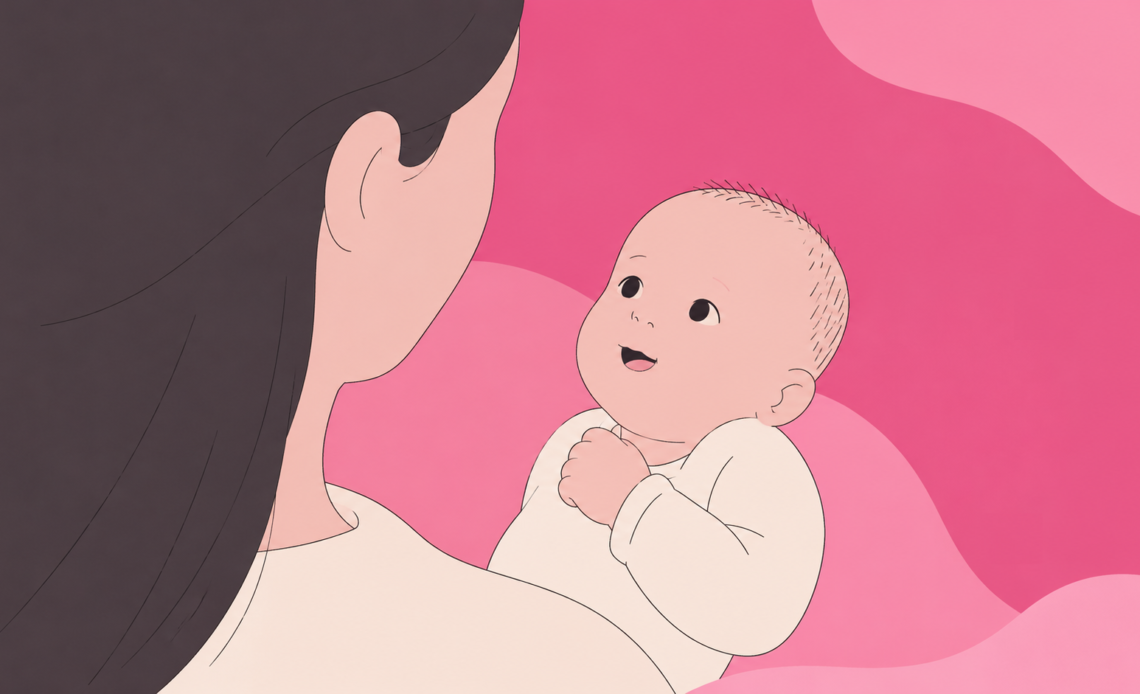
Baby faces naturally have features like big eyes, round cheeks, and small noses that are especially good at capturing grown-up attention. Scientists call this the baby schema.
In very simple terms, your baby’s cuteness isn’t just your amazing genes. These features are there to switch on the brain’s caregiving instinct, making it a lot easier to become a little obsessed with staring, holding, and protecting them.
Their Cry is Supposed to Be Hard to Ignore
After birth, the amygdala (part of the brain that processes danger) becomes much more sensitive to anything involving the baby. Cortisol, the body’s main stress hormone, and adrenaline, which prepares the body to react quickly, can also remain elevated.
This keeps the body constantly alert to the baby. A single cry or sudden sound can immediately grab attention and create a strong physical urge to check on them. It is why mothers can wake up from the deepest sleep for their little ones, even if they have slept through alarms their entire lives.
And this is only one of the many ways motherhood can change the brain. Here’s what happens during matrescence and why becoming a mother can quite literally reshape the brain.
Your Baby’s Smell Can Feel Weirdly Irresistible
There is a biological reason new mothers may want to smell their baby’s head ALL the time.
According to research, smelling a newborn activates the caudate nucleus and putamen, parts of the brain that recognise rewarding experiences and encourage us to repeat them (a.k.a., addiction).
So yes, a baby’s smell alone may be enough to get the brain unusually invested in them.
Why Do Emotions Feel More Intense After Childbirth?
If the baby-specific brain changes weren’t already doing enough, postpartum hormones and sleep deprivation can turn up the volume on almost every emotion, too. Here’s why.
Hormonal Imbalance Intensifies Emotional Reactions
Within days of giving birth, estrogen and progesterone drop dramatically. And progesterone usually supports GABA, one of the brain chemicals responsible for keeping the nervous system calm.
So, when progesterone suddenly drops, some of that calming effect reduces too, making small feelings feel bigger and emotions hit a lot harder.
While the hormones are doing the MOST, Nua’s Maternity Pads can help make heavy postpartum bleeding one less thing to constantly think about.
Serotonin Shifts Affect Postpartum Mood
Serotonin is a brain chemical that helps keep moods steady. But its activity can also change during the postpartum period. So, the distance between feeling perfectly fine and suddenly crying can feel MUCH shorter than usual.
Sleep Deprivation Weakens Emotional Control
Lack of sleep affects the prefrontal cortex, the part of the brain that helps control emotional reactions. So, after staying up with the baby all night, the brain has less control over how strongly it reacts, making every emotion feel much more intense.
And if postpartum sleep has been getting a little weird beyond just not getting enough of it, here’s why some new mothers move and talk in their sleep.
Maternal Brain Can Mirror a Baby’s Distress
The maternal brain’s mirror neuron system helps mothers pick up on and almost feel what their baby is feeling. So, when the baby is upset or distressed (which is pretty common in the early days), the mother’s brain may mirror that distress too, keeping her slightly on edge throughout the postpartum period.
While the brain worries about the baby, Nua’s Maternity Panties can keep postpartum bleeding from becoming another worry.
Yep, You Might Literally Be Addicted to Your Baby
So, why does looking at your baby feel addictive?
Well… because in a way, the brain is doing everything it can to keep the baby impossible to ignore. Dopamine keeps pulling you back to them. Their tiny face grabs your attention. Their cry puts the body on alert. Then there’s also the oxytocin bonding after childbirth.
Add hormonal chaos, sleep deprivation, and postpartum emotional intensity, and suddenly being addicted to your baby like they’re an ACTUAL DRUG makes sense.
So, no, being this obsessed with your baby isn’t weird. It is completely normal.
Maybe baby fever was a little more literal than anyone realised.
Anything about your baby you simply cannot get enough of? Tell us in the comments. We need to know.
Disclaimer
The content of this article is provided for general informational and educational purposes only and is not intended to constitute medical advice, diagnosis, or treatment. The information shared is of a general nature and may not be appropriate for all individuals or specific circumstances. Readers should not disregard, delay, or substitute professional medical advice based on the information contained herein.
If you experience any symptoms, notice anything unusual, or have concerns relating to your health or overall well-being, you should consult a qualified healthcare professional. While every effort is made to ensure the information shared is accurate and up-to-date, Nua makes no representations or warranties, express or implied, regarding the accuracy, completeness, or suitability of the information provided and disclaims all liability arising from reliance on this content to the fullest extent permitted by law.