What you will learn about spotting during ovulation from the blog:
- Spotting during ovulation is light bleeding around the midpoint of your cycle, usually just a few drops of pink or light-red blood that clears within a day or two.
- It is driven by the natural hormonal changes during ovulation, mainly a quick dip in estrogen as your ovary releases an egg.
- Only about 5% to 8% of women notice it, and it does not show up every cycle.
- It looks different from your period, which is heavier and longer, and from implantation bleeding, which happens better ovulation and your actual period.
- Spotting during ovulation does not lower your odds of conceiving.
- Heavy mid-cycle bleeding, pain, or spotting that keeps coming back deserves a doctor’s visit.
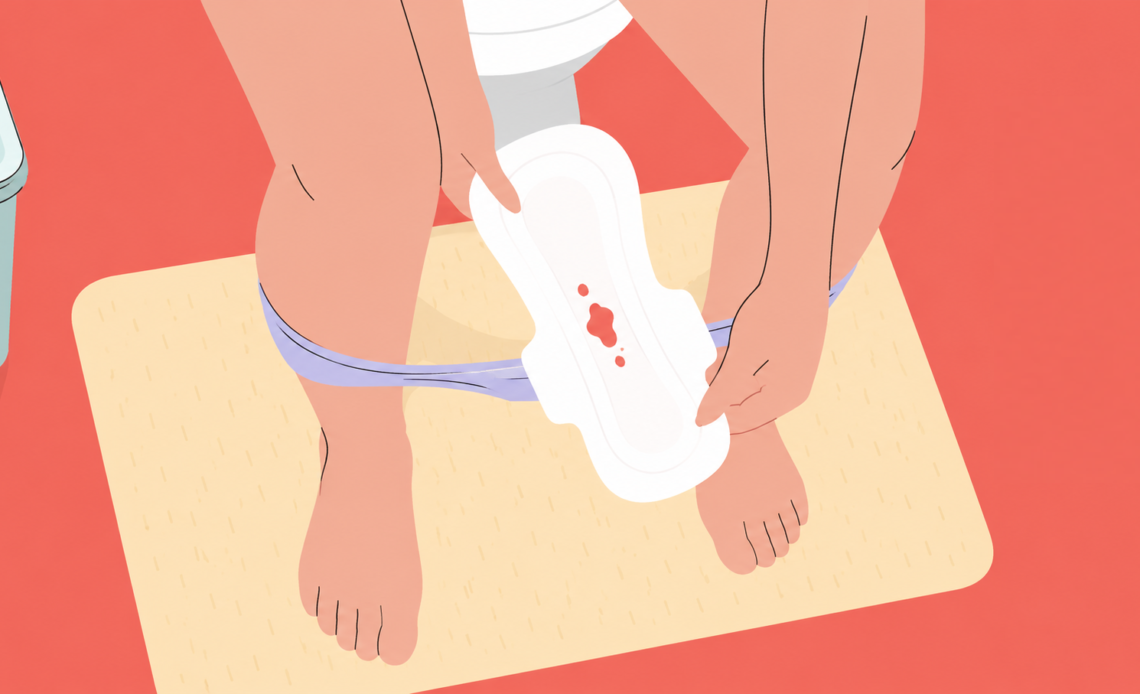
You went to the toilet, glanced down, and there it was, a streak of pink, a good two weeks before your period is even due. If your gut reaction was, “wait, why am I bleeding already?”, you are in very good company. That mid-cycle surprise has a name, and most of the time it is spotting during ovulation. It is not your period arriving early, and it usually is not a warning sign. It is your body doing something fairly routine at the exact midpoint of your cycle.
Let’s get into what is actually happening, because once you understand the why, the panic tends to fade.
Is ovulation spotting normal?
Yes, for most people it is completely normal. Light bleeding right in the middle of your cycle is a recognised, harmless part of how some bodies ovulate. The catch is that it is quite uncommon, which is probably why is causes alarm. The Cleveland Clinic estimates it shows up for about 8% of women, while a 2012 study in the American Journal of Epidemiology put it closer to 5%. Either way, if you do experience it, you are in the minority.
Blog continues after the ad.

This probably also why nobody flagged it, because it hasn’t happened to most of the people around you. And even if you are a spotter, it will not turn up every single cycle, because the hormone swings that set it off vary month to month. So spotting during ovulation sits firmly in the normal column for most people, even when it feels like a glitch.
The frustrating part is that spotting during ovulation happens without any warning. Slipping a barely-there everyday liner into your underwear on the days you suspect you are ovulating means those few surprise drops stay off your favourite jeans instead of ending your morning early.
What causes ovulation spotting?
It comes down to one hormone – estrogen. Just before your ovary releases an egg, estrogen climbs to a peak and then drops sharply. That dip can leave the uterine lining slightly unstable, so a small amount sheds. That is the light bleeding during ovulation you spot on your underwear.
The causes behind spotting during ovulation are mostly mechanical and hormonal, not a sign of anything broken.
Here is what is going on:
- The Estrogen Dip: As estrogen falls right after its mid-cycle peak, the lining it was holding steady loses a little support and lets go of a few drops. Before it becomes a full period, progesterone rises to settle the lining back down.
- The Follicle Rupturing: The moment your ovary releases the egg can cause a touch of bleeding on its own, sometimes alongside a one-sided ache called mittelschmerz.
- Hormones Turned Up A Notch: Research found women who spotted mid-cycle had higher peak luteinising hormone and higher estrogen and progesterone in the luteal phase. These are simply the hormonal changes during ovulation bleeding running a little stronger than average.
A thin, breathable everyday panty liner catches this spotting keeps you feeling fresh through a full workday, so the only one who needs to know what’s happening is you.
How do you tell ovulation spotting vs period apart?
Look at three things: timing, flow, and colour.
Your period is the heavier event your body builds toward, while spotting during ovulation is a brief mid-cycle blip. Once you know what separates them, the difference is hard to unsee:
| Factor | Ovulation Spotting | Period |
| Timing | Ovulation spotting turns up near the middle, roughly day 14 in a 28-day cycle. | A period arrives at the end of your cycle on a fairly predictable schedule. |
| Flow | Light bleeding during ovulation rarely fills more than a liner and fades within a day or two. | A period needs a pad or tampon and runs three to seven days. |
| Colour | Ovulation spotting leans pink or light red, because it is diluted by the cervical fluid that peaks in your fertile window. | Period blood trends bright to dark red. |
| Extras | Ovulation spotting may come with a single-sided pelvic twinge and a rise in clear, stretchy discharge instead. | A period often brings cramps, bloating, and PMS. |
How do you tell ovulation spotting vs. implantation bleeding?
Implantation spotting is light bleeding that happens when a fertilised egg burrows into the lining of your uterus, signalling a possible pregnancy. According to the Cleveland Clinic, this usually happens 10 to 14 days after ovulation.
Timing is your biggest clue, because the two happen at different points in your cycle. One marks the start of your fertile window, the other can hint that a pregnancy has just begun.
Here is how they line up:
When it happens: Ovulation spotting lands mid-cycle, around the time your egg is released. Implantation bleeding comes later, about 10 to 14 days after ovulation, close to when your period is due.
What it signals: Ovulation spotting tells you the fertile window is open. Implantation bleeding can be an early sign a fertilised egg has settled into the uterine lining.
How it looks: Both are light, but implantation bleeding often skews pink to brown with mild cramping, while ovulation spotting tends toward pink or light red.
The honest catch: You cannot reliably tell them apart by looks alone in the moment, and a test taken too early may not help. If the spotting shows up near your expected period and your cycle then runs late, a pregnancy test after the missed period answers it far better than guessing. That is the real line in ovulation spotting vs implantation bleeding, the calendar, not the colour.
What are the other mid-cycle bleeding reasons?
Ovulation is only one explanation, and a few others are worth knowing:
1. Breakthrough bleeding from hormonal birth control is common, especially in the first few months on a new method.
2. Fibroids and uterine or cervical polyps can bleed unpredictably.
3. Infections, including some STIs and pelvic inflammatory disease, can cause it.
4. Endometriosis, thyroid imbalances, and even a long stretch of high stress can cause it too.
5. Rarely, bleeding points to something more serious, which is why pattern matters so much.
Spotting during ovulation should track with your cycle’s midpoint. When bleeding wanders to random times instead, these other mid-cycle bleeding reasons are the ones worth a closer look.
How do you manage ovulation spotting day to day?
Here is how to manage ovulation spotting without letting it run your week:
- Track your cycle: Note the day spotting appears for two or three cycles. If it consistently lands near your midpoint, you have your answer, plus a record to show a doctor if you ever need one.
- Confirm your fertile window: Pair the spotting with other ovulation signs like clear, stretchy discharge or a small rise in basal body temperature, so you know it is spotting during ovulation and not bleeding that is off-schedule.
- Protect your underwear: Keep an everyday panty liner in your bag on the days you expect to ovulate, so a surprise few drops never reaches your clothes in the first place.
- Ease any ache: If mittelschmerz tags along, a heat pad or an over-the-counter pain reliever usually settles it within hours.
- Watch for changes: If the pattern shifts, the flow gets heavier, or the cramping ramps up, treat that as your cue to check in with a professional.
When should you see a doctor for mid-cycle bleeding?
Knowing when to see a doctor for mid-cycle bleeding comes down to a handful of clear signals. Most spotting during ovulation needs nothing more than a liner and a shrug, but book an appointment if you notice:
- Bleeding heavy enough to soak a pad or tampon every couple of hours.
- Spotting that shows up at random times rather than tracking your cycle’s midpoint.
- Bleeding after sex, or any bleeding after menopause.
- Spotting paired with pain, fever, unusual discharge, or dizziness.
- Any new pattern that simply worries you, because you know your own body best.
There is no such thing as a silly reason to ask. A quick conversation can rule out fibroids, polyps, or infection, and far more often than not it ends in plain reassurance.
The Bottom Line
Spotting during ovulation is one of those quietly common things nobody quite prepared you for. Once you can read the pattern, light flow, pink colour, mid-cycle timing, it stops being a scare and becomes just another signal your body sends. Treat it as information, keep an eye on anything that breaks the pattern, and let the rest be the small, manageable thing it usually is.
Disclaimer
The content of this article is provided for general informational and educational purposes only and is not intended to constitute medical advice, diagnosis, or treatment. The information shared is of a general nature and may not be appropriate for all individuals or specific circumstances. Readers should not disregard, delay, or substitute professional medical advice based on the information contained herein.
If you experience any symptoms, notice anything unusual, or have concerns relating to your health or overall wellbeing, you should consult a qualified healthcare professional. While every effort is made to ensure the information shared is accurate and up-to-date, Nua makes no representations or warranties, express or implied, regarding the accuracy, completeness, or suitability of the information provided and disclaims all liability arising from reliance on this content to the fullest extent permitted by law.