Here’s what we’ll cover in this guide about the underarm microbiome:
- The underarm microbiome is a community of bacteria and other microbes that break down sweat compounds, producing body odour.
- Deodorants and antiperspirants work differently, and some formulations may disrupt bacterial balance or irritate sensitive skin.
- Choosing skin-friendly deodorants with transparent ingredients and avoiding harsh fragrances can help reduce irritation and manage odour.
- Soap, shaving, hormonal changes, heat, stress, clothing, and diet can all influence underarm odour and microbial balance.
- Gentle cleansing, careful shaving, breathable fabrics, hydration, and stress management can support healthier underarm skin.
- Nua’s Deodorant Roll-Ons use ceramides and AHAs to target odour-causing bacteria while supporting the skin barrier, without aluminium or alcohol.
Underarm odour is something almost everyone deals with, yet most people never think about what’s actually causing it. You might assume you simply sweat a lot. But the truth is, there’s more to it. It comes down to the underarm microbiome, that tiny world of bacteria hanging out right under your arms.
This microbiome plays a major role in how your body reacts to sweat, and thus, the odour that follows. It even affects how your skin responds to the deodorant you use every day. That deodorant doesn’t just sit on the surface, it actively interacts with this microbiome, either supporting its natural balance or disrupting it over time. But odour isn’t the only consequence. An imbalanced underarm microbiome can also lead to skin irritation, increased sensitivity, and inflammation, showing up as itchiness, redness, or chafing.
So what exactly is this microbiome, and why does it matter? Let’s start by understanding it.
Understanding the Armpit Microbiome
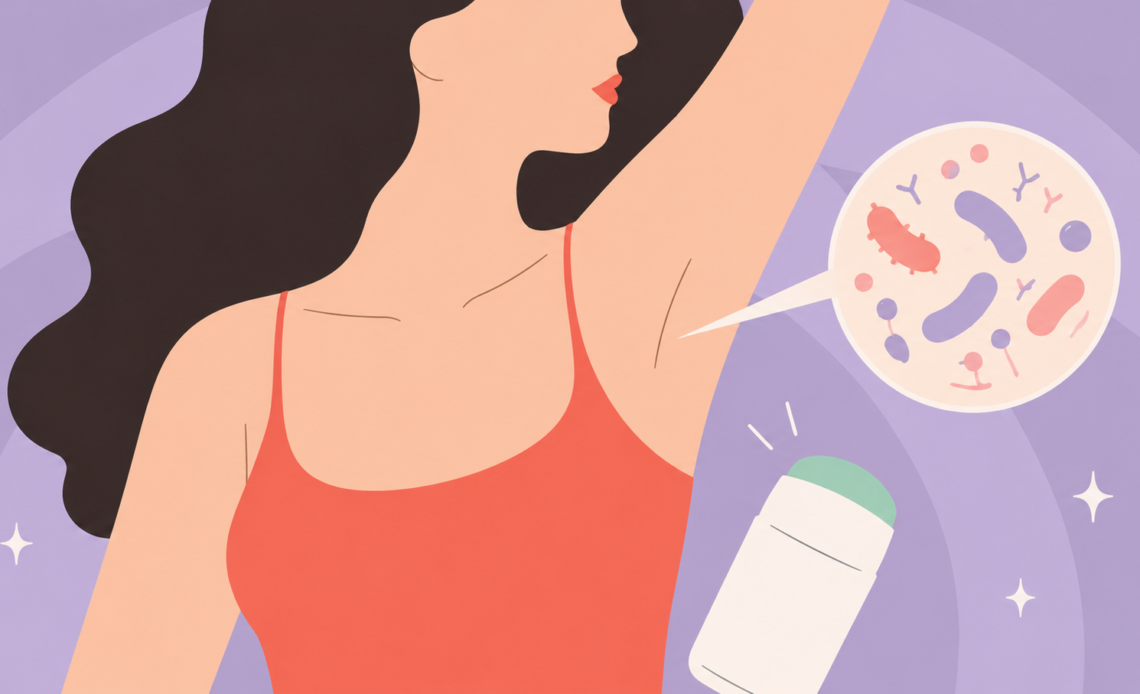
The underarm microbiome is a community of bacteria, fungi, and yeast that live on the skin of your armpits, dominated primarily by Staphylococcus and Corynebacterium. In fact, the underarm is one of the biggest bacterial hubs on your entire body, and that’s largely thanks to sweat. Humans have three types of sweat glands — apocrine, eccrine, and sebaceous. While eccrine glands are spread across your entire body, apocrine and sebaceous glands are concentrated in specific areas, including the underarms.
Apocrine glands secrete a thicker, oilier form of sweat, released through hair follicles rather than directly onto the skin’s surface. This sweat is packed with proteins, lipids, and steroids, and on its own, it’s completely odourless. But these compounds are essentially food for the underarm microbiome. Proteins and lipids act as a nutrient source that the bacteria thrive on, while steroid compounds get broken down into smaller molecules that carry a distinct, musky scent. It’s only once bacteria begin feeding on these nutrient-rich compounds, metabolizing them into byproducts like thioalcohols and short-chain fatty acids, that odour actually starts to develop.
But not all bacteria in this ecosystem play the same role. Take Staphylococcus epidermidis, for example, considered one of the “good” bacteria on your skin. It acts as a first line of defense, helping keep harmful microbes in check and maintain overall skin balance, all while producing little to no odour of its own. On the other end, bacteria like Staphylococcus hominis and Corynebacterium feed directly on the odourless sweat from your apocrine glands and break it down into the smelly compounds responsible for body odour.
So, the goal isn’t a bacteria-free armpit, it’s a balanced one, where protective species like S. epidermidis are allowed to thrive, while odour-producing bacteria are kept in check. But this balance is delicate, and it doesn’t take much to throw it off. One of the biggest disruptors is something most of us use without a second thought: the very products meant to keep odour away, antiperspirants and deodorants, many of which don’t distinguish between good and bad bacteria, wiping out both indiscriminately.
How Do Deodorants and Antiperspirants Affect Your Underarm Microbiome?
People often use “deodorant” and “antiperspirant” interchangeably, but they work quite differently. A deodorant tackles odour by making the skin more acidic or using antibacterial agents to control bacteria, while an antiperspirant uses aluminium-based ingredients to temporarily plug sweat ducts and block sweat from reaching the surface altogether.
That sweat-blocking action isn’t harmless. Research suggests suppressing sweat this way can shift your underarm microbiome, sometimes encouraging odour-producing bacteria rather than keeping them away.
Deodorants come with a trade-off of their own. Many rely on alcohol or antibacterial agents that don’t distinguish between bacteria. They alter the microbiome broadly, wiping out protective species like Staphylococcus epidermidis along with the odour-causing ones. Add synthetic fragrances into the mix, and you’ve got a formula that can also trigger redness, itching, or contact dermatitis, particularly on freshly shaved or sensitive skin.
So, if deodorants can disrupt the underarm microbiome like this, why are they still sold and recommended? The truth is, not every deodorant works the same against your skin. Plenty are formulated well and manage odour effectively without causing harm. The real issue was never deodorant itself, it’s the formulation. Some are built with your skin’s microbiome in mind (like Nua’s), and others aren’t. Knowing that difference is what actually matters.
So what separates a deodorant that supports your underarm microbiome from one that works against it? Let’s break it down.
Good Deodorant vs. Bad Deodorant: What’s the Difference?
A good deodorant neutralizes odour-causing bacteria while using safe, skin-friendly ingredients that work in harmony with your underarm microbiome. A bad deodorant, on the other hand, relies on harsh chemicals or heavy artificial perfumes that don’t actually solve the problem. They trap sweat, irritate the skin, and can even disrupt the natural bacterial balance.
The easiest way to spot the difference is by looking at how each one performs across a few key areas, starting with what’s actually in the formula.
Ingredient Transparency
- Check the label: Skin-safe deodorants clearly list their active and botanical ingredients, like natural antimicrobial agents and skin-soothing moisturisers such as shea butter or aloe vera, so you know exactly what you’re putting on your skin.
- Avoid heavy synthetics: Many market sprays hide cheap propellant gases and synthetic fragrances high up on their ingredient list. These ingredients don’t just sit on the skin, they can disrupt the underarm microbiome by irritating the skin barrier and indiscriminately killing off both good and bad bacteria.
- Look for targeted actives: Skin-safe formulas rely on proven odour-fighters like tea tree oil, zinc compounds, or gentle antibacterial plant extracts, rather than masking odour with heavy fragrance or blocking sweat altogether.
Why Choose Nua’s Deodorant Roll-On
If everything you’ve read so far has you rethinking your deodorant, Nua’s Roll-On is built around exactly that shift in thinking. Here’s why you should choose Nua:
- Odour control without the trade-offs: Formulated with ceramides and AHAs, it targets odour-causing bacteria while supporting your skin’s natural barrier, instead of wiping out everything indiscriminately.
- No harsh ingredients, perfect for sensitive skin: Made without aluminium, alcohol, parabens, or sulphates, so there’s no drying out, no irritation, and no disrupting the microbiome balance we’ve talked about throughout this post.
- Transparency in what goes on your skin: The toxic-free formula uses clean, phthalate-free fragrances, so freshness never comes at the cost of skin health.
- Healthier-looking underarms over time: With actives like Pro-Vitamin B5 (strengthens the skin barrier and protects against dryness and irritation), glycolic acid (targets odour-causing bacteria and keeps pores clear), lactic acid (gently exfoliates and helps even out skin tone), and hyaluronic acid (hydrates and keeps underarms soft and smooth), it supports overall underarm skin health, not just odour.
- A scent that actually suits you: Available in two fragrances, Sage & Bergamot for an earthy, herbal freshness, or Rose & Raspberry for something softer and fruitier, so there’s an option to match whatever scent profile you love.
Deodorant can play a big role in your underarm microbiome, but it’s not acting alone. A few other everyday factors can influence that balance just as much.
Other Factors That Affect Your Underarm Microbiome
- Soap: Your underarms naturally sit at a slightly acidic pH (5.5–6.5), known as the skin’s acid mantle. Traditional bar soaps, often highly alkaline (pH 9–10), can strip away beneficial bacteria along with dirt. Instead, opt for pH-balanced syndet bars, soap-free body washes, or targeted antimicrobial cleansers.
- Shaving: Micro-abrasions from shaving can irritate skin, disturb its natural pH, and encourage the growth of odour-producing bacteria. Use a sharp, clean razor; avoid shaving on already-irritated skin.
- Hormonal Shifts: Menstrual cycles and perimenopause can naturally increase underarm odour at certain times, this comes down to fluctuating estrogen and progesterone levels, which affect sweat gland activity and shift the bacterial balance in your underarms. This is completely normal, not a hygiene issue, just your body responding to natural hormonal changes. Learn more in our guide about period body odour.
- Environmental Changes: Heat and humidity increase sweat production, giving bacteria more fuel, while tight or synthetic clothing traps moisture and creates ideal conditions for odour-causing bacteria. This is largely why underarm odour feels stronger in summer or right after a workout.
- Stress: Stress activates the apocrine sweat glands, which is why stress sweat tends to smell noticeably stronger than sweat from heat or exercise. Simple habits like deep breathing, short walks, or even a few minutes of stepping away from a stressful situation can help keep this response in check.
- Diet: Sulphur-rich foods like garlic and onions, along with dehydration, can intensify odour, while staying hydrated helps dilute sweat compounds.
Knowing what disrupts your underarm microbiome is only half the picture; the good news is that a few simple daily habits can help protect it just as effectively.
Daily Hygiene Tips for a Healthy Underarm Microbiome
- Wash with the right products: Use pH-balanced, soap-free cleansers instead of harsh alkaline bar soaps to protect your skin’s acid mantle.
- Shave carefully: Use a clean, sharp razor and avoid shaving on irritated or broken skin to prevent micro-abrasions.
- Choose breathable fabrics: Opt for cotton or natural fibers over tight synthetic clothing, especially in hot or humid weather, to reduce trapped moisture.
- Let your underarms breathe: Avoid over-layering products (like heavy antiperspirant + perfume) that can clog pores and disrupt your skin’s natural barrier.
- Stay hydrated: Drink enough water throughout the day to help dilute sweat compounds and support overall skin health.
- Pick a skin-safe deodorant: Choose a formula (like Nua’s Roll-On) that manages odour without stripping your microbiome’s natural balance.
- Manage stress: Since stress sweat can smell stronger, simple practices like deep breathing or short walks can help.
The Final Takeaway
At this point, one thing should be clear, body odour isn’t just about sweating more or less. It’s about the delicate bacterial balance living on your skin, and how well your daily choices support it. Every deodorant you use, every soap you wash with, and even the fabric you wear play a small role in either protecting that balance or disrupting it.
The right deodorant, paired with a few simple habits, can make a bigger difference than most people realize. It’s not about finding a magic fix, it’s about being a little more mindful of what you’re putting on your skin every day, and understanding why it matters.
If you’re ready to make the switch, Nua’s Deodorant Roll-On is designed with exactly this in mind — gentle, skin-safe, and built to work with your underarm microbiome, not against it.
FAQs
1. What is the underarm microbiome?
The underarm microbiome is a community of bacteria, fungi, and yeasts that live on your underarm skin. These microbes break down compounds in sweat, producing the substances responsible for body odour.
2. How does deodorant affect the underarm microbiome?
Some deodorants use alcohol, antibacterial agents, or synthetic fragrances that may disrupt the balance of underarm bacteria or irritate the skin. The effect depends on the formulation and ingredients used.
3. What is the difference between deodorant and antiperspirant?
Deodorants help manage body odour by making the skin more acidic or controlling odour-causing bacteria. Antiperspirants typically use aluminium-based ingredients to temporarily block sweat ducts and reduce sweating.
4. What factors affect the underarm microbiome and body odour?
Soap, shaving, hormonal changes, heat, humidity, stress, clothing, and diet can all influence underarm odour and microbial balance. For example, tight synthetic fabrics can trap moisture, while stress can increase the production of stronger-smelling sweat.
5. How can you maintain a healthy underarm microbiome?
Use gentle, pH-balanced cleansers, shave carefully, wear breathable fabrics, stay hydrated, manage stress, and choose a skin-friendly deodorant. These habits can help support the skin barrier and manage odour without unnecessary irritation.
Disclaimer
The content of this article is provided for general informational and educational purposes only and is not intended to constitute medical advice, diagnosis, or treatment. The information shared is of a general nature and may not be appropriate for all individuals or specific circumstances. Readers should not disregard, delay, or substitute professional medical advice based on the information contained herein.
If you experience any symptoms, notice anything unusual, or have concerns relating to your health or overall wellbeing, you should consult a qualified healthcare professional. While every effort is made to ensure the information shared is accurate and up-to-date, Nua makes no representations or warranties, express or implied, regarding the accuracy, completeness, or suitability of the information provided and disclaims all liability arising from reliance on this content to the fullest extent permitted by law.