What you will learn about how to choose a diaper for your baby in this guide:
- Choose your baby’s diaper size by their weight and the brand’s diaper size chart, rather than their age alone.
- Make sure the diaper fits snugly around the waist and thighs without digging into the skin or leaving gaps.
- Look for red marks, tightness, or frequent leaks, as these may mean it’s time to check the fit or size up.
- Choose tape diapers for easier changes with newborns and pant diapers as your baby becomes more active.
- Look for absorbent, soft, and breathable diapers that help keep your baby’s skin comfortable and dry.
- Speak to a paediatrician if your baby’s rash persists, their skin breaks or bleeds, or their umbilical cord stump shows signs of infection.
How to choose a diaper for your baby? A question you didn’t think would be so difficult to answer…until you found yourself staring at a shelf full of diapers. Confusing sizes, diaper types, and labels promising everything from extra softness to overnight protection. And suddenly, one tiny baby has a lot of diaper options to choose from.
And if you’re a first-time parent, where do you even begin? How do you find the right diaper for your baby? Should you choose the diaper size by weight or age? Plus, like, how do you even read a diaper size chart?
On top of all this, you also have to figure out the fit. What are the signs a diaper is too small or too big? How should a diaper fit around those tiny thighs and that little tummy? And most importantly, when to change diaper size as your baby grows?
So, let’s make the whole thing a little less confusing for you. This diaper buying guide covers everything you’d need to know about how to choose diapers for your baby.
Let’s get into it.
5 Things to Check When Choosing a Diaper
What actually makes one diaper a better choice than another? Well, it’s literally just 5 things.
- Size: Check your baby’s weight on the diaper size chart. Age is only a rough guide, so don’t rely on it alone.
- Fit: The diaper should fit snugly around the waist and thighs, without digging into the skin or leaving gaps for leaks.
- Style: Tape diapers are handy for newborns who spend most of their time lying down. Pant diapers are easier to manage when your little one starts rolling, crawling, and wriggling around.
- Absorbency: Look for a diaper that soaks up wetness well without leaking. For longer stretches of sleep, overnight diapers may be worth a try.
- Skin comfort: Choose soft, breathable materials that help keep moisture away from your baby’s skin. Less dampness means less chance of irritation.
Still figuring out the newborn basics? Our newborn baby care guide for first-time parents covers everything from feeding to sleep here.
Size: Start With Your Baby’s Weight
Baby diaper sizes are based on weight, and NOT age. For example, two babies who are three months old can be in totally different sizes, simply because babies grow at their own pace.
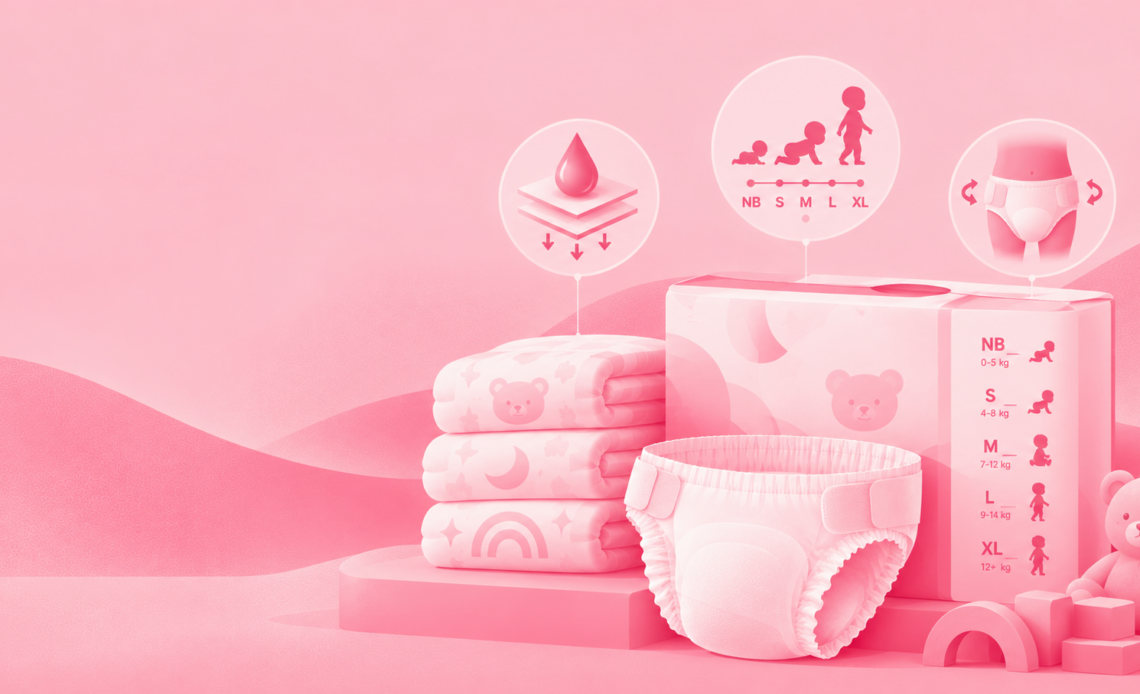
As a rough idea, most packs go NB, S, M, L, and XL, with each size covering a a range of kilos, eg. 3–8 kg, 6–12 kg and so on. So, check the diaper size chart on the pack to see what your baby needs.
And remember, the ranges vary between brands, so don’t assume the same size will work across the board.
Most newborns usually start with a newborn (NB) diaper size, but here’s the thing. Research has found that those tiny humans grow like really, really fast, especially in the first 3 months. So, you might find yourself reaching for the next size sooner than expected. This is why stocking up on months’ worth of newborn diapers isn’t always the best idea. Start with a smaller supply and see how your baby grows.
How Should a Diaper Fit? A Quick Fit Check
A diaper can be the “right” size on paper and still not fit well. So, here’s a quick check for the right fit:
- Check the waistband: It should sit comfortably below the belly button. (Pro tip: If the umbilical cord stump is still attached, fold the front down so it doesn’t rub against it).
- Try the two-finger test: You should be able to slip two fingers under the waistband without squeezing.
- Look around the thighs: The leg cuffs should sit flat against the thighs with no gaps, because gaps are where leaks start.
If you’re noticing red marks around the waist or legs, or frequent leaks, it’s worth checking the size again. These could be signs that the diaper isn’t sitting quite right or is too tight.
Need a refresher on the diaper change itself? Our newborn hygiene guide has an easy step-by-step walkthrough here.
Style: Tape or Pants?
Ah, the classic tape diaper vs. pant diaper debate! Well, TBH, both do the job, but the ‘better’ choice depends on your baby’s stage and what makes diaper changes easier for you.
- For a newborn baby, tape diapers are often the easier starting point because you can fasten and adjust them while your baby’s on their back.
- Once your baby starts rolling, crawling, and turning, every diaper change can turn into a workout. So, pant diapers can make life simpler because you can pull them on quickly without having to line up and fasten the tabs.
Here’s a quick tape diaper vs. pant diaper breakdown.
| Tape diapers | Pant diapers | |
| Best for | Newborns and younger babies who mostly lie down | Babies who roll, crawl, stand, or won’t sit still |
| How they work | You fasten the tape/ tabs around your baby’s waist | You simply pull them up like regular underwear |
| Changing time | Easy to adjust while your baby lies on their back | Handy for quick changes when your little one is on the move ALL the time |
| Fit | The tabs let you adjust the fit around the waist | The stretchy waistband gives a snug, flexible fit |
| Removal | You need to open the tabs to remove the diaper | You’ll usually need to tear the sides to remove a soiled diaper |
Absorbency and Comfort: Why Dryness Matters for Baby Skin
According to research, baby skin is 20-30% thinner and more delicate than adult skin, making it more vulnerable to irritation. Plus, when skin stays wet for long stretches, it can become softer and more prone to chafing. That’s why you want a diaper that helps keep your baby’s skin dry.
In humid weather, it also helps when a diaper doesn’t trap too much heat, because warm, damp skin can get uncomfortable. So, when choosing a diaper, look for one that is:
- Absorbent: Pulls moisture away from the skin and locks it inside the diaper.
- Breathable: Allows airflow to help reduce heat and dampness around your baby’s skin.
- Soft: Feels gentle against delicate skin and helps reduce friction or irritation.
But remember, even the most absorbent diaper isn’t a free pass to skip changes! Change your baby’s diaper regularly, and don’t wait for it to leak or feel completely full.
Keeping your baby dry is just one part of protecting their delicate skin. Read our baby skin care guide for more tips here.
Common Diaper-Buying Mistakes
Buying diapers seems straightforward until you realise there are quite a few ways to get it wrong. Here are five little mistakes to watch out for.
- Choosing by age alone: Always check your baby’s weight against the diaper size chart instead of relying only on age.
- Stocking up on newborn sizes: Babies grow FAST, so avoid buying months’ worth of newborn diapers before you know how quickly your baby grows.
- Sticking to a smaller size to save money: A diaper that’s too small can feel uncomfortable and cause leaks, so size up when your baby needs it.
- Ignoring red marks: Marks around the waist or thighs can mean the diaper is too tight or doesn’t fit well.
- Assuming expensive means better: A higher price doesn’t automatically mean a diaper will be better for your baby’s skin. Focus on fit, absorbency, softness, and how your baby responds to it.
When to Speak to a Paediatrician
Most diaper-area skin troubles sort themselves out once the fit and changing routine are right. But please speak to your paediatrician if:
- A rash doesn’t go away even with a good fit and regular changes.
- The skin looks broken or is bleeding.
- The skin around the cord stump looks red or swollen, has discharge, or smells bad.
You know your baby best, so if something feels off, a quick call to the doc is always a good idea.
Diaper Duty, Decoded
Choosing the right diaper for your baby doesn’t have to be another parenting puzzle to solve. Start with your baby’s weight, check the fit, pick a style that works for your little one’s stage, and look for features that help keep their skin comfortable.
And remember, babies grow quickly, so the diaper that fits perfectly today might not fit for long. Keep an eye out for red marks, gaps, or frequent leaks, and don’t be afraid to try the next size when needed.
There’s no single diaper that works perfectly for every baby. It’s about finding what works for YOUR little one. You’ve got enough on your parenting plate already!
If you’ve any more diaper doubts, drop them in the comments, and we’ll get back to you.
FAQs
What diaper should I buy for a newborn?
Start with the newborn size based on your baby’s weight, and choose a soft, snug-fitting diaper with a front that can be folded below the cord stump.
When should I change to the next diaper size?
When your baby reaches the top of the weight range on the pack, or when the fit starts showing red marks, gaps, or frequent leaks.
Should I size up if the diaper keeps leaking?
Not always. Check the fit first, because leaks can also come from a diaper sitting too low or gaping at the legs. If the fit looks right and your baby is near the top of the weight range, then size up.
Do diaper sizes vary between brands?
Yes, diaper sizes can vary between brands because each brand may use different sizing guidelines based on a baby’s weight, age, and body shape. Always check the brand’s size chart and look for signs of a good fit, such as a snug waistband, comfortable leg cuffs, and no frequent leaks or red marks.
Can the wrong diaper irritate my baby’s skin?
It can. A diaper that is too tight can rub, and one that is too loose can leak and leave the skin damp, both of which can make the skin uncomfortable.
Disclaimer
The content of this article is provided for general informational and educational purposes only and is not intended to constitute medical advice, diagnosis, or treatment. The information shared is of a general nature and may not be appropriate for all individuals or specific circumstances. Readers should not disregard, delay, or substitute professional medical advice based on the information contained herein.
If your baby experiences any symptoms, or if you notice anything unusual or have concerns relating to their health or overall wellbeing, you should consult a qualified healthcare professional. While every effort is made to ensure the information shared is accurate and up-to-date, Nua makes no representations or warranties, express or implied, regarding the accuracy, completeness, or suitability of the information provided and disclaims all liability arising from reliance on this content to the fullest extent permitted by law.