What you will learn about talcum powder for babies in this blog:
- Talcum powder doesn’t reliably prevent diaper rashes, as it doesn’t create a protective barrier against skin and urine or stool.
- Fine powder particles can be inhaled by babies and cause serious breathing problems, which is why health experts advise against using them.
- Keeping the diaper area clean and dry, along with using a barrier cream, is a better way to protect your baby’s skin.
- Cornstarch and herbal baby powders aren’t automatically safer alternatives, as they can also become airborne and be inhaled.
- If your baby accidentally inhales powder, watch for coughing, wheezing, or difficulty breathing, and seek urgent medical help if symptoms occur.
Talcum powder is so often called baby powder that the two have become almost synonymous. When you’re shopping for your baby in your third trimester, it’s easy to assume it’s one of those essentials you’ll need to stock up on.
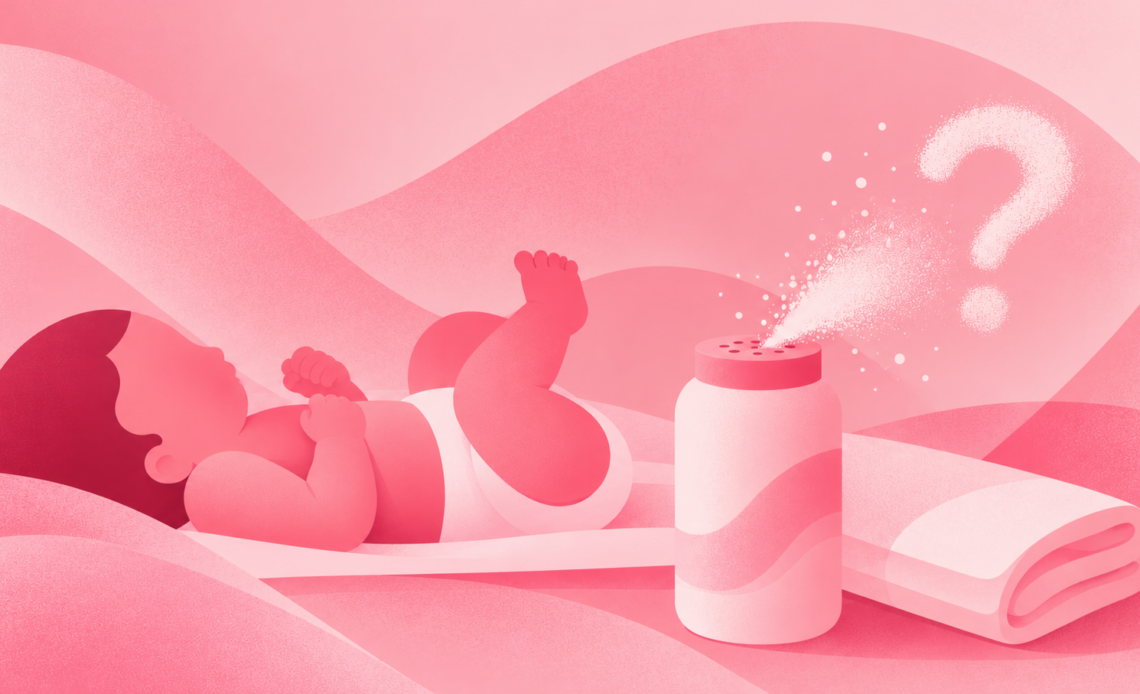
Many parents and grandparents swear by it, too, especially after diaper changes, to keep the skin dry and prevent rashes. But does baby powder actually prevent diaper rash? And more importantly, is baby powder safe for your newborn?
Baby care advice has changed over the years, and some of the products we grew up with aren’t necessarily recommended today. Before adding talcum powder for babies to your shopping list, here’s what you need to know.
Does Talcum Powder Prevent Baby Rashes?
No, talcum powder isn’t a reliable way to prevent diaper rash.
Talcum powder can absorb some surface moisture, so it might seem like a good way to keep your baby’s skin dry. But it doesn’t create a protective barrier that shields the skin from urine and stool, so irritation can still happen.
Plus, there’s another reason paediatricians advise against using talc for diaper rash. Its fine particles can become airborne and accidentally be inhaled by your baby, causing breathing problems.
So, it’s best to skip baby powder for rashes and stick to simpler, gentler ways to make sure your baby remains rash-free. Keep the diaper area clean and dry, change wet or dirty diapers ASAP, and use a barrier cream containing zinc oxide or petrolatum whenever needed.
Why Parents Have Traditionally Used Baby Powder
For generations, talcum powder for babies has been a regular part of diaper changes and bath time. And it’s easy to see why it became so popular. It leaves the skin feeling dry and fresh almost instantly, especially in hot, sticky weather. It was also VERY heavily advertised as a baby care essential, so many parents grew up believing it belonged in the diaper bag. One particular pink bottle probably comes to mind, doesn’t it?
But paediatric recommendations have evolved, and we’ve learned so much more about baby powder side effects. While the practice comes from a place of care and love, it is now well-known that you don’t need a powder in your diapering kit anymore.
Talcum Powder Myths vs Facts
There’s a lot of advice floating around about using baby powder for rashes. And when something has been used for generations, it’s easy to assume it must be safe. But that’s not always true. So, let’s separate the facts from the baby powder myths.
Myth 1: A daily dusting of powder keeps the diaper area healthy.
Fact: Your baby doesn’t need powder after every diaper change.
Once you’ve gently cleaned the diaper area and let it dry properly, adding talcum powder doesn’t provide any extra protection at all. It also doesn’t create a barrier against urine and stool, which is needed to protect from skin irritation. So, if you’re worried about diaper rash, change soiled diapers promptly and use a barrier cream when needed.
Here’s our complete guide on how to prevent diaper rash.
Myth 2: Powder keeps babies cool and prevents prickly heat.
Fact: Powder isn’t a trustworthy way to prevent prickly heat or keep your baby cool.
Prickly heat happens when sweat gets trapped under your baby’s skin, causing tiny red bumps and irritation. Baby powder may absorb a little moisture, but it doesn’t stop sweat from getting trapped or prevent these bumps from forming. Instead, dress your baby in light, breathable cotton clothes and avoid too many layers to help keep them cool.
To learn how to spot prickly heat and other common newborn skin changes, read our guide here.
Myth 3: Baby powder is gentle because it’s made for babies.
Fact: Just because a product is made for babies doesn’t automatically make it safe or risk-free.
Not every baby product is automatically safe for infants just because it’s marketed for them. In fact, baby powder side effects have been studied by experts, and one of the biggest concerns is the risk of inhaling fine talc particles. These particles can irritate your baby’s airways and cause serious breathing problems.
Myth 4: Cornstarch powder is a safe alternative to talcum powder
Fact: Cornstarch also carries an inhalation risk.
When comparing cornstarch vs. talc baby powder, it’s important to remember that cornstarch being safe to consume doesn’t make it safe for your baby’s lungs. Both are fine powders that can become airborne during application, and babies may accidentally breathe in these particles. Powder inhalation can irritate their airways and cause breathing difficulties, so switching to cornstarch doesn’t eliminate the risk.
Myth 5: A little powder in skin folds stops chafing.
Fact: Powder isn’t the best way to protect your baby’s skin folds.
It might seem helpful in areas such as the neck, armpits, and groin, where sweat tends to collect. But when powder mixes with sweat or moisture, it can clump and build up in the folds, potentially causing further irritation. Instead, gently clean these areas with a damp sponge, and keep them as dry as possible instead.
Myth 6: Baby powder causes cancer in babies.
Fact: While baby powder isn’t recommended for babies, research reports no direct evidence that using baby powder causes cancer in babies.
Most studies on talc and cancer have focused on adults, so we don’t have enough evidence to determine how using talcum powder affects a baby’s cancer risk. In 2024, the World Health Organization’s cancer research agency classified talc as “probably carcinogenic to humans” based on evidence from human, animal, and laboratory studies. This means there’s evidence suggesting talc could cause cancer, not that using baby powder will definitely lead to cancer.
Note: If you’ve used baby powder before, there’s no need to feel worried or guilty. It’s okay. You can simply skip loose powders going forward and stick to gentler ways of caring for your baby’s skin.
What Do Health Experts Say About Baby Powder?
The American Academy of Pediatrics (AAP) strongly advises against using baby powder. A report published in the AAP journal noted around 50 cases of baby talcum powder inhalation in New York alone each year. European Union rules also require powders intended for children under three to carry a warning to keep them away from the nose and mouth.
Another concern is asbestos, a substance known to cause cancer. Talc and asbestos can occur close together in nature, so talc may become contaminated with asbestos during mining if it isn’t carefully controlled.
Since powder isn’t necessary for everyday baby care, it’s best to leave it out of your newborn’s routine to be on the safer side.
If You Still Wish to Use Baby Powder, Follow These Guidelines
If you still prefer to use baby powder, a few precautions can help reduce the risks. Keep in mind that even careful use cannot fully eliminate the risk of your baby inhaling loose powder.
- Apply it away from your baby’s face: Shake a small amount into your palm, away from your baby, then gently pat it onto the skin. Never shake powder directly over your baby.
- Keep it out of reach: Store the container somewhere your baby cannot access it.
- Avoid sensitive areas: Don’t apply powder to broken or irritated skin, near the umbilical cord stump, or around your baby’s nose and mouth.
- Don’t layer it with creams: Avoid applying powder over creams, as the mixture can clump and irritate the skin.
Better Ways to Keep Your Baby’s Skin Dry and Comfortable
You don’t need baby powder to keep your baby’s skin comfortable. A few simple habits can help prevent excess moisture, irritation, and chafing.
- Change diapers promptly: Change wet or dirty diapers as soon as possible to reduce prolonged contact with moisture and stool.
- Pat skin dry after a bath: Gently pat your baby’s skin with a soft towel, paying attention to folds where moisture can collect (more on how to bathe your baby here).
- Use a barrier cream: Apply a suitable barrier cream to the diaper area to help protect the skin from moisture and irritation.
- Choose loose cotton clothing: Dress your baby in soft, breathable cotton clothes in summer to reduce sweating, friction, and chafing (more on how to prevent chafing here).
- Keep your baby cool: Avoid overdressing your baby, especially in hot weather, to help reduce sweating and the risk of prickly heat.
What to Do If Your Baby Breathes in Powder
If your baby accidentally inhales baby powder, here’s what to do.
- Take your baby to fresh air and remove the powder from around them.
- Look for coughing, wheezing, or difficulty breathing.
- If any of these symptoms occur, get medical attention immediately. Call emergency services if your baby is struggling to breathe.
- If your baby has swallowed powder, call your doctor. Don’t try any home remedies and don’t try to induce vomiting.
Baby Powder? Let’s Dust the Doubts
Baby powder has been a nursery staple for generations, but it isn’t a must-have for your little one. It doesn’t reliably prevent diaper rashes, and inhaling fine powder particles is a bigger immediate concern.
However, if you’ve used baby powder before, there’s no need to panic or feel guilty. Going forward, just focus on the basics. Change diapers promptly, gently pat your baby’s skin dry, and use a barrier cream when needed.
FAQs
At what age is it safe to use baby powder?
There isn’t a specific age at which loose baby powder becomes risk-free. Even as your infant grows, powder can still be inhaled by them and irritate their airways.
Are herbal or “natural” baby powders safer?
No. Plant-based and other natural powders can still be inhaled by babies, causing breathing issues. So, it’s best to avoid loose powders altogether.
Can I use powder on my baby’s clothes or bedding instead of their skin?
No. It’s best not to. Powder sprinkled on clothes, sheets, or bedding can become airborne and may be inhaled by your baby.
What should I do with baby powder I received as a gift?
You don’t have to use it just because someone gifted it to you. If it’s unopened, you could return it or dispose of it according to local waste guidelines.
Disclaimer
The content of this article is provided for general informational and educational purposes only and is not intended to constitute medical advice, diagnosis, or treatment. The information shared is of a general nature and may not be appropriate for all individuals or specific circumstances. Readers should not disregard, delay, or substitute professional medical advice based on the information contained herein.
If your baby experiences any symptoms, or if you notice anything unusual or have concerns relating to their health or overall wellbeing, you should consult a qualified healthcare professional. While every effort is made to ensure the information shared is accurate and up-to-date, Nua makes no representations or warranties, express or implied, regarding the accuracy, completeness, or suitability of the information provided and disclaims all liability arising from reliance on this content to the fullest extent permitted by law.