
Most of us grew up only knowing one period product: the sanitary pad. It was what our moms used, what was shown in TV ads, and what most school nurses (if any) offered. Research shows that in India, around 64.4% of women use sanitary napkins. Tampons? Just 1.7%. Which means not only are Indian women unfamiliar for tampons, but deeper choices, like applicator vs. non-applicator tampons, aren’t even on the radar. Not because we don’t care, but because we were never really given the full picture.
But that low awareness also means low conversation, and we deserve better than that. Most of us weren’t taught how to choose a tampon, let alone understand the differences between tampon types. But choosing something that goes inside your body should be an informed, conscious, and honestly, kind of empowering choice. So let’s break it down, because once you do, it can change everything about how you experience your period.
First off, what are tampon applicators?
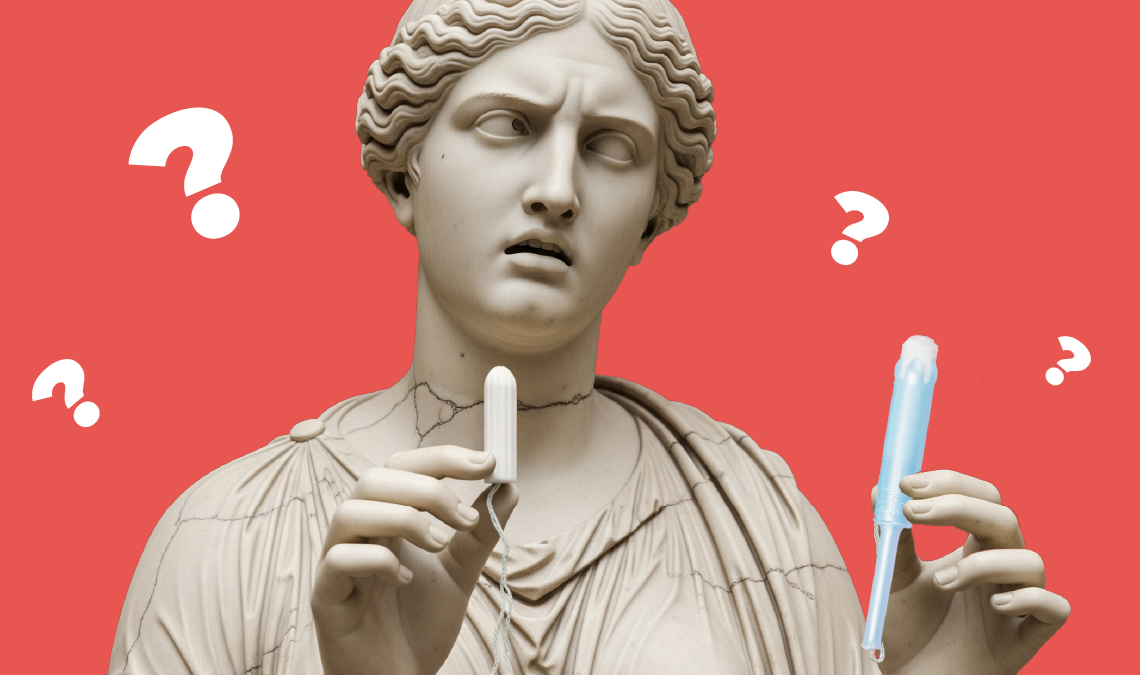
Before we go further, here’s a quick primer on what tampon applicators actually are: they’re the plastic or cardboard tubes that help insert the tampon into your body. You push the smaller tube into the larger one to slide the tampon in place, kind of like an injection. They’re designed to make insertion cleaner and less hands-on, which is why many first-time tampon users prefer them. But not all tampons have them, and that’s where things get interesting.
Which tampon is actually more comfortable?
Let’s start with the big one: comfort. The truth is, comfort is super personal, and what works for one person might feel totally off for another. Applicator tampons are often chosen for the ease they offer during insertion. You don’t need to touch the tampon itself or yourself, which can make them feel more convenient and fuss-free, especially for beginners.
Non-applicator tampons are inserted with your fingers, which gives you more control over placement. For some, that’s the game-changer. If you’ve ever had a tampon sit wrong all day (ugh), you know how important that is. When it sits just right, you barely feel it. Others also find non-applicator options more discreet and compact, great if you’re on the go or packing light.Once you adjust to the method, many find it hard to go back.
At the end of the day, it’s about which one feels better for you. It’s a personal choice based on your comfort, your lifestyle, and your flow.
It’s also worth noting: Nua’s EaseFit tampons (yes, the ones you need to check out) are non-applicator but thoughtfully designed. They are 100% toxic-free. No bleach, chlorine, dyes, and fragrance. They’re also gynecologically tested for the safest period experience. That means they’re not just comfy, they’re gentle, too. Ideal for sensitive skin, peace of mind and zero irritation.
Are applicators more convenient?
When you’re juggling a busy day and dealing with a heavy flow, convenience is everything. And sure, applicator tampons can feel like the faster, cleaner option, especially in public restrooms where you don’t want to deal with any extra mess.
But once you’re familiar with non-applicator tampons, they often end up being efficient too. No fiddling with extra plastic or cardboard and no awkward waste to discreetly toss. Just a quick change and you’re done. Plus, they take up way less space in your bag, since the actual tampon is quite small and easy to carry around if there isn’t an applicator attached (your mini purse will thank you) and that is one less thing to stress about.
Nua’s tampons come in three absorbency levels: Mini, Regular and Super, so you can grab what your body actually needs that day. This kind of tampon absorbency choice means you’re not stuck with a one-size-fits-all solution. Instead, you get a product that moves with your life, not against it. So whether you’re spotting or in full-on crime scene mode, you’ve got options. That kind of tampon absorbency choice makes life easier, no matter your flow.
Which tampon is better for the environment?
Let’s talk impact, the kind that goes beyond just your body. Applicators, especially plastic ones, contribute heavily to period-related waste. Billions of them end up in landfills and oceans every year. Even cardboard applicators, while technically biodegradable, still require additional resources to dispose of.
Now compare that with non-applicator tampons, where there’s no extra applicator involved so there’s less waste. No additional parts, no wrappers for tubes, no bulky disposal concerns. It’s a simpler product with a significantly lighter environmental footprint.
That’s not to say switching tampon types will save the planet, especially if you’re comfortable with what you use. But for someone trying to reduce single-use plastic in their routine, going applicator-free is a solid step. Choosing a non-applicator tampon is one of those small but meaningful shifts that adds up over time.
Of course, sustainability doesn’t have to be a factor in choosing the right tampon. It’s about understanding what each option means for your body and the world around you—and then deciding what aligns best with your values, lifestyle, and comfort.
Are non-applicator tampons hard to use? Let’s talk about the learning curve
No one tells you this, but non-applicator tampons take a minute to master. It might be awkward at first. You’ll probably look up a tutorial or two (here’s one you might find helpful), but once you figure it out, it’s not that deep (pun intended).
And honestly, there’s something kind of empowering about getting that intimate with your own body (more on that here). You get to know your anatomy better, which is a weirdly radical act in a world that still doesn’t love women being too in touch with themselves.
Applicator tampons, on the other hand, have very little learning curve, which is why many beginners prefer starting with them.
Nua makes the transition smoother with tampons crafted using innovative Flexi-Glide Grooves and a compact shape for smooth insertion and removal, because comfort should start from the very first step. So if you’re choosing the right tampon and considering going applicator-free, their design helps bridge that learning curve. And once you’re comfortable, you’ll wonder why applicators ever felt necessary.
So… Applicator vs. Non-Applicator?
If we’re laying it all out, applicators are beginner-friendly, hygienic-feeling, and convenient in busy or public situations. Non-applicators are compact, eco-friendlier, and give you more control.
In short, both options work and the “better” choice depends on your comfort, lifestyle, and values. And if you’re choosing the right tampon for the first time (or the fiftieth), Nua’s gynaecologist-tested tampons are a no-brainer. They’re as gentle as they are effective, a rare combo that makes you wonder why you didn’t switch sooner.
Choosing between applicator vs. non-applicator tampons isn’t about finding the “right” answer for everyone, it’s about finding what works for you.
So next time you’re standing in that pharmacy aisle, remember this: you’re not just choosing a tampon. You’re choosing how you want to feel, and how much better the right product can make things. Make it count.
If you have any more questions about tampon applicators, ask them in the comments below!