What you will learn about period cramps in the summer:
- Heat increases prostaglandin activity and dehydration, which is why period cramps in the summer can feel sharper than the same cramps in winter.
- Even mild dehydration thickens your blood and lowers your pain threshold, which is why a 38°C afternoon can flatten you on day one.
- Disrupted sleep from warm nights spikes cortisol, and cortisol amplifies cramp pain by interfering with progesterone balance.
- Salt, sugar, and iced coffee, the unofficial summer trio, are inflammatory triggers that quietly worsen period flow and pain.
- Magnesium, omega-3s, and steady hydration calm uterine muscle spasms more reliably than a heat pad alone.
- Targeted heat relief works best when paired with rest, sleep, and an anti-inflammatory plate.
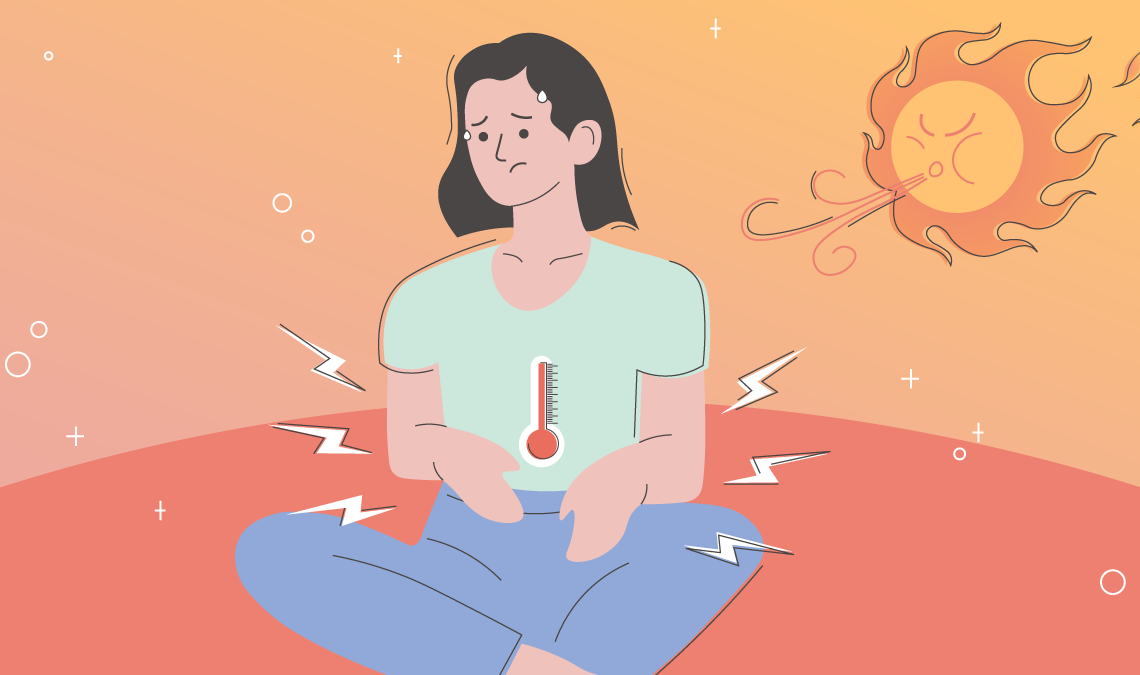
If your uterus seems to throw a bigger tantrum the moment temperatures climb, you are not imagining it. Period cramps in the summer genuinely feel more intense for most of us, and there is real science behind that sticky, swollen, ouch-on-repeat feeling. Heat changes how your body holds water, how your hormones behave, and how your nervous system reads pain, all at once.
Let us unpack what is actually going on.
Why do period cramps feel worse in hot weather?
Short answer, heat amplifies the chemicals already creating the cramp. Why cramps feel worse in hot weather comes down to one main villain, prostaglandins. These are hormone-like compounds your uterus releases to shed its lining, and the more you produce, the harder your uterus squeezes. A study in the American Journal of Obstetrics and Gynecology found women with severe dysmenorrhea (cramps) had prostaglandin levels up to seven times higher than those with mild cramps. When heat is added to that mix, and your body diverts blood toward the skin to cool you down, leaving less circulation to your pelvic region. Less blood, more spasm, more pain.
Your basal body temperature is also already elevated in the luteal phase, the week before your period (more about that here). Stack a heatwave on top and your thermoregulation system is working overtime, which is part of why period cramps in the summer come paired with extra irritability. So if you have ever wondered does heat increase period pain, the answer is yes, both directly and through every messy domino it sets off.
Blog continues after the ad.
Can Dehydration in Summer Trigger Cramps?
Yes, and most of us are more dehydrated in the summer than we realise. The link between dehydration and period cramps is surprisingly direct, and it is one of the biggest reasons period cramps in the summer hit harder. When you lose fluids through sweat, your blood volume drops, and your body holds on to water by releasing vasopressin, the same hormone that triggers uterine contractions. Translation, dehydration literally tells your uterus to squeeze harder.
Research in BMC Women’s Health found women who increased daily water intake reported shorter periods and used significantly fewer painkillers. Menstrual cramps and dehydration feed each other, so breaking the loop is mostly about being annoyingly steady with fluids before the thirst hits.
A few hydration truths worth knowing:
- Plain water is good, but you also need electrolytes. Sodium, potassium, and magnesium go out in sweat and need replacing.
- Coconut water, lemon water with a pinch of pink salt, or a real ORS sachet do more than iced coffee ever will.
- Caffeine and alcohol are mild diuretics (i.e. they make you pee more), so they pull water out faster, making cramps sharper within a few hours.
- Watery foods count. Cucumber, watermelon, tomatoes, and curd contribute a surprising amount of daily fluid.
Hydration helps, but uterine muscles often need targeted heat to actually unclench. This is where Nua Cramp Comport fits in, try it here!
What are the other causes of severe period cramps in the summer?
The causes of severe period cramps in hotter months are a stack of small shifts piling up over a few days. Here is what is quietly working against you:
- Sleep debt: Hot, humid nights fragment your sleep, and even one bad night raises inflammatory markers the next day. Poor sleep is one of the strongest predictors of painful periods in young women, per a 2019 review in Sleep Medicine Reviews.
- Cortisol spikes: Heat, travel, and disrupted routines push cortisol (your stress hormone) up, which suppresses progesterone and worsens cramping. Read more on how stress affects your cycle here.
- Inflammatory food: Summer plates lean salty, sugary, and ultra-processed, which feeds prostaglandin production.
- Sodium overload: AC, sweat loss, and salty snacks mess with electrolyte balance, leaving you bloated and tender.
- Sedentary days followed by sudden bursts of activity: Both extremes irritate the pelvic floor and lower back.
The combined effect of heat and menstrual pain is not just physical. It is also why period cramps in the summer come with an emotional edge, your nervous system is processing more inputs, so everything lands harder.
How to relieve cramps in the summer: An actionable day-by-day guide
The trick to how to relieve cramps in the summer is timing. You cannot fix a cramp at full volume, but you can soften the curve by starting two or three days before your bleed. Here is the playbook for handling period cramps in the summer.
Three days before your period:
- Front-load magnesium-rich foods, pumpkin seeds, dark leafy greens, dark chocolate, or a clean supplement.
- Switch your evening coffee for chamomile or fennel tea, both anti-spasmodic.
- Begin a daily 600 to 800 ml hydration bump on top of your normal intake.
The day before and day one:
- Eat warm, cooked food. Cold food slows digestion, which intensifies bloating.
- Walk for ten minutes after meals. It moves prostaglandins through faster.
- Use a heat patch on your lower abdomen, even in summer. Research in Evidence-Based Nursing showed continuous low-level heat was as effective as ibuprofen for period pain.
Through your bleed:
- Sip electrolyte water all day, do not chug.
- Sleep cool, use a lighter sheet, keep room temp around 22 to 24°C, and avoid screens an hour before bed.
- Gentle yoga, especially child’s pose, supine twist, and reclined butterfly, helps drain pelvic congestion.
This is the rhythm that turns managing cramps in hot weather from reactive to proactive, and once you feel the difference one cycle, you stop dreading the next.
If you want one thing that quietly does the heavy lifting alongside this routine, Nua’s Cramp Comfort Heat Patches are worth slotting in.
What home remedies for period cramps actually work?
Most home remedies for period cramps either calm inflammation and relax muscles. According to research 750 to 2000 mg of ginger powder in the first three days of the period reduced pain as effectively as painkillers. Impressive, for a kitchen staple.
Other home remedies worth keeping on hand:
- Fresh ginger tea, two to three cups across day one and day two.
- Cinnamon, a teaspoon a day, shown to reduce both pain and bleeding in clinical trials.
- A heat patch, still undefeated for spot relief.
- Omega-3 from flaxseeds, walnuts, or a fish oil capsule, which lowers prostaglandin output over time.
What does not work, despite the hype, is chugging painkillers every two hours and hoping a cold drink will reset the day. With period cramps in the summer, your body is asking for warmth, minerals, and rest. Give it those first, and the rest gets easier.
The Bigger Picture
Dealing with period cramps in the summer is not about white-knuckling through five days a month. Your body is responding to heat, hormones, hydration, and habits, all at once, and you actually have leverage over most of them. The science is on your side, the remedies are simple, and the relief is real.
You just have to start a few days earlier than you think.
Disclaimer:
The content of this article is provided for general informational and educational purposes only and is not intended to constitute medical advice, diagnosis, or treatment. The information shared is of a general nature and may not be appropriate for all individuals or specific circumstances. Readers should not disregard, delay, or substitute professional medical advice based on the information contained herein.
If you experience any symptoms, notice anything unusual, or have concerns relating to your health or overall wellbeing, you should consult a qualified healthcare professional. While every effort is made to ensure the information shared is accurate and up-to-date, Nua makes no representations or warranties, express or implied, regarding the accuracy, completeness, or suitability of the information provided and disclaims all liability arising from reliance on this content to the fullest extent permitted by law.