What you will learn about the best overnight pads from this blog:
- Yes, overnight pads are better for nights because periods behave differently when you’re lying down.
- At night, flow can move backward, sideways, or pool, increasing leak risk.
- Regular pads are designed mainly for daytime upright movement.
- Overnight pads are usually:
- Longer for front-to-back coverage
- Wider at the back for back leaks
- More absorbent for 7–10 hours wear
- Many also include wings/barriers to reduce shifting and side leaks.
- They can also improve comfort by reducing dampness, friction, and irritation.
- Best for: heavy flow, restless sleepers, side/back sleepers.
- If night leaks stress you out, switching to an overnight pad usually helps a lot.
If you’ve ever woken up in the middle of the night and done that tense, hopeful body scan wondering if you’ve leaked, you already know the problem. Period leaks at night are one of the most common and frustrating parts of managing your cycle. But here’s where a lot of us get stuck. Should you just use your regular daytime pad, or do you actually need a separate one? And does it even make a difference? The confusion between overnight pads vs regular pads is real, and it’s worth clearing up. In this guide, we’re breaking down exactly how overnight period protection works differently, when it outperforms a regular pad, and how to find the best overnight pads for your body and flow.
What Are Overnight Pads and How Are They Different From Regular Pads?
A regular pad is designed for the way your body moves during the day: upright, active, and working with gravity. Your flow goes downward, and the pad handles it from the centre. That’s the job it’s built for, and it does it well.
An overnight pad is built for a completely different reality. When you lie down, gravity shifts. Your flow doesn’t go straight down anymore. Depending on how you sleep, it can move backwards, forwards, or sideways. On top of that, experts say that lying flat for hours can make the blood pool. This pooled blood then shifts all at once the moment you toss or turn.
The difference between day and night pads isn’t just about size. It’s a full redesign for horizontal, 360-degree protection across a long, uninterrupted stretch of time.
Blog continues after the ad.

Overnight Pads vs Regular Pads: What’s the Real Difference?
At first glance, a day pad and a night pad might look like cousins. But they’re designed for completely different jobs. Here’s how the anatomy of an overnight pad is different from a regular one:
Here’s how the anatomy of an overnight pad is different from a regular pad:
The Length
The most obvious difference is that overnight sanitary pads are way longer. When you’re lying down, your flow doesn’t just go down. It can go forward or backward. That extra length is your front-to-back safety net. Nua’s overnight pads come with extra-long coverage, built to handle any of your nighttime movement.
The Wider Back
This is the genius part. A good overnight pad has a flared, much wider back because when you sleep on your back or side, that’s exactly where gravity sends the blood. That’s how leaks happen. Nua’s All Night Comfort Pads especially kill it on this front with 50% more coverage at the back.
Next-Level Absorbency
Your night pad is on duty for a long shift, around 8 hours. It’s built with a super-absorbent core that locks flow away so you don’t get that damp, icky feeling. Nua’s overnight pads go even further with twin-layer protection for up to 10 hours of uninterrupted sleep.
Goodbye Night Rashes (Seriously)
Skin Comfort (No More Night Rashes)
Leaks aren’t the only thing that ruin your nights. Rashes and irritation can be just as painful. When your skin is pressed against a pad for hours, sweat and friction can cause redness, itching or those dreaded bumps that leave you stuck in one awkward position all night. That’s why Nua’s All Night Comfort Pads are made with the softest, most breathable top layer and 100% toxin-free materials, backed by Nua’s Zero Irritation Promise.
Wings That Actually Work
Nua’s nighttime pads feature anti-stain wings that keep your pad firmly in place, so even restless sleepers can get through the night stain-free. Some overnight pads also include raised side barriers to keep your flow contained in the middle, stopping side leaks before they can start.
Overnight Pads vs Regular Pads: At a Glance
| Feature | Regular Pads | Overnight Pads |
| Length | Standard length | Extra-long for front-to-back coverage |
| Back width | Uniform width | Flared, wider back (50% more coverage) |
| Absorbency | Designed for 4–6 hours of use | Up to 8–10 hours, twin-layer protection |
| Flow direction | Optimised for vertical, upright movement | Handles horizontal, 360-degree flow |
| Wings | Standard wings | Anti-stain wings that grip through the night |
| Skin comfort | Fine for short wear | Breathable, rash-free for long hours |
| Best use | Daytime, light-to-medium flow | Night sleep, heavy flow, long shifts |
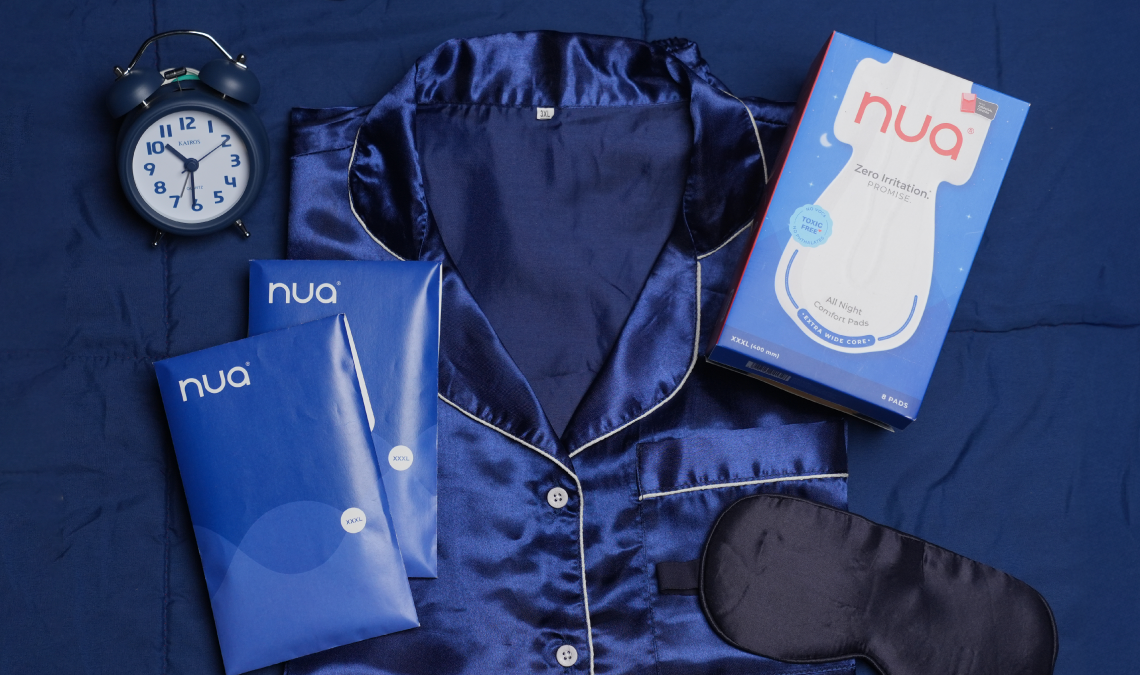
Waking up to a stained sheet is not the alarm clock you deserve. Meet the pad built for how you actually sleep!
Are Overnight Pads Actually Better Than Regular Pads?
The short answer: yes, but only for the right situations.
Are overnight pads better than regular pads? Not categorically, but when you’re lying down for hours, they genuinely outperform.
During the day, gravity is on your side. It pulls your flow straight down into the centre of your pad. But at night, gravitational pull goes sideways, backwards and forwards depending on your sleeping position. A regular daytime pad is not built for that.
On top of that, lying flat for hours can make blood pool. The second you toss or turn, that pooled flow starts to move, and that’s usually when a regular pad gives up on you. An overnight pad’s longer length, wider back, and higher absorbency are specifically designed to handle this. So for nighttime use, heavy flow nights, or any situation where you need overnight period protection for extended periods, they’re not just better. They’re the right tool for the job.
When Should You Use Overnight Pads Instead of Regular Pads?
There are a few situations where switching to an overnight pad makes a real difference:
- Night sleep: This is the obvious one. Any time you’re lying down for 6 to 8 hours, an overnight pad is the right choice.
- Heavy flow days: Even during the day, if your flow is heavy enough that regular pads aren’t lasting long enough, overnight sanitary pads for heavy flow can give you better coverage and more time between changes.
- Long work shifts: If you’re in a situation where you can’t change your pad frequently, the higher absorbency of an overnight pad can be a lifesaver.
- Travel: Long flights, road trips, or any situation where bathroom access is limited.
- Postpartum bleeding: Postpartum flow can be heavy and unpredictable, and overnight pads can provide the extra coverage needed during recovery.
Knowing how to prevent leaks at night during period often comes down to matching the right product to the right situation, and overnight pads are the answer more often than you’d think. You can also explore other overnight period protection options to find what works best for you.
How to Choose the Best Overnight Pads for Your Flow
So you’re ready to upgrade your nights. When looking at your options, here’s a simple checklist for what makes a great overnight pad:
- Extra length: Look for pads designed with front-to-back coverage in mind, not just a longer version of a regular pad.
- 50% wider back: A flared back is essential for side and back sleepers.
- Twin-layer or high absorbency core: You want 8 to 10 hours of reliable protection without the damp feeling.
- Breathable, rash-free top layer: Your skin is in contact with this pad for hours, so softness and breathability matter.
- Anti-stain wings with strong grip: Wings that stay in place even when you move in your sleep.
- 100% toxin-free materials: Because what’s touching your skin all night should meet a high standard.
This is how to choose overnight pads that will actually do the job. If you’re looking for overnight pads in India, Nua’s All Night Comfort Pads tick all of these boxes and come in a convenient Day and Night Pack so you don’t have to manage two separate purchases.
For people who’ve decided that ‘good enough’ isn’t good enough at 2 AM.
Try Nua’s overnight pads, because your sleep is non-negotiable.
Can You Use Regular Pads at Night?
Technically, yes. If your flow is very light and you don’t move much in your sleep, a regular pad might get you through the night without incident.
But for most people, especially on heavier flow days, the risks are real: back leaks when you sleep on your back, side leaks when you roll over, front leaks if you sleep on your stomach, and the general discomfort of a pad that wasn’t designed for 8 hours of horizontal use.
Women have come up with creative workarounds for this, like doubling up on pads or sleeping in a specific position, but the results are rarely worth the effort or the anxiety. A pad designed specifically for nighttime use is simply a better solution.
How Long Can You Safely Wear Overnight Pads?
This is a question worth taking seriously. Most overnight pads for heavy flow are designed to last up to 8 to 10 hours. Nua’s All Night Comfort Pads, for example, offer up to 10 hours of twin-layer protection.
That said, how long can you wear overnight pads safely depends on your individual flow. Here are some general guidelines:
- Change your pad first thing in the morning, even if it doesn’t feel full.
- If you have a very heavy flow, you may need to change your pad at night too, even with an overnight pad.
- Don’t wear any pad for more than 8 hours if you can help it, for hygiene reasons.
- If you notice any irritation, change your pad sooner and consider whether the material is right for your skin.
Overnight pads are not designed to be worn indefinitely. They’re engineered for a single night’s sleep, and following basic hygiene practices alongside them will keep you comfortable and healthy.
Do Overnight Pads Prevent Leaks Better at Night?
Yes, and the design explains exactly why. To understand how to stop period leaks at night, you first need to understand where they come from. You can also read more about how to stop period leaks at night with additional tips.
Back leaks: When you sleep on your back, flow is directed straight toward the back of the pad. The wider, flared back of an overnight pad catches this. A regular pad, with its uniform width, doesn’t have the coverage to handle this direction of flow.
Side leaks: Rolling onto your side shifts the flow laterally. Side barriers and the longer length of overnight pads keep this contained. With a regular pad, this is often where the leak happens first.
Movement while sleeping: Every time you shift position, pooled blood can suddenly move. The anti-stain wings on overnight pads keep the pad locked in place so it moves with you, not away from you.
Together, these features make overnight period protection genuinely more effective at night, not just as a marketing claim, but as a matter of physics and product design.
See what actually staying dry through the night feels like.
FAQs About Overnight Pads
Are overnight pads better than regular pads?
For nighttime use, yes. Overnight pads are longer, wider at the back, and more absorbent, which makes them much better suited to how your body and flow behave when you’re lying down. For daytime use with normal movement, regular pads are perfectly fine.
What is the difference between overnight and regular pads?
The key differences are length, back width, absorbency capacity, and design for horizontal use. Regular pads are optimised for upright movement during the day. Overnight pads are designed for 8 or more hours of lying down, with features like a wider back and anti-stain wings to handle 360-degree flow.
Can I use overnight pads during the day?
Yes, you can. Many people use overnight pads on their heaviest flow days for extra protection. They’re bulkier than regular pads, so it’s a personal preference, but there’s nothing wrong with it.
Can I use regular pads overnight?
You can, especially if your flow is light. But for medium to heavy flow, regular pads are likely to leak because they’re not designed for the direction and volume of nighttime flow. The risk of back leaks and side leaks is much higher with a regular pad at night.
How long can you wear overnight pads safely?
Most overnight pads are designed for 8 to 10 hours. Nua’s overnight pads offer up to 10 hours of protection. For hygiene reasons, always change your pad in the morning and avoid wearing any pad for longer than recommended, even if it doesn’t feel full.
Do overnight pads prevent back leaks?
Yes. The wider, flared back design of overnight pads is specifically built to handle back leaks, which happen when you sleep on your back and flow moves toward the back of the pad. This is one of the most common causes of nighttime leaks with regular pads.
Are overnight pads good for overnight sanitary pads for heavy flow?
Absolutely. The higher absorbency and twin-layer protection of overnight pads makes them ideal for heavy flow nights. They can handle significantly more volume than a regular pad and keep you dry for longer.
Which overnight pads are best for sensitive skin?
Look for overnight pads made with 100% toxin-free materials and a soft, breathable top layer. Nua’s All Night Comfort Pads are specifically designed with sensitive skin in mind, using materials that keep your skin cool and dry through the night, backed by a Zero Irritation Promise.
Conclusion: Should You Switch to Overnight Pads?
If you’re regularly waking up to check for leaks, sleeping in one position to avoid disaster, or starting your mornings with that dreaded walk to the bathroom, the answer is yes. Overnight period protection is not a gimmick. It’s a practical solution to the very real ways your body and flow behave differently at night.
The best overnight pads are longer, wider at the back, more absorbent, and designed to stay in place through hours of movement. Compared to regular pads, they’re simply better suited to the job.
Your sleep deserves the same care as your days. And a pad that genuinely protects you through the night? That’s not a small thing.
Because waking up refreshed and unstained is the bare minimum your period nights should offer.