
Yes, pimple patches do work! The effects of pimple patches might sound too good to be true. Like you can just stick one on and sleep, and tadaa…by morning, your pimple has shrunk. But they have been backed by research AND by real-life results.
Whether it’s that last-minute zit before a big event or annoying period acne, pimple patches are becoming a go-to fix for many. They’re fuss-free, quick to apply, and easy to carry. Plus, they’re either transparent or just super cute, so wearing them out in public has actually become a trend.
If you’re sceptical and find it hard to believe that such cute little stickers can actually help, you’re in the right place. Let us take you through the magical effects of pimple patches and how they work.
But first, how do you get a pimple?
In short, a pimple = excess oil + clogged pore + bacteria.
Most of us have stared at a pimple in the mirror, poked at it, maybe even popped it (no judgment), without really knowing what’s happening under the skin. But once you understand what’s going on beneath the surface, it becomes a lot easier to understand how pimple patches actually help.
Think of each pore on your face as a tiny tunnel connected to a hair follicle and an oil gland. That oil (called sebum) usually flows out to keep your skin soft and healthy. But sometimes, dead skin cells, extra oil, and dirt get trapped inside the pore, blocking the tunnel like a clogged drain.
When that happens, the trapped gunk creates the perfect breeding ground for bacteria that already live on your skin. They start multiplying, the area gets red, swollen, and tender, a.k.a. the start of a breakout.
And if the wall of that clogged pore breaks? Everything inside, the oil, bacteria and skin cells, can spill into nearby skin, creating pimples.
So, how can a pimple patch help?
Well, in simple terms, pimple patches work by unclogging your pores. These tiny, clear stickers might not look like much, but they’re made with something called hydrocolloid, a smart, absorbent material that has been used in the world of medicine for ages as a wound dressing.
If you’ve ever used a bandage on a cut that soaked up fluid and kept the area clean, that’s pretty much what’s happening here, too.
When you stick a pimple patch on, the hydrocolloid draws out all the gunk trapped inside (oil, pus, and fluid) and soaks it up into the patch. At the same time, it keeps the area protected from dirt, bacteria, and your fingers (which, let’s be honest, love to poke and pick).
The result?
- The pimple shrinks faster
- Redness and swelling go down
- Chances of pimple popping drop (= less scarring)
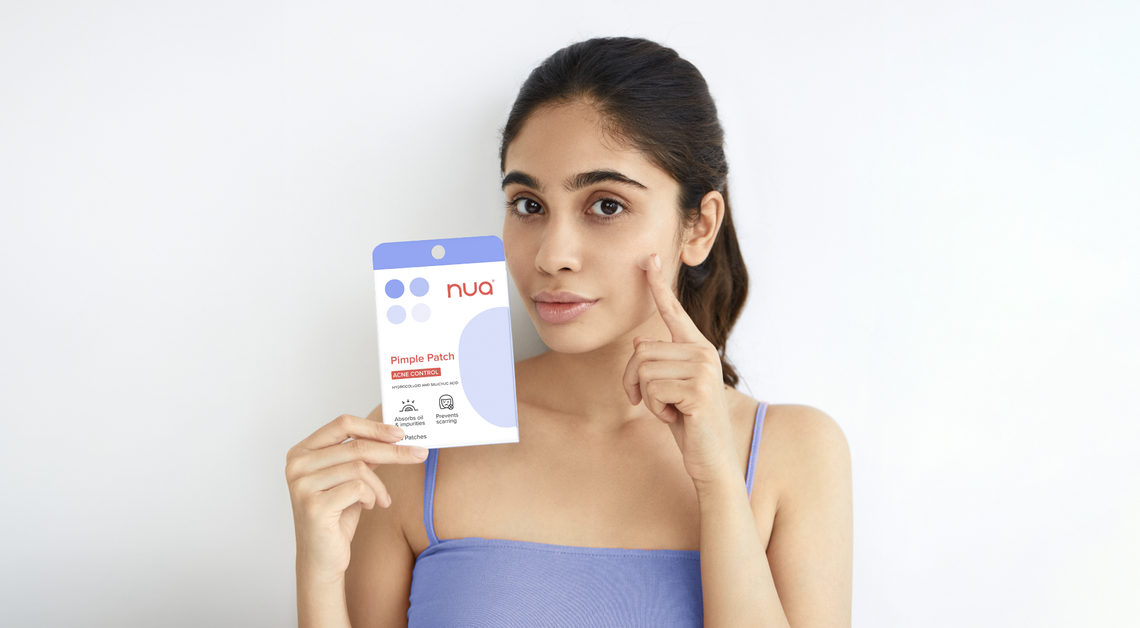
In fact, in a clinical trial where participants used pimple patches, they saw visible improvements in texture, redness, smoothness, and overall healing from as early as Day 1. And if you’re thinking of trying one, Nua’s Pimple Patch is a great place to start. It’s designed to be gentle but effective.
Do pimple patches also have active ingredients?
Most patches are built on a hydrocolloid base, but many also come with an active ingredient added to the mix. Think of it like your patch getting a little upgrade.
The most effective (and most skin-friendly) active ingredient? Salicylic acid. It is a go-to for acne because it works in multiple ways:
- Gently exfoliates the skin
- Unclogs pores by dissolving dead skin and excess oil
- Has anti-inflammatory properties to calm inflammation
- Helps prevent future breakouts
One study showed that salicylic acid alone can reduce acne severity scores significantly over just a few weeks. So, when used in a patch? You’ve got a fast-acting, multi-tasking spot treatment that’s as easy as peel-stick-sleep.
That’s why Nua has a pimple patch that comes with salicylic acid. In fact, it is one of the favourites for the Nua girlies. Tanya, from Goa, describes it as magic. “These patches are seriously magical, they go straight to the root and pull out all the oil and impurities. I’ve tried tons of stuff, but these patches are the real deal.”
Are pimple patches better than regular acne cream?
Good question. And if your cream works, great! But more and more people, especially younger folks, are ditching creams and turning to patches. Here’s why:
- Creams take time (sometimes days)
- They can dry out the surrounding skin
- They’re easy to overuse
- They can cause flaking or redness
- They can make you look shiny or chalky
With pimple patches, you just stick them on, and that’s it. It works while you sleep, commute, or even Zoom. No mess. No second-guessing. Just faster healing with fewer side effects.
Do pimple patches have any side effects?
Mostly? No. But if you’re worried or have especially sensitive skin, just keep this in mind:
- Do a patch test if you’re trying it for the first time
- Avoid using it on broken or irritated skin
- Don’t use on wounds, burns, or infections
And if your skin starts feeling dry or itchy, take a break and switch to the non-medicated one.
As long as you use something trusted like Nua’s Pimple Patches, which are dermatologist-created, free of harsh chemicals, and safe for all skin types, the chances of side effects are almost negligible.
A small patch but a big sigh of relief
If you’re someone who deals with period pimples regularly, then a good-quality pimple patch can honestly feel like a little superpower. You don’t need a 12-step skincare routine. You just need the right product at the right time.
For a complete guide on how to use these patches, check out our blog here.
If you still have any questions or lingering doubts, just drop them in the comments!