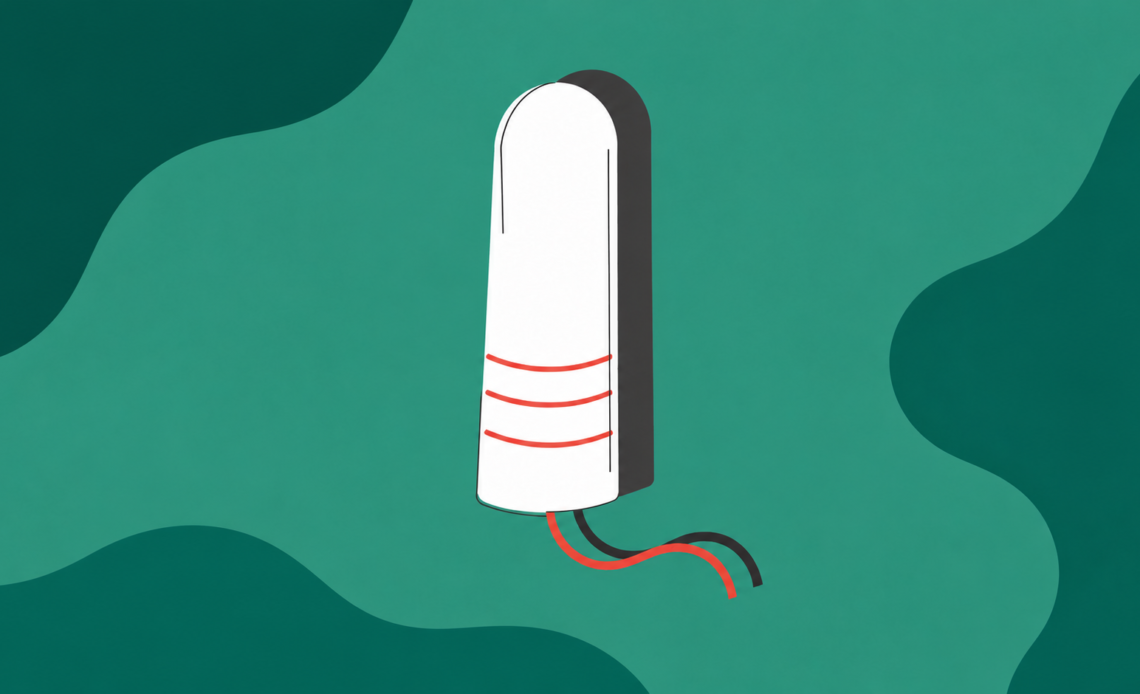
Wondering, do you need to change your tampon if it isn’t full, here’s what you will learn from this guide:
- Tampons should ideally be changed every 4 to 6 hours.
- Wearing a tampon for longer than 8 hours can increase the risk of bacterial growth and rare infections like Toxic Shock Syndrome (TSS).
- Tampons are designed to absorb menstrual flow, but using a higher absorbency than your flow actually needs can sometimes cause dryness and irritation.
- It is usually best to start with a lower or regular absorbency tampon and adjust based on how heavy your flow feels.
- Paying attention to signs like leaks, spotting, or discomfort helps you know when it is time for a fresh tampon.
You check, the tampon barely looks used, and you start to wonder, do you need to change your tampon if it isn’t full, or can you stretch it a little longer? Many women prefer tampons because they are discreet, comfortable, and usually can’t be felt at all. Still, working out how often should you change a tampon can feel surprisingly confusing. Change it too early and it can feel unnecessary. Leave it in too long and it can become uncomfortable or raise the risk of irritation and infection. Finding the right timing is what makes tampon use feel safe, comfortable, and stress-free.
In this blog, we will decode the most-asked tampon questions about changing frequency, safe wear time, the signs that it is time to change, and what actually happens if you leave one in for too long.
Do You Need to Change Tampons if They Aren’t Full?
The short answer is yes. A tampon sitting in the vaginal canal creates a warm, moist setting where bacteria can multiply over time, and that slow buildup is tied to how long the tampon stays in, not just how saturated it looks. So do you need to change your tampons if it isn’t full? You do, because the clock matters as much as the flow. The FDA advises changing each tampon every 4 to 8 hours and never wearing one for more than 8 hours at a time, whatever its fullness.
Blog continues after the ad.

There is a second clue hiding in that barely-used tampon. If it is still mostly dry after several hours, it usually means you are using a higher absorbency than your body needs. That is worth noticing, because the risks of leaving a tampon in too long climb the longer it stays in, and an oversized absorbency can dry you out at the same time.
If that barely-used tampon makes you feel like you are wasting product, the fix is usually to use a smaller size. Nua’s EaseFit Tampons come in Mini, Regular, and Super, so a light day gets a light tampon and you are never stuck choosing between waste and comfort.
How Often Should I Change a Tampon?
Tampons should ideally be changed every 4 to 6 hours, and they should never be worn for more than 8 hours at a stretch. That window is the heart of healthy tampon changing frequency during periods, and it holds true on busy days, slow days, and everything in between.
On heavier days you may need to change more often, closer to every 4 hours, to avoid leaks and discomfort. On lighter days, instead of trying to make the same tampon last longer, it is usually more comfortable to switch to a lower absorbency tampon or even a panty liner. Knowing when to change tampon, and when to change the absorbency you use, is half the battle. Using a tampon that is more absorbent than your flow needs can leave things feeling dry and irritated.
What Tampon Absorbency Should I Use?
First things first, tampon size has nothing to do with the size of your vagina. Tampon size simply refers to absorbency. Because your flow shifts across your period, you will probably need different absorbencies on different days, and choosing the right one is what makes good tampon hygiene best practices feel easy rather than fussy.
Using a tampon that is far more absorbent than your flow needs can soak up more than menstrual blood. It also pulls away the vagina’s natural moisture, which can leave things dry, irritated, and uncomfortable. Dry vaginal walls are less elastic, so insertion and removal turn rougher and can cause tiny abrasions or micro-tears. Those small tears may increase irritation and, in rare cases, create the conditions linked to bacterial infections like toxic shock syndrome (more on that here).
Here is the cheat sheet depending on your flow:
- Light flow or spotting: Mini absorbency tampons usually do the job. They are slimmer, easier to insert, and ideal for lighter days when your period is barely showing up. Because they absorb less, they tend to stay comfortable within the recommended 4 to 8 hour change window without causing too much dryness.
- Moderate flow: Regular absorbency tampons work well when they can comfortably last around 3 to 5 hours without leaks or discomfort.
- Heavy flow: Super tampons are made for heavier days, when you may need more frequent changes because the tampon fills up faster.
Once you learn your flow patterns, choosing the right absorbency, knowing how often should you change a tampon becomes surprisingly easy.
Looking for tampons that match your flow comfortably? Nua’s EaseFit Tampons are available in Mini, Regular, and Super absorbencies for different flow days. They are hypoallergenic and 100% toxic-free, with flexi-glide grooves designed for smoother insertion and reliable leak protection.
Signs That You Need to Change Your Tampon
Changing your tampon every 4 to 6 hours is the baseline. On heavy days, though, your tampon may fill up much sooner, and your body usually gives a few warning signs when it is full. Learning to read them is one of the most useful tampon safety tips for women who are still getting comfortable with the timing. This is also where people ask do you need to change your tampons if it isn’t full, and the honest answer is that a clean swap inside the window beats squeezing extra hours out of a half-used tampon.
- Blood on the tampon string: If you notice blood on the string when you use the bathroom, your tampon has likely absorbed all it can and started to leak. Even if this happens in under 3 hours, it is a sign of heavy flow, and you may want to switch to a higher absorbency tampon.
- The gentle tug test: Wash your hands, then gently pull on the string. If the tampon slides down easily, it is probably saturated and ready to come out. If it still feels dry or resistant, it may not be full yet.
- A feeling of pressure or fullness: A full tampon can create a heavy, pressure-like sensation in the pelvic area, a little like the feeling of needing the bathroom.
- Sudden wetness or spotting: A quick rush of wetness in your underwear, or spotting when you wipe, is your tampon letting you know it has reached capacity and clocked out for the day.
Spending the day quietly bracing for a leak is its own kind of exhausting. Matching a regular or super tampon to a heavy day gives you reliable leak protection and frees up the mental space you were spending on worry.
Can I Sleep With Tampons In?
Yes, but only if you will sleep for no more than 7 to 8 hours. Tampons should never be worn for longer than 8 hours at a stretch, so if you usually sleep longer than that, it is better to skip the overnight tampon. Good period hygiene habits are less about strict rules and more about working with your real schedule.
Leaving a tampon in the vaginal canal for too long can create a warm, moist environment where harmful bacteria may grow, which raises the risk of infections, including the rare but serious Toxic Shock Syndrome. On longer-sleep nights, pads or period underwear are usually the safer and more comfortable choice.
For more comfort and protection, Nua’s Sanitary Pads and Period Panties are designed to handle long hours of wear with breathable comfort and reliable leak protection.
Can Tampons Cause Infection if Not Changed?
This is the worry underneath most timing questions, so it is worth answering plainly. Can tampons cause infection if not changed? A tampon itself does not cause infection, but leaving one in well past the safe window of 8 hours increases the risk. The longer it sits, the more time the bacteria that naturally live in the vagina have to multiply and, in rare cases, release toxins.
That is the real reason behind the time rule. Why change tampons every 4-8 hours? Because that range keeps the environment from tipping into the conditions bacteria prefer, while still letting a tampon do its job. It also answers a different version of the same question, do you need to change your tampons if it isn’t full on a slow day. Yes, because time in place, not just volume, is what shifts the odds.
Most of this really does come down to a clean, well-made tampon changed on time. Choosing tampons that are 100% toxic-free and hypoallergenic gives your body one less thing to react to during an already demanding week.
How Common Is TSS When Using Tampons?
Menstrual TSS is genuinely rare. A recent clinical review puts the incidence at roughly 0.03 to 0.5 cases per 100,000 menstruating people each year, which is a tiny fraction of everyone who uses tampons.
Much of the fear around tampons traces back to the early 1980s, when a spike in cases was linked to highly absorbent tampons. Around 812 cases were reported in 1980, which pushed manufacturers and regulators to overhaul tampon materials, absorbency standards, and safety guidance.
Today’s tampons are made and labelled under much stricter standards, which is a big part of why cases have stayed low (read more about tampon health risks here). Sensible toxic shock syndrome prevention is not complicated. It is mostly using the lowest absorbency you need and respecting the 8-hour limit.
Key Safety Rules for Using Tampons
- Stick to the time rule: Change your tampon every 4 to 6 hours, and never leave it in for more than 8 hours.
- Match your flow: Use the lowest absorbency you actually need. If a tampon lasts the full 8 hours with zero leaks, it may be more absorbent than necessary.
- Clean hands only: Always wash your hands before and after handling a tampon, since simple tampon hygiene best practices start there.
- Period-only use: Tampons are meant for menstrual flow, not discharge or just-in-case days.
If you are using a tampon, menstrual cup, or disc and suddenly develop symptoms like a high fever, vomiting, dizziness, or a rash, remove the product right away and seek medical help. With TSS, early treatment matters.
The Final Takeaway: You’ve Got This, Keep It Simple
Tampons are safe and easy to use when you get two things right, the timing and the absorbency. So one last time, do you need to change your tampons if it isn’t full? Yes, because the 8-hour limit is about wear time, not just saturation, and a barely-used tampon is often a hint to size down.
Most tampons should be changed every 4 to 6 hours, depending on your flow. On heavier days you may need to change closer to every 4 hours, while lighter days feel more comfortable with a lower absorbency than with the same one held longer.
Matching your tampon to your flow matters just as much. Regular absorbency suits lighter flow, and super absorbency handles heavier days, which together help prevent leaks, reduce dryness, and keep things comfortable. Most importantly, never leave a tampon in for more than 8 hours, even overnight. That is the safe upper limit.
To support different flow days comfortably, Nua’s EaseFit Tampons are available in Mini, Regular, and Super absorbencies, making it easier to find the right fit for your period.
There is no need to stress about getting it perfect. Once you learn your flow patterns and follow the timing guidance, tampons start to feel a lot more simple, comfortable, and intuitive.
FAQs
1. Do you need to change a tampon if it isn’t full?
Yes. Tampons should still be changed every 4–6 hours, even if they aren’t full. Never leave a tampon in for more than 8 hours, as the risk of bacterial growth increases with longer wear time.
2. How often should you change a tampon?
Ideally, change your tampon every 4–6 hours. On heavier-flow days, you may need to change it closer to every 4 hours, while lighter days may call for a lower-absorbency tampon.
3. Can leaving a tampon in too long cause an infection?
Leaving a tampon in for longer than the recommended 8 hours can increase the risk of bacterial growth and, rarely, infections such as Toxic Shock Syndrome (TSS). Using the lowest absorbency you need and changing your tampon on time helps reduce this risk.
4. How do you know when it’s time to change your tampon?
Signs include blood on the tampon string, sudden wetness or spotting, a feeling of pressure or fullness, or a tampon that slides out easily when gently pulled. Even without these signs, it should be changed within the recommended 4–8-hour window.
5. What tampon absorbency should you use?
Choose the lowest absorbency that comfortably manages your flow. Mini tampons are suited to light flow or spotting, Regular to moderate flow, and Super to heavier flow. Using a higher absorbency than you need can contribute to dryness and irritation.
Disclaimer
The content of this article is provided for general informational and educational purposes only and is not intended to constitute medical advice, diagnosis, or treatment. The information shared is of a general nature and may not be appropriate for all individuals or specific circumstances. Readers should not disregard, delay, or substitute professional medical advice based on the information contained herein.
If you experience any symptoms, notice anything unusual, or have concerns relating to your health or overall well-being, you should consult a qualified healthcare professional. While every effort is made to ensure the information shared is accurate and up-to-date, Nua makes no representations or warranties, express or implied, regarding the accuracy, completeness, or suitability of the information provided and disclaims all liability arising from reliance on this content to the fullest extent permitted by law.