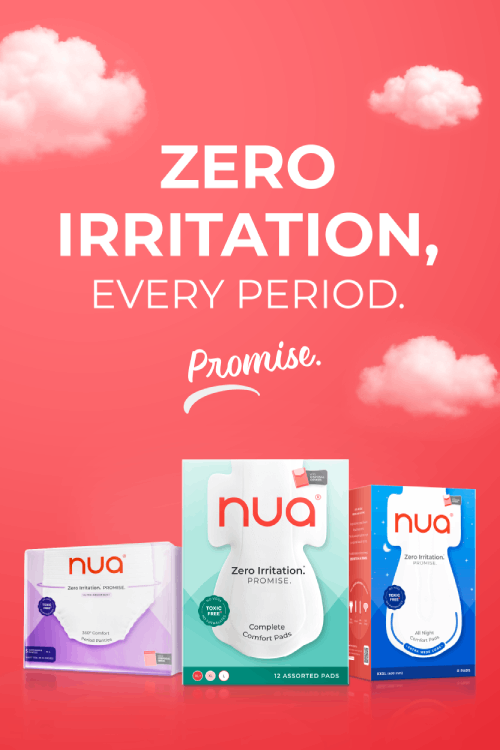


Overnight sanitary pads can’t stop hot flashes, but they’re incredibly helpful when dealing with the night sweats that often accompany them. By absorbing all that sweaty moisture, overnight pads keep you dry and comfortable, so you can get a better night’s sleep.
Hot flashes are super common during perimenopause. Studies show nearly 87% of women experience hot flashes during this phase of their lives. And unfortunately, they are a notorious cause for sleep loss. The main reason they disrupt sleep isn’t the heat itself, it’s the sweat. Being drenched in the middle of the night wakes you up and makes it hard to fall back asleep.
Thankfully, there are things you can do to manage and avoid this. From cooling techniques to overnight sanitary pads, let’s dive into the science, the strategies and the surprising hacks that can make hot flashes a bit less of a nuisance.
What are Hot Flashes and Why Do I Get Them?
A sudden feeling of heat rushing to your face, neck and chest, often accompanied by sweating and flushed skin, is a hot flash. It happens when your body’s personal thermostat, a tiny part of your brain called the hypothalamus, malfunctions. Normally, the hypothalamus is pretty good at keeping your temperature just right. But a dip in estrogen levels during perimenopause can throw it off (more on the signs of perimenopause here).
Wait. Isn’t estrogen just a reproductive hormone? Yes, it is. But it also plays a role in thermoregulation (maintaining your internal temperature).
Estrogen helps the hypothalamus accurately read your body temperature by influencing the brain’s chemical messengers. So, when its levels drop, the chemical signals become weak or erratic. This makes the hypothalamus think you’re overheating even from a small temperature shift, and it immediately triggers an emergency response to cool you down:
- Blood vessels near your skin dilate (widen) to release heat, causing that signature flushed (as though you’re wearing too much blush) look and feeling of warmth.
- Your sweat glands go into overdrive to help cool you down.
- Your heart rate increases, sometimes by as much as 10-15 beats per minute, to pump more blood to the surface of your skin.
All of this happens in a flash (hence the name!), and it can be followed by a sudden chill as your body overcorrects and cools down too quickly. It’s a full-blown physiological event, all triggered by a simple hormonal miscommunication.
Why are My Hot Flashes Worse at Night?
Hot flashes can feel worse at night because that’s when your body makes small temperature changes to help you sleep, which can trigger the hypothalamus. Normally, your core temperature dips a little after dark so you can drift off easily. But during perimenopause, the lack of estrogen makes your hypothalamus very sensitive. So, when your body starts its natural cooling process for sleep, the hypothalamus overreacts to stabilize the body temperature by triggering a hot flash.
On top of that, nighttime habits like sleeping under blankets, cuddling with a pet or a partner, or wearing cozy pyjamas can act as extra triggers. All this extra bit of warmth can set off a full-blown hot flash to cool you down…even when you probably don’t need to.
Can Overnight Sanitary Pads Help My Hot Flashes at Night?
Yes! But indirectly. Overnight sanitary pads can’t directly help with hot flashes at night because they can’t stop the hormonal shifts that trigger a hot flash. However, they can be a lifesaver in managing the sudden drenching sweat from hot flashes that ruins your sleep.
Research shows that a hot flash can last anywhere from 1 to 5 minutes and can happen more than three times in one night. That adds up to 3-15 minutes of heavy sweating, which is a lot of moisture while you’re trying to sleep. That’s where an ultra-absorbent overnight sanitary pad, like Nua’s Overnight Comfort pad, steps in. It has all the features that can truly help you with night sweats from hot flashes:
- Twin-layer protection to absorb sudden sweat quickly so your skin stays dry.
- 50% wider back for extra coverage to prevent leaks while you move in bed.
- Softest, most breathable topsheet to keep your skin comfortable while reducing that sticky, damp feeling.
- Wings so the pad doesn’t shift even if you toss and turn in your sleep.
- Up to 10 hours of protection so you can sleep through the night without worrying.
It’s not a cure for hot flashes, but it’s a practical, stress-free way to stay dry, feel comfortable, and stay asleep at night.
Why Do I Have Hot Flashes When I Am Not Perimenopausal?
Hot flashes don’t happen only due to perimenopause, there can be other reasons for them as well.
PMS: A sudden drop in estrogen right before your period (PMS) can confuse your hypothalamus, causing a hot flash. In fact, one study found that 83.4% of people with PMS experienced at least one episode of night chills and sweats.
Pregnancy: Hot flashes are also pretty common during pregnancy due to the pronounced hormonal changes. As per research published by the American Society for Reproductive Medicine, around 1 in 3 women experience them before or after giving birth.
Diet: Spicy foods contain a compound called capsaicin that can trick your brain into thinking you’re overheating, causing you to sweat to cool down. Similarly, alcohol can widen your blood vessels, while caffeine can speed up your metabolism, both of which can lead to hot flashes. Here’s what to eat for balanced hormones.
Stress: Sometimes, a hot flash is a psychological response. High stress and anxiety release hormones like adrenaline and cortisol that raise your heart rate and make you feel hot and sweaty.
Illness or Disorder: An overactive thyroid gland, a sudden drop in blood sugar levels or a simple infection can make you feel a hot flash as well. Even certain medications, like some antidepressants, can have it as a side effect.
So, it’s always best to talk to a doctor to figure out the cause of your hot flashes and make sure there’s nothing to worry about.
When Will My Hot Flashes Stop?
On average, hot flashes can stick around for about 4-7 years after they first begin. Some women may breeze through in a shorter time, while for others, it can last a bit longer. About one-third of women continue to have them even after 10 years, and nearly 8% still notice occasional hot flashes even two decades after menopause. So, there isn’t one “expiry date” for hot flashes as every body runs on its own timeline.
Keep Your Cool Even When It’s Hot
Your body’s normal temperature is around 98.6ºF, which isn’t that hot at all. But research has found that it can generate 100 watts of heat (= a light bulb). So, if your hot flashes feel incredibly intense, you’re not imagining it. That feeling of being a human furnace is 100% real.
And while you can’t do much to stop them completely right now, you can try to understand their patterns and timing. For example, see what triggers them and when they tend to hit hardest. This can help you know what to avoid and make you feel more in control.
If you have any more questions or tips to share about hot flashes at night, drop them in the comments. We’d love to hear!