Wondering “how to know if a menstrual cup Has Opened Properly?” Here’s what we’ll cover in this guide:
- To check if your menstrual cup is properly positioned, insert a clean finger and feel around the base.
- A correctly opened menstrual cup should feel round, smooth, and completely free of dents, folds, or collapse.
- Lightly pull the stem. If the cup stays in place and does not slip easily, it usually indicates a proper fit and a secure seal.
- If your menstrual cup is not opening properly, try relaxing your pelvic muscles, switching to a different fold, using a firmer cup, or applying a small amount of water-based lubricant.
- Mild discomfort, such as lower abdominal cramps, urinary pressure, or awareness of the stem, can indicate that the menstrual cup is not positioned correctly.
You’ve folded, inserted, and positioned your menstrual cup—but now you’re asking the big question almost every beginner asks: How to know if a menstrual cup has opened properly?
A properly opened cup forms a gentle seal, sits comfortably inside the vaginal canal, and handles your flow, reducing the chances of a leak. But if you are feeling pressure, a strange fullness, or that “wait, is this actually right?” moment, chances are it just has not fully popped open yet.
Don’t worry, this is completely normal in the beginning. Your body just needs a little time to adjust, and often a few simple changes are enough to make everything feel right.
In a 2024 survey of hundreds of young cup users, more than half reported leaks in their very first cycle, and about a quarter felt some discomfort early on. That is not a sign you are bad at using cups. It is just a sign that you are new at this. The same research found people got the hang of it fast, with most feeling confident within just a few cycles.
In this guide, we’ll help you understand exactly how to know if a menstrual cup has opened properly, what to do if it’s not opening or settling easily, and simple tips to stay comfortably leak-free throughout your cycle.
How can I tell my cup is open and sealed?
That two-second body check is really the whole secret to how to know if a menstrual cup has opened properly. Run a clean finger around the base of the cup. If it feels round and smooth, with no dents or folds pressing in, that is your green light. A collapsed cup has a crease you can feel, so no crease usually means it popped open. This is also the simplest answer to how to check if a menstrual cup is sealed without overthinking it.
Blog continues after the ad.

For a little extra peace of mind, there is a classic move you can try and it’s the tug test. How to do menstrual cup tug test? Give the stem a gentle tug downward. If you feel slight resistance, like the cup is politely refusing to budge, the suction seal has likely formed.
Still second-guessing? Pinch the base and slowly rotate the cup. If it spins smoothly, it is open and settled. Between the feel, the spin, and the tug, that is basically the full toolkit for how to feel if menstrual cup has opened, no mirror or diagram required.
If you want the reassuring science behind the fuss, a 2019 systematic review in The Lancet Public Health covering 43 studies and more than 3,300 people, found that cups are safe and leak about as much as, or less than, pads and tampons. So when the seal is right, the protection genuinely holds.
The catch is that a reliable seal is so much easier when the cup actually wants to open in the first place. A firm-but-not-rigid build, like Nua’s Ultra-Safe Menstrual Cup, is shaped to spring open with far less coaxing, so the seal forms for you instead of after a tense back-and-forth with your own body.
Do I need to hear a “pop” when I insert a menstrual cup?
Short answer, no. You do not need a dramatic sound effect to confirm anything. Some people feel or hear a faint pop as the cup unfolds, but plenty of cups open in stealth mode. Sound is not part of the equation. The whole question of how to know if a menstrual cup has opened properly comes down to feel, not noise, so if yours opened silently, that is not a red flag at all.
What Should I Do If My Menstrual Cup Won’t Open?
If your menstrual cup won’t open, try relaxing your pelvic muscles, switching to a different fold, trying a firmer cup, or using a water-based lubricant. In most cases, these simple tweaks are enough to help the cup unfold and create a proper seal.
Here’s a more detailed guide on what you should do if your menstrual cup won’t open:
Relax your muscles
Take a few deep breaths, slow down, and try inserting your cup again in the shower. A relaxed body often means a more cooperative cup.
Stress, anxiety, or rushing through menstrual cup insertion can tighten your pelvic floor muscles, making it harder for the cup to expand.
Rethink your folding technique
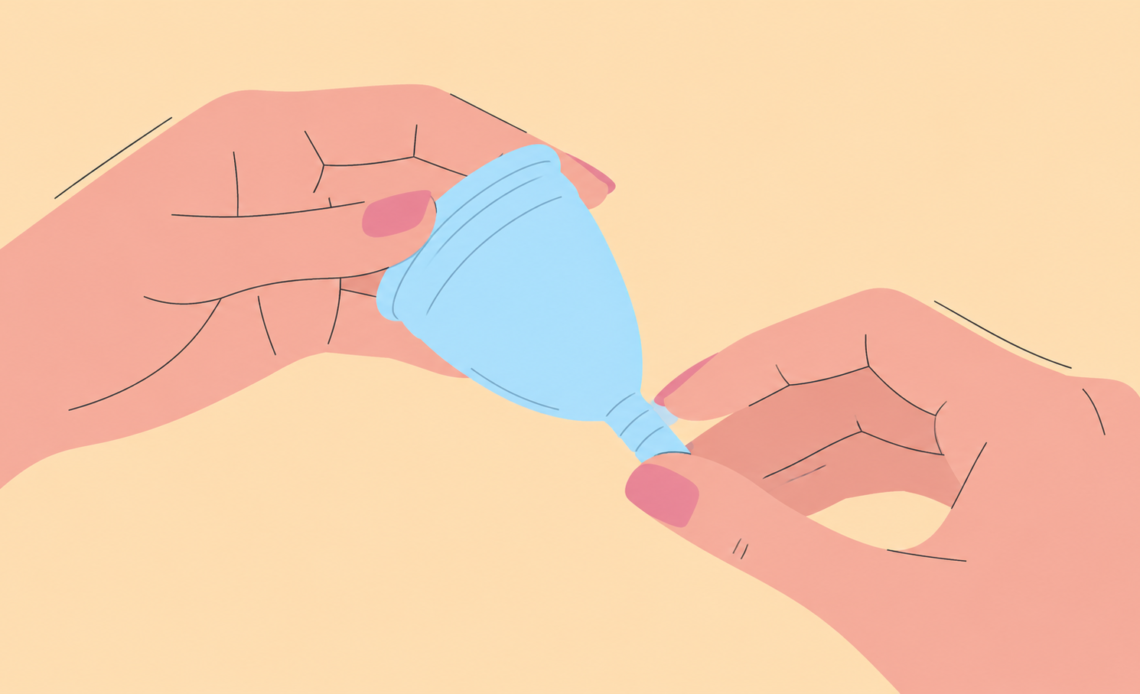
If your current fold isn’t getting the job done, try the C-fold menstrual cup technique, the punch-down fold, the 7-fold, or the origami fold (read more about it here).
Sometimes your cup isn’t being stubborn; it just hasn’t found its favourite fold yet.
Consider cup firmness
Softer cups may feel more comfortable, but they can also take longer to open, especially if you have strong pelvic floor muscles. Firmer cups tend to unfold more easily and create a seal faster. They’re also better at holding their shape, making insertion and positioning a little more straightforward, and a lot less fussy.
That’s where Nua’s Ultra-Safe Menstrual Cup strikes the perfect balance. Its thoughtfully designed firm-but-not-rigid body is flexible enough for comfortable insertion while providing the structure needed to unfold smoothly and create a secure, leak-proof fit.
Read more about soft vs. firm menstrual cup here.
Try cold water or lubrication
Rinsing the cup with cold water before menstrual cup insertion may make the silicone slightly firmer, helping it pop open more easily. You can also apply a small amount of water-based lubricant to the rim to help the cup slide into place and unfold smoothly.
A little trial and error is completely normal. Even experienced cup users have had their fair share of “come on, open already!” moments. Once you find the technique that works for your body, using a menstrual cup becomes much easier.
Is My Menstrual Cup Leaking Because It Hasn’t Opened Properly?
Yes, a menstrual cup can leak if it hasn’t opened properly. When the cup doesn’t create a complete seal against the vaginal walls, menstrual fluid can sneak around the cup instead of collecting inside it.
If your cup is fully open and you’re still spotting leaks, here are a few other things to check:
Positioning
A menstrual cup should ideally sit in the vaginal canal below or around the cervix. Not too close to the vaginal opening and not positioned beside the cervix. If it’s sitting too low, too high, or off to the side, it may not create a secure seal. Think of it as your cup finding its sweet spot.
Read about how to insert your menstrual cup without pain in this step-by-step guide.
Clogged Air Holes
Those tiny holes near the rim may be small, but they’re important for helping your menstrual cup maintain a secure seal. If they get blocked by blood or residue, leaks can happen. A quick rinse is usually all they need to get back to work.
Overflowing
Your menstrual cup might simply be working overtime. While menstrual cups can typically be worn for up to 8 hours, those with a heavier flow may need to empty them more frequently. If your cup keeps reaching capacity before removal time, it may be worth sizing up.
Nua’s Menstrual Cup comes in Medium and Large sizes, helping you find a fit that feels just right for your body and flow.
Can Improper Menstrual Cup Placement Cause Discomfort?
Yes, improper menstrual cup placement can cause discomfort. A menstrual cup that is inserted incorrectly, positioned too low, or isn’t the right size for your body can create pressure, cramping, or irritation.
In most cases, it’s simply your body’s way of indicating that the cup needs a small adjustment.
Common signs that your menstrual cup isn’t positioned correctly include:
- Abdominal or pelvic cramping: The cup may be pressing against the cervix or creating excess pressure in the vaginal canal.
- Urinary discomfort or urgency: A cup that’s too firm or positioned incorrectly can put pressure on the bladder or urethra, making you feel like you need to pee more often.
- Feeling the cup or stem: If you can feel the base of the cup or the stem while walking or sitting, the cup may be sitting too low.
A small repositioning is often all it takes to turn an uncomfortable cup into one you barely notice.
Looking for a cup designed with comfort in mind? Explore Nua’s Menstrual Cup, designed for all-day comfort and reliable protection.
The Final Takeaway
Figuring out how to know if a menstrual cup has opened properly becomes much easier once you know what to look and feel for. A round, smooth base, a successful tug test, and a comfortable, stable feel inside are some of the simplest ways to confirm everything is in place.
Common concerns like leaks, pressure, or discomfort are often linked to the cup not fully opening, minor positioning issues, a blocked rim, or even overflow. In most cases, small adjustments like relaxing your muscles, trying a different fold, or changing cup firmness can make a big difference.
The key is patience and practice. As you get more familiar with insertion techniques and your body’s signals, you’ll naturally understand when your cup is correctly positioned and working as it should.
With time, what once felt confusing becomes a simple, comfortable part of your cycle routine.
Disclaimer
The content of this article is provided for general informational and educational purposes only and is not intended to constitute medical advice, diagnosis, or treatment. The information shared is of a general nature and may not be appropriate for all individuals or specific circumstances. Readers should not disregard, delay, or substitute professional medical advice based on the information contained herein.
If you experience any symptoms, notice anything unusual, or have concerns relating to your health or overall wellbeing, you should consult a qualified healthcare professional. While every effort is made to ensure the information shared is accurate and up-to-date, Nua makes no representations or warranties, express or implied, regarding the accuracy, completeness, or suitability of the information provided and disclaims all liability arising from reliance on this content to the fullest extent permitted by law.