
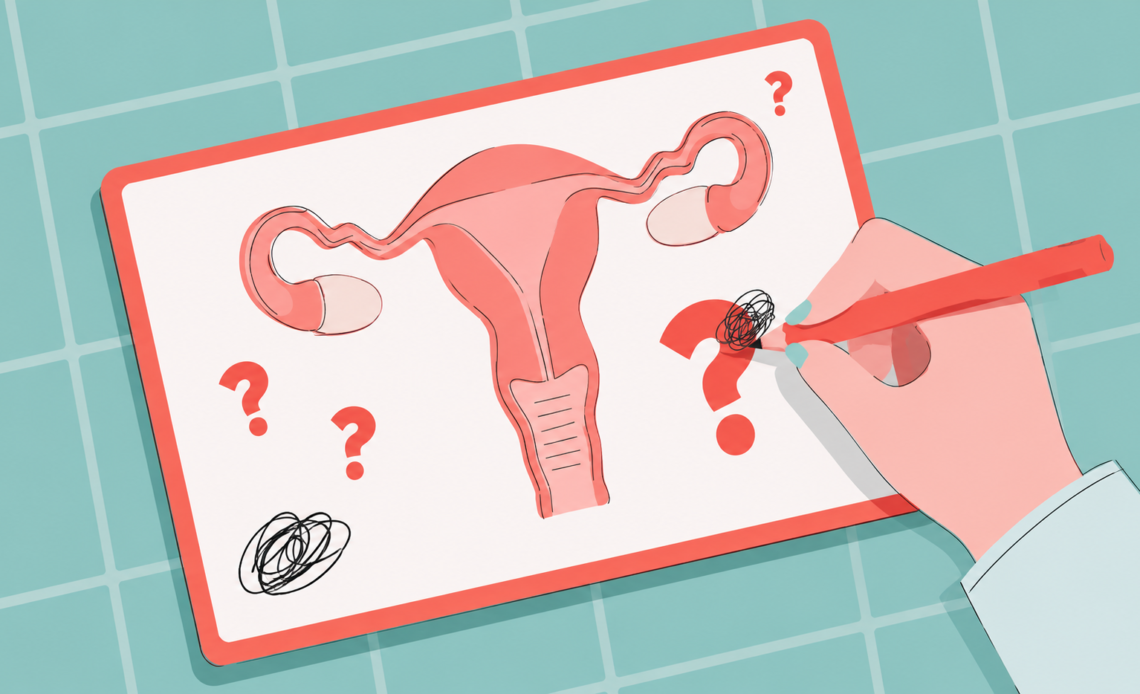
What you’ll learn about why PCOS is now called PMOS in this blog:
- Polycystic Ovary Syndrome (PCOS) officially became Polyendocrine Metabolic Ovarian Syndrome (PMOS) on 12th May, 2026.
- This was done following a landmark study published in The Lancet, backed by 56 global health organisations.
- The old PCOS name was considered medically inaccurate because many women with the condition do not actually have ovarian cysts.
- The old name also overlooked the condition’s hormonal and metabolic effects on the body.
- PMOS highlights that this is a whole-body hormonal (polyendocrine) and metabolic disorder, rather than just an ovarian issue.
- The change aims to speed up diagnoses and better address severe symptoms like insulin resistance, weight gain, and cardiovascular risk.
Yes! PCOS is now called PMOS or Polycystic Metabolic Ovarian Syndrome, following a major global consensus led by international health experts.
Published in The Lancet on 12th May, 2026, and backed by 56 leading medical organisations worldwide, this is not just a rebranding exercise. It is a much-needed correction.
The older name, PCOS or Polycystic Ovary Syndrome, suggested that ovarian cysts were the main feature of the condition. But many women with PCOS do not have ovarian cysts at all. This often leads to confusion, delayed diagnosis, and misunderstanding around something that affects 1 in 8 women worldwide.
So, yes, the PCOS name change allows for a new understanding of PCOS, highlighting it as a whole-body hormonal (polyendocrine) and metabolic disorder, rather than just an ovarian issue.
Here is what changed, why it matters, and what it means for women now.
Why is PCOS Being Renamed as PMOS?
PCOS is now called PMOS because PCOS is a medical misnomer. It stands for Polycystic Ovary Syndrome, where “polycystic” means “many cysts.” But the small round structures doctors see on ultrasounds in this condition are usually not cysts at all. They are follicles.
Follicles are tiny fluid-filled sacs inside the ovaries that hold immature eggs. Every woman naturally has follicles in her ovaries. In fact, they are a normal part of how ovulation and periods work.
Blog continues after the ad.

In PCOS, these follicles often do not mature. So instead of growing fully and releasing an egg during ovulation, many smaller follicles remain inside the ovary and become visible on an ultrasound scan.
Either way, these are not cysts. And more importantly, they are not even the main problem in the condition.
The real issue in PCOS has always been much bigger than the ovaries alone (more on that here). It also involves hormones, insulin resistance, metabolism, and the body’s entire endocrine system. However, the old name paid no attention to any of that. It just made people think that PCOS is only about ovarian cysts and misdiagnosed women who did not have visible ‘cysts’ on their ultrasound.
This is why experts spent 11 years, involving more than 22,000 people worldwide, working toward replacing it with Polycystic Metabolic Ovarian Syndrome (PMOS), a name that holistically reflects what is actually happening in the body.
PMOS vs PCOS: Why is the New Name Better?
PCOS’s name change to PMOS, or Polycystic Metabolic Ovarian Syndrome, is a very well-researched and thought-out move because the new name covers all aspects of the condition that were missed before.
Poly
This means many. As in, multiple things are happening at once in this condition. It is not one single problem with one single cause.
Endocrine
This refers to the body’s hormonal system. In PMOS, several parts of this system are involved.
- Androgens (male hormones, but even females have them) are often elevated.
- Insulin signalling (the process that helps your body use sugar from food for energy) is frequently disrupted.
- Brain signals that control ovarian hormones like estrogen and progesterone can become out of rhythm too.
Metabolic
This refers to how your body processes energy, a.k.a, how your body handles blood sugar, how it stores fat, how efficiently it converts food into fuel, and how it manages inflammation. In PMOS, metabolic disruption is key to many of its symptoms like weight gain, fatigue and intense cravings.
Ovarian
This keeps the ovaries in the picture, because they are still involved. The hormonal environment created by PMOS affects how the ovaries mature and release eggs, causing fertility challenges and irregular or heavy periods as part of the condition.
Syndrome
This means a group of symptoms that occur together, even if the exact mechanism is not fully understood yet.
And when you put it all together, you have Polycystic Metabolic Ovarian Syndrome. A condition where multiple hormonal systems interact and disrupt each other, with wide-ranging symptoms and effects on your metabolism, ovaries, and overall health.
Since PMOS periods can often be heavier, longer, and very unpredictable, soft, leakproof, irritation-free period panties can make a difference on those dreadful heavy-flow days.
PMOS vs PCOS: Why Does the Name Change Actually Matter?
The symptoms of PMOS are exactly the same as those of PCOS. So does it really matter what we call it?
Yes. A lot, actually. It gives us a new understanding of PCOS.
It Changes What Doctors Look For
When a condition is named after one of its features, doctors tend to only focus on that feature. And that is exactly what happened with PCOS. The name made it sound like an ovary-and-cyst problem. But many women with PCOS never had visible “cysts” to begin with.
So they were told they could not have PCOS based on their normal scans, even when they had other classic PCOS symptoms, like acne, facial hair growth and weight changes. This led to missed or delayed diagnosis. In fact, WHO estimates that up to 70% of people with PCOS remain undiagnosed worldwide.
The PCOS name change to PMOS can help drive timely diagnosis by shifting focus to other important areas beyond cysts, like:
- Insulin resistance and PCOS
- Metabolic dysfunction in PCOS
- Hormonal imbalance in PCOS
- Obesity and PCOS connection
Changes Policies and Research Areas
PCOS was treated mainly as a fertility or period problem. Which meant conversations around the condition usually stopped at irregular periods or getting pregnant. But many women were struggling with so much more than that, including exhaustion, sleep problems, mental health struggles, and long-term health risks that were not getting equal attention.
In fact, research specifically mentions that the older PCOS name limited research, fragmented care, and affected health policy framing around the condition.
A more accurate name, like Polycystic Metabolic Ovarian Syndrome, helps push the condition into bigger conversations, focusing on policy changes and research on:
- Early screening for insulin resistance and diabetes
- Better long-term metabolic care
- More mental health support
- More funding for women’s health research
- Clearer medical guidelines beyond just fertility treatment
It Reduces Confusion and Stigma
The word “cysts” caused a lot of unnecessary fear because many women thought they had dangerous cells growing inside them. It made the condition feel abnormal, damaged, or severe in ways that were not even medically accurate.
The name also reduced women to just their fertility because it framed the condition almost entirely around reproduction. And in many cultures, these symptoms of infertility or irregular periods already carry a lot of taboo and judgment. So that is why PCOS being renamed as PMOS was so important. It was to ensure women don’t feel dismissed, embarrassed, or ashamed because of a condition.
It Opens the Door to Better Treatment
For years, many women with PCOS ended up treating every symptom separately.
- Acne? Dermatologist.
- Irregular periods? Gynaecologist.
- Weight gain? Diet changes.
- Anxiety or exhaustion? Counselling.
- Difficulty getting pregnant? Fertility clinic.
But the problem was that all these symptoms were often connected to the same underlying condition. The PCOS name change helps make that connection clearer. It encourages doctors to stop looking at symptoms in isolation and start treating the condition more holistically.
And that even small comfort upgrades, like soft, rash-free period products, can make difficult period days feel more manageable.
So, What Does the Future of PCOS Look Like?
The PCOS name change to PMOS has paved a path for a better understanding of the condition itself.
For years, millions of women were dealing with a condition that medicine was incompletely describing. The PMOS name finally acknowledges that this is not just about ovaries or fertility, but a much bigger hormonal and metabolic condition that deserves proper attention and care.
And while a name change alone will not fix everything overnight, it is an important step toward earlier diagnosis, better research, more holistic treatment, and women feeling less dismissed or misunderstood.
The transition from PCOS to PMOS will happen gradually over the next few years, but it will one day make navigating this condition much easier for millions of women.
That said, if you still have questions about PMOS, PCOS, periods, hormones, or anything else female, drop them in the comments. We’ll help break it down for you.
Disclaimer
The content of this article is provided for general informational and educational purposes only and is not intended to constitute medical advice, diagnosis, or treatment. The information shared is of a general nature and may not be appropriate for all individuals or specific circumstances. Readers should not disregard, delay, or substitute professional medical advice based on the information contained herein.
If you experience any symptoms, notice anything unusual, or have concerns relating to your health or overall wellbeing, you should consult a qualified healthcare professional. While every effort is made to ensure the information shared is accurate and up-to-date, Nua makes no representations or warranties, express or implied, regarding the accuracy, completeness, or suitability of the information provided and disclaims all liability arising from reliance on this content to the fullest extent permitted by law.