What you will learn about your period cramps timeline in this guide:
- For most people, period cramps begin 1-2 days before the start of their period or within the first 24 hours.
- Most people experience cramps for about 2 to 3 days, making this the typical menstrual cramps duration.
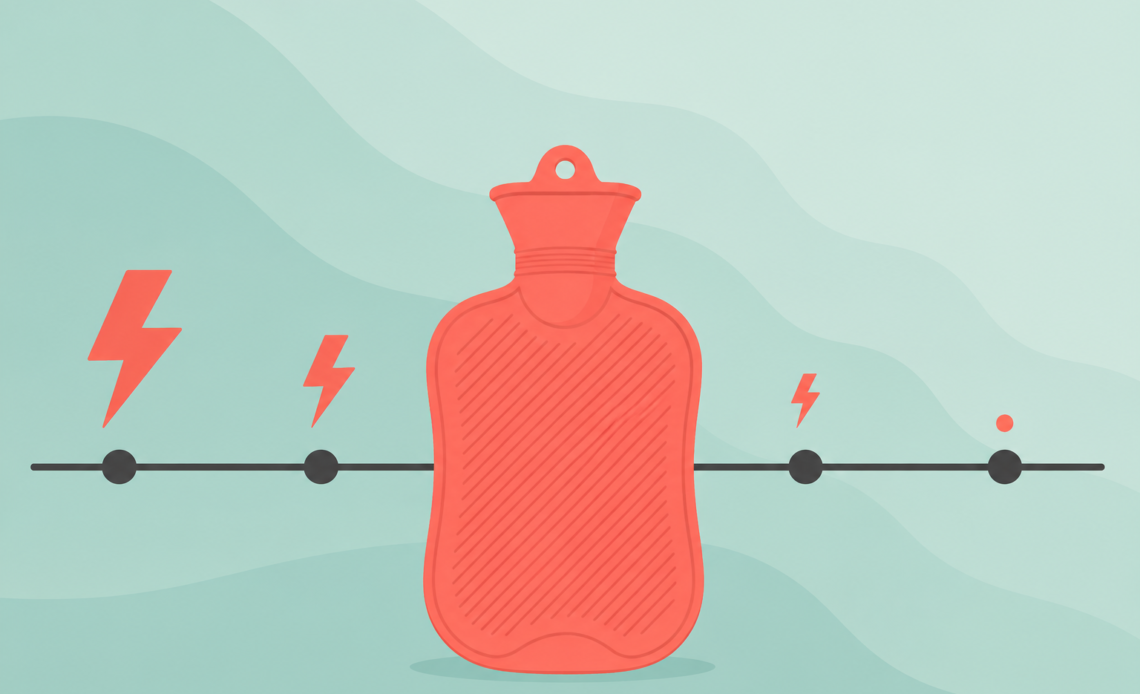
- Pain is usually strongest on Day 1, reduces on Day 2, and eases significantly by Day 3.
- Normal cramps follow a predictable pattern and are manageable, while severe cramps last longer, do not improve, and interfere with daily life.
- Severe cramps may also come with symptoms like nausea, vomiting, or dizziness.
- Conditions like endometriosis, adenomyosis, fibroids, infections, and hormonal imbalances can lead to more intense pain.
- Simple relief methods like heat, movement, rest, hydration, and in some cases, medication can help manage cramps.
- If your cramps do not follow a predictable pattern or feel unmanageable, it is important to consult a doctor.
Here’s the thing: Nobody really teaches you how to read your own pain. One cycle it’s barely a dull ache in the background. The next, you’re curled up on the bathroom floor with your phone in hand, googling whether this is normal. That gap between “this is just my period” and “something feels off” is exactly why understanding your period cramps timeline matters. Once you know what’s typical for your own body, you stop guessing every single month, and you start trusting it again.
When Do Period Cramps Start, Really?
Some people feel the first twinge before their period even shows up. Others don’t notice anything until the bleeding actually starts. And a few lucky people barely cramp at all.
Blog continues after the ad.
So when do period cramps start on average? Most people notice them 1 to 2 days before their period begins, or within the first 24 hours of bleeding. That timing comes down to prostaglandins, hormone like compounds your uterus releases to help itself contract and shed its lining. The more prostaglandins your body produces, the harder those contractions hit, which is a big reason cramps feel so different from one person to the next, and even from one cycle to the next for the same person.
Learn more about prostaglandins here.
The Period Cramps Timeline, Day by Day
According to the Cleveland Clinic, most people experience menstrual cramps for about 2 to 3 days. Knowing this period cramps timeline can help you tell the difference between what’s normal and what genuinely needs a second look.
Day 1:
On the first day of menstruation, period pain is usually at its peak.
Day 2:
Pain is still present, but at a reduced level.
Day 3:
Cramps reduce significantly for most people.
Day 4 onwards:
Little to no pain.
If this sounds like your experience, your menstrual cramps’ duration is likely within the normal range. There’s something almost reassuring about a body that follows a script like this one. Pain that peaks and then recedes is pain your body already knows how to resolve on its own.
If Day 1 already has you side eyeing your calendar and wondering how you’ll get through a full work day, that reaction makes complete sense, your hormones are working overtime right when you need to function normally. A lot of people lean on Nua’s Cramp Comfort Heat Patch through this window. It’s air activated, so there’s nothing to heat up or charge, you just peel it and stick it onto your underwear and let it work under your clothes while you go about whatever the day actually demands.
Why Are Period Cramps Worse on the First Day?
If you’ve ever wondered why are period cramps worse on the first day, the prostaglandin theory has a pretty satisfying answer. A clinical review published in American Family Physician found that levels of PGF2α, the prostaglandin most responsible for uterine contractions, peak during the first two days of menstruation, exactly when symptoms hit hardest. In other words, your pain isn’t in your head, it’s measurable in your own menstrual fluid.
Basically, your body is just front loading the hardest part of the job, then easing off once the lining has mostly shed. Knowing this doesn’t make Day 1 hurt less, but it can make it feel less random. There’s a difference between pain that feels like punishment and pain that has a known, time limited cause.
Normal vs. Severe Period Cramps: How to Tell the Difference
Understanding normal vs. severe period cramps is one of the more useful things you can learn about your own body, mostly because it gives you permission to stop second guessing yourself every month. It also answers the practical question of how long should period pain last before it crosses from normal into something more.
Normal cramps typically:
- Last for 2 to 3 days
- Peak early and then reduce in intensity
- Are manageable with traditional home remedies and period pain relief products, such as heat patches and hot water bottles
Severe cramps may:
- Last longer than 3 to 4 days
- May not reduce after the first few days
- Disrupt daily life
- Be accompanied by nausea, vomiting, or dizziness
It is not normal for menstrual pain to feel unmanageable. If you’ve spent years assuming that doubling over every month is just “how your body is,” that assumption deserves a second look. Learn all about normal and severe cramps here.
Even when your cramps land on the normal end of that list, normal doesn’t have to mean gritting your teeth through it either. Nua’s Cramp Comfort Heat Patch is built for exactly these days.
Severe Period Cramps Causes You Shouldn’t Ignore
If your pain looks more like the second list than the first, there’s often a real, identifiable reason behind it. Common severe period cramps causes include:
- Endometriosis: This is when tissue similar to the uterine lining grows outside the uterus and responds to the same monthly hormone shifts, often creating pain that’s sharper and more persistent than typical cramps.
- Adenomyosis: This is when the uterine lining grows into the muscle wall of the uterus itself, making it thicker and more sensitive, which leads to stronger contractions and deeper, longer lasting pain.
- Uterine fibroids: These are noncancerous growths in or around the uterus that add pelvic pressure, which can make cramps feel heavier and longer lasting.
- Pelvic infections: This is inflammation in the reproductive organs that makes the uterus more reactive, intensifying pain during your period.
- Hormonal imbalances: This is when hormone levels are off, and your body is overproducing prostaglandins, leading to stronger contractions and more painful cramps.
None of these are rare edge cases. A narrative review published in the Journal of Pain Research notes that dysmenorrhea affects somewhere between 45 and 95% of people of reproductive age worldwide, and that 2 to 29% experience pain severe enough to be disabling. If that’s you, you’re part of a very large, very under heard group. Pay attention to your own pattern, because a period cramps timeline that refuses to follow the normal script deserves a conversation with a doctor, not a shrug.
While you sort out what’s actually going on with a gynaecologist, you still deserve to get through your day comfortably. Keep Nua’s Heat Patch in your bag for when you’re managing a real condition and still need to function at work or school.
How to Relieve Period Cramps Without Overhauling Your Life
You don’t need an elaborate routine to find real period cramps relief methods. If you’re trying to figure out how to relieve period cramps without medicating every single cycle, a few low effort habits go a long way.
- Gentle movement like walking or stretching can ease discomfort by loosening tension in your lower back and pelvis.
- Staying hydrated and prioritizing sleep both help your body manage inflammation more efficiently.
- If your doctor has cleared it, over the counter medication can help too, especially when it’s taken early in the prostaglandin curve rather than after the pain has already built.
- And then there’s heat, which deserves its own conversation, because it might be the single most underrated tool on this entire list.
Heat Therapy for Period Cramps, the One Thing That Actually Works
Heat therapy for period cramps works by relaxing the muscles of the uterus and improving blood flow to the area, which softens the intensity of contractions and the pain that comes with them. It also improves circulation in the pelvic region more broadly, which can ease discomfort even further.
This isn’t just anecdotal comfort passed down from your mom. A randomized controlled trial published in BMC Women’s Health compared a heat patch directly against ibuprofen in women with primary dysmenorrhea and found the heat patch produced comparable pain relief, with no significant difference between the two at multiple time points. A separate placebo controlled study, published in the European Journal of Obstetrics and Gynecology and Reproductive Biology, found that continuous low level topical heat relieved menstrual pain as effectively as oral ibuprofen, and significantly better than placebo.
So a heating pad isn’t just a cozy ritual, it’s genuinely backed by research. The catch is that you can’t exactly carry a hot water bottle into a meeting or onto a train.
That gap between knowing heat works and actually being able to use it on a regular Tuesday is exactly where something like Nua’s Cramp Comfort Heat Patch earns its place. It delivers up to 8 hours of steady warmth, sticks discreetly under your clothes, and needs no outlet, no microwave, and no awkward explaining to coworkers.
The Real Goal
Your period cramps timeline should, in a healthy cycle, be fairly predictable. Pain peaks early, usually on Day 1, then eases over the next couple of days. If that matches your experience, you’re likely well within the normal range. If it doesn’t, if the pain keeps building instead of fading, or interrupts your life month after month, that’s worth a real conversation with a gynaecologist, not another month of quietly pushing through it.
Period pain is common. It is not, and should never have to be, unbearable. Whatever this month’s cramps look like, it’s worth having something steady in your corner, like a heat patch you actually reach for, while you figure out the rest.
Disclaimer
The content of this article is provided for general informational and educational purposes only and is not intended to constitute medical advice, diagnosis, or treatment. The information shared is of a general nature and may not be appropriate for all individuals or specific circumstances. Readers should not disregard, delay, or substitute professional medical advice based on the information contained herein.
If you experience any symptoms, notice anything unusual, or have concerns relating to your health or overall wellbeing, you should consult a qualified healthcare professional. While every effort is made to ensure the information shared is accurate and up-to-date, Nua makes no representations or warranties, express or implied, regarding the accuracy, completeness, or suitability of the information provided and disclaims all liability arising from reliance on this content to the fullest extent permitted by law.