What you will learn about post-workout intimate hygiene in this blog:
- Post-workout itching is most commonly caused by sweat, heat, friction, and staying in damp clothes too long.
- You should change out of gym clothes and shower soon after exercise to lower irritation risk.
- Cotton underwear and loose clothes after workouts help the area stay cooler and drier.
- Regular soaps can disrupt vaginal pH, so a gentle intimate wash for the outer area is a better option.
- Moisturising the outer vulva after showering can help if the skin feels dry, tight, or rubbed raw.
- During your period, sweat and menstrual products can trap extra moisture, making irritation more likely.
- Changing your pad, tampon, liner, or period underwear after a workout helps prevent discomfort.
You just crushed your workout, the endorphins are flowing, and you’re feeling like a total main character. But then comes the very, very urgent need for some post-workout intimate hygiene, as a prickly little itch kicks in down there.
And honestly, this part gets ignored way too often. We talk endlessly about protein shakes, hydration, warmups and cooldowns, but nobody really talks about vaginal health after exercise or why post-workout intimate hygiene actually matters.
Because sweat, friction, tight activewear, and staying in damp clothes for too long can all make your lady parts feel irritated, uncomfortable, and rashy.
But the good news is you do not need an elaborate 12-step routine or fancy products to feel better. Usually, a few post-workout habits are enough to keep your vulva calm, clean, and comfortable. So if your hot girl workout keeps ending in overheated girl itching, read the blog for the do’s, don’ts, and easiest tips for intimate care after a workout.
The Need for Post-Workout Intimate Hygiene: Why Does My Vagina Itch After a Workout?
The biggest culprit behind itching and irritation post-workout is sweat.
During exercise, your body cools itself by sweating. That includes the groin area, where sweat gets trapped more easily because the vulval skin folds, underwear, and leggings create a warm, little closed environment. Basically, a sauna for your very delicate skin down there, which does no good to it.
- The skin becomes softer and more fragile, a process called maceration. Basically, moisture overhydrates the top layer of skin, making it easier to rub, sting, itch, or feel raw. Just like how your fingers wrinkle after staying in water too long.
- Sweat increases friction as the damp skin rubs against itself or fabric more easily during movement. This repeated rubbing can lead to tiny, invisible irritation spots.
- The vulva already sits in a warmer area of the body, and trapped sweat can raise skin temperature even more by about 1.5°C, as per research.
- Sweat causes pH disruption, pushing your vaginal pH up from its acidic normal (3.8-4.5) to around 6, which messes up the intimate ecosystem, leading to discomfort, odor, and itching.
And if you are on your period? Girl ufff. Things can feel even worse. Blood, pads, tampons, or period panties add extra warmth and moisture, while cramps may already make the area feel sooooo sensitive.
Blog continues after the ad.
In short, post-workout sweat + period week = a little more intimate care after workout.
And if you don’t know what all you’d need to maintain vaginal health after exercise. You can shop the absolute best intimate care range, which is dermatologically tested and enriched with natural extracts, here.
How To Prevent Vaginal Irritation After a Workout
Sweat and vaginal irritation, unfortunately, go hand in hand. So the trick to avoiding post-workout irritation is getting the V-zone cool, clean, and sweat-free as soon as your workout ends.
Should I Change and Shower Right After Exercise?
Yes. You should get out of sweaty, damp gym gear and shower right after your workout, ASAP, because you don’t want sweat and heat to cause more damage than they already may have.
And yeah, there might be days (we all have them) where we need to go on a quick errand run right after exercising or for a quick coffee with a friend, leaving no time for a shower. Well, in such cases, you need a quick way to reset your vaginal pH and hydrate the skin. The best way to do so is with a high-quality intimate wipe. Not wet wipes, baby wipes or organic wipes, ONLY intimate wipes for women, the ones that are dermatologically tested and pH-balancing.
Pro-tip: It’d be a bonus if your wipes are also enriched with cranberry to soothe any existing irritation, and cucumber to hydrate your skin after the salt from your sweat has dried it out. In fact, you can actually find something like that right here.
Is Synthetic Underwear Bad for Working Out?
Yes. Cotton panties are a gym girl’s best friend and can really spare you that post-workout irritation.
Most of those cute, squat-proof gym leggings are made of synthetic fabrics that don’t breathe. They trap sweat against your skin, leading to irritation. But you do need them for their mobility and stretchiness. So, it becomes a lot more important to at least have breathable underwear for vaginal health. And that’s only possible with a good, ol’ pair of cotton undies.
How Do I Wash My Vagina After a Workout?
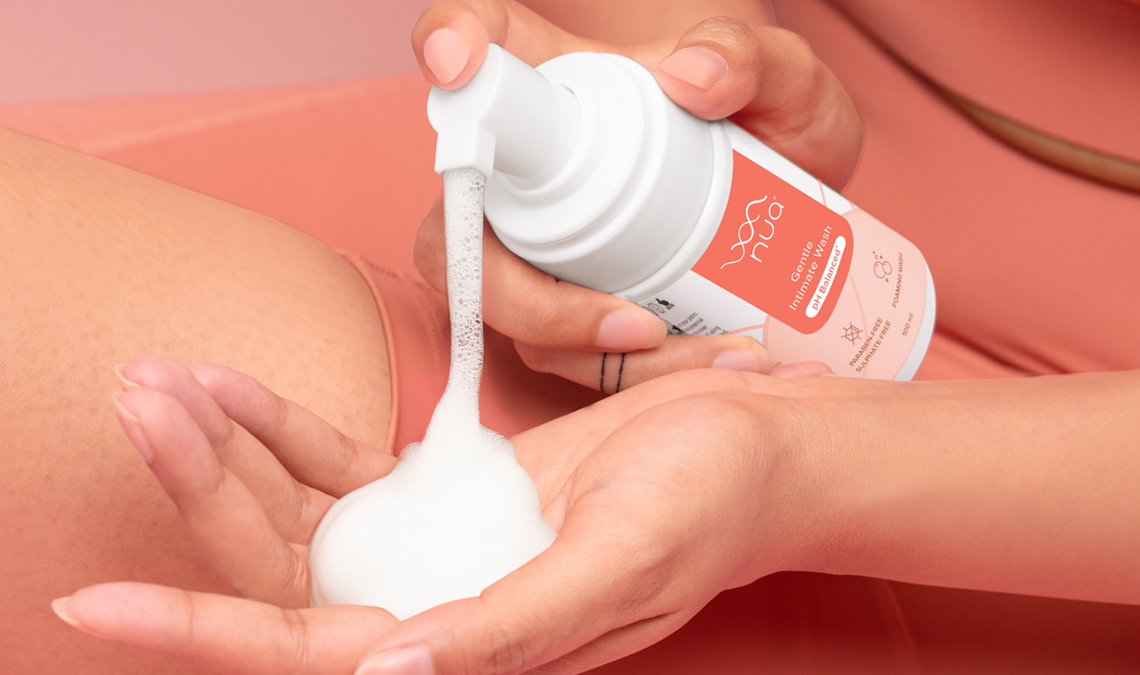
The smartest way to wash your vagina after a workout to get rid of all the sweat is by using an intimate wash. You should not be bringing soaps, shampoos, body washes, or scrubs ANYWHERE near the vulva or vagina.
Research shows that most of these are alkaline, while the vaginal area is acidic. So, using them down there is only going to disrupt the pH and lead to dryness, irritation, burning, and itching. In fact, they can also strip away natural oils that help protect the skin barrier, especially when the skin is already slightly irritated from the sweat.
Instead, go for an intimate wash that is toxic-free, paraben-free, sulphate-free, fragrance-free, and dermatologically tested. The best intimate wash for women will also have ingredients like lactic acid to support the perfect pH and aloe vera to soothe the troubled skin.
What Should I Wear After My Workout?
After your workout, you should aim for something loose. Going from sweaty, tight gymwear straight into tight jeans, shapewear, or fitted clothes is basically swapping one non-breathable situation for another.
If you can, change into something roomy after your shower, the kind of oversized that could comfortably fit two of you. Extra points if you can skip underwear or bottoms altogether for a bit and let the area air out.
If you need an in-depth piece on maintaining intimate health, here’s one that takes you through vulva care without irritation.
How Can I Prevent Post-Workout Chafing Down There?
A simple barrier like petroleum jelly can genuinely help prevent post-workout chafing in areas that rub, like the inner thighs, bikini line edges, or outer groin folds.
It works by reducing friction, so skin glides instead of constantly rubbing against itself or the fabric.
Just apply a thin layer on external skin only, never inside the vagina or on internal tissues.
How Do I Manage Post-Exercise Irritation on My Period?
Having proper feminine hygiene after exercise can really help avoid any period irritation. Because once sweat + blood + friction + moisture team up, irritation can come in faster than the speed of light.
Period blood adds extra dampness to an area that is already warm and sweaty after activity. Plus, period products can also hold onto this heat and moisture, especially if they are thick and non-breathable.
So, your goal should be to get out of the damp setup fast:
- Remove your period product immediately. Even if it is not full, a sweaty pad, tampon, liner, or period panty can be super irritating post-workout.
- Shower or just gently wash/ wipe the external area with the right intimate hygiene products to remove sweat, salt, and any blood residue.
- Do not douch even if you feel like it’s gonna clean more deeply. It will only disrupt the vaginal pH you are already working to protect (more on that here).
- Pat dry before putting anything fresh on. Damp skin under a new product is not the vibe we’re going for.
- Choose a softer, breathable period product. Your skin has been through enough. It needs something it can call a friend.
- If you feel sore or rubbed raw, go for the least bulky option your flow allows, so there is less friction after exercise.
- Let the area breathe for a few minutes if possible before changing into fresh underwear or a new product.
If you want to learn more about exercising out on your period, find your ultimate guide to pain-free workouts here.
When Should You See a Doctor for Post-Workout Vaginal Irritation?
A little itching or irritation after a sweaty workout usually improves once you shower, change into dry clothes, and let the area breathe. But if the discomfort doesn’t go away or keeps coming back, it’s worth speaking to a healthcare professional.
See a doctor if you notice:
- Persistent itching or burning that lasts for more than a few days despite proper intimate hygiene.
- Unusual vaginal discharge, especially if it has a strong odor, changes color, or has a thick, cottage cheese-like texture.
- Severe redness, swelling, pain, or rashes that worsen instead of improving.
- Recurring vaginal or yeast infections, particularly if symptoms return after exercise or become frequent.
While sweat and friction commonly cause temporary irritation, persistent or recurring symptoms may indicate an underlying infection, skin condition, or another health concern that requires medical evaluation. Getting the right diagnosis and treatment early can help prevent further discomfort and complications.
Sweat It Out, Not Down There
Post-workout intimate hygiene is simply a small part of taking care of your body after working out, just like stretching and hydrating. When sweat, heat, friction, and damp clothes sit for too long, the intimate area can feel itchy, irritated, or uncomfortable.
The good news is that it usually does not take much to prevent it. Change out of sweaty clothes soon after your workout, cleanse the outer area gently with the right intimate hygiene products, dry properly, and wear something fresh and breathable afterwards.
Most post-workout discomfort comes from moisture staying trapped for too long, so a quick reset can make all the difference.
If you’ve any more questions about vaginal health after exercise, drop them in the comments, and we’ll get back to you.
Frequently Asked Questions
Should I shower immediately after a workout?
Yes. Showering and changing out of sweaty clothes soon after exercising helps reduce sweat, friction, and irritation.
Why does my vagina itch after working out?
Sweat, heat, friction, and staying in damp workout clothes can irritate the vulva, leading to itching or discomfort.
Can I use regular soap to wash my vagina after exercising?
No. Regular soaps can disrupt the natural vaginal pH. Use water or a gentle intimate wash on the external vulval area only.
What should I wear after a workout to prevent irritation?
Choose clean, breathable cotton underwear and loose-fitting clothing to help the area stay cool and dry.
How can I prevent chafing in the intimate area during exercise?
Wear moisture-wicking clothing, change out of sweaty gear promptly, and use a barrier cream on areas prone to friction if needed.
When should I see a doctor for post-workout vaginal irritation?
Consult a healthcare professional if itching, unusual discharge, severe irritation, or recurring infections persist despite proper hygiene.
Disclaimer
The content of this article is provided for general informational and educational purposes only and is not intended to constitute medical advice, diagnosis, or treatment. The information shared is of a general nature and may not be appropriate for all individuals or specific circumstances. Readers should not disregard, delay, or substitute professional medical advice based on the information contained herein.
If you experience any symptoms, notice anything unusual, or have concerns relating to your health or overall wellbeing, you should consult a qualified healthcare professional. While every effort is made to ensure the information shared is accurate and up-to-date, Nua makes no representations or warranties, express or implied, regarding the accuracy, completeness, or suitability of the information provided and disclaims all liability arising from reliance on this content to the fullest extent permitted by law.