
The key difference between the two is that maternity pads are designed for the unique kind of bleeding that happens after childbirth. Postpartum bleeding (called lochia) is completely different from a regular period. It’s heavier. It lasts longer. And it comes with sudden gushes and even clots.
That’s why maternity pads are made to be longer, more absorbent, and softer to support your body during recovery. Period pads, while reliable during your monthly cycle, aren’t built for the demands of postpartum healing.
We know it sounds confusing. Let’s break it down for you step by step:
Maternity pads handle much more than just blood
Period bleeding tends to follow a flow (pun intended!). It’s usually gradual, and you more or less know what to expect. But postpartum bleeding is in a league of its own.
Research shows lochia is more than just blood. It’s leftover tissue, lining, mucus, and even bits of placenta. You might be chilling in bed when…boom…there’s a gush. Or stand up after nursing, and suddenly you feel like a water balloon just popped open inside you.
Unlike regular pads, which are designed for the lighter, steadier flow of periods, maternity pads are built with a deeper core and multiple layers that pull in thicker clots and gushes fast. So, it isn’t wet on your skin.
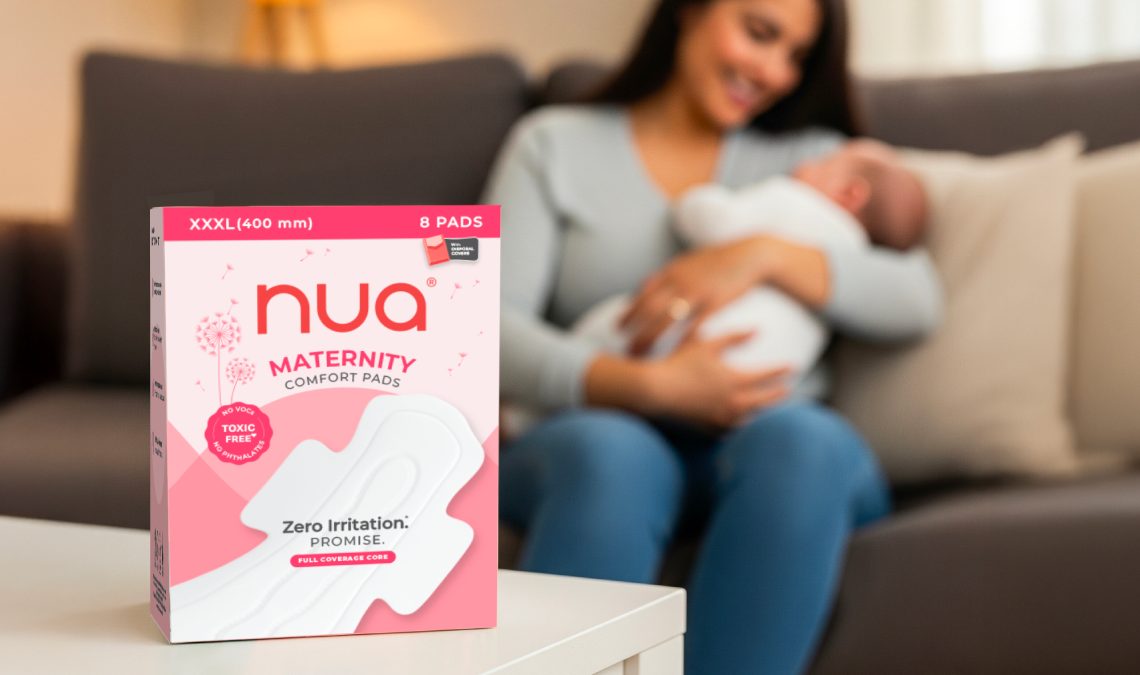
The texture of the pad matters too. Maternity pads are soft enough not to irritate stitches, but tough enough to trap all that lochia. Nua Maternity Pads do all this heavy lifting gently for you with a rapid absorbent core. As a new mom, you shouldn’t have to stress about your pad not keeping up.
Maternity pads are longer and wider for a reason
During your period, you’re mostly upright. Except for the crampy moments, you’re walking, working, living your usual life. So, regular pads usually focus on front and centre absorption since period flow tends to be more vertical.
But in the postpartum phase? You’re lying down a lot more. Nursing, resting and recovering. That’s when gravity starts doing its thing. And the blood flows backwards, pools when you’re flat, and releases the minute you sit or stand up. This is why postpartum surprise leaks are common, especially from the back.
That’s exactly why Nua maternity pads are designed to be extra long and super wide, 60% wider to be exact, at the back. Not just to catch more, but to catch blood in ways your regular period pad was not meant to. They’ve got you and your intense postpartum flow.
Extra back coverage during postpartum isn’t a luxury, it’s a necessity.
Maternity pads are designed around healing
During your period, a snug pad feels secure. Postpartum? Snug can feel like pressure. After childbirth, everything down there is sore, swollen, stretched, or stitched. You don’t just want something soft, you need it to feel like a cloud. And not just on top, but all around. This is about preventing chafing, tugging, or any extra friction. It’s about zero irritation.
Regular pads, even the comfy ones, might not be enough for this kind of sensitivity. But maternity pads are made with tenderness in mind. The top layer is made to be extra breathable, non-sticky, and flexible enough to move with you.
That’s why Nua’s maternity pads are not just soft, they’re also airy and feather-light, with a design that stays put without hugging too tightly.
Maternity pads fit in with your postpartum routine
If no one’s told you yet, postpartum care often means using multiple recovery products. As per research, it can be chemical packs, ice pads, mesh underwear, or even cooling sprays. And if your pad isn’t cooperating with all of that? It gets very hard to manage your healing routine.
Maternity pads are designed with this routine in mind. They lie flat with edge-to-edge protection and are flexible and non-bulky. So they don’t bunch up or shift when you add other essentials over or under them.
Nua’s pads will fit into your care routine without making you feel like you’re wearing toooo much.
You won’t need them forever, but you’ll be glad you had them
Most people use maternity pads for the first 10–14 days postpartum, when the bleeding is at its heaviest and most unpredictable. After that, as lochia lightens, you can gradually shift to high-absorbency period pads or even panty liners for those last days of spotting. We have a blog specifically on when to stop wearing maternity pads here.
And when you’re ready to switch, Nua has you covered with that too! Even Nua’s regular pads are just as gentle and irritation-free. They’re made for sensitive skin and designed to never cause rashes with a zero irritation promise. So you don’t need to compromise comfort, just adjust for flow.
You don’t need more. You just need what’s right.
Whether it’s your monthly period or the postpartum phase, your body goes through intense, beautifully complex changes. Choosing the right product is just about matching your pad to the phase you’re in (more on that here).
If you’re recovering from birth, maternity pads are built to keep up with everything your body is doing behind the scenes. And when you’re ready to go back to your period routine, we promise, Nua’s got you covered there, too.