

What this blog covers about thigh chafing during periods in the summer:
- Chafing is a friction burn: when your inner thighs rub together, the constant rubbing wears away the top layer of skin and leaves it raw, red and stinging.
- Sweat makes it worse, because wet skin has a much higher friction coefficient than dry skin, so damp thighs grip and tear instead of gliding.
- Periods stack the odds against you. In the days around your period your body runs warmer and sweats more, and a pad adds a layer of heat and trapped moisture right at the source.
- Breathable shorts or anti-chafe bands cut the skin-on-skin contact, while moisture-absorbing powders like cornstarch keep the area dry.
- Soothing agents like aloe vera calm the inflammation, and a barrier balm lets the skin slide instead of snag.
- Choosing a soft, breathable pad reduces the heat and friction your skin is already fighting, so the whole area stays calmer.
That hot, raw, why-is-there-a-fire-between-my-legs feeling has a name, and almost every woman knows it even if she has never said it out loud. Thigh chafing during periods in the summer is one of those quiet discomforts we all power through, smiling through a coffee date while every step feels like sandpaper. The summer heat, the sweat, the constant rub of thigh against thigh, and then a period layered on top of all of it, it’s too much irritation to handle.
Here is the part nobody explains: chafing is not a hygiene problem and it is not about your body shape. Slim thighs chafe. Athletic thighs chafe. It is simple physics meeting biology, and once you understand the mechanics, the remedies feel intuitive.
So. let’s actually talk about why it happens, and how to make it stop.
What exactly is thigh chafing, and why does it hurt so much?
Thigh chafing is a friction injury. Your skin is literally being sanded down by repeated rubbing. Dermatologists call the chronic version intertrigo, and the name itself tells the story. It comes from the Latin inter, meaning between, and terere, meaning to rub.
When your thighs rub together, the back-and-forth motion creates shear stress, a sideways force that drags the top layer of skin one way while the deeper layers stay put. Repeat that a few thousand times on a walk and skin cells start peeling apart. Your body reads the damage as an injury and floods the area with immune signals, which is exactly why chafed skin turns red, swells and feels warm. Research on how chafing develops describes how that friction triggers an inflammatory response in the skin, and how continued rubbing can take it from a faint pink patch to cracked, raw, weeping skin. That is the burning sensation, it is inflamed nerve endings.
Blog continues after the ad.

So when we talk about the causes of thigh chafing, we are really talking about three ingredients working together: skin-on-skin contact, repetitive movement, and moisture. Remove or reduce any one of them and the whole reaction calms down. Keep all three and your skin does not stand a chance.
Your skin is already managing enough friction this season. Give it one less thing to fight with a soft, breathable pad from Nua.
Why does sweat and friction rash get so much worse in the heat?
Because wet skin chafes far more easily than dry skin, and that is measurable, not just a feeling. Studies on skin friction have shown that the more moisture sits on the skin’s surface, the higher the friction climbs, and that effect is even stronger in women. Dry skin tends to glide, while damp skin grips. The Cleveland Clinic’s research on intertrigo explains that trapped sweat makes skin surfaces stick together, which increases friction and leads to skin damage and inflammation.
There is a second problem. Sweat that sits on the skin causes maceration, a softening and waterlogging of the outer layer, like when your fingertips prune in the pool. Soft, soggy skin is fragile skin. The micro-tears that dry friction would take an hour to create now happen in minutes. This is why inner thigh chafing in hot weather feels like it appears out of nowhere. The heat has already weakened your skin before the rubbing even starts.
And it does not stop at a rash. That warm, damp, rubbed-raw environment is also a perfect home for the bacteria and yeast that already live on your skin. When the skin barrier breaks, they can move in, which is how an ordinary friction rash sometimes turns into something itchier and more stubborn. Treating skin irritation in summer heat early matters, because you are not just soothing discomfort, you are protecting a barrier before it gets overwhelmed.
Why does chafing get worse during periods?
Because your period quietly changes your skin’s environment in three specific ways, and all three point toward more friction. Here is what is actually going on under the surface.
- You run hotter and sweat more. In the luteal phase, the stretch right before and into your period, progesterone nudges your basal body temperature up by roughly half a degree. Research on the menstrual cycle and skin found a higher basal skin temperature and a higher sweating rate in the luteal phase compared to earlier in the cycle. Warmer skin plus more sweat is the exact recipe for chafing during periods.
- A pad adds heat and trapped moisture. It sits at the top of your inner thighs and creates a small, warm, low-airflow zone. It holds warmth against the skin and slows evaporation, so the area stays damper for longer. That is occlusion, the lack of air circulation dermatologists list as a direct trigger for intertrigo.
- Your skin is more reactive. Hormonal shifts around your period can leave skin a little more sensitive and quicker to inflame. So the same walk that barely registered last week leaves your thighs raw this week. You are not imagining the difference, your skin genuinely has a lower threshold right now.
Put those together and you can see why thigh chafing during periods in the summer is its own particular kind of misery. It is not bad luck. It is heat, hormones and a pad all landing in the same few inches of skin at once. The good news is that every one of those factors is something you can work with.
If your pad is part of the heat equation, it is worth rethinking. A breathable, skin-friendly pad keeps that zone cooler and drier, and Nua makes one designed exactly for these days. Try it here!
How to prevent thigh chafing before it starts?
The fastest way to prevent thigh chafing is to break up the skin-on-skin contact and keep the area dry, so friction never gets a chance to build. Prevention beats treatment every time here, because once skin is raw, every option becomes a healing job instead of an easy fix. A few reliable chafing prevention tips:
- Wear easy, breezy shorts: A thin pair of shorts under a dress puts fabric between your thighs so skin never touches skin. Counterintuitively, smooth synthetic or moisture-wicking fabrics often beat pure cotton in summer, because cotton soaks up sweat and holds it against your skin, keeping friction high. Biker shorts with a built-in rash guard are a genuinely good investment.
- Try anti-chafing bands or bandelettes: On dress and skirt days when shorts feel like too much, slip a pair of soft thigh bands on. They stay put, they are barely visible, and they do one job well: keeping your thighs from rubbing.
- Use an unscented roll-on deodorant: The one already in your bag works. Roll a little onto the inner thigh and it cuts both sweat and friction. Pick an unscented or sensitive-skin formula so you are not adding fragrance to skin that may already be irritated, and reapply through the day.
- Keep the area dry: Since moisture is what turns rubbing into a rash, a quick dusting of a moisture-absorbing powder before you head out makes a real difference. This is the single most underrated move on this list.
Prevention also means starting your day on the right pad. On a summer period, a pad that breathes and stays dry does half the work for you, like the ones from Nua.
What are the best remedies for inner thigh rash once it has already started?
If your skin is already raw, the goal shifts to soothing the inflammation, keeping the area dry, and creating a barrier so the rubbing stops making it worse. A handful of remedies for inner thigh rash that genuinely help:
- Aloe vera gel: Aloe is the gentlest first move. Whether straight from the plant or from a clean bottled gel, it cools the burn and helps calm inflammation and redness. Keep it in the fridge for an extra hit of relief.
- Cornstarch and coconut oil: Mix roughly one part cornstarch to two parts coconut oil and smooth it on. The cornstarch absorbs moisture while coconut oil brings mild anti-inflammatory and barrier benefits. It tackles wetness and soreness at the same time.
- A barrier balm: Shea butter or even ghee, massaged in and left for a while before rinsing, helps soften and protect healing skin. A balm works because it lets the skin glide instead of catch, buying the rash time to recover.
- Loose clothing and air: Healing skin needs to breathe. Swap tight bottoms for loose, airy fabrics for a day or two so the area is not sweating and rubbing while it tries to repair.
One honest note: a friction rash should ease within a few days of care. If it keeps spreading, oozes, or gets itchier and more painful instead of better, it may have tipped into infection, and that is worth a doctor’s visit rather than another home remedy.
Here’s a cheat sheet you can save!
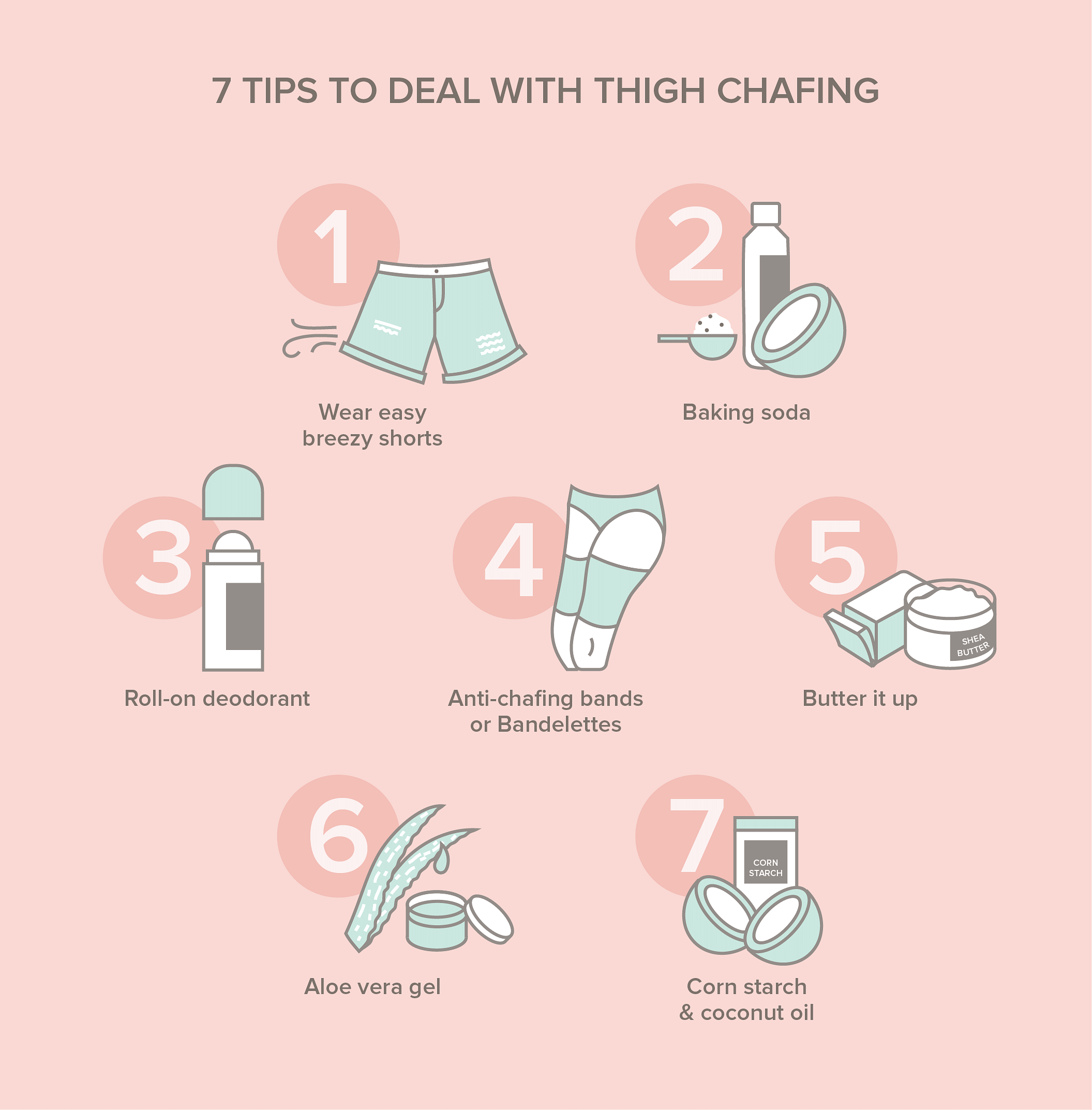
How to reduce friction between thighs on a summer period day
Here is an actionable, follow-along routine for the days your period and the heat collide. Do it in order and you have addressed every cause before you leave the house.
- Morning, after your shower, dry thoroughly: Pat the inner thighs and groin completely dry. Damp skin under a pad is where chafing begins, so do not skip this.
- Create a barrier: Smooth on an anti-chafe balm or your cornstarch-coconut oil mix across the inner thighs so the skin can glide.
- Choose a breathable pad: Reach for a soft, breathable pad rather than a thick, synthetic one, so that warm zone at the top of your thighs stays as cool and dry as possible.
- Add a physical barrier between the thighs: Pull on breathable shorts or thigh bands so skin is not directly rubbing skin all day.
- Carry a midday reset: Keep an unscented roll-on or a small powder in your bag and reapply once the heat builds, usually early afternoon.
- Evening: cool and soothe: Rinse, dry, and finish with chilled aloe vera so any early irritation calms overnight instead of carrying into tomorrow.
Step three of that routine matters more than you think. The pad you pick sets the temperature and dryness of the whole zone, so choose one built to breathe from Nua.
The Bottom Line
Thigh chafing during periods in the summer is not a flaw in your body or a sign you are doing something wrong. It is heat, sweat, movement and hormones meeting in one sensitive spot, and now that you know the mechanics, you can interrupt them. Keep the area dry, put something between your thighs, soothe inflammation early, and be a little kinder to your skin on the days it is already working overtime.
So, Nua women, do not let the fear of friction keep you from your favourite dress, your long summer walk, or simply moving through your day in comfort. Your skin is your most precious possession, and it responds beautifully to a little understanding.
Disclaimer:
The content of this article is provided for general informational and educational purposes only and is not intended to constitute medical advice, diagnosis, or treatment. The information shared is of a general nature and may not be appropriate for all individuals or specific circumstances. Readers should not disregard, delay, or substitute professional medical advice based on the information contained herein.
If you experience any symptoms, notice anything unusual, or have concerns relating to your health or overall wellbeing, you should consult a qualified healthcare professional. While every effort is made to ensure the information shared is accurate and up-to-date, Nua makes no representations or warranties, express or implied, regarding the accuracy, completeness, or suitability of the information provided and disclaims all liability arising from reliance on this content to the fullest extent permitted by law.