If you’ve ever sat around with your mom or older sister and heard them talk about their first period timing, maybe it was at school, maybe it was dramatic, maybe it was just… weirdly casual, you might have wondered, will mine be the same? Spoiler: it probably won’t. And that’s not just okay, it’s normal.
Let’s talk about why that’s such a big deal.
The Myth: You Inherit Your Period
For so many of us, our only reference for what a period should look like comes from our mom or sister, if we’re lucky enough that they even talked about it. Periods aren’t exactly dinner table conversation, so when theirs become your only blueprint, you expect yours to follow the same story. You think periods are inherited, like your mom’s curly hair or your sister’s laugh. That when your body decides it’s time, it’ll unfold just like theirs did (here’s what you can expect when it actually does).
Then when something goes off-script—yours comes earlier, later, heavier, or not at all—you panic. Your mom panics. Everyone assumes something’s wrong. But it’s not wrong, it’s just different.
But the truth? Menstruation doesn’t work that way, it doesn’t come with a family manual. Sure, family traits like hormones, metabolism, and age of puberty are inherited and can influence your cycle. But lifestyle, habits, diet, physical activity, etc. influence it too. Your period is ultimately based on your body’s own performance. And it’s got its own timing, tempo, and story to tell.
The Science That Actually Explains This
Your menstrual cycle is governed by a delicate hormonal orchestra, mainly estrogen, progesterone, LH (luteinizing hormone), and FSH (follicle-stimulating hormone). And these hormones don’t behave exactly the same way in every person, even within families.
Here’s what actually affects when and how your first period arrives:
- Body composition & fat percentage: Your body needs a certain amount of body fat to start menstruating (around 17%). That threshold can vary widely from person to person.
- Nutrition & stress: Chronic stress or restrictive eating can delay your first period. High physical activity levels can, too.
- Environment: Climate, exposure to endocrine disruptors, even light exposure can influence hormonal rhythms.
- Genetics: Yes, there is a genetic component, but it’s more like background music than a main character. You might start around the same age as your mom did, but how it feels, how heavy it is, how long it lasts? That’s all uniquely you.
So, while your mom’s first period story might involve fainting in school and your sister’s came during a family wedding, yours could be completely different, and still totally valid and wild.
What You DO Inherit
Research shows a strong genetic link when it comes to the first period timing. Daughters often experience theirs around the same age as their mothers, not because the body copies the same timeline, but because of the genes influencing hormonal regulation and puberty onset. One study found that variations in genes like LIN28B significantly affect when puberty begins, marking one of the strongest genetic signals tied to age at menarche.
Even more fascinating, researchers at the University of Cambridge discovered that the timing of puberty can depend on which parent you inherit certain genes from. So, your experience might even come from your father’s side.
Yes, genetics plays a role, but it’s not a solo act. Think of your genes as giving you a few hints and clues about what might happen, but not an exact timeline or prediction. If your experience looks completely different from your mom’s or sister’s, there’s nothing wrong with you, it just means your body is following something else.
The Emotional Inheritance (and How to Rewrite It)
Your experience of your period is shaped by more than biology, it’s also molded by emotion, mindset, and the stories you’ve absorbed about what a period means.
Did your mom describe her cramps as unbearable? Did your aunt call mood swings a curse? Did anyone label it gross or annoying? Those words linger, often deeper than we realize.
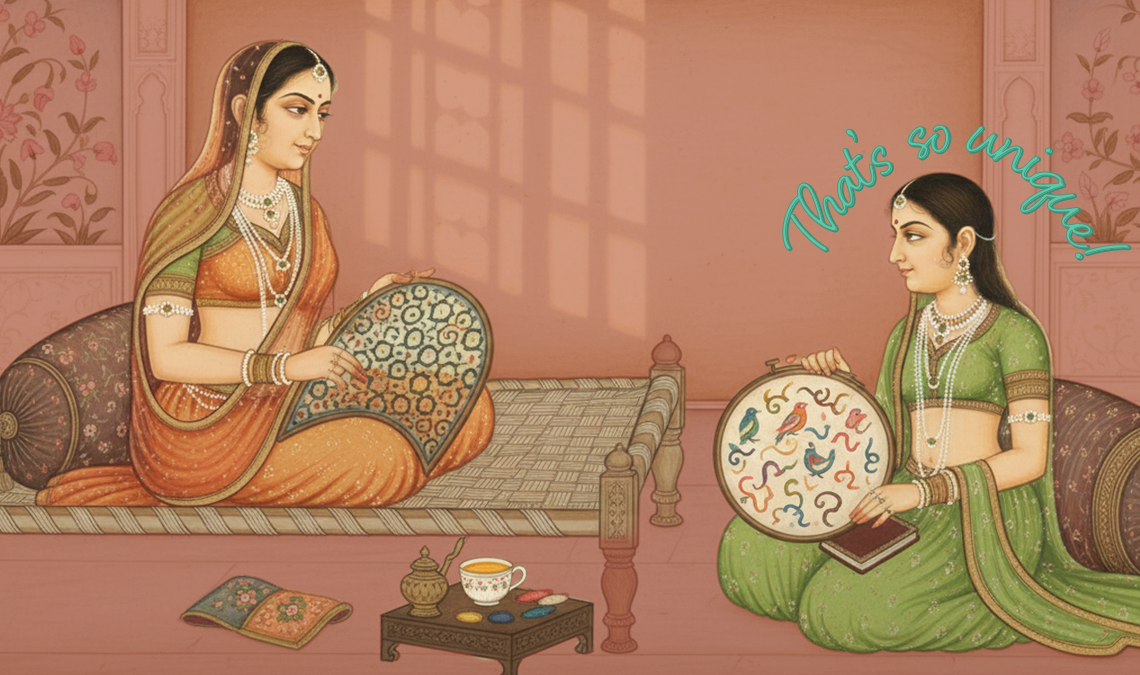
If your mom grew up when periods were whispered about, her story might carry quiet embarrassment. If your sister had Instagram, maybe she found solidarity or celebration online. You? Probably somewhere in between, aware, curious, a little nervous, but ready to own it.
Here’s the thing, you get to rewrite that script. Research shows your mindset, stress, and self-talk can shape how your body experiences a period. People who approach menstruation with less fear and more understanding often feel fewer negative symptoms. That’s not magic, it’s biology meeting psychology.
Plus, your first period doesn’t have to be a horror story or a huge celebration. Maybe it’s simply a quiet reminder that your body’s doing what it’s meant to, no drama required.
Why Comparison Can Be Problematic
Comparisons don’t just make things harder, they can create panic and a deep sense of being out of control. When your first period doesn’t match your mom’s or sister’s story, it’s easy to assume something’s wrong. And that anxiety spreads quickly. You panic, your mom panics. Neither of you are wrong, it’s just that both of you have been told periods should follow one acceptable pattern.
For many mothers, that moment comes with unexpected guilt. They feel an emotional responsibility to guide their daughters through this milestone, and when they can’t predict or control it, they feel helpless, like they’ve failed to protect or prepare you. That helplessness can sometimes translate into pressure in the form of questions, worries, or comparisons that come from care, but still sting.
And daughters feel guilt too, the kind that whispers, why isn’t my body like hers? When your experience doesn’t fit that mold, it can bruise your self-esteem. It’s a heavy cycle of expectation and worry that no one asked for.
The truth? Your body’s timeline doesn’t owe anyone an explanation. Menstruation isn’t a uniform rite of passage, it’s an individual rhythm shaped by your biology, your environment, your emotions. What it needs most is compassion, not comparison.
If you’re feeling that guilt or pressure—yours or your mom’s—pause. Send her this article, because when you understand each other’s fears and hopes, the panic quiets, the guilt softens, and you both see that no one’s doing it wrong. You’re just figuring it out together, your way.
What You Can Actually Do
- Track your cycle (even from your first period). Apps are great, but a notes app works too. It helps you learn your body’s rhythm.
- Notice patterns, but don’t judge them. Irregularity early on is normal.
- Talk openly—to your mom, your sister, your friends—but don’t compare. Swap stories, not standards.
- Trust your instincts. If something feels off (like pain so bad it stops you from functioning), check in with a doctor. Being informed is a form of self-care.
- Be prepared with the right products. Nua’s Teen Comfort Pack includes XL pads, L pads and panty liners, so you’re prepared no matter what happens.
Blog continues after the ad.

The (F)Lowdown
Your first period timing isn’t a family tradition to repeat. It’s a personal milestone to experience, in your own way, on your own timeline. Genetics gives you the framework, but your individuality fills in the details.
And the more we talk about that, the individuality, the science and the emotions, the more we make room for every version of normal.
So when it happens, however it happens, know this—your first period doesn’t have to be like anyone else’s to be exactly right for you.