
Period body odour is real, common, and almost always completely normal. Here’s what you’ll learn in this guide:
- The smell comes primarily from pH changes and bacterial activity, not from the blood itself being dirty or unclean.
- Hormones and smell during your period are directly linked, especially through apocrine sweat glands and shifts in vaginal flora.
- Triggers like infrequent pad changes, synthetic materials, and poor hydration make period body odour significantly worse and are all within your control.
- Mild, metallic, or musky odour during menstruation is normal. Strong, fishy, or persistent smells warrant a check-in with your doctor.
- Your pad choice matters more than you realize. Pick one that keeps moisture away from the skin.
You know that feeling when you’re midway through your period and you just… notice you smell different? Not necessarily bad, just different. You shower, you’re clean, but there’s still this faint awareness of your own body that doesn’t smell quite like the rest of the month. That’s period body odour, it’s normal, and it makes a lot of biological sense. The fact that nobody really talks about it doesn’t mean it isn’t happening to almost everyone who menstruates.
Let’s discuss!
Does Your Body Actually Smell Different During Your Period?
Yes, and there’s a clear reason why. Your vaginal pH shifts during menstruation. Under normal circumstances, a healthy vaginal environment sits at a slightly acidic pH of around 3.8 to 4.5, kept in check by Lactobacillus bacteria, according to Healthline. But blood has a pH closer to 7.4, which is much more alkaline. When menstrual blood mixes with vaginal secretions and sits against the skin, it disrupts that acidic balance, creating conditions where odour-producing bacteria can multiply more easily. That’s where the smell on your period actually comes from, not the blood itself, but what happens when it meets your skin’s ecosystem.
Blog continues after the ad.

Also, menstrual fluid isn’t just blood. It’s a mix of blood, endometrial tissue, cervical mucus, and vaginal secretions, all with their own bacterial and chemical profiles. When this mixture is exposed to air and warmth (both of which are basically guaranteed when you’re going about your day), oxidation kicks in and that’s when the odour becomes more noticeable.
Generic pads, in particular, trap heat and moisture against the skin. That warm, damp environment is essentially ideal for odour-causing bacteria to thrive. Changing your pad regularly helps, but so does choosing one that actually manages moisture rather than just absorbing it.
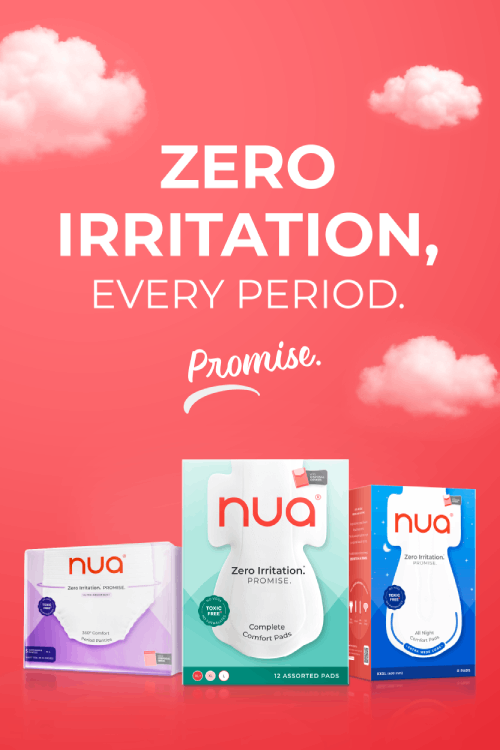
Your pad shouldn’t be working against you. Nua’s Complete Comfort Sanitary Pads are designed for sensitive skin, with a top layer that stays dry even when fully absorbed, so your skin isn’t sitting in moisture all day.
How Do Hormones Affect the Way You Smell During Your Period?
More than most people think, according to the Cleveland Clinic. Hormones and smell during your period are deeply connected, partly through your body chemistry and partly through how your sweat glands respond. Estrogen and progesterone both drop sharply in the days before and during your period, and this hormonal shift affects everything from your skin’s oil production to the composition of your vaginal discharge. Lower estrogen means less of the ‘good’ bacteria that usually keep things balanced, which can amplify odour.
There’s also another lesser-known factor: apocrine sweat glands. These are concentrated in areas like your underarms and groin, and they respond directly to hormonal fluctuations, according to the Cleveland Clinic. During menstruation, they can become more active, which means you might notice changes in smell while menstruating that go beyond just the vaginal area. Your whole body can feel like it smells ‘more’ during this window.
Interestingly, there’s also some research that suggests the chemical signals your body emits shift noticeably across your entire cycle including during menstruation, and that other people can actually perceive those differences. So, your body’s scent is essentially a hormonal diary, written in real time.
What Makes Period Body Odour Worse? Key Triggers to Know
Some habits and circumstances make period body odour significantly more noticeable. Here’s what’s actually amplifying it:
- Infrequent pad changes: Every hour that blood sits on an absorbent surface, bacteria multiply. Aim to change every 4 to 6 hours, even on lighter days.
- Synthetic materials against the skin: Many conventional pads use plastic-heavy top layers that trap heat and moisture, creating the exact environment bacteria love.
- Dehydration: When you’re not drinking enough water, your body’s natural flushing systems slow down. Vaginal secretions can become more concentrated, and overall body odour intensifies.
- High-stress levels: Stress activates your apocrine sweat glands, the ones responsible for the more pungent kind of sweat. Periods are already hormonally taxing, and adding stress compounds the odour issue.
- Certain foods: Red meat, sulphur-heavy vegetables like garlic and onions, and alcohol can all affect body odour during your period more noticeably than at other times of the month.
- Poor airflow: Tight, non-breathable underwear restricts airflow and raises the temperature of the area, making odour during menstruation much harder to control.
How Can You Actually Manage Period Body Odour?
Managing period body odour is less about perfuming it away and more about addressing what causes it. Here’s what actually works:
Step 1: Change your pad more often than you think you need to.
If you’re waiting until your pad ‘feels full’, you’ve probably waited too long. The bacteria that cause odour are already thriving. Every 4 to 6 hours is a solid baseline, and on heavy days, every 3 hours is better.
Step 2: Rinse with water, not soap.
Soap disrupts the natural vaginal microbiome and can actually worsen odour over time. Using warm water along with a pH-balanced intimate wash to clean the external vulvar area is enough, and keeping that routine twice a day during your period makes a real difference.
Step 3: Choose breathable underwear.
Cotton over synthetics, every time. Your skin needs to breathe, especially when it’s already dealing with extra moisture and heat.
Step 4: Hydrate more than usual.
Your body loses more fluid during menstruation. Staying well-hydrated dilutes the compounds that contribute to body odour and supports your immune system in keeping your vaginal flora balanced.
Step 5: Switch to a pad that actually manages moisture.
Not all pads are equal. One with a dry, breathable top layer keeps moisture away from the skin surface, which is exactly where bacteria want to set up shop. It’s one of the simplest swaps you can make, and the impact is immediate. Nua’s Complete Comfort Pads are made for sensitive skin and designed to keep the area dry, which directly reduces the conditions that cause period body odour.
When Does Period Odour Signal Something Worth Checking?
Most period body odour is completely normal, but there are a few signs that what you’re noticing might be worth a conversation with your doctor.
- A strong, fishy smell that persists beyond your period: This is one of the more common signs of bacterial vaginosis (BV). BV is very common and easily treated, caused by an overgrowth of certain bacteria in the vaginal flora. The key detail is that the smell sticks around outside of menstruation, not just during it.
- A yeasty or bread-like smell: This usually points toward a yeast infection rather than anything period-related. It’s often accompanied by itching or unusual discharge.
- A sudden, foul, or rotten odour: If the smell is severe and comes on quickly, it could indicate a retained tampon or foreign object. This needs to be addressed promptly.
- Odour accompanied by other symptoms: If the smell comes with itching, burning, or discharge that looks or feels different from usual, that combination is worth checking out, regardless of where you are in your cycle.
The baseline to remember is that odour during menstruation that’s mild, metallic, or musky and fades with normal hygiene is almost always just your body doing its thing. Your body has a scent, and that scent shifts across your cycle. Knowing the difference between ‘this is just my body being a body’ and ‘something is off’ is genuinely useful knowledge.
Why Do Some People Experience Stronger Period Odour Than Others?
It varies, and a few things explain why changes in smell while menstruating are more noticeable for some people:
- Natural vaginal flora: Everyone’s microbiome is different. Some people naturally have a more diverse bacterial community that’s more sensitive to the pH changes that come with menstruation.
- Flow volume: Heavier periods mean more menstrual fluid sitting against the skin for longer, which creates more opportunity for odour-producing reactions.
- Hormonal profiles: The intensity of your hormonal fluctuations varies person to person. People with PCOS, endometriosis, or thyroid conditions often experience more pronounced shifts in body chemistry across their cycle.
- Diet and gut health: Your gut microbiome and your vaginal microbiome are more connected than you’d expect. A diet high in processed foods and sugar can deplete the good bacteria that help keep vaginal odour balanced.
- Stress and sleep: Both affect your hormone levels and immune function, which directly influence how your body manages bacterial balance during your period.
Odour is often a comfort problem before it becomes anything else. See what staying dry all day actually feels like with this!
The Bottom Line
Noticing period body odour doesn’t mean something is wrong with you. It means your body is doing exactly what it’s designed to do, shifting hormones, changing pH, adjusting its entire internal environment over the course of a month. The odour is just a side effect of that process, one that’s been happening to menstruating people forever, long before anyone had the language or the biology lessons to explain it.
What actually helps isn’t perfume, or anxiety, or convincing yourself it’s all in your head. It’s understanding the mechanics behind it and making small, informed choices. Drink more water. Change your pad more often. Choose breathable fabrics. Pick products that work with your body instead of just sitting against it.
You deserve to feel clean and comfortable every single day of your cycle, not just the ones where your period isn’t involved. And the more you know about what’s actually happening in your body, the easier it gets to stop apologizing for it and start just, you know, living in it.
Disclaimer:
The content of this article is provided for general informational and educational purposes only and is not intended to constitute medical advice, diagnosis, or treatment. The information shared is of a general nature and may not be appropriate for all individuals or specific circumstances. Readers should not disregard, delay, or substitute professional medical advice based on the information contained herein.
If you experience any symptoms, notice anything unusual, or have concerns relating to your health or overall wellbeing, you should consult a qualified healthcare professional. While every effort is made to ensure the information shared is accurate and up-to-date, Nua makes no representations or warranties, express or implied, regarding the accuracy, completeness, or suitability of the information provided and disclaims all liability arising from reliance on this content to the fullest extent permitted by law.