
What you will learn about why endometriosis is not just a gynaecological disease in this blog:
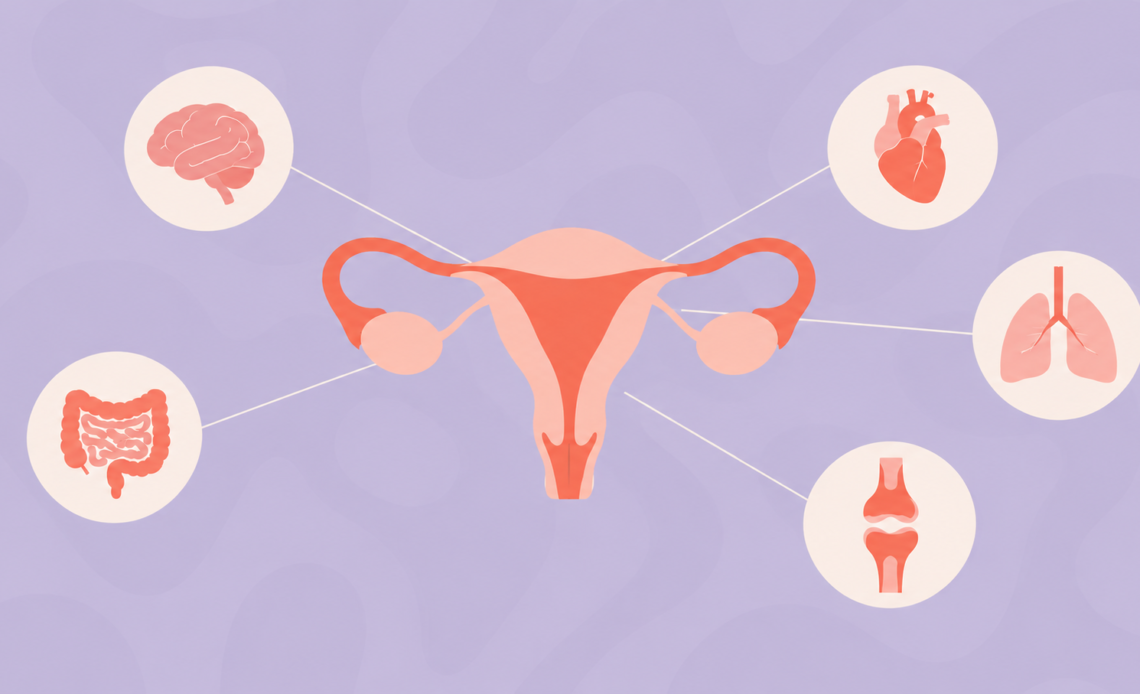
- Endometriosis is a systemic disease, not just a gynaecological one, because its symptoms can affect parts of the body beyond the reproductive system.
- Endometriosis has been difficult to diagnose, with surgery often used for confirmation and many women facing years of delays and misdiagnosis.
- Delayed diagnosis can lead to persistent inflammation, scar tissue, cysts, fertility problems, and a reduced quality of life.
- The new ACOG guidelines allow doctors to use symptoms, medical history, examination, and imaging without waiting for surgery.
- This means that treatment can start as soon as possible, helping women manage their symptoms without necessarily waiting for surgical confirmation.
- Also, treatment can be tailored to each woman, based on her symptoms, fertility plans, treatment goals and personal preferences.
It’s official now. We’re finally recognising that endometriosis is not just a gynaecological disease but a chronic, systemic one that needs a whole-body approach.
On 20 February 2026, the American College of Obstetricians and Gynecologists (ACOG) published updated clinical guidance on endometriosis, bringing together, for the FIRST time, one complete, official set of recommendations for its diagnosis.
Before this, guidance was scattered across separate, older bulletins and updated piece by piece over years and years, making diagnosis slower and extremely complex. Plus, we looked at endometriosis mainly through period symptoms and pelvic pain, so if those signs weren’t obvious, there were not many ways to diagnose what was actually going on. And for a disease that affects around 5-10% of women worldwide, that has meant an average endometriosis diagnosis delay of 4 to 11 years.
Now, understanding endometriosis as a systemic disease means we can look beyond gynaecological symptoms to identify it, opening up more opportunities for earlier diagnosis.
So yes… this update was much needed, highly awaited, and totally warranted. Let’s look at what changed, why it matters, and what it means for women now.
Endometriosis a Systemic Disease and Not Just a Gynaecological One: Why?
Systemic means a disease that affects the various systems in the body, rather than being limited to one organ or one area. Endometriosis fits this definition because its effects can go beyond the reproductive system and show up in different parts of the body.
Blog continues after the ad.

But for years, endometriosis was understood mainly through what happened in the pelvis. Even the name comes from “endometrium”, the lining of the uterus. So when doctors thought about endometriosis, they naturally looked for symptoms that seemed most obviously gynaecological, like painful periods, pelvic pain and fertility problems.
However, endometriosis does not stop at the reproductive system. The tiny inflammatory signals released by the disease can travel beyond the pelvis and affect your gut, your brain, or even your energy levels.
And that is where the old understanding fell short and led to delays in diagnosis. Someone with severe pain and vomiting was treated for a stomach problem, someone with bowel symptoms was diagnosed with IBS, while someone with recurring bladder pain was on antibiotics for a UTI. The symptoms could all be connected to endometriosis, but that connection was easy to miss.
In fact, research has found that 74.3% of women with endometriosis were initially misdiagnosed with another condition before eventually being diagnosed with endometriosis.
So, recognising endometriosis as a systemic disease gives doctors a more complete way to understand it, making diagnosis less about identifying one set of symptoms and more about connecting the different symptoms back to the same underlying disease.
That’s also why tracking your symptoms alongside your cycle can help. Nua’s Period Tracker lets you record both in one place, making patterns easier to spot and discuss with your doctor.
What Has Been the Biggest Gap in Endometriosis Diagnosis?
For years, laparoscopy was commonly used to confirm a diagnosis of endometriosis. It is a minimally invasive surgery where a doctor uses a camera to look inside the pelvis and identify endometriosis lesions. While less invasive than open surgery, it still requires a hospital visit and a surgical procedure, making it harder to access than a routine examination or scan.
As a result, women could face multiple medical visits, referrals, and long waits before getting a confirmed diagnosis, even when their symptoms pointed towards endometriosis.
In fact, research shows that of 10,000 women with endometriosis, 58% had visited their doctor MORE THAN 10 times before receiving a formal diagnosis (confirmed by laparoscopy or imaging), 21% went to a hospital more than ten times, and 53% had visited an emergency department because of the delayed diagnosis.
So, yeah, you could have severe, recurring pain and other symptoms that strongly point towards endometriosis, but without surgical confirmation, getting the right diagnosis and treatment could take close to a decade.
This is what made the old approach so problematic, and it is exactly the gap ACOG’s updated guidance tried to address.
For a first-hand look at what living with endometriosis can actually feel like, read this Nua Woman’s story.
What Can Happen When Endometriosis Goes Undiagnosed?
A delayed endometriosis diagnosis means years could pass without treatment, giving the disease more time to progress, worsen, and potentially cause irreversible changes in the body:
- Lesions can grow and spread to other areas over time, with endometriosis inflammation returning and worsening cycle after cycle.
- Repeated endometriosis inflammation can create scar tissue inside the pelvis, causing organs like the ovaries, uterus, bowel, or bladder to stick together, making movement painful.
- Cysts can develop on the ovaries, called endometriomas, which can grow over time and damage healthy ovarian tissue.
- Fertility can take a hit because lasting inflammation and changes in the pelvic organs can interfere with ovulation.
- Severe period pain can become normalised and affect daily activities and quality of life. One study found that depressive symptoms were reported by 44.3% of women with endometriosis, while 25.3% reported anxiety and 31.7% reported stress.
If you’re trying to make sense of your symptoms, Nua’s Period Tracker helps you keep a record of your cycle and symptoms in one place, so you have a clearer picture to share with your doctor.
So, What Is ACOG Actually Changing?
ACOG’s updated guidance now allows doctors to make a clinical diagnosis of endometriosis based on your symptoms, medical history, and physical examination, and start treatment without waiting for surgical confirmation. This means fewer delays in the diagnosis of the disease.
Here’s what that changes in practice:
- Imaging before surgery: Transvaginal ultrasound is now the recommended first imaging test, with MRI used when a closer look is needed. Laparoscopy is no longer the automatic first step in getting an endometriosis diagnosis.
- Blood test reliability: There is still no biomarker reliable enough to diagnose endometriosis on its own. So blood tests may be part of the evaluation, but a normal result does not rule out the disease.
- Whole-body approach: The updated approach recognises endometriosis symptoms beyond the uterus, including bowel symptoms, bladder pain, and nerve pain.
- Shared decision-making: The guidance also emphasises taking into account your symptoms, treatment goals, preferences, and the benefits and risks of different options rather than treating surgery as the default next step.
What Does This Mean for Someone With Endometriosis?
With the new ACOG guidelines in place, women with endometriosis do not need to wait years and years for the right treatment and relief.
You can bring up endometriosis earlier
You don’t need unbearable period pain as proof for a doctor to diagnose or treat endometriosis. The new approach moves away from the idea that you need to wait until the disease is severe enough to show up during surgery.
Plus, you can start treatment for your symptoms while your doctor is still figuring out whether you have endometriosis. So you don’t have to keep living with the pain while you wait for an answer.
You have a say in what happens next
Your symptoms, fertility plans and personal priorities can all be considered when deciding what treatment makes sense for you. You can discuss medication, further tests or surgery with your doctor, depending on what you need and what you’re comfortable with.
For example, if you’re trying to conceive, that can change the treatment plan. If you want to avoid surgery, that can be considered too. The treatment doesn’t have to look the same for every woman with endometriosis.
This more personalised approach is important in women’s health, where many conditions have historically been under-researched and misunderstood. Read more about the period gap in medical research here.
What Gaps Are Still There in the New ACOG Guidance?
A better diagnostic pathway for endometriosis shared by ACOG is genuinely GREAT news. But the next step is making sure this systemic, whole-body understanding reaches beyond gynaecology.
Women need to recognise and track their symptoms alongside their menstrual cycle, while doctors across specialities, whether a urologist, gastroenterologist or general physician, need to consider these patterns as part of the diagnostic picture.
The norm should be to look at symptoms and menstrual history together. When these patterns are considered side by side, it becomes easier to connect seemingly unrelated symptoms back to endometriosis instead of treating each one in isolation.
This is where a period tracker app can be useful. Nua’s Period Tracker keeps your cycle history and symptoms together, making it easier to look back at changes over time and share relevant details with your doctor.
What Does the Future of Endometriosis Care Look Like?
Recognising endometriosis as a systemic disease and changing how it is diagnosed can help us understand the condition much better.
For years, women were dealing with symptoms that did not always fit neatly into the way endometriosis was understood. The new guidance is a step towards looking at the whole picture, not just the pelvis, and making it easier to get the right diagnosis and treatment.
Of course, one new guideline cannot change everything overnight. But it can mean faster diagnosis, better research, and care that looks at the person as a whole.
Still have questions about endometriosis, periods, hormones, or anything else female? Drop them in the comments, and we’ll help break them down.
FAQs
1. Can endometriosis cause bowel symptoms?
Yes. Endometriosis can be associated with bowel symptoms, which may sometimes be mistaken for conditions such as IBS.
2. Can endometriosis cause bladder symptoms?
Yes. Endometriosis can cause bladder-related pain and symptoms that may otherwise be mistaken for a urinary condition.
3. Can endometriosis cause nerve pain?
Yes. Endometriosis can involve nerve-related pain, particularly when disease or inflammation affects areas around pelvic nerves.
4. Why is there often a delay in endometriosis diagnosis?
Diagnosis has traditionally relied heavily on surgical confirmation, contributing to long waits, repeated medical visits, and misdiagnosis.
5. Can endometriosis be diagnosed without surgery?
Yes. A clinical diagnosis can be based on symptoms, medical history, physical examination, and imaging without waiting for surgical confirmation.
6. How can you get diagnosed with endometriosis faster?
Discussing your symptoms and menstrual history with a doctor and considering appropriate imaging can help move the diagnostic process forward.
Disclaimer
The content of this article is provided for general informational and educational purposes only and is not intended to constitute medical advice, diagnosis, or treatment. The information shared is of a general nature and may not be appropriate for all individuals or specific circumstances. Readers should not disregard, delay, or substitute professional medical advice based on the information contained herein.
If you experience any symptoms, notice anything unusual, or have concerns relating to your health or overall well-being, you should consult a qualified healthcare professional. While every effort is made to ensure the information shared is accurate and up-to-date, Nua makes no representations or warranties, express or implied, regarding the accuracy, completeness, or suitability of the information provided and disclaims all liability arising from reliance on this content to the fullest extent permitted by law.