What you will learn in this blog about wearing period products for too long:
- Wearing period products for too long can increase friction and irritation, while prolonged dampness can weaken the skin barrier.
- Limited toilet access, poor facilities, lack of privacy, and restricted breaks can make wearing period products for long hours difficult to avoid.
- Prolonged wear can contribute to stronger odour and create conditions that may encourage bacterial or fungal overgrowth.
- When period product irritation or infection needs treatment, costs can add up through consultations, diagnostics, medicines, and missed work.
- UTIs can recur, meaning the same treatment costs, lost time, and disruption may come around again and again.
- Period protection for long hours, like Nua’s highly absorbent disposable period panties, can help on days when frequent changes are not possible.
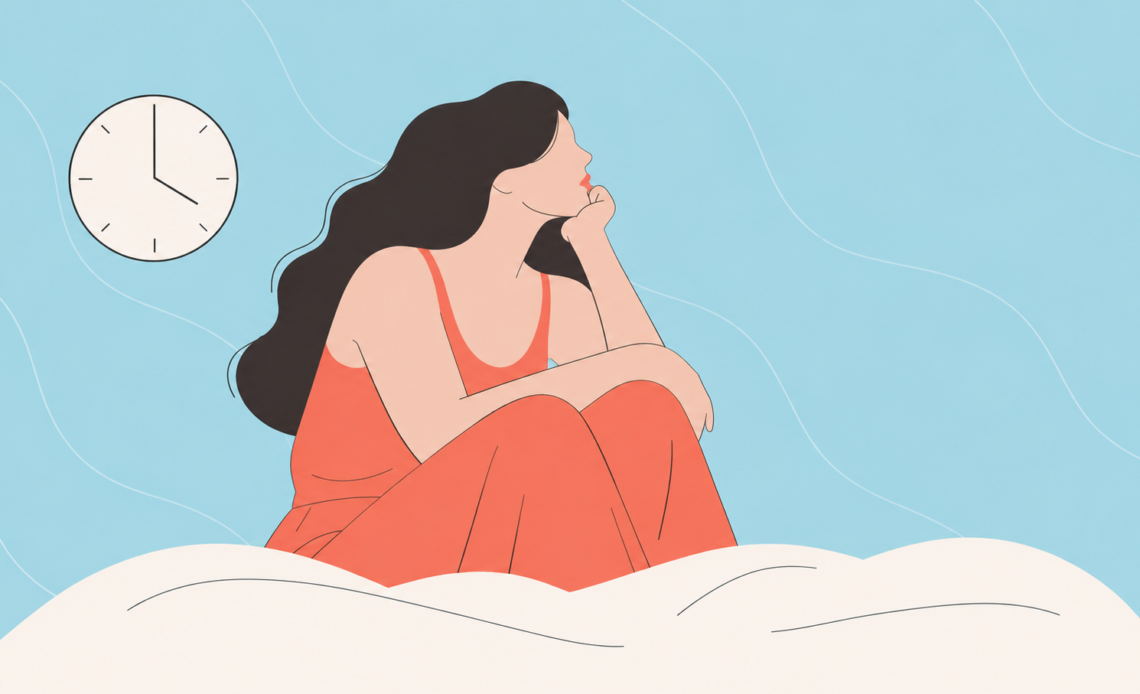
You’ve probably found yourself wearing your period products for too long at some point. Maybe it’s hour six of a long shift, you’re stuck on a long commute, or you’re sitting through a meeting that won’t end. You know you should change your pad, but you can’t use a bathroom for another forty minutes, it isn’t clean enough, or you simply don’t have the time.
So you wait. You make a deal with yourself. Just a bit longer. It’ll be fine.
Because in that moment, it doesn’t really feel like a big health decision. It feels like something small that can wait when you already have a thousand other things that can’t.
But that extra time can have a greater impact than you might think. The longer a period product stays on, the more moisture, heat, and friction build up against your skin, which can lead to irritation, infections, and actual financial costs for treating them.
So how much is too much? And what are the risks of wearing period products too long?
Let’s find out.
Wearing Period Products For Long Hours Is Rarely A Choice
Nobody genuinely wants to wear a soaked pad for ten hours. So when women end up wearing period products for long hours, it’s rarely because they don’t know better. More often, it’s because the conditions around them leave them with very little choice (more on that here).
Blog continues after the ad.
Sometimes, the problem is the toilet itself. A stall with no lock, a floor you don’t want to look at too closely, no water, a bin overflowing because nobody has emptied it in days. And when the only available toilet feels unhygienic, unsafe, or undignified, waiting to change your pad can feel like the better option.
Then there are the situations where a toilet exists, but getting to it isn’t that simple. An employee whose breaks are tightly controlled. A doctor on a long shift who can’t step away. A field visit where there’s no toilet for hours. A long drive with nowhere safe to stop.
And this isn’t just anecdotal. One study of 232 working women across corporate, government and self-employed sectors found that 62.3% struggled to dispose of menstrual products because their workplace facilities weren’t equipped for it, while 24% reported having experienced an infection they associated with poor menstrual hygiene management at work.
So, yes, the ability to change a period product is shaped by the whole environment around it. Whether there is a toilet, whether it is usable, whether there is privacy, and whether there is a safe way to dispose of what you have used.
For long, endless days, Nua’s Disposable Period Panties can help. With up to 10 hours of wear and 4x absorbency, it is perfect for days that do not allow you a period break.
What Happens If You Wear a Period Product Too Long
A period product sits against some of the most sensitive skin on your body for hours at a time. Wearing it for too long can cause anything from a little irritation to a more serious infection. Here are the risks to be aware of.
Irritation, Itching, and Rashes
Your skin has a protective outer layer that helps keep the skin underneath safe. When a period product stays on for too long, the skin stays damp for hours. This can make the outer layer swell and weaken, so it does not protect the skin as well as it normally does. Add sweat, menstrual fluid, and all the little irritants sitting against the skin, and it can start to react with redness, itching, or a burning feeling.
Chafing, Soreness, and Burning
Every time you walk, sit, or move, the period product moves against your skin too. When the skin is already damp from wearing the product for too long, repeated rubbing creates A LOT of friction and eventually causes tiny tears. That is what leaves you with raw, sore, or chafed skin, especially around the thighs and other areas where the product keeps rubbing.
If you’re struggling with chafing and want to learn how to manage it, we’ve a full guide here.
Strong Period Odour and Discomfort
Your vaginal area naturally has microbes living on and around it. Normally, they are just part of your skin’s natural environment, and period blood itself does not usually have a strong smell. But when menstrual blood stays against the body in a warm, covered period product for hours, it creates perfect conditions where these microbes can multiply. The blood also gives them something to feed on, and as they metabolize it, they release chemical compounds with a very distinct smell. That is why the smell can become much stronger and noticeably different from the usual smell of your period.
Vaginal And Urinary Tract Infections
A healthy vagina sits at a fairly acidic pH, usually somewhere between 3.8 and 4.5, and that acidity is a big part of what keeps harmful bacteria in check. Prolonged contact with blood, which is closer to neutral pH, nudges that pH balance the wrong way and gives bacteria the opening they need to overgrow, leading to infections.
You can lower the risks of wearing period products for too long with Nua’s Disposable Period Panties, designed with an ultra-absorbent core and 100% toxic-free materials for worry-free long wear.
The Cost of Wearing Period Products for Long Hours
The discomfort is one thing. But when irritation or an infection actually needs attention, there can be a very real cost attached to it, too. A visit to the doctor, a test, a prescription, or even just the time spent getting treatment can turn a few extra hours of wear into an expense you did not plan for.
The Remedies
For many women, an antifungal cream or ointment is one of those things that always has a place in the bathroom cabinet. It gets used for the itching, irritation, or discomfort that can come with periods. A tube of antifungal cream or ointment can cost around ₹100 to ₹300. It may not sound like much on its own, but when it is something you keep buying every few months, it quietly becomes a recurring expense alongside the period products you already buy every month.
The Checkup
And when the remedies don’t work, that is usually when you end up at the gynaecologist, where the consultation can cost around ₹500 to ₹5000. This is where the doctor works out whether you are dealing with simple irritation, a yeast infection, a UTI, or something else.
But going to the doctor costs more than the consultation fee. You have to get there, wait your turn, sit through the appointment, and get back. For some women, that might mean using a few hours of paid leave. For others, especially if they are paid by the day or cannot simply step away from work, it can mean losing income altogether.
The Diagnostics
Sometimes the doctor can identify the problem from the symptoms and examination. Sometimes, they need a test to know what they are treating.
That could mean a blood test or a urine culture for a suspected UTI, or a vaginal swab if the cause of vaginal symptoms is unclear. Depending on the test, this can add a few hundred to over ₹5,000 to the bill.
The Medicines
Then comes the actual treatment. And in many cases, that means antibiotics for a bacterial infection such as a UTI. Studies show that 50 to 60% of women experience at least one UTI in their lifetime, and one in three will need antibiotic treatment for it by the age of 24.
A typical five-day course can cost around ₹100 to ₹300. But the spending may not stop with the antibiotics. Some women also need prebiotics and probiotics to support their vaginal microbiome after its natural pH balance has been disturbed, adding another ₹300 to ₹1,500 to the bill.
The Follow-Up
Most gynaecologists want to see you again after the course is done, just to confirm the infection has actually cleared and hasn’t just gone quiet. That’s another ₹500 to ₹1,000.
The Flare-Up
The thing about UTIs is that they can be surprisingly easy to get again. Research shows that 25 to 30% of women who have had a UTI will have another one within six months. This is because the bacteria that cause UTIs can sometimes survive treatment or come back from the surrounding area.
And that means all those costs can come around again. Another consultation, another round of tests and medicines, another trip to the pharmacy, and potentially more time away from work. So, a cost that seemed manageable the first time can look very different when you are paying it for the second, third, or fourth time.
The Basics
Then there are the smaller costs that are easy to forget. Extra underwear or clothes if there has been discharge or urine leakage. Additional hygiene products. Travel to the clinic. Time spent arranging childcare. And the mental space of dealing with pain, itching, smell, or discharge while trying to get through a normal day.
So the real cost is not simply ₹X for a doctor and ₹Y for medicine. It is SOOOO much more. And if a better long-wear period product, like Nua’s Disposable Period Panties, can help you avoid that gamble in the first place, why not give it a try?
If you want to learn more about how disposable period panties can fit into your busy routine, check out our piece here.
So, What Can You Do About It?
If you know you have a long day ahead, the goal isn’t to simply push through discomfort or hope you find a bathroom in time. It’s about choosing period protection that works for the long hours of your day, like Nua’s Disposable Period Panties.
Designed for up to 10 hours of wear and 4x absorbency, they give you reliable, long-lasting protection when frequent changes aren’t possible. They’re ultra-absorbent, made with 100% toxic-free materials, and work just like underwear, making them a practical choice for endless shifts, travel, commutes, or days packed with back-to-back plans.
With that, here are a few other things that might help, too:
- Change into a fresh product before a long commute, shift, or journey.
- Keep an extra product and underwear within easy reach.
- Figure out your cleanest, most private bathroom options if you’re somewhere new before you need it.
- Carry disposal bags, because you can’t always count on a bin being available (Thank god, Nua’s Period Panties already come with one!).
- Choose breathable underwear, especially on long, sweaty days.
A Little Less Worry, A Lot Less Cost
Nobody chooses to wear a soaked pad for ten hours. Most women are choosing between a bad toilet and a bad wait, and picking whichever feels less risky in the moment. But those extra hours can mean irritation, infections that come back, and bills that show up weeks after the actual period is over.
So, knowing what those extra hours can actually cost matters. And on the days that do not leave you with a real choice, having something like Nua’s Disposable Period Panties in your bag can make that wait a lot less worrisome.
Have more questions about disposable period panties? Drop them in the comments, and we’ll get back to you.
FAQs
1. What happens if you wear a period product too long?
Wearing a period product for too long can increase the risk of irritation, chafing, odour, and infection.
2. How often should you change menstrual products?
Most menstrual products should be changed every 4 to 6 hours, or sooner if they feel full or uncomfortable.
3. How long can you wear a period panty?
Wear time for period panties differ, depending on your flow and the product. Nua’s Period Panties can be worn for up to 10 hours.
4. Are period panties good for heavy flow?
Yes, high-absorbency period panties can provide reliable protection on heavy-flow days.
5. What are disposable period panties?
Disposable period panties are single-use menstrual underwear designed to absorb period flow.
6. Are disposable period panties good for long hours?
Yes, they are designed to provide extended-period protection when frequent changes are not possible.
Disclaimer
The content of this article is provided for general informational and educational purposes only and is not intended to constitute medical advice, diagnosis, or treatment. The information shared is of a general nature and may not be appropriate for all individuals or specific circumstances. Readers should not disregard, delay, or substitute professional medical advice based on the information contained herein.
If you experience any symptoms, notice anything unusual, or have concerns relating to your health or overall well-being, you should consult a qualified healthcare professional. While every effort is made to ensure the information shared is accurate and up-to-date, Nua makes no representations or warranties, express or implied, regarding the accuracy, completeness, or suitability of the information provided and disclaims all liability arising from reliance on this content to the fullest extent permitted by law.